Why Is Understanding Your Wisconsin Roof Warranty Essential?
A new roof is a significant investment for your home, especially here in the Northwoods where harsh winters test every square foot of your building envelope. While a warranty offers essential peace of mind, many homeowners are surprised to learn that standard coverage can easily be forfeited through simple daily decisions or minor installation oversights.
Understanding what voids a roof warranty in Wisconsin is critical because roof warranties fall into two distinct categories:
- Manufacturer Material Warranties: These cover physical defects in the roofing products themselves, such as shingles that blister or split prematurely due to factory errors.
- Contractor Workmanship Warranties: These cover installation quality, ensuring that underlayment, flashing, and fasteners were applied correctly.
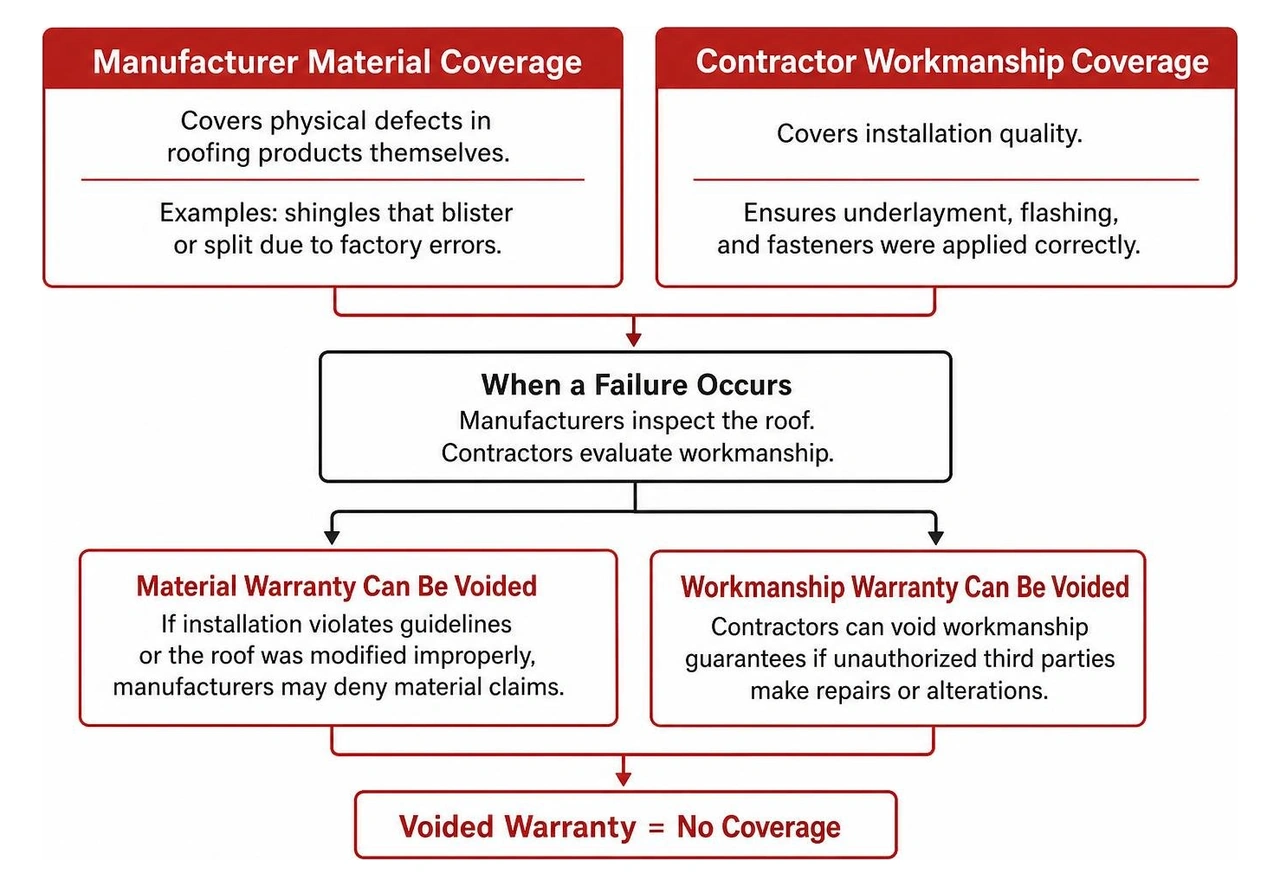
When a failure occurs, manufacturers inspect the roof closely. If they find that the installation violated their guidelines, or if the roof was modified improperly afterward, they will often deny material claims. Likewise, contractors can void their workmanship guarantees if unauthorized third parties make repairs or alterations.
Knowing these boundaries helps you protect your investment, avoid unexpected repair costs, and keep your roof performing as designed through heavy snow, ice dams, and spring thaws.
What Are the Primary Installation and Material Mistakes That Void Coverage?
Poor workmanship is one of the leading reasons warranty claims are rejected. In fact, industry reports indicate that up to 9 out of 10 new commercial and residential roofs fail initial warranty inspections because of improper installation techniques.
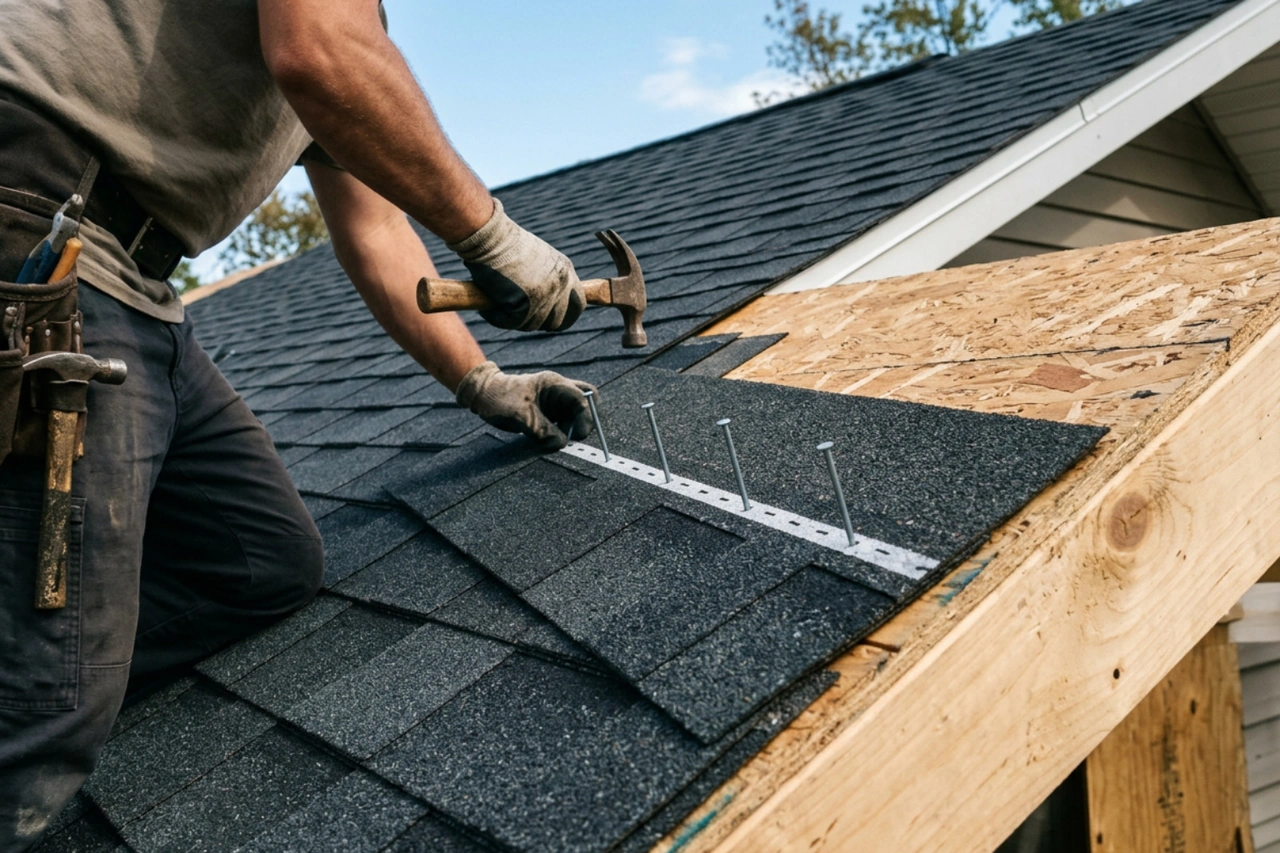
When fasteners are placed incorrectly (such as nails driven above the designated nail line, over-driven through the shingle surface, or installed at an angle), the shingle loses its wind rating. During strong spring or autumn storms, wind can catch loose shingles, and manufacturers will often reject the resulting claim due to improper fastening.
Installing new asphalt shingles directly over an existing layer of old shingles also introduces serious risks. Adding a second layer traps heat, creates uneven surfaces, adds heavy structural weight, and accelerates shingle wear. Because of these risks, most major manufacturers will either void coverage entirely or reduce their warranty terms if shingles are installed over an existing layer.
Using mixed material brands during installation can also compromise your protection. Manufacturers design complete roofing systems where underlayment, ice barriers, ridge caps, and shingles work together. Combining products from different brands can create component incompatibilities. While some homeowners consider brands like CertainTeed, at Eagle River Roofing, we recommend and exclusively install complete GAF shingle systems for residential projects. This approach helps ensure every component is matched and eligible for strong system warranties on qualifying projects.
Hiring an uncredentialed roofer can also restrict your coverage options. Extended warranty tiers often require installation by certified contractors who pass strict installation audits. You can learn more about verifying credentials by working with a Licensed Roofing Contractor. For visual examples of installation standards, check out this How To Avoid Voiding Your Roof's Warranty - Video Guide.
How Does Pressure Washing Damage Shingles and Nullify Warranties?
Over time, shaded roof sections near pine trees or lakefronts can develop moss, algae, or dark streaks. While power washing might seem like a fast way to clean your roof, high-pressure water strips away the protective mineral granules embedded in asphalt shingles.
Granules shield the underlying asphalt from UV radiation. When pressure washing removes these granules, the asphalt deteriorates rapidly, leading to premature cracking and leaks. Manufacturer guidelines explicitly prohibit high-pressure washing on asphalt shingles. Doing so will immediately nullify your material coverage.
If moss or algae build up on your shingles, we recommend soft-washing methods that use low-pressure spray solutions flowing gently downward. For continuous moss control, peak-mounted metallic zinc or copper strips offer a practical alternative. Rainwater reacts with the metal strips to release natural fungus inhibitors that help clear moss without harming the protective shingle granules.
Why Does Inadequate Attic Ventilation or a Hot Roof Invalidate Warranties?
Attic ventilation plays a critical role in preserving shingle health and keeping warranties valid. Manufacturers require specific net free vent area ratios (typically 1:150 or 1:300 depending on attic design), conforming to ARMA guidelines and ASHRAE 62.2 standards.
In hot summer months, an unventilated attic traps extreme heat beneath the roof deck. This buildup bakes the shingles from below, causing asphalt to dry out, blister, curl, and crack. When lab tests show that shingle failure resulted from thermal baking due to poor ventilation, manufacturers deny material defect claims.
In Wisconsin's cold climate, improper ventilation creates winter moisture issues. Warm, humid indoor air rises into an unvented attic and condenses on the underside of cold roof sheathing. This moisture causes mold, rots structural timber, and melts snow on the roof deck, creating ice dams at the eaves.
Some custom home designs use an unvented "hot roof" configuration, applying spray foam insulation directly to the underside of the roof sheathing. While this seals the building envelope, it traps heat beneath the shingles. Research indicates that a hot roof setup can increase shingle temperatures slightly, lowering shingle lifespan by up to 10%. Consequently, many major manufacturers disclaim or limit warranty coverage on hot roof installations unless specific high-temperature underlayments and installation protocols are followed.
Wisconsin legal precedents reinforce how critical roof ventilation design is during harsh winters. In cases like the Court of Appeals Decision on Structural Defects and Ice Damming, courts recognized that inadequate ventilation design causing severe ice damming and moisture accumulation can constitute a structural defect. Evaluating airflow is an essential step when determining How Do You Know Whether Your Roof Needs a Repair or a Full Replacement.
How Do Roof Modifications, Solar Panels, and Gutter Guards Impact Warranties?
After a roof is installed, adding satellite dishes, solar panels, skylights, or new ventilation pipes introduces risk to your warranty coverage. Drilling mounting screws directly through shingles without engineered flashing creates water pathways, voiding the leak warranty in that localized area.
If third-party installers drive lag bolts through shingles, the roof manufacturer will not cover leaks caused by those penetrations. While the rest of your roof may retain material defect protection, the section surrounding the unapproved modification becomes the homeowner's financial responsibility.
Gutter guards can also impact warranty coverage if installed improperly. Some leaf protection systems require lifting the lower course of shingles or driving screws directly into the roof edge decking. Prying up shingles can break factory adhesive seal strips, leaving lower shingles vulnerable to lake winds, while roof deck penetrations can create moisture leaks.
To protect your roof warranty, we recommend choosing non-invasive gutter guard systems mounted with clips directly to the gutter frame. While high-quality micro-mesh systems help filter out leaves and pine needles, no system eliminates maintenance entirely, and non-invasive mounts help protect your roof's water barrier.
Before making structural modifications or adding equipment, notify your warranty provider or consult your original roofer. Exploring professional Wisconsin Roofing Services ensures all rooftop additions meet manufacturer standards.
Does Weather and Storm Damage Void Your Warranty Coverage in Wisconsin?
Wisconsin homeowners experience demanding weather, from heavy winter snow and ice dams to summer hail and windstorms. A common point of confusion is how storm damage interacts with warranty coverage.
Manufacturer warranties cover internal product defects, not damage caused by extreme weather events or "Acts of God." Standard exclusions include:
- Hail impacts that fracture fiberglass mats or knock off granules
- Windstorms exceeding designated speed limits (often 70 mph on basic warranties)
- Damage from falling trees, branches, or lightning strikes
- Structural overload from extreme snow accumulation
When a hailstorm strikes, hail impacts can crack the inner mat of a shingle without breaking the surface immediately. UV rays then degrade the exposed asphalt over time. Because this damage stems from weather rather than a factory defect, manufacturers exclude it from warranty coverage. These situations are designed to be covered by your homeowner's insurance policy rather than your roof warranty.
For commercial single-ply membranes (like EPDM or TPO), standard warranties usually exclude damage caused by ponding water that remains on the roof surface for 48 hours or longer. Adequate slope and clear drainage are essential for maintaining flat roof warranty validity.
In residential applications, compliance with Wisconsin Building Code (SPS 321–325) requires proper ice barrier underlayments extending at least 24 inches inside the warm exterior wall line. This protection helps guard against winter meltwater backing up under shingles. If you suspect storm damage, having a certified professional inspect your Storm Damaged Roof helps preserve your remaining warranty protection while securing insurance documentation.
How Do Material, Workmanship, and Commercial Warranties Compare?
Understanding the differences between warranty types helps homeowners make informed choices about their property protection.
| Warranty Type | Typical Coverage Scope | Standard Duration | Common Voiding Factors |
|---|---|---|---|
| Standard Manufacturer Material Warranty | Manufacturing defects, shingle splitting, factory adhesive failure | 20 to 50 Years (Prorated after initial non-prorated period) | Improper ventilation, pressure washing, missing registration (after 30-45 days) |
| Contractor Workmanship Warranty | Installation errors, improper flashing, incorrect fastener placement | 1 to 10 Years (Varies by contractor) | Unauthorized DIY repairs, third-party alterations, unapproved roof additions |
| Commercial System / NDL (No Dollar Limit) | Full material and labor leak coverage for entire commercial assembly | 10 to 30 Years (Non-prorated) | Unapproved contractors, 48-hour ponding water, lack of bi-annual maintenance logs |
Most standard material warranties run 20 to 50 years on a prorated basis. During the initial period (often 10 years), coverage is non-prorated, meaning the manufacturer covers material replacement costs for covered defects. After that initial window, coverage depreciates based on the product terms.
Timing is also critical. Most manufacturers require product registration within 30 to 45 days of installation. Failing to register on time can downgrade your protection from extended system coverage to basic limited material coverage.
Saving original receipts and municipal permit records is essential for validating future claims; note that permit rules vary by municipality, so confirm requirements during your estimate. In cases like the Wisconsin Court of Appeals Ruling on Material Warranty Documentation, courts upheld that failure to maintain purchase records or product identification tags can prevent homeowners from enforcing finish and material warranties. For a broader breakdown of these rules, consult Roofing Warranties in Wisconsin: Manufacturer and Contractor Coverage.
What Are the Key Responsibilities for Wisconsin Homeowners?
To keep both material and workmanship warranties active, homeowners are expected to fulfill basic maintenance responsibilities:
- Schedule annual or bi-annual professional roof and attic ventilation inspections, particularly after severe winter seasons.
- Clean gutters and downspouts regularly to prevent standing water, overflow, and ice backup along the eaves.
- Retain all original purchase contracts, municipal permit records, material receipts, and maintenance logs in a permanent record file.
- Submit written notice of any discovered leaks or defects to the manufacturer or contractor within 30 days of discovery.
- Complete official warranty transfer documentation within required timeframes (typically 30 to 60 days) when selling the home to transfer remaining coverage to the new owner.
Frequently Asked Questions About Wisconsin Roof Warranties?
Will installing a satellite dish or solar panels void my whole roof warranty?
Installing a satellite dish or solar panels does not automatically void your entire roof material warranty, but it will void coverage for any leaks or structural damage caused by the installation itself. If installer screws puncture shingles without proper flashing and cause a leak, the repair costs fall on the installer or homeowner, not the roof manufacturer.
Does ice dam damage count as a material defect under standard warranties?
No. Material warranties cover manufacturing flaws in the shingles, not weather-related phenomena or heat loss from the home. Ice dams occur when indoor attic heat melts snow on the roof deck, which then freezes at the cold eaves. Repairs for ice dam damage are typically handled through homeowner's insurance or addressed by improving attic insulation and ventilation.
How quickly must I register my new roof warranty after installation?
Most major manufacturers require warranty registration within 30 to 45 days of project completion. If registration is missed, extended coverage tiers -- which include non-prorated labor and tear-off costs -- may downgrade to standard limited material warranties.
How Can You Keep Your Roof Warranty Fully Intact?
Keeping your roof warranty valid comes down to a few practical steps: verify your contractor's credentials, maintain recommended attic ventilation, perform routine inspections, avoid high-pressure power washing, and register your product warranty after installation.
At Eagle River Roofing, we help Northwoods homeowners protect their investments through careful, code-compliant craftsmanship. Locally owned and founded in late 2023, our work is built on a 50+ year legacy of local team experience. Across our team's history, we have installed over 9,000 roofs and 8 million feet of gutters across Eagle River, Rhinelander, Minocqua, St. Germain, Three Lakes, and nearby Northwoods communities.
As a certified GAF Master Elite contractor, we can offer access to extended manufacturer warranties on qualifying projects, depending on the system and proper registration. We take pride in maintaining tidy job sites, providing clear written estimates, and delivering straightforward guidance every step of the way.
To learn more about protecting your roof, visit Eagle River Roofing or request an Instant Roofing Estimate today.
Additional Guides & Helpful Resources
- Learn to identify early warning signs with our guide on Common Roofing Problems.
- Understand standard contract terms in What Should Be Included in a Roofing Estimate.
- Budget effectively using our Roof Inspection Cost Complete Guide.
- Compare regional installation standards in the Roofing Contractors Complete Guide 2026.
- Find actionable tips in How Do I Choose a Roofing Contractor.
- Recognize when it is time for an upgrade by reading about Roof Replacement Signs.
This article is for general informational purposes only and may not reflect the most current products, pricing, codes, availability, weather-related recommendations, or roofing requirements for your specific property. Every home and roof is different, especially in the Northwoods. Please contact Eagle River Roofing directly for the latest information and guidance for your project.

