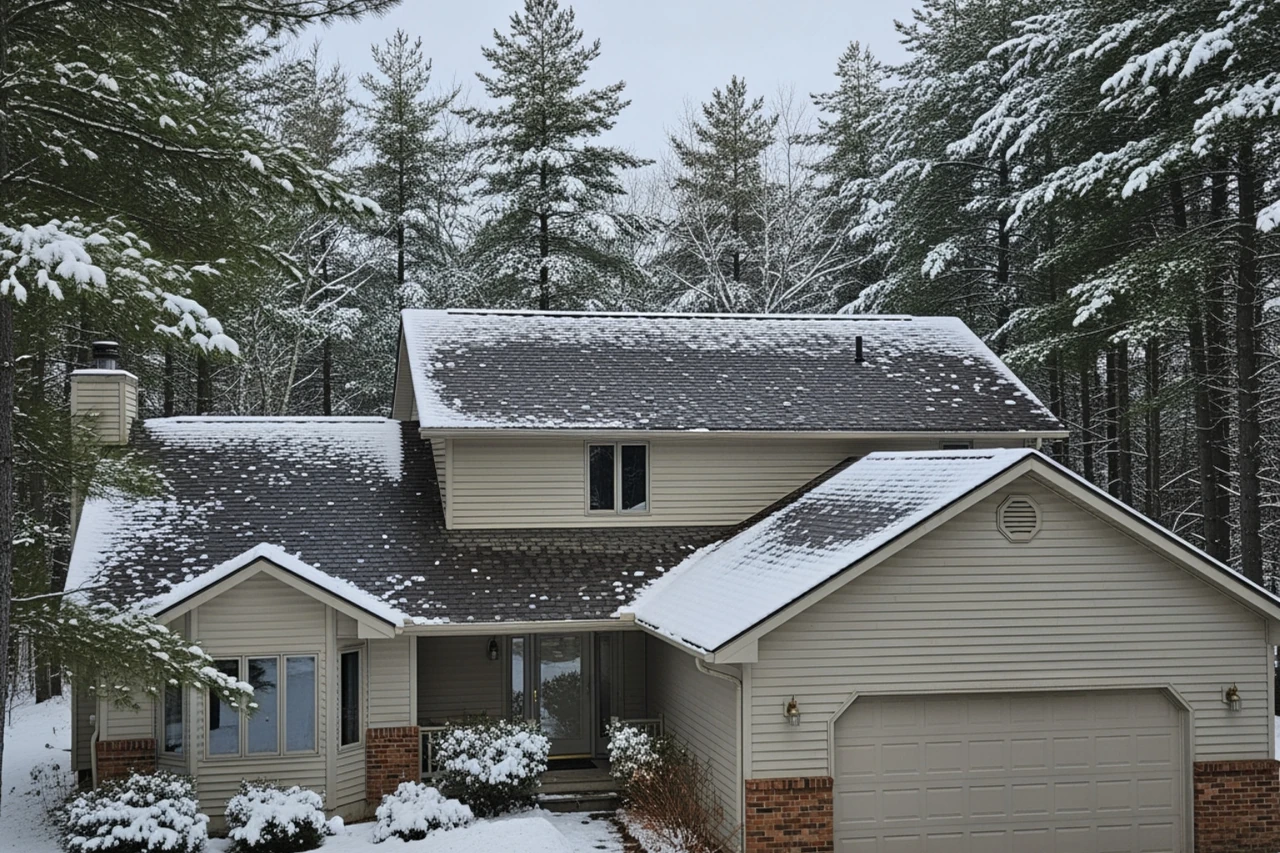
Why Knowing Your Roof Replacement Signs Can Save You Thousands
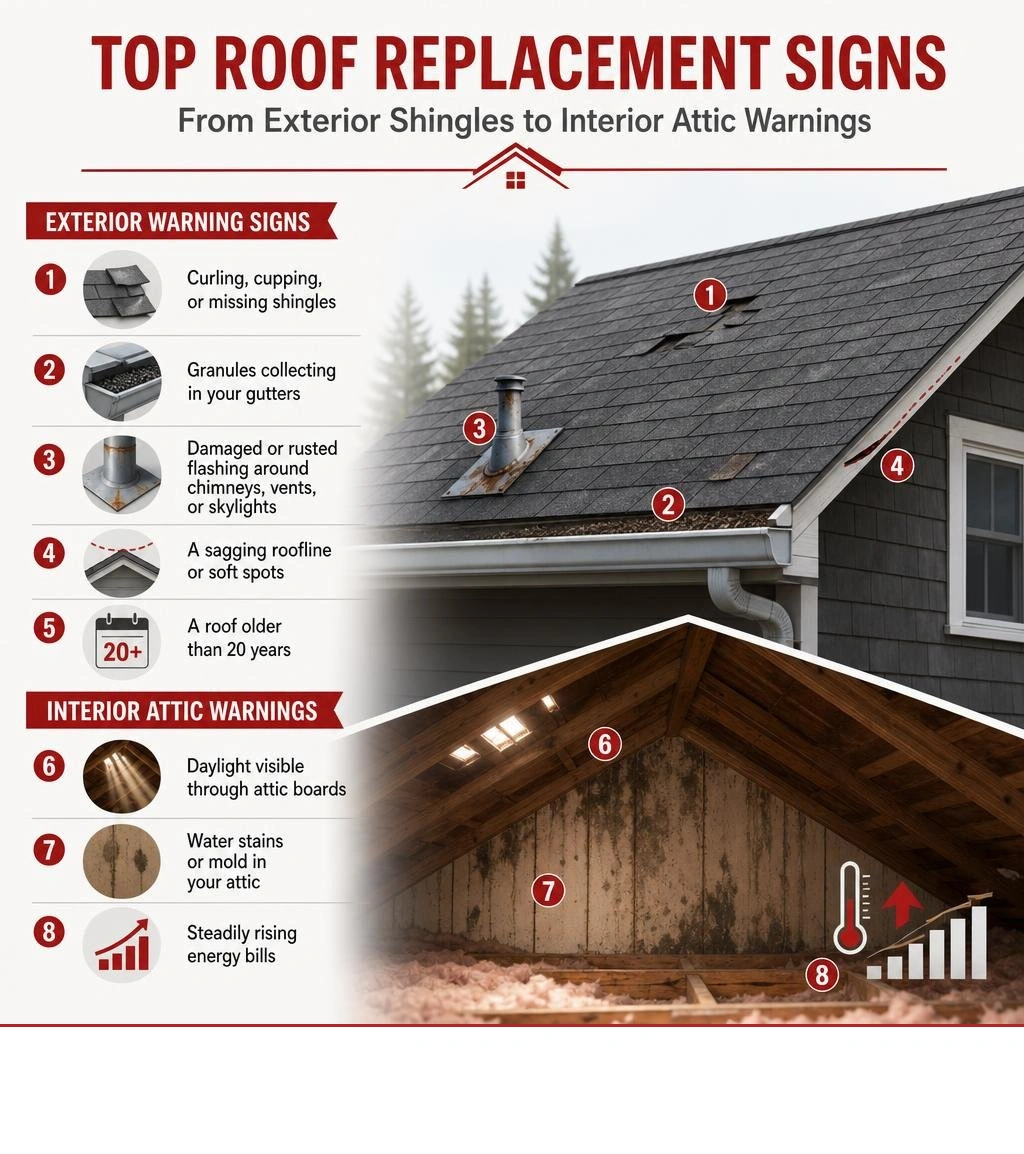
The most common warning signs homeowners should watch for include:
- Curling, cupping, or missing shingles on the roof surface
- Granules collecting in your gutters, especially on roofs 10+ years old
- Water stains or mold in your attic after rain or snowmelt
- A sagging roofline or soft spots when walking on the roof
- Daylight visible through attic boards
- Damaged or rusted flashing around chimneys, vents, or skylights
- A roof older than 20 years, particularly if it has not been regularly maintained
- Steadily rising energy bills with no other clear cause
Your roof is the first thing standing between your home and everything the Northwoods weather throws at it - heavy snow loads, ice dams, spring thaws, and lake winds can all quietly wear a roof down over time. The tricky part is that many of the warning signs are easy to miss until the damage has already worked its way inside.
Most asphalt shingle roofs last between 15 and 30 years, but that window shrinks fast when a roof faces the kind of winters we see in Eagle River, Rhinelander, and the surrounding Northwoods communities. Catching the early signs of failure can mean the difference between a straightforward replacement and a much costlier repair involving decking, insulation, or interior damage.
I'm Tyler Blair, owner of Eagle River Roofing, and after working on thousands of roofs across the Northwoods, I've seen how easy it is to miss the early warning signs that signal real trouble is on the way. In this guide, we'll walk you through everything you need to know to make a confident, no-pressure decision about your roof.
Essential roofing terms:
Recognizing Key Roof Replacement Signs
When we look at a roof that might be failing, we break our evaluation into two main categories: what is happening on the outside and what is happening on the inside. Many homeowners do not realize that a roof can look acceptable from the driveway while slowly rotting the plywood decking underneath.
Regular inspections are an effective way to catch these issues before they turn into emergency situations. If you are comfortable looking at your roof from the ground, a pair of binoculars can help you spot missing shingles or damaged areas without ever leaving safety. However, a professional evaluation is often needed to check the structural integrity of the roof deck and the condition of the underlayment.
For a deeper dive into the specific issues that plague residential roofs, you can read more about common roofing problems that we see daily in our local area.
Exterior Warning Signs on Shingles
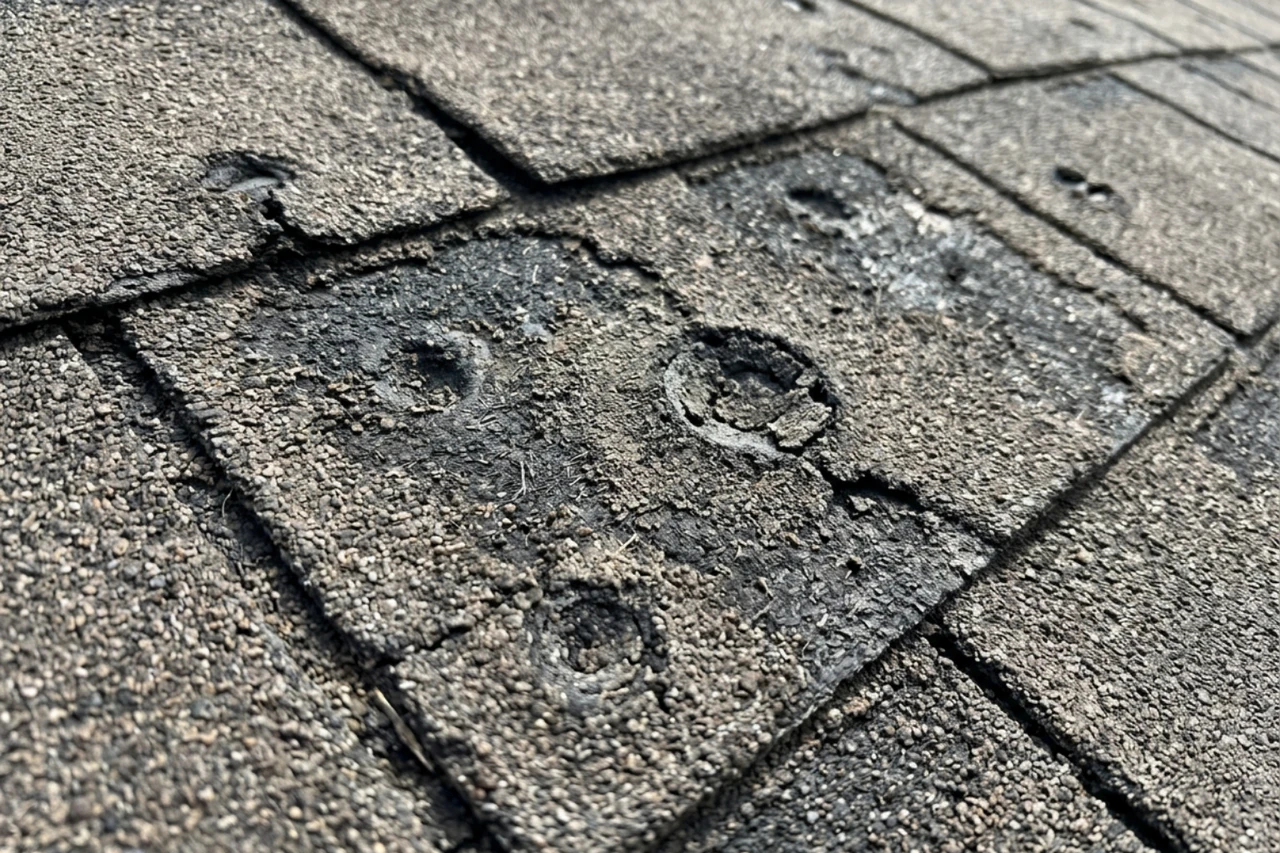
The shingles themselves are your home's primary shield. As they age, the asphalt within them dries out and becomes brittle. This drying process causes several distinct physical changes that you can easily spot:
- Curling and Cupping: When the edges of the shingles turn upward (cupping) or the middle sections begin to buckle (curling), it means the shingle is no longer lying flat. This exposes the underlayment to wind-driven rain and snow.
- Clawing: This occurs when the edges stay flat but the center of the shingle bulges upward, creating a claw-like shape. Clawing shingles are highly susceptible to being blown off during high wind events.
- Granule Loss: Shingle granules are not just for color; they protect the underlying asphalt from the sun's harsh ultraviolet rays. Over time, these granules wash away. If you notice bare, dark spots on your shingles, or if you find piles of sand-like granules in your gutters, your shingles are reaching the end of their functional life.
- Damaged Flashing: Flashing is the metal shielding installed around chimneys, vents, and valleys. If your flashing is rusted, cracked, or lifting, water can easily slip behind it.
For homeowners in St. Germain and surrounding areas, working with certified professionals is crucial to ensuring your shingles are installed to withstand our tough climate. You can find qualified help through GAF certified contractors in St. Germain who understand the unique installation requirements for cold-weather climates.
Interior Warning Signs in Your Attic
An attic inspection is often the most revealing part of a roof assessment. We recommend taking a flashlight into your attic during or immediately after a heavy rainstorm or a major spring thaw. Here is what you should look for:
- Daylight Through the Boards: If you turn off your flashlight and can see beams of sunlight peaking through the roof boards, water can get in too. While some older spaced sheathing boards naturally have small gaps, you should never see direct daylight through your outer shingle layer.
- Water Stains and Active Leaks: Look for dark rings or damp spots on the rafters, collar ties, and the underside of the plywood decking. Even if a spot is dry when you touch it, a dark stain indicates a historic leak that is likely to return.
- Mold and Mildew: A musty smell or visible white, black, or grey mold on the attic wood indicates chronic moisture retention. This is often caused by a combination of minor leaks and poor attic ventilation.
- Sheathing Decay: If the plywood decking looks warped, dark, or feels soft and spongy when lightly pressed, the wood has begun to rot. Rotted decking cannot securely hold shingle nails and must be replaced during a reroofing project.
To help you perform your own preliminary check, we have put together a comprehensive roof inspection checklist that covers both interior and exterior trouble spots.
Northwoods Climate Challenges and Your Roof
Our local weather in the Northwoods is beautiful, but it is incredibly tough on residential roofing systems. In towns like Eagle River, Minocqua, Rhinelander, and Three Lakes, roofs face a unique combination of environmental stressors.
During our long winters, heavy snow loads put immense physical weight on the roof structure. When warm air escapes from a poorly ventilated attic, it melts the bottom layer of snow on the roof. This runoff water flows down to the cold eaves, where it refreezes, creating a solid ridge of ice known as an ice dam.
Ice dams trap subsequent meltwater behind them. This standing water can back up under the shingles, leading to severe leaks along the interior walls and ceilings. While heat cables can help keep drainage paths open, they do not solve the root cause of ice dams, which is often a combination of inadequate insulation and poor attic ventilation.
In the spring and summer, heavy winds off our local lakes can lift older, brittle shingles. Additionally, the dense pine trees that define our landscape drop thousands of needles. If these needles are allowed to accumulate in roof valleys or gutters, they trap moisture against the shingles and accelerate rot.
To combat these issues, we design our roofs with balanced ventilation systems, ice and water shields along the eaves, and heavy-duty snow guards over entryways to prevent dangerous snow slides.
How Roof Age and Materials Impact Your Decision
The age of your roof is one of the most reliable indicators of whether you need a repair or a full replacement. Even if a roof looks decent from the ground, the chemical components of the roofing materials degrade steadily over time.
Different materials have vastly different lifespans. Understanding how long your specific material is designed to last can help you budget for the future and avoid unexpected structural failures.
| Roofing Material Type | Average Lifespan in the Northwoods | Commonly Suited For | Key Benefit |
|---|---|---|---|
| Traditional 3-Tab Asphalt | 15 to 20 Years | Budget-conscious projects | Low upfront cost |
| GAF Architectural Shingles | 25 to 30 Years | Standard residential homes | Excellent wind and snow resistance |
| Standing Seam Metal | 40 to 70 Years | Long-term residential investments | Superior snow shedding, hidden fasteners |
| Flat Roof Membranes (EPDM/TPO) | 15 to 25 Years | Low-slope or commercial sections | Waterproof seal for flat surfaces |
If you are curious about how these materials impact your overall investment, you can learn more about general pricing factors in our guide to roofing general and cost questions.
Lifespan of Asphalt and Architectural Shingles
Asphalt shingles remain the most popular choice for residential homes in our region. However, there is a major difference between traditional three-tab shingles and modern architectural shingles.
Traditional three-tab shingles are flat, single-layer shingles. In our harsh climate, they typically last between 15 and 20 years before they begin to curl and lose their granules.
Architectural shingles, also known as dimensional shingles, are laminated with multiple layers of asphalt, making them much thicker and more wind-resistant. A high-quality architectural shingle system can easily last 25 to 30 years with proper attic ventilation and regular maintenance.
When we install shingle roofs, we recommend GAF shingles because of their exceptional durability, wind ratings, and advanced granule retention. GAF systems offer comprehensive warranty options and proven performance in deep-freeze environments, making them an excellent choice for Northwoods homes.
Lifespan of Metal Roofing Systems
For homeowners looking for a long-term solution, metal roofing is an exceptionally strong option. A professionally installed standing seam metal roof can last between 40 and 70 years.
Standing seam systems utilize hidden fasteners, meaning the screws are protected from the elements under the metal panels. This design prevents the leaks that often occur with exposed-fastener metal roofs when the rubber washers degrade over time.
Metal roofs are highly efficient at shedding heavy snow, which can help prevent ice dams from forming. However, they are not ideal for every budget, as the upfront installation cost is significantly higher than that of an asphalt shingle roof. We position metal roofing honestly: it is a fantastic, lifetime investment, but we will never pressure you into it if a GAF shingle roof fits your budget and needs better.
Repair vs. Replacement: The Cost-Effective Choice
One of the most common questions we get is: "Can I just repair this leak, or do I need to replace the whole roof?" Making the wrong choice can be costly. Spending money on repeated repairs for an old, failing roof is often a waste of resources, while replacing a young roof with minor, localized damage is unnecessary.
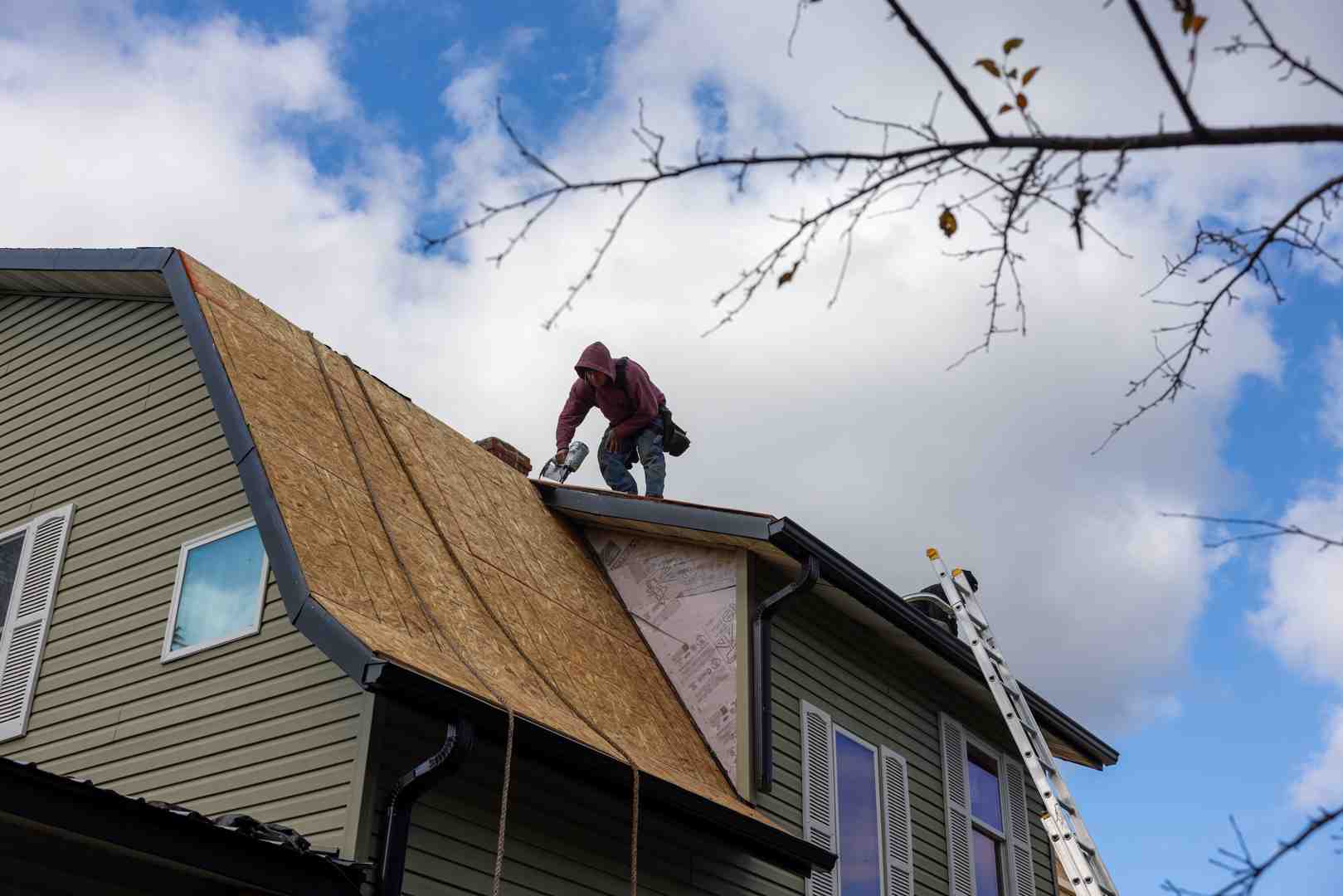
To help you understand what goes into professional assessments, you can read our complete guide on roof inspection cost complete guide to see how we evaluate a roof's remaining lifespan.
When to Choose Roof Repair
Roof repairs are highly effective when the damage is isolated to a small area and the rest of the roof is still in good structural condition. We typically recommend repairs in the following scenarios:
- Isolated Storm Damage: If a recent high-wind event blew off a few shingles in one specific area, but the surrounding shingles are still flexible and holding their granules, we can easily replace those missing pieces.
- Flashing Leaks: If your shingles are in great shape but the sealant around a vent pipe or chimney flashing has cracked, we can repair or replace the flashing to stop the leak.
- Tree Branch Impact: If a falling branch damaged a small section of your roof, a localized repair is usually all that is needed.
If your roof has suffered damage from a recent storm, you can find more information on how we handle these situations in our guide to storm damaged roof repairs.
When Full Replacement is Necessary
We generally recommend a full roof replacement when the roof system as a whole can no longer protect your home. We use two main guidelines to help make this decision:
- The 75% Lifespan Rule: Once a roof reaches 75% of its expected lifespan, any major repair is often a temporary fix. For example, if a 20-year-old asphalt roof begins to leak, investing in a repair is rarely wise, as other areas of the roof are likely to fail soon.
- The 50% Cost Rule: If the cost of repairing your roof is 50% or more of the cost of a full replacement, we highly recommend opting for the replacement. A new roof comes with a fresh warranty, improved energy efficiency, and greater peace of mind.
Systemic failure, widespread sagging, or multiple leaks in different areas of your home are clear indicators that a full replacement is necessary. Additionally, if your home was built before the mid-1980s, there is a chance that older roofing materials may contain asbestos. In these cases, we follow strict safety protocols and asbestos safety guidelines to ensure the safe removal and disposal of the old materials.
Frequently Asked Questions about Roof Replacement
How much does a typical roof replacement cost?
The cost of a roof replacement in Wisconsin varies widely depending on several factors. These include the total square footage of your roof, the pitch (slope) of the roof, the complexity of the architecture (such as valleys, dormers, and chimneys), and the materials you choose.
On qualifying projects, we provide clear, written quotes that break down every expense so there are no surprises. Because material and labor costs fluctuate, we avoid giving hard pricing estimates without seeing the property first, but we are happy to provide a detailed, no-pressure estimate for your specific home.
Will homeowners insurance cover my roof replacement?
Whether your insurance covers a replacement depends entirely on what caused the damage and the type of policy you have. Insurance is designed to cover sudden, accidental damage from events like hail storms, high winds, or falling trees. It does not cover normal wear and tear, neglect, or age-related deterioration.
It is also important to understand the difference between Actual Cash Value (ACV) and Replacement Cost Value (RCV) policies:
- RCV Policies: These cover the actual cost to replace your roof with a similar new one, minus your deductible.
- ACV Policies: These only pay out the depreciated value of your roof based on its age. If your roof is 20 years old and has wind damage, an ACV policy may only cover a small fraction of the replacement cost.
Many insurance companies automatically switch roofs to ACV coverage once they pass 15 or 20 years of age, which is why keeping track of your roof's age is so important.
How long does it take to replace a residential roof?
Most residential roof replacements in our area can be completed within 2 to 7 days, depending on the size and complexity of the roof. However, weather plays a major role in our timeline.
We monitor local weather forecasts closely. Because we refuse to expose your home's interior to rain or snow, we only tear off sections of your old roof that we can safely dry-in with protective underlayment before the end of the day. If a sudden Northwoods storm rolls in, it can cause minor delays, but we strive to communicate clearly with you throughout the entire process.
Conclusion
Your roof is a major investment, and recognizing the early warning signs is an excellent way to protect your home and your budget. Whether you are dealing with curling shingles, granule loss, or a persistent attic leak, catching these issues early gives you the time to make an informed, stress-free decision.
At Eagle River Roofing, founded in late 2023, we are proud to be locally owned and built on a foundation of deep local experience in the Northwoods. Our team brings decades of combined industry experience to every project. As a GAF Master Elite contractor, we combine quality craftsmanship with clear written quotes and incredibly tidy job sites, treating your home with the respect it deserves.
If you suspect your roof is showing signs of wear and want an honest, professional opinion, we are here to help. Schedule a professional roofing consultation with us today, and let us help you keep your home safe and dry for decades to come.
This article is for general informational purposes only and may not reflect the most current products, pricing, codes, availability, weather-related recommendations, or roofing requirements for your specific property. Every home and roof is different, especially in the Northwoods. Please contact Eagle River Roofing directly for the latest information and guidance for your project.

