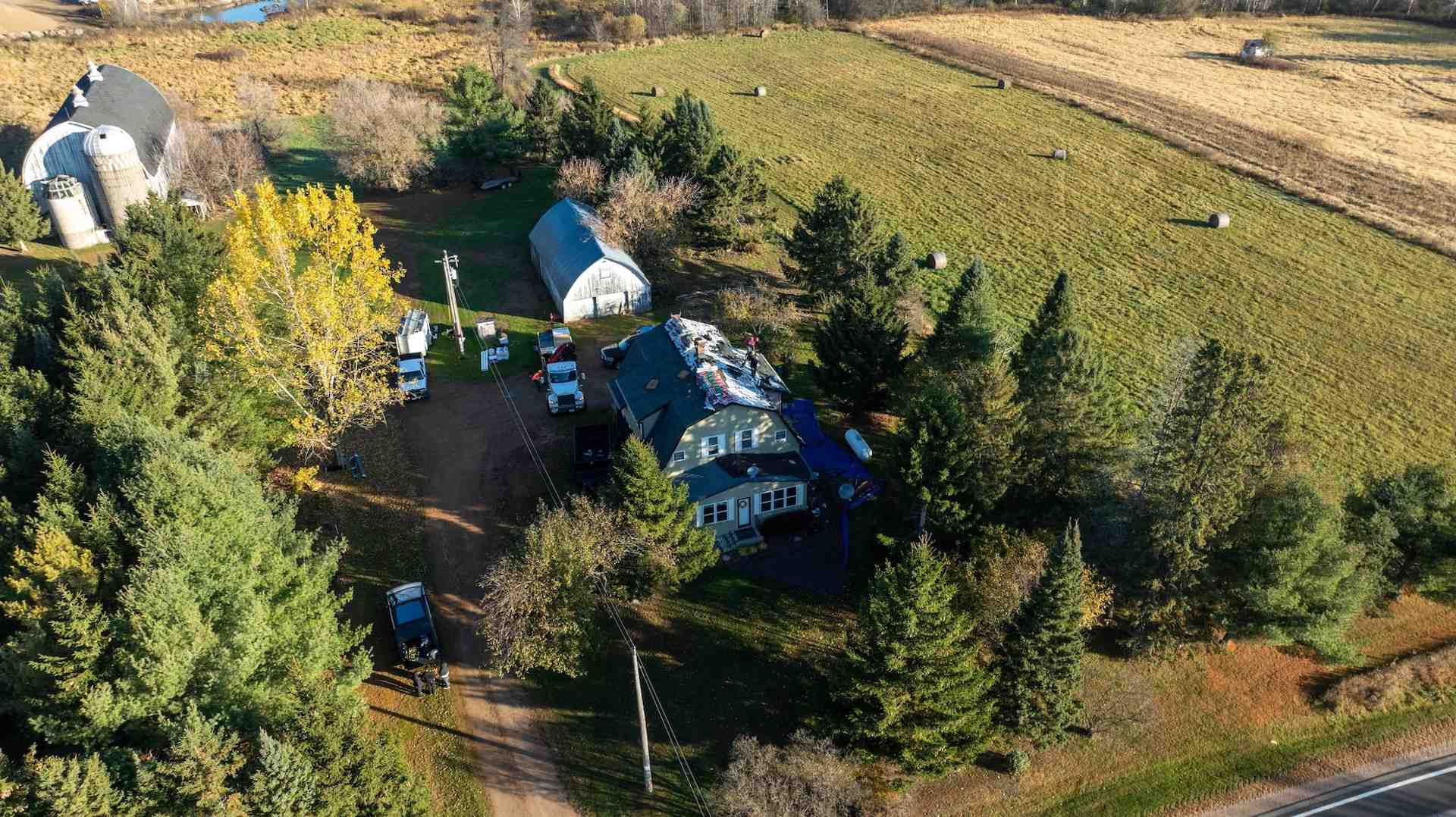
What to Do When a Storm Damages Your Roof (Without Losing Your Mind)
A storm damaged roof is one of the most stressful things a Northwoods homeowner can face, especially when you're not sure what to do next. Here's a quick summary of the most important steps:
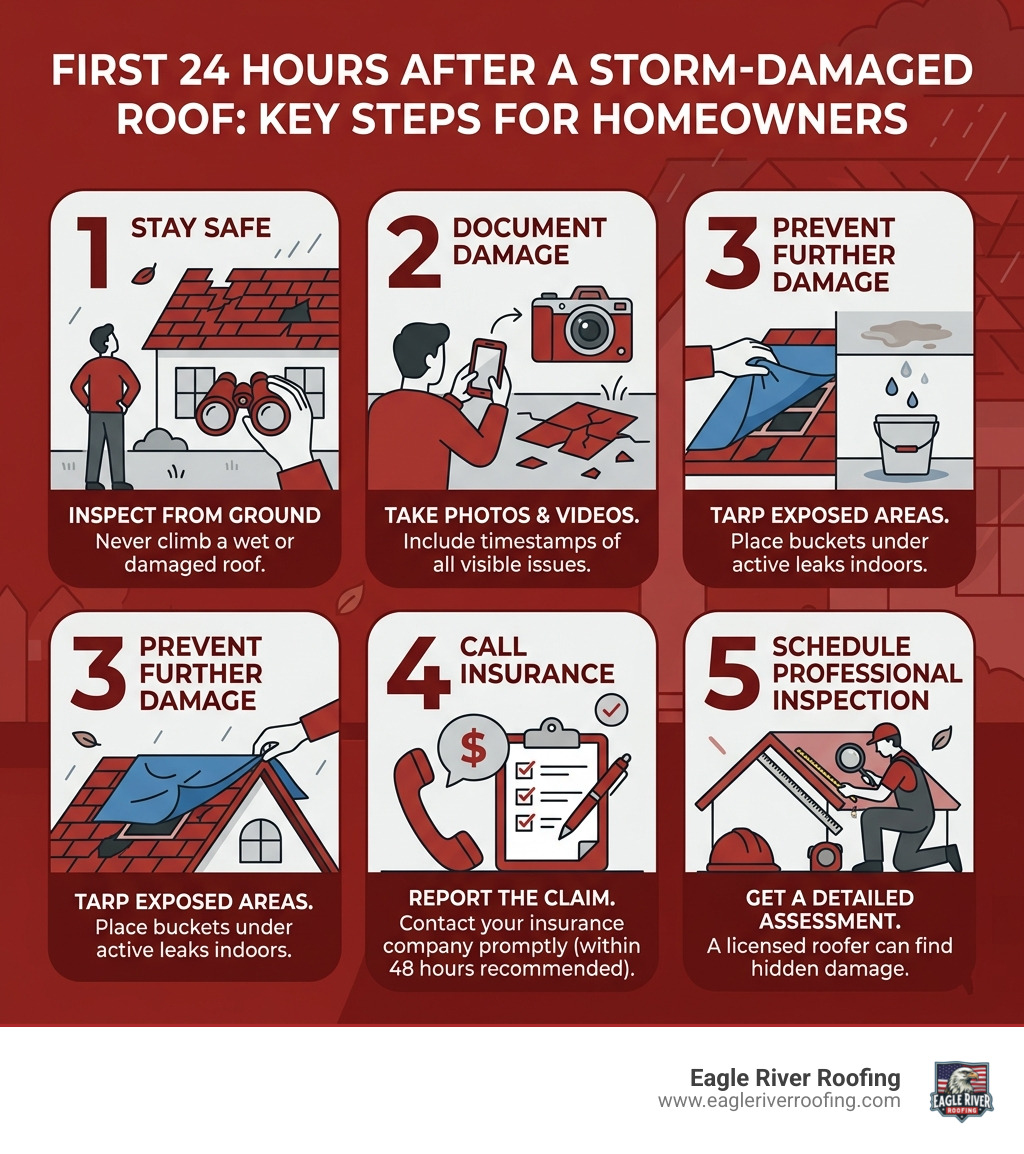
The first 24-48 hours after storm damage:
- Stay safe - inspect from the ground only, never climb a wet or damaged roof
- Document everything - take timestamped photos and videos of all visible damage
- Stop further damage - cover exposed areas with a tarp and place buckets under active leaks
- Call your insurance company - report the damage within 48 hours if possible
- Book a professional inspection - a licensed roofer can find damage you can't see from the ground
- Hire a local contractor - avoid door-to-door storm chasers
Up here in the Northwoods, storms hit hard and fast. A summer squall in Eagle River can strip shingles off a perfectly good roof in minutes. Wind gusts in the 50-60 mph range can break the seal strips on shingles and leave your underlayment exposed before you even know it happened.
The damage is often worse than it looks from the driveway. And the insurance process that follows? It can feel like a second disaster on top of the first.
That's why acting quickly and knowing exactly what to do matters so much. Post-storm roof repairs average around $12,384, with costs ranging anywhere from $2,642 to over $22,000 depending on the extent of the damage. The difference between a manageable repair bill and a massive one often comes down to how fast you respond and how well you document what happened.
I'm Tyler Blair, owner of Eagle River Roofing, and our team has replaced thousands of storm damaged roofs across the Northwoods. I'll walk you through everything you need to know to protect your home and your insurance claim.
Basic storm damaged roof glossary:
- Asphalt Shingle Roof Replacement Cost Wisconsin
- Licensed Roofing Contractor
- Roofing Company Eagle River WI
Spotting the signs of a storm damaged roof from the ground
When the clouds clear over Eagle River or Rhinelander, your first instinct might be to grab a ladder. Stop right there. Falls are the leading cause of death in construction, and a wet, storm damaged roof is incredibly dangerous. You can spot almost everything you need to see right from the safety of your lawn using a pair of binoculars.
Start by walking the perimeter of your home. Look for missing shingles or pieces of metal flashing that have been peeled back. Wind damage is often a "domino effect" where one loose shingle allows the wind to get underneath the rest, lifting them up and breaking their water-tight seals. If you see shingles scattered in your yard, that is a clear sign your roof's defense has been breached.
Hail is another beast entirely. While we get plenty of snow in the Northwoods, those summer hailstorms can be brutal. Look at your gutters and downspouts. If you see a lot of "sand" or granules piling up at the bottom of your downspouts, your shingles have likely suffered significant granule loss. These granules protect your roof from UV rays; without them, your shingles will brittle and fail fast. Check your metal valley flashing and vents too. Dents on these metal surfaces are much easier to see than dents on shingles and are a "smoking gun" for insurance adjusters.
Other signs to watch for include:
- Curled or lifted shingle tabs: Wind can break the sealant strip without blowing the shingle off.
- Crooked chimney: High winds or falling debris can shift the masonry or damage the flashing.
- Tree impact: Look for broken branches on the roof or scuff marks where limbs rubbed against the surface.
- Interior leaks: Check your attic with a flashlight. Look for wet insulation, dark spots on rafters, or musty smells.
For a deeper dive into what to look for, check out our Roof Inspection Checklist and this overview from Angi on 8 Signs of Roof Storm Damage and What to Do About It.
Immediate steps to protect your home and your claim
The first 24 hours are critical. Most insurance policies require you to "mitigate" the damage, which is just fancy talk for "don't let the hole in your roof ruin your living room furniture." If you don't take basic steps to stop further water from coming in, the insurance company might deny part of your claim for "neglect."
Start by documenting everything. Take photos of the roof from the ground, any debris in the yard, and any water stains inside the house. Use a coin or a ruler in your photos of hail dents to show the scale. Make sure your camera has the timestamp feature turned on. This evidence is vital when you file your claim.
If you have an active leak, you need a temporary fix. This usually means emergency tarping. We recommend hiring a pro for this because securing a tarp properly on a steep or damaged roof is risky business. Plus, the cost of professional tarping is usually reimbursable by your insurance company. If you must do it yourself from a ladder, use weighted boards to hold the tarp down rather than nailing through your good shingles.
Keep every single receipt. Whether you bought a five-gallon bucket to catch drips or paid a local crew for emergency Roof Repairs, those costs are part of your claim. For another simple checklist, this guide on 4 Steps to Take To Fix Your Roof Storm Damage covers the same basic first-response steps.
Navigating the insurance maze: ACV vs. RCV
This is where most homeowners lose their minds. You pay your premiums every month, so you expect the insurance company to buy you a new roof, right? Well, it depends on two acronyms: ACV and RCV.
Actual Cash Value (ACV) is the "garage sale" value of your roof. If you have a 20-year-old roof that was supposed to last 25 years, the insurance company will say it has depreciated by 80%. They will only pay you what that old, worn-out roof was worth the day before the storm. This can leave you with a massive bill to cover the difference.
Replacement Cost Value (RCV) is what you actually want. This coverage pays to replace your roof with a brand-new one of similar quality, regardless of how old the original was. Usually, they send you an initial check for the ACV, and then "release the depreciation" (the rest of the money) once the work is finished and they see the final invoice.
| Feature | Actual Cash Value (ACV) | Replacement Cost Value (RCV) |
|---|---|---|
| Payout Basis | Depreciated value based on age | Current cost to replace with new |
| Out-of-Pocket | High (Deductible + Depreciation) | Low (Just your deductible) |
| Commonality | Often found on older homes/budget policies | Standard on most modern policies |
Don't wait to file. Many carriers have a window of 30 days to one year to report a storm damaged roof. If you wait until next spring when the snow melts and you finally notice a leak, it might be too late. For more on the timing of your claim, see our Roofing General and Cost Questions page and this outside guide on Severe Storm Roof Damage: What to Do in the First 24 Hours.
Choosing a local pro over a storm chaser
After a big storm hits Tomahawk or Minocqua, you'll see "storm chasers" appear like mosquitoes. These are out-of-state companies that follow weather maps. They knock on doors, promise a "free roof," and try to get you to sign over your insurance rights on the spot.
Red flags for storm chasers include:
- Unsolicited door knocking: If they showed up uninvited, be wary.
- Out-of-state plates: If they aren't from the Northwoods, will they be here to honor their warranty in three years?
- Pressure to sign: Never sign a contract before your insurance adjuster has even seen the house.
- Asking for the full payout upfront: A reputable Licensed Roofing Contractor will never ask for the whole check before they start.
At Eagle River Roofing, we live here. We know that a roof in St. Germain has to handle three feet of snow and ice dams that would crush a roof in the south. We focus on durable installations and clear communication. We also help you navigate those Common Roofing Problems that pop up during the claims process.
Repairing your storm damaged roof by material type
Not all roofs react to storms the same way. The repair strategy changes based on what's over your head.
Dealing with a storm damaged roof: GAF shingles vs. Metal
For residential homes, we only use GAF shingles because we find they offer the best protection for our harsh winters. GAF shingles have a specialized adhesive seal that can withstand hurricane-force winds. If a storm has ripped up your old shingles, we usually recommend a full replacement with a GAF system to ensure you have a cohesive warranty.
If you're tired of worrying about hail, you might consider switching to metal. Metal Roof Cost vs Shingles Wisconsin is a common comparison we help homeowners with. Standing seam metal roofs are incredibly tough against wind and won't lose granules like shingles. While they can still get cosmetic dents from massive hail, they rarely leak after a storm. You can find more pricing info in our Wisconsin Asphalt Shingle Roof Cost Guide.
Commercial flat storm damaged roof issues
If you own a business in Woodruff or Merrill with a flat roof, storms bring a different set of headaches. High winds can tear the membrane, and heavy rains can lead to ponding water. If that water finds a small puncture from flying debris, it will sit there and seep into your insulation for days. We provide specialized Roofing Services for commercial properties to patch these membranes or replace them before they cause structural damage.
Frequently Asked Questions about storm damage
How long do I have to file an insurance claim for roof damage?
In most cases, you have between 30 days and one year. However, every policy is different. Some Northwoods homeowners think they can wait until they see a leak, but hail damage is "silent." It might take two years for a hail-damaged shingle to finally fail, and by then, your insurance window has closed. Check our Knowledge Center for more details on policy timelines.
Will my insurance premium go up if I file a storm claim?
Generally, insurance companies cannot raise your rates just because you filed a single "catastrophe" claim (like a storm). However, they can raise rates for an entire zip code if a major storm hits the area. Since your rates might go up anyway because of the regional damage, you might as well get your roof fixed! You can learn more about costs in our Roof Inspection Cost Complete Guide.
Can I fix a storm damaged roof myself?
We strongly advise against it. Beyond the fall hazards, DIY repairs can actually void your manufacturer's warranty. If you don't install the flashing or shingles exactly to spec, GAF or other manufacturers won't honor the warranty later. Plus, if you need Fascia, Soffit, and Guttering Replacement Near Me, these components need to be integrated perfectly to prevent ice dams.
Conclusion
Dealing with a storm damaged roof is a marathon, not a sprint. By staying off the roof, documenting the damage, and working with a local Northwoods professional, you can protect your investment without losing your mind.
At Eagle River Roofing, we pride ourselves on clear communication and tidy job sites. We serve the entire Northwoods region, from Ironwood to Antigo, ensuring our neighbors have roofs that can stand up to whatever Mother Nature throws our way.
If you suspect your roof took a hit, don't wait for the next storm to find out. Contact Us today for a professional inspection or visit our Roofing Services page to see how we can help you get back to normal.
This article is for general informational purposes only and may not reflect the most current products, pricing, codes, availability, weather-related recommendations, or roofing requirements for your specific property. Every home and roof is different, especially in the Northwoods. Please contact Eagle River Roofing directly for the latest information and guidance for your project.

