
What Are the Essential Components of a Professional Roofing Estimate?
When you receive a roofing estimate, the first thing to look at is how the information is presented. A major difference exists between a vague, one-page quote and a comprehensive, professional estimate. A simple sheet of paper that says "replace roof for $12,000" is not an estimate; it is just a number. It leaves you with very little protection if disputes arise over materials, cleanup, or hidden damage.
A professional estimate should run several pages to cover all project phases. It acts as a legal safeguard and a detailed roadmap for your project. A detailed scope of work is critical for comparing bids because it helps ensure every contractor plans to perform the exact same work. When we structure our Free Roof Estimate, we separate every phase of the project to help provide complete transparency.
One of the first technical details you should see on a professional estimate is the physical roof size measured in "roofing squares." In the roofing industry, one square equals 100 square feet of roof surface. This is different from your home’s heated footprint. Due to roof pitch, overhangs, and garage spaces, your roof surface area is often 30% larger than your home's square footage. A professional estimate should state the exact number of squares being bid so you can verify the material quantities. You can read more about how these details are structured in professional guides on what should be included in a roofing estimate.
Detailed Scope of Work and Material Specifications
A professional estimate should specify all materials by manufacturer, product line, and color rather than using generic terms like "architectural shingles." If an estimate simply says "asphalt shingles," a contractor could install a low-grade product that may not withstand harsh Northwoods winters.
At Eagle River Roofing, we believe in using materials designed for our climate. That is why we only recommend GAF shingles for residential asphalt installations to help ensure durability against heavy snow, ice, and high winds.
Your estimate should also detail the following accessory materials:
- The Waste Factor: This is the extra material needed to account for cuts, valleys, and starters. It typically ranges from 10% to 15% (and up to 20% for complex roofs).
- Underlayment: The protective barrier installed directly on the wood decking.
- Starter Shingles: Specially designed shingles applied at the eaves to help prevent wind uplift.
- Ridge Caps: Shingles designed to cover the peaks and hips of your roof.
We usually recommend that these components come from the same manufacturer. Mixing material brands for starter strips, field shingles, and ridge caps can sometimes void your manufacturer warranty. A detailed estimate will list all of these components by brand and product line to help ensure system compatibility.
Tear-Off, Disposal, and Property Protection
A complete estimate should outline what happens to your old roof and how your property will be protected during construction. This section should state the number of existing shingle layers to be torn off and disposed of. Wisconsin building codes generally limit homes to two layers of asphalt shingles, but tearing off all old layers is often the recommended practice to inspect the wood decking underneath.
The estimate should detail specific property protection measures. Roofing is a messy process, and falling shingles can damage landscaping, siding, decks, or air conditioning units. Your estimate should state that the crew will use tarps and protective barriers to help shield your home.
Additionally, look for clear language regarding cleanup and waste. The estimate should include dumpster rental fees and debris hauling costs as part of the total price. It should also specify a daily cleanup routine and a final magnetic nail sweep of your yard to collect loose roofing nails before they can cause flat tires or injuries.
How Should a Roofing Estimate Break Down Material and Labor Costs?
Understanding how your money is allocated helps you determine if you are receiving a fair price. In the roofing industry, labor typically represents about 60% of your total roofing investment, while materials, permits, and disposal make up the remaining 40%.
Material-only costs for asphalt shingles generally range from $2 to $5 per square foot, while total replacement costs including labor often range from $4 to $11 per square foot. Where your project falls in this range depends heavily on the complexity of your roof. In the Northwoods, regional factors like steep pitches, dormers, valleys, and high rooflines require more labor hours and specialized safety equipment, which naturally increases the overall cost. For a broader look at these cost ranges, you can check our guide on Average Roof Cost.
| Roofing System Component | Material-Only Cost Range | Fully Installed Cost Range (with Labor) |
|---|---|---|
| Standard Asphalt Shingles | $2 to $5 per sq. ft. | $4 to $11 per sq. ft. |
| Premium Architectural Shingles | $3 to $6 per sq. ft. | $6 to $13 per sq. ft. |
| Standing-Seam Metal | $6 to $12 per sq. ft. | $12 to $25 per sq. ft. |
The True Cost of Quality Materials in the Northwoods
When reviewing the material section of your estimate, pay close attention to the quality of the accessories. For example, synthetic underlayment is the modern standard over obsolete 15-pound felt paper. Synthetic underlayment is far more tear-resistant and provides a much stronger secondary water barrier under your shingles, which is crucial when snow sits on your roof all winter.
The estimate should clearly show the cost differences if you are comparing standard architectural shingles to premium options. If you are looking for long-term durability, standing-seam metal roofing is a highly durable option with hidden fasteners. While metal requires a larger upfront budget, it can last two to three times longer than asphalt. A professional estimate will lay out these material choices clearly so you can make an informed decision. For more details on budgeting, see our Cost of a New Roof Complete Guide.
Labor, Overhead, and Fair Contractor Profit Margins
A professional roofing contractor should factor overhead and reasonable profit into their estimates. Overhead is not "fluff" or unnecessary markup; it covers essential business expenses that protect you as a homeowner. This includes general liability insurance, workers' compensation insurance, professional safety equipment, vehicles, and ongoing training for the crew.
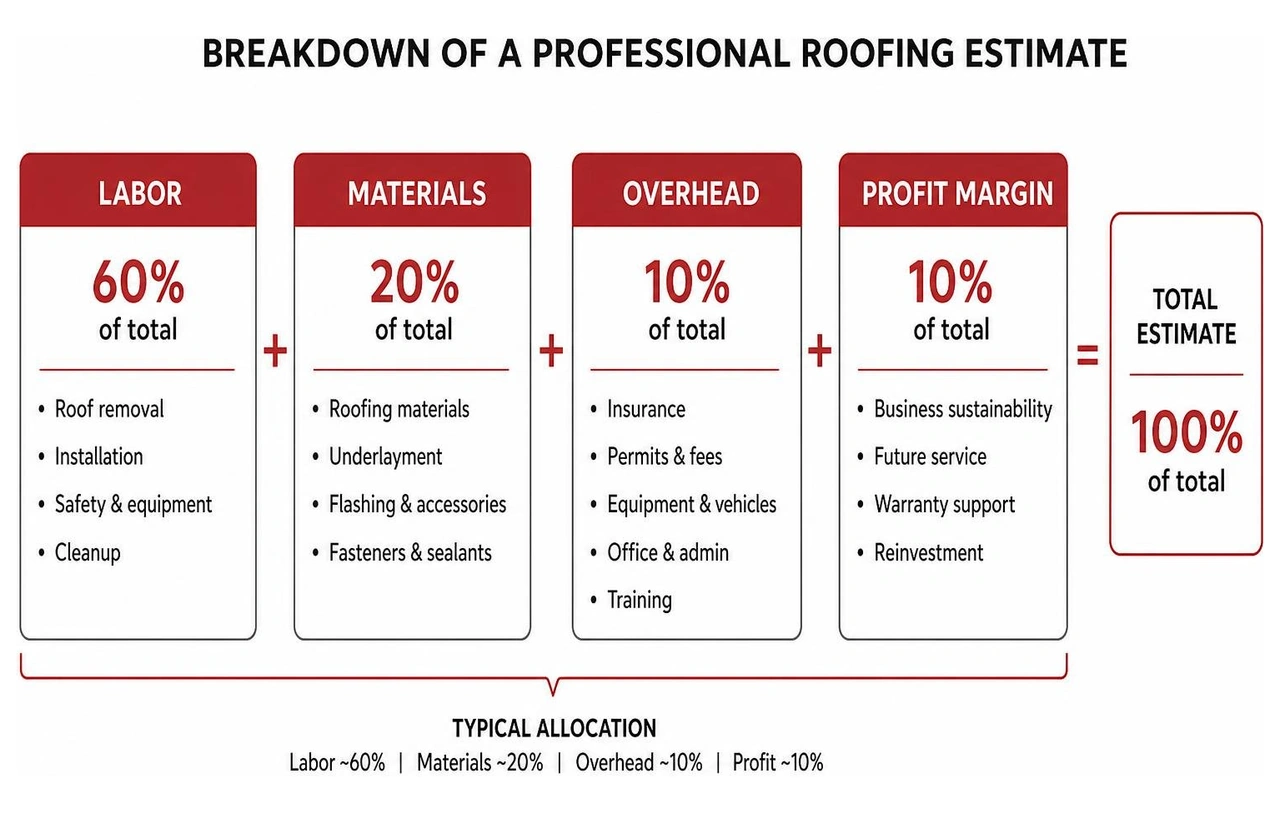
While the average profit margin for roofers has historically been around 6% due to widespread underbidding, a healthy, stable business aims for a 15% to 20% margin. This margin helps ensure the contractor will still be in business years down the road to honor their workmanship warranties if your roof ever develops a leak. Extremely low labor rates on an estimate often signal that the contractor is using untrained crews, skipping safety standards, or operating without proper insurance coverage.
What Contractor Credentials and Warranties Should Appear on Your Estimate?
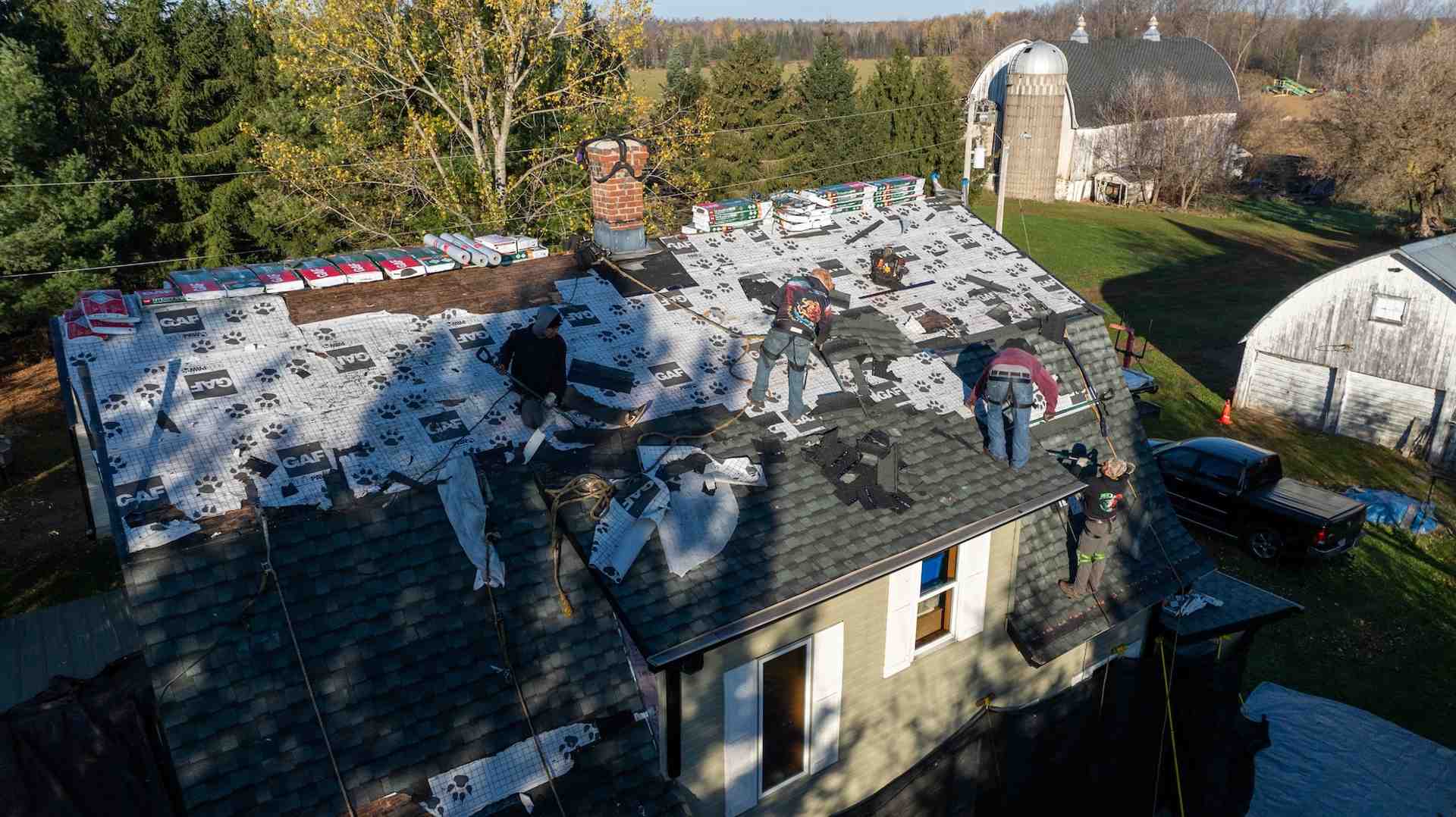
A roofing estimate is also a reflection of a contractor's professionalism and legitimacy. We usually recommend avoiding signing an estimate that does not clearly display the contractor's credentials, physical address, and warranty terms. If these details are missing, it can be very difficult to get help if something goes wrong after the project is complete. You can read more about common credential questions in our guide on Roofing General and Cost Questions.
Verifying Licensing, Insurance, and Local Experience
Your roofing estimate should clearly display the contractor's state license number. In Wisconsin, professional roofers must hold a Dwelling Contractor credential and a Dwelling Contractor Qualifier certification. You can easily verify these numbers on the Wisconsin Department of Safety and Professional Services website.
The estimate should also state that the contractor carries active insurance. We recommend requesting a current certificate of insurance (COI) sent directly from the contractor’s insurance agency showing both general liability insurance and workers' compensation coverage. General liability is designed to help protect your home from accidental damage, while workers' comp is designed to help protect you from financial liability if a worker is injured on your property.
Additionally, look for deep local experience. Eagle River Roofing was founded in late 2023, but we are built on a 50+ year legacy of local experience, with over 9,000 roofs and 8 million feet of gutters installed across the Northwoods. Working with an established local contractor means we understand how to build roofs that stand up to our unique climate. You can find verified, manufacturer-certified local contractors through resources like Best Roofers in St Germain, WI | GAF Roofing Contractors and Best Roofers in Three Lakes, WI | GAF Roofing Contractors.
Understanding the Three-Layer Warranty Stack
A professional roofing estimate should clearly outline your warranty protection. A complete warranty is actually a "stack" made of three distinct layers:
- The Manufacturer's Material Warranty: This covers defects in the shingles themselves. Depending on the product and registration, this often covers 25 to 50 years, or offers lifetime coverage on qualifying architectural shingles.
- The Contractor's Workmanship Warranty: This covers installation errors, such as improperly placed nails or poorly installed flashing. This coverage is provided directly by the contractor and typically ranges from 1 to 10 years, though some established companies offer longer terms.
- The Manufacturer-Backed System Warranty: This is a strong form of protection. It is only available through certified contractors, such as GAF Master Elite installers. This warranty covers both materials and the contractor's workmanship, and it is backed directly by the manufacturer. This means that even if the original contractor goes out of business, the manufacturer can help cover the cost of repairs if an installation error occurs.
How Do Northwoods Weather and Building Codes Affect Your Estimate?
Roofing in northern Wisconsin is very different from roofing in milder climates. Our long, snowy winters, heavy ice loads, spring thaws, and summer lake winds require specialized installation techniques. If a contractor submits an estimate that does not account for these local weather challenges, your roof may be prone to premature failure. You can learn more about regional pricing and weather adjustments in our guide to the Average Roof Replacement Cost Wisconsin.
Ice and Water Shield and Winter-Ready Details
Wisconsin building codes require the installation of an ice and water shield underlayment. This is a self-adhering, waterproof membrane that seals around roofing nails to help prevent water from backing up into your home when ice dams form at the eaves.
While code minimums often only require this shield to extend two feet inside the warm wall line of your home, we recommend installing ice and water shield at least six feet up from the eaves in the Northwoods. This extra protection is designed to help prevent leaks from the massive ice dams common in our region.
Your estimate should also detail the replacement of flashing. Flashing consists of metal pieces installed around chimneys, valleys, dormers, and walls to direct water away from these vulnerable joints. Flashing failures are one of the most common causes of roof leaks, especially during spring thaws. We recommend replacing flashing on every reroof rather than reusing old, worn materials. You can read more about residential roofing specifications in local building guides.
Attic Ventilation and Local Permit Requirements
Proper attic ventilation is critical for a healthy roof. A balanced ventilation system requires intake vents at the soffits (under the eaves) and exhaust vents at the ridge (the peak of the roof). This continuous airflow is designed to help keep your attic cool in the winter, which can help prevent ice dams, and keep it dry in the summer to help prevent moisture buildup and mold. Inadequate ventilation can cause your shingles to overheat and fail prematurely, which can void your manufacturer warranty. Your estimate should include a clear plan for attic ventilation calculations and any necessary vent upgrades.
Additionally, the estimate should address local building permits. Permit rules vary by municipality, but on qualifying projects, a permit is almost always required. We recommend that your contractor pulls the local building permit in their own name. This keeps the legal and financial accountability for code compliance on the licensed professional. Permit fees typically range from $75 to $350 depending on the municipality, and they should be listed as a clear line item on your estimate. For more information on local service standards, you can consult municipal building departments.
What Red Flags and Missing Items Should You Watch Out For?
Knowing what should not be on an estimate, or what is suspiciously missing, is just as important as knowing what should be included. Dishonest or inexperienced contractors often omit critical items from their initial bids to make their prices look lower, only to hit you with surprise upcharges once your roof is torn off. For a complete look at what to expect, see our Estimated Roof Replacement Cost Guide 2026.
Common Omissions That Lead to Mid-Job Price Increases
One of the most common sources of quote overruns is wood decking replacement. Your roof decking is the plywood or OSB sheathing that your shingles are nailed to. If water has leaked through your old roof, some of this wood may be rotted and often needs to be replaced.
Because a contractor cannot see the condition of your decking until the old shingles are removed, a professional estimate should include a clear plan and a per-sheet rate (typically $70 to $120 per sheet) for replacing rotted wood. If an estimate does not mention decking replacement terms, you could face unexpected charges on installation day.
Other common red flags on a roofing estimate include:
- Vague Material Descriptions: Listing generic terms instead of specific brands and product lines.
- Missing Permit Costs: Omitting municipal permit fees or asking you to pull the permit yourself.
- No Flashing Details: Planning to "reuse existing flashing" to save on material costs, which increases leak risks.
- High Upfront Deposits: Demanding more than 25% of the project cost before materials are delivered to your property.
- High-Pressure Sales Tactics: Offering "today only" discounts or pressuring you to sign immediately.
If you encounter a contractor who exhibits these red flags, it is usually best to walk away. You can find more tips on evaluating local contractors through regional consumer protection resources.
How to Compare Three Estimates in 30 Minutes
We usually recommend getting at least three estimates for a roof replacement. However, comparing them can be difficult if they are structured differently. To compare them fairly, we suggest building a simple comparison table:
- Normalize the Scope: Check if all three bids include tear-off, disposal, and dumpster fees.
- Compare Materials: Ensure every contractor is bidding on the same shingle quality (such as GAF architectural shingles) and synthetic underlayment.
- Check the Accessories: Verify that ice and water shield, starter shingles, and new flashing are included in all bids.
- Verify the Warranties: Compare the length and terms of both the workmanship and manufacturer warranties.
- Divide by Squares: Divide the total bid price by the roof area in squares to find the true cost-per-square.
The lowest bid is often the most expensive in the long run because it may omit critical line items or use cheaper materials and labor. Taking the time to normalize these bids helps you identify the best overall value for your home. For more guidance on evaluating your roof's condition before getting quotes, see our Roof Inspection Cost Complete Guide.
How Do Insurance Estimates Differ from Contractor Estimates?
If you are replacing your roof due to storm damage, such as hail or wind, you will likely deal with both an insurance estimate and a contractor estimate. It is important to understand that these two documents are very different.
Insurance adjusters typically write estimates using standardized pricing software like Xactimate. While this software provides a baseline, its regional database often lags behind real-world local costs, especially in remote Northwoods areas where material shipping and labor rates are higher. This means your insurance company's initial estimate may be 15% to 30% lower than a local contractor's actual quote.
Additionally, you must understand your policy type:
- Actual Cash Value (ACV): This pays to replace your roof minus depreciation based on its age. You are responsible for covering the depreciated difference out of pocket.
- Replacement Cost Value (RCV): This is designed to help cover the cost of replacing your roof. The insurance company initially pays the ACV amount, and then releases the remaining "depreciation" funds once the contractor submits the final invoice showing the work is complete.
If your contractor discovers hidden damage during the tear-off process, such as rotted decking or structural issues, they will submit a "supplement" to your insurance company. This is a request for additional funds to cover the necessary repairs that could not be seen during the initial inspection.
We usually recommend sharing your insurance paperwork with your contractor. This is not about giving away pricing power; it is about helping the contractor write an estimate that aligns with the insurance scope of work, helping you get the full amount of coverage you are entitled to under your policy.
Frequently Asked Questions about Roofing Estimates
How long is a roofing estimate typically valid?
Most professional roofing estimates are valid for 30 to 90 days. Material costs can fluctuate due to supply chain changes, and labor rates may adjust seasonally. If you receive an estimate in the spring but wait until autumn to sign, the contractor may need to update the pricing to reflect current material costs.
Should I pull the building permit myself to save money?
No, we recommend that you do not pull the building permit yourself. If a contractor asks you to pull the permit, it often indicates they lack an active state license, do not carry proper insurance, or are trying to shift the legal liability for code compliance onto you. A reputable, licensed contractor will typically pull the permit in their own name.
Is it normal for the final bill to be higher than the estimate?
The final bill should match your estimate unless hidden issues are discovered after the old shingles are torn off. The most common hidden issue is rotted wood decking, which cannot be inspected beforehand. A professional estimate will typically include a clear, written rate for these repairs so you can know what to expect.
Conclusion
A complete, professional roofing estimate is a strong tool for helping ensure a successful, stress-free roof replacement. By taking the time to read your estimate line-by-line, verifying contractor credentials, and ensuring all critical components, like ice and water shield, flashing, and ventilation, are included, you can protect your home and your wallet from unexpected costs.
At Eagle River Roofing, we are committed to providing clear, written quotes, tidy job sites, and durable installations designed to withstand our harsh Northwoods winters. We believe in educating homeowners so you can make the best decision for your property with absolutely no pressure.
If you are ready to plan your next roofing project, we invite you to contact us today for a transparent, detailed consultation. We are proud to serve Eagle River, Rhinelander, Minocqua, St. Germain, Three Lakes, and nearby Northwoods communities, and we look forward to helping you protect your home for years to come.
This article is for general informational purposes only and may not reflect the most current products, pricing, codes, availability, weather-related recommendations, or roofing requirements for your specific property. Every home and roof is different, especially in the Northwoods. Please contact Eagle River Roofing directly for the latest information and guidance for your project.

