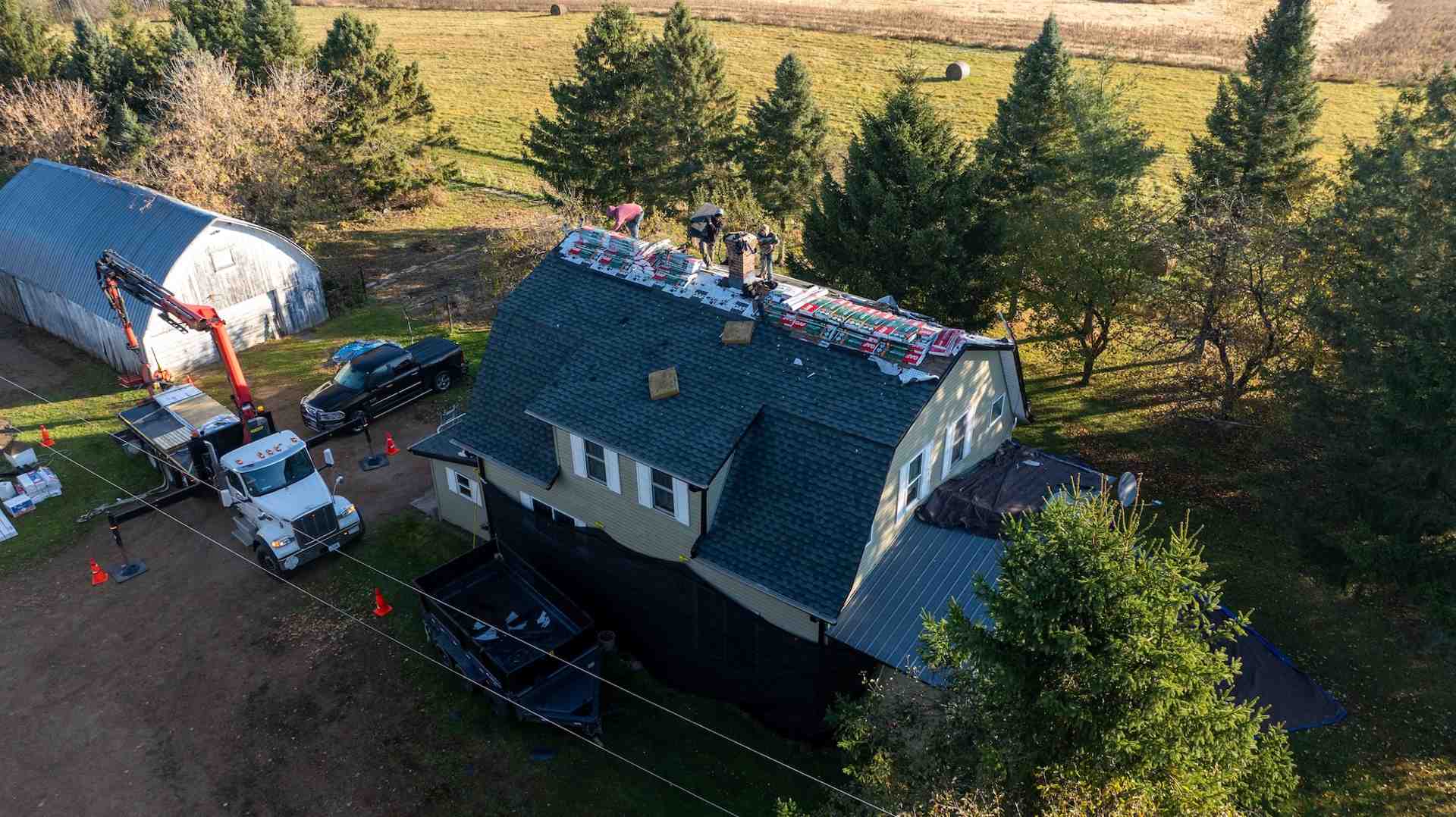
Why Choosing the Right Contractor Matters
A roof replacement is often one of the largest single investments most homeowners make, with costs varying depending on materials, roof size, and regional labor rates. Because this is such a significant financial decision, choosing the right professional to handle the job is critical. Your roof is your home’s primary defense against the elements, and a mistake during the installation process can have long-lasting consequences.
According to real estate appraisal data, a poorly installed roof can reduce your home’s resale value by 10 to 15 percent. If you plan to sell your home in the future, a home inspector will easily spot improper nailing patterns, poor flashing, or inadequate ventilation. This can lead to difficult negotiations or require you to pay for repairs before closing.
Even more concerning is how improper installation can void your manufacturer warranty. Many high-quality roofing materials come with warranties lasting decades, but these agreements typically require the shingles to be installed according to strict manufacturer specifications. If a contractor cuts corners, a 50-year shingle system might fail at year 8 with zero warranty coverage. This leaves you responsible for the entire cost of another replacement.
Rushing into a contract with the first person who knocks on your door often leads to stressful results. Taking your time to research, verify credentials, and ask the right questions can help ensure that your investment is protected. If you are looking for guidance on finding a contractor with experience in our unique climate, you can read our guide on Who Is the Best Roof Replacement Contractor Near Rhinelander WI for Snow Ice Dams and Northwoods Weather.
The Real Cost of the Cheapest Bid
It is natural to want to save money, but choosing a contractor based solely on the lowest price can be a costly mistake. The National Roofing Contractors Association reports that the majority of roofing complaints filed with state licensing boards involve contractors who were selected primarily because they offered the lowest bid.
A quote that is significantly lower than other estimates often indicates that the contractor is cutting corners. They may be using low-grade materials, employing untrained labor, or operating without proper insurance. In some cases, a low-ball bid does not include essential components like ice and water shields, new flashing, or proper ventilation. The contractor may add these items as extra charges once the project is already underway.
Choosing long-term value and strong warranty protection over the lowest price can help save you money over time. A properly installed, high-quality roof will require fewer repairs, perform better during harsh winters, and last years longer than a cheap, poorly installed alternative.
Credentials and Qualifications to Verify
When you begin evaluating contractors, the first step is to verify their basic business credentials. A legitimate roofing contractor should have no trouble providing the following information:
- A permanent place of business: Ask for their physical address. A contractor operating out of a post office box or a temporary rental space may be difficult to find if you experience issues with your roof down the road.
- A tax ID and business license: This proves they are registered to operate a business in your area.
- A dedicated phone number: You should be able to reach them easily during normal business hours.
You should also request copies of their liability insurance and workers' compensation certificates. General liability insurance protects your property in case of accidental damage, such as a heavy bundle of shingles damaging your siding or landscaping. Workers' compensation insurance protects you from being held liable if a worker is injured while on your property.
We highly recommend calling the insurance carrier directly to verify that the coverage remains active throughout your project. Some unreliable contractors will purchase a policy to obtain a certificate and then cancel it to save money on premiums. Working with an uninsured contractor may make you legally and financially responsible for property damage or worker injuries that occur on your property.
To learn more about why these credentials are so important, you can read our detailed post on hiring a Licensed Roofing Contractor. You can also review the professional guidelines provided by the Selecting a Contractor - National Roofing Contractors Association .
Licensing Differences Across States
Licensing requirements for roofing contractors vary significantly from state to state. For example, Texas does not require a license or registration for roofers and general contractors, and they are permitted to operate a business without insurance or even the necessary skills. This makes it incredibly easy for unqualified individuals to set up shop after a major storm.
In contrast, working with a credentialed professional in Wisconsin is essential for meeting local building codes. Wisconsin requires dwelling contractor credentials and certifications for professionals performing construction work on residential properties. Choosing a contractor who holds these active state credentials ensures they have met the state's safety and business requirements, giving you an extra layer of protection.
Why Local Experience and Certifications Matter
Local experience is incredibly important when choosing a roofer. A contractor from outside our region may not understand the unique challenges that our climate presents. Local contractors are often more familiar with regional weather patterns, local building codes, permit requirements, and insurance processes.
In the Northwoods, our roofs must withstand heavy snow loads, severe ice dams, rapid spring thaws, falling pine needles, and strong lake winds. A local contractor knows how to design a roofing system that can handle these specific conditions.
When it comes to residential shingle installations, we only use GAF shingles because of their exceptional wind resistance and durability in cold climates. We are proud to hold GAF Master Elite status, a credential held by only 2 percent of roofing contractors nationwide. This certification is not easy to obtain; it requires a contractor to be fully licensed, adequately insured, have a proven reputation in their community, and commit to ongoing professional training.
Working with a GAF Master Elite contractor allows you to access enhanced, integrated warranty options on qualifying projects, which can provide decades of worry-free protection. For more information on finding reliable local contractors, you can read about Who Are the Most Reliable Contractors for a New Roof Near Me in the Eagle River Area That Specialize in Durable Materials for Harsh Winters.
You can also search for certified GAF contractors in our region by checking the official directories, such as the Best Roofers in Woodruff, WI | GAF Roofing Contractors , the Best Roofers in St Germain, WI | GAF Roofing Contractors , and the Best Roofers in Three Lakes, WI | GAF Roofing Contractors .
While we are proud of our credentials, we also want to acknowledge other local options in our broader community. Companies like Superior Roofing Company, Lakeland Roofing, and Danbee Roofing also serve our region. We encourage homeowners to research multiple local options to find the right fit for their needs.
Understanding Northwoods Roofing Materials
To protect your home from our harsh winters, you need to understand how different roofing materials and systems work:
- Standing Seam Metal Roofing: This system features metal panels joined by raised, interlocking seams. The fasteners are hidden, which helps reduce the risk of leaks caused by expanding and contracting metal. Standing seam metal is designed to help shed heavy snow quickly, reducing the weight on your home's structure. While metal roofing is a highly durable option, we position it honestly as a premium choice that may not fit every homeowner's budget.
- GAF Asphalt Shingles: For residential shingle roofs, we rely on GAF's advanced shingle technology. These shingles are designed to resist high winds and heavy snow, providing a beautiful and cost-effective solution for Northwoods homes.
- Proper Ventilation: Your attic needs a balanced system of intake vents (usually under the eaves) and exhaust vents (along the ridge). This allows warm, moist air to escape, keeping your attic cool in the winter. Proper ventilation is critical because it helps keep the attic from warming up and melting the snow on your roof, which is a primary cause of ice dams.
- Flashing: These are metal pieces installed around chimneys, vents, and roof valleys to redirect water away from sensitive areas.
- Ice and Water Shield: This is a self-adhering waterproof membrane installed under the shingles along the eaves, valleys, and penetrations. It provides a secondary barrier against water that may back up under the shingles due to ice dams.
At Eagle River Roofing, our team brings a 50-plus year legacy of local experience to our work, operating under local ownership founded in late 2023. Our team has installed over 9,000 roofs and 8 million feet of gutters across our region. We serve Eagle River, Rhinelander, Minocqua, St. Germain, Three Lakes, and nearby Northwoods communities. We source high-quality materials locally, often working with trusted suppliers like Arbor Vitae - Pukall Lumber Company | Northern WI to ensure your project is built to last.
How to Compare Roofing Bids Fairly
We recommend obtaining detailed written estimates from at least three reputable providers. This allows you to see how different contractors approach your project and helps you identify any unusually high or low pricing.
When you receive your estimates, it is important to compare them on an "apples to apples" basis. A simple bottom-line number does not tell the whole story. You should ensure each estimate specifies the exact shingle type, brand, color, and waste allowance. Shingle installation projects usually include a waste allowance of around 10 percent to account for cutting shingles to fit valleys and hips.
You should also confirm that the contractor plans to perform a complete tear-off down to the bare wood. We typically perform a complete tear-off on our projects because removing the old shingles is often necessary to inspect the decking for rot or damage. This allows us to identify and repair any underlying issues before installing the new roof.
For advice on finding a contractor who offers transparent pricing without high-pressure sales tactics, you can read about What Roofing Company Near Rhinelander Gives Clear Quotes and Doesn't Pressure Homeowners.
Below is a comparison table showing the difference between a low-ball bid and a comprehensive professional estimate:
| Project Element | Low-Ball Bid | Comprehensive Professional Estimate |
|---|---|---|
| Material Details | Vague descriptions (e.g., "30-year shingles") | Specific brand (GAF), shingle line, and color |
| Tear-Off | May not include full tear-off or decking inspection | Explicitly includes full tear-off down to bare wood |
| Underlayment | Standard 15-pound organic felt | High-quality synthetic underlayment and ice/water shield |
| Ventilation | Reuses old vents or ignores ventilation needs | Detailed plan for intake and exhaust ventilation |
| Cleanup | Vague cleanup terms or left to the homeowner | Daily cleanup, magnetic nail sweep, and debris disposal included |
| Warranties | Basic manufacturer material warranty only | Integrated manufacturer and workmanship warranties |
Key Elements Every Estimate Must Include
A professional roofing estimate should be a detailed, multi-page document. It must include:
- Complete company information: The contractor's full name, physical address, phone number, and email.
- An itemized cost breakdown: Clear costs for materials, labor, permits, and disposal fees.
- A full statement of work: A detailed description of the work to be performed, including tear-off, decking replacement rules, and underlayment installation.
- A detailed material list: The specific brands, types, and quantities of shingles, underlayment, flashing, and ventilation products.
- Payment terms: Clear details on the deposit amount, milestone payments, and accepted payment methods.
- An estimated work schedule: Start and completion dates, keeping in mind that project timelines can vary depending on the system and weather conditions.
- Warranty terms: Explicit details on both the manufacturer material warranty and the contractor's workmanship warranty.
Red Flags and Scams to Avoid
Unfortunately, the roofing industry has its share of bad actors. Out-of-town "storm chasers" often travel to areas that have recently experienced severe weather, such as hailstorms or high winds. They monitor weather radar, knock on doors, and offer quick, cheap repairs or complete roof replacements.
These storm chasers often lack proper insurance, are unfamiliar with local building codes, and use transient crews. Once the storm season ends, they disappear, leaving homeowners with no way to resolve warranty claims if their roof begins to leak.
Door-to-door solicitation and high-pressure sales tactics are major warning signs. If a contractor pressures you to sign a contract immediately, we recommend taking a step back. Take the time to do your research before contractually obligating yourself.
While some states have laws that allow you a short window to cancel a contract, relying on this can be risky. For example, in Texas you only have three days to cancel a contract. It is far safer to avoid signing anything until you are completely comfortable with the contractor and the terms of the agreement.
Another common scam involves the promise of a "free roof." Avoid any contractor who offers to waive your insurance deductible or build it into the estimate. This is illegal and constitutes insurance fraud. A reputable local contractor will not offer to waive your deductible, as they must comply with state and federal laws.
To learn more about how to spot these warning signs and hire safely, you can read our Roofing Contractors Complete Guide 2026.
Payment Red Flags
How a contractor handles payments can tell you a lot about their professionalism. You should avoid any contractor who demands payment in full upfront. If they collect all your money before driving a single nail, you lose all your leverage, and there is a risk they may never return to complete the work.
A reasonable deposit of 10 to 30 percent is standard in the roofing industry to secure your place on the schedule and cover initial material costs. However, down payments of up to 50 percent may occur depending on the specific system, custom materials, or the scope of the project.
We recommend using milestone-based payments. For example, you might pay a portion of the cost upon the delivery of materials, another portion after the tear-off is complete, and the final payment only after the work is finished to your satisfaction and a final walkthrough has been completed.
Questions to Ask Before Signing
Before you sign a contract, you should have a detailed conversation with your chosen contractor. Asking every candidate the same set of questions helps you make an accurate comparison of their professionalism and expertise.
Pay close attention to how they respond. A contractor's responsiveness, patience, and communication style during the initial consultation are strong indicators of how they will handle your project. If they are slow to return calls or brush off your questions now, they are likely to be difficult to work with once the project begins.
If you are ready to start this process and would like to speak with our team, you can request a Free Roof Estimate.
Essential Questions to Ask
Here are the key questions you should ask any roofing contractor before signing an agreement:
- Do you use your own crew or subcontractors? Some companies sell the job and then hire an independent crew to perform the work. Knowing who will actually be on your roof is important for quality control and safety.
- How long have you been operating in this area? A contractor with deep roots in the community is far more likely to be around to honor their workmanship warranty if you experience issues in the future.
- How will you protect my lawn, gutters, and landscaping during the project? Roof replacement is a messy process. A professional crew will use tarps and plywood to protect your plants, siding, and windows from falling debris.
- What is your process for daily cleanup and debris removal, and do you use magnetic rollers to find stray nails? Thousands of nails will be removed during a tear-off. A diligent crew will perform a daily cleanup and use magnetic rollers to sweep your lawn and driveway, protecting your family, pets, and car tires from stray nails.
- How will we communicate during the project, and who will be the on-site crew leader? You should have a clear point of contact on-site who can answer your questions and provide daily updates on the project's progress.
Protecting Yourself During and After the Project
Once you have selected a contractor, you should protect yourself by insisting on a detailed written contract. The contract should outline the exact scope of work, payment terms, material specifications, and project timelines.
Never rely on verbal promises. If the contractor promises to replace a rusted chimney flashing or clean your gutters as part of the job, ensure those details are added to the written contract before you sign it.
You should also confirm who will secure the required building permits. Permit rules vary by municipality, and failing to secure the proper permits can result in fines, project delays, or issues with your homeowner's insurance. A reputable contractor will typically handle the permit process for you and can include those costs in the estimate, depending on the municipality.
Finally, we recommend requesting lien waivers with each payment. A lien waiver is a document signed by the contractor, subcontractors, and material suppliers stating they have received payment for their work or materials. This helps protect you from subcontractor claims if the general contractor fails to pay their crew or suppliers.
If you are looking for a trusted local company with a proven reputation in our area, you can read about Who Is the Best Roofing Company in Rhinelander WI.
Post-Installation Steps
After the roof is installed, there are a few important steps you should take before making your final payment:
- Perform a final walkthrough: Walk around your property with the contractor. Inspect the roof from the ground to ensure the shingles look straight and the flashing is neat. Check your yard, driveway, and landscaping to ensure they have been cleaned of all debris and nails.
- Check the attic: After the first major rainstorm following your installation, go up into your attic. Look for any signs of moisture, leaks, or condensation. You should also verify that your attic vents are clear and not blocked by insulation.
- Perform routine maintenance: To extend the life of your new roof, you should keep your gutters clear of pine needles, leaves, and debris. This helps prevent water from backing up under the shingles and protects your home's foundation.
Common Questions About Choosing a Roofer
How much does a typical roof replacement cost in the Northwoods?
Roof replacement costs vary widely depending on the materials you choose, the size of your roof, and the pitch (steepness) of your roof. In our region, residential roof replacement costs vary depending on the size of the home and the materials selected.
Because every home is unique, we recommend getting a clear, written quote tailored to your specific home during the estimate. This can help ensure you know what to expect and can budget accordingly.
What is the difference between a workmanship warranty and a manufacturer warranty?
A manufacturer warranty covers defects in the roofing materials themselves, such as shingles that blister, crack, or lose their granules prematurely. These warranties often last 20 to 50 years depending on the product and registration. However, they do not cover installation errors.
A workmanship warranty is provided by the contractor and covers installation errors, such as improperly installed flashing or incorrect nailing patterns. These warranties ideally last 5 to 10 years or more.
Choosing a GAF Master Elite contractor can allow you to access enhanced, integrated warranty options on qualifying projects. These special warranties cover both material defects and workmanship errors, backed directly by the manufacturer for ultimate peace of mind.
How long does a typical roof replacement take?
Many residential roof replacements can take 2 to 3 days once work begins, depending on the system, the size of your roof, and weather conditions. However, complex roofs with steep pitches or custom metal installations can take longer. Project timelines should be confirmed during the estimate and documented in your written contract.
How Eagle River Roofing Can Help
Choosing a roofing contractor is a major decision, but it does not have to be a stressful one. By verifying credentials, comparing bids fairly, and asking the right questions, you can find a professional who will protect your home and your budget.
At Eagle River Roofing, we provide a low-stress experience built on clear written quotes, tidy job sites, and clear communication. We serve homeowners in Eagle River, Rhinelander, Minocqua, St. Germain, Three Lakes, and nearby Northwoods communities.
Whether you need a complete roof replacement, a minor repair, or new gutters, our team is here to help. Our team brings a 50-plus year legacy of local experience to our work, operating under local ownership founded in late 2023. With over 9,000 roofs and 8 million feet of gutters installed, we understand how to build a roof that can handle Northwoods winters.
If you are ready to take the next step, you can Get an Instant Estimate or Contact Eagle River Roofing today to schedule a consultation. We look forward to working with you to protect your home.
For more local resources and guides, explore our related articles:
This article is for general informational purposes only and may not reflect the most current products, pricing, codes, availability, weather-related recommendations, or roofing requirements for your specific property. Every home and roof is different, especially in the Northwoods. Please contact Eagle River Roofing directly for the latest information and guidance for your project.

