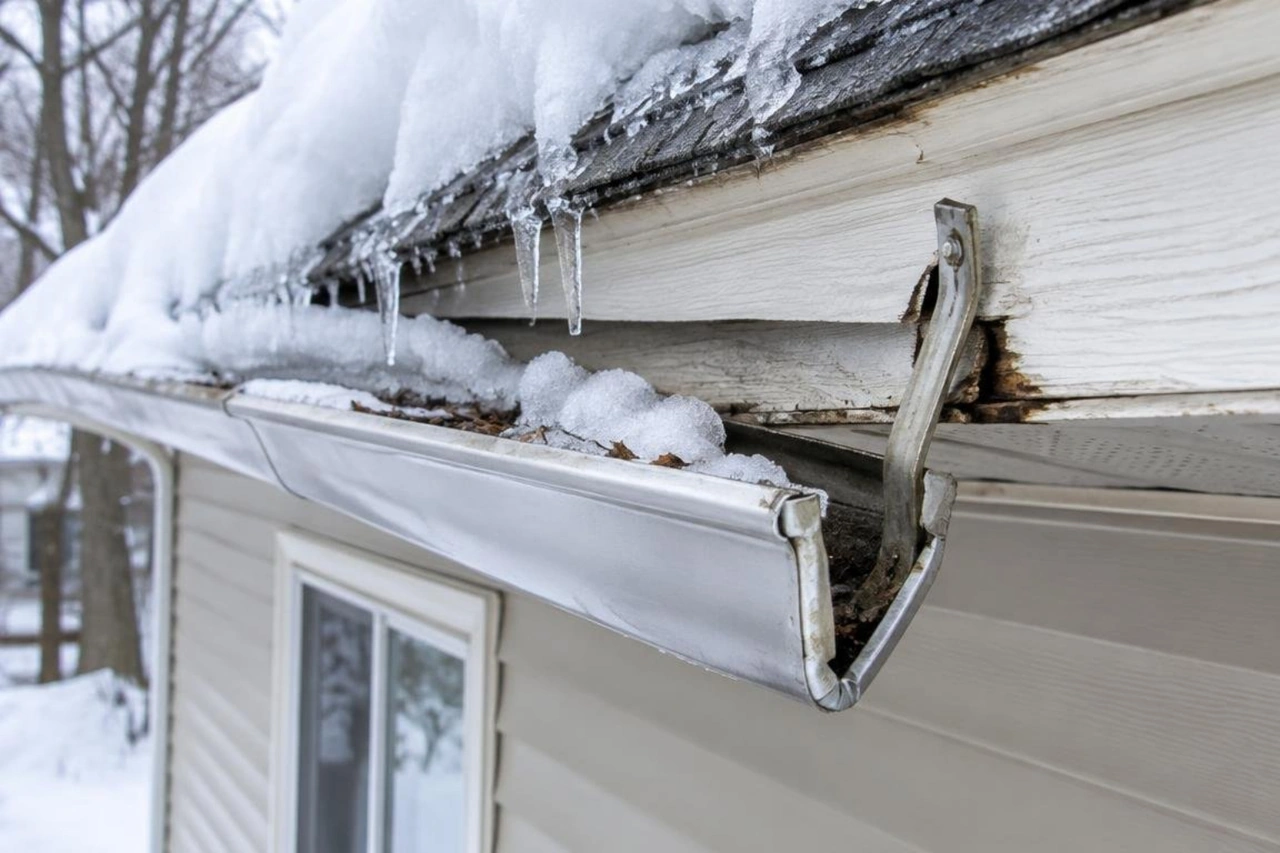
Why Do Snow and Ice Cause Severe Gutter Damage?
Protecting gutters from sliding snow starts with a few practical steps: hidden hangers spaced closer together than a standard install, heavy-gauge seamless gutters, snow guards on metal or steep roofs so big sheets of snow can't slide off all at once, and a fall cleanup before freeze-up. These steps help your gutters handle the heavy snow, wind, and freeze-thaw cycles we get across the Northwoods.
When snow gathers on your roof, it rarely sits as light, powdery fluff for long. As daytime temperatures shift or minor heat escapes into the attic, that snow begins to settle, transforming into dense, waterlogged slush and solid ice.
Here is what happens behind the scenes during the winter months:
- Fastener Failure and Trough Bending: The sheer physical weight of accumulating snow pulls brackets and hangers loose from the fascia. Over time, heavy slush bends gutter troughs downward, causing them to sag and lose their intended slope.
- Freeze-Thaw Expansion: When standing meltwater gets trapped in a gutter trough, it expands as it freezes overnight. This expansion exerts strong outward force against the gutter walls and joints, which can split open caulked seams in sectional systems.
- Rot and Foundation Risks: Once gutters pull away or overflow with ice, future meltwater cannot reach the downspouts. Instead, it drips down behind the trough, soaking into the fascia boards and soffits. During the spring thaw, this uncontrolled overflow pools near your foundation walls instead of draining safely away.
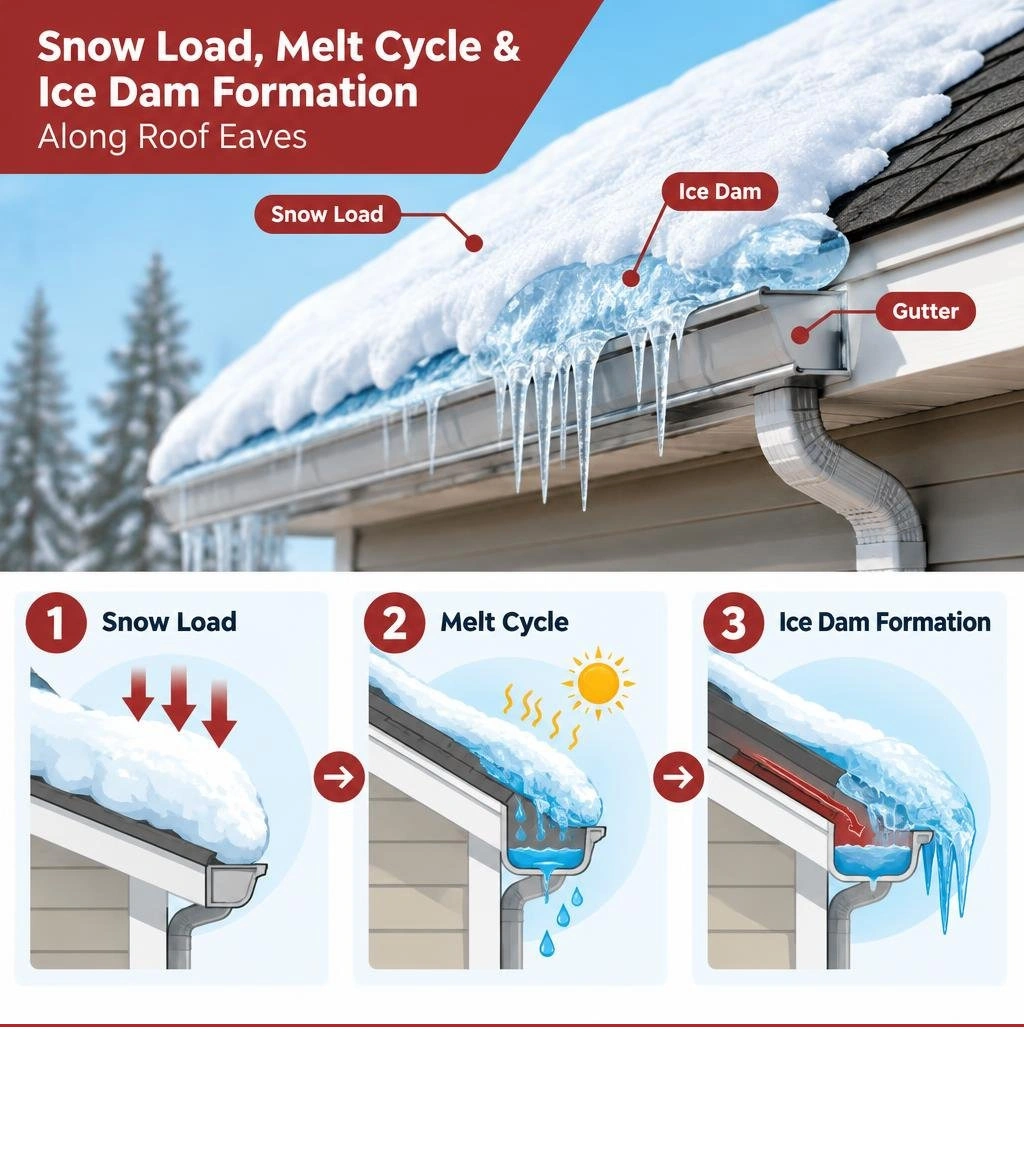
Understanding these forces helps you make practical choices about how to reinforce your eaves before the coldest weather settles in.
What Are Ice Dams and How Do They Impact Gutters?
An ice dam is a ridge of ice that forms along the edge of a roof, blocking melting snow from draining off into the gutters or down to the ground.
While many people assume gutters cause ice dams, the root cause usually starts inside the home. When warm air escapes from the living spaces into an under-insulated attic, it warms the upper sections of the roof deck. The snow on top of that warm deck begins to melt, and the runoff trickles down toward the eaves.
Because the eaves extend past the exterior walls of the house, they remain at the outdoor freezing temperature. When that liquid runoff hits the cold overhang, it refreezes into a thick band of ice.
As the cycle continues, pooling water gets trapped behind the ice barrier. That trapped water can back up under the shingles, soaking the underlying roof decking and insulation. While gutters do not cause the initial thermal problem, they provide a cold metal channel where ice can quickly build up, making the dam thicker and heavier.
If you notice ice ridges appearing in identical spots every winter, there is usually an underlying reason. Learning why ice dams form repeatedly in the same spot can help you locate hidden air leaks or insulation gaps around attic bypasses, chimney chases, or recessed lights.
Proper attic insulation combined with balanced soffit and ridge ventilation helps keep your roof deck at a more uniform, cold temperature, which significantly reduces the cycle of melting and refreezing.
Which Gutter Materials and Profiles Hold Up in Heavy Snow?
Choosing the right gutter material and profile makes a major difference in how your eaves handle Northwoods winters. Thin or brittle materials often fail under the weight of wet snow and sliding ice.
Vinyl (PVC) gutters, for instance, tend to become brittle in sub-zero temperatures. Under heavy snow loads or frost heave, vinyl troughs easily crack or snap, and they may need replacing sooner in cold climates.
For reliable winter performance, we usually recommend heavier-duty metal options:
- Heavy-Gauge Aluminum: Thick aluminum provides an excellent balance of strength, rust resistance, and cost. It flexes slightly under cold temperatures without cracking and holds up well against winter weight.
- Galvalume or Coated Steel: Steel offers exceptional load-bearing strength, making it popular for buildings with large roof surfaces. However, it requires a protective coating to guard against rust over time.
- Copper: Copper is extremely durable, naturally resistant to corrosion, and holds its shape under heavy loads, though it carries a substantially higher material cost.
Hardware selection is just as critical as the metal itself. Older installations often relied on spikes and ferrules, which easily back out of the wood when ice expands. Modern installations should use heavy-duty hidden hangers secured with corrosion-resistant screws directly into the rafter tails or solid fascia.
In heavy snow zones, spacing these hangers closer together than a standard install helps spread the snow load evenly and keeps troughs from pulling away.
| Gutter Material | Snow Load Capacity | Freeze-Thaw Durability | Relative Cost |
|---|---|---|---|
| Vinyl (PVC) | Low | Low (becomes brittle below freezing) | Budget |
| Standard Aluminum | Moderate | Moderate (can bend under heavy slush) | Moderate |
| Heavy-Gauge Aluminum | High | High (resists warping and rust) | Moderate |
| Galvalume or Coated Steel | Very High | High (strong, needs rust protection) | Moderate to High |
| Copper | Very High | Excellent (durable against heavy pack) | Premium |
Gutter sizing also plays a practical role during early spring warm-ups. Reviewing the difference between 5-inch and 6-inch gutters in Wisconsin shows that moving to a 6-inch trough significantly increases water-carrying capacity, helping handle sudden surges of slush and meltwater without spilling over the sides.
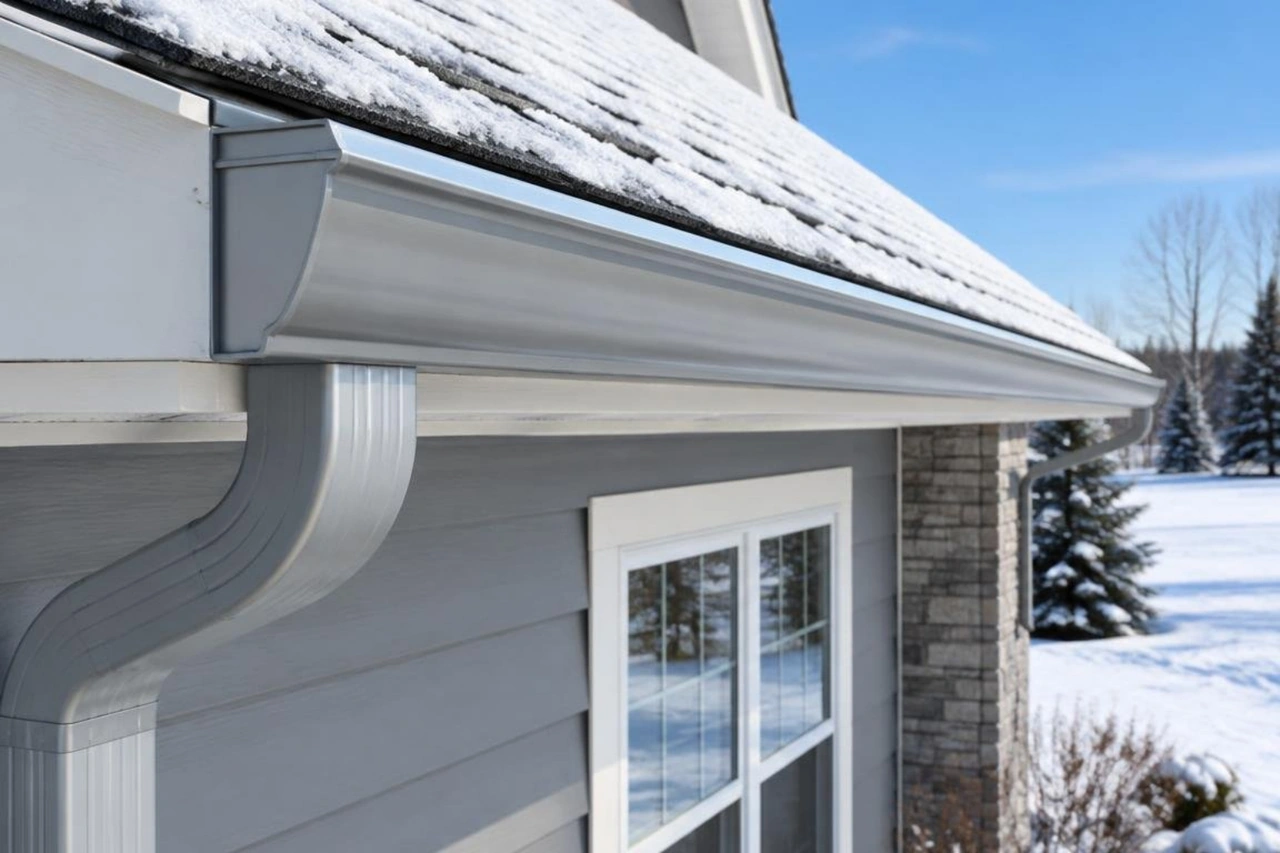
How Do Seamless Gutters Help With Freeze-Thaw Separation?
Sectional gutters come in pre-cut lengths joined together with seams, slip joints, and sealant. Every seam represents a structural weak point. As water inside the gutter repeatedly freezes and thaws, the expanding ice works against the sealant, eventually causing the joints to separate and leak.
Custom-extruded seamless gutters are formed on-site to the exact measurements of your roofline. Because they feature continuous metal runs from corner to corner, they eliminate intermediate seams along the eaves.
When pitched with a slight, steady slope toward the outlets, seamless systems allow meltwater to drain smoothly without getting caught in joint ridges.
Why Are Oversized Downspouts Useful in Winter?
Standard residential downspouts are fairly narrow and can easily become clogged by small chunks of ice, pine needles, or frozen slush. Once a downspout freezes solid, water backs up into the gutter trough and quickly freezes into a solid block.
Upgrading to oversized downspouts provides a significantly larger opening for slush and sudden runoff. This extra capacity is especially useful for steep cabin roofs in snow country, where large volumes of snow melt rapidly during sunny winter afternoons.
Whenever site conditions allow, extending downspout outlets several feet away from the foundation helps direct heavy spring runoff safely away from your basement or crawlspace walls.
Are Gutter Guards Effective in Winter?
Homeowners often ask whether add-on accessories can help protect their eaves from cold-weather damage. The short answer is that while these systems cannot fix underlying attic insulation problems on their own, they can serve as helpful tools to keep drainage paths open.
Not every gutter guard behaves the same way in winter:
- Micro-Mesh Gutter Guards: Fine stainless steel mesh guards allow water to filter into the trough while keeping out dried leaves, twigs, and pine needles. When the trough stays free of organic debris in late autumn, water can flow freely rather than forming soggy dams that freeze into solid ice plugs.
- Solid Curved Covers and Plastic Screens: Curved helmet-style covers or basic plastic perforated screens can sometimes worsen winter issues. Heavy snow can sit on top of solid covers, and meltwater may freeze directly across the curved nose, creating hanging icicles that block water from ever entering the gutter.
Can Gutter Guards Handle Snowpack?
Quality micro-mesh gutter guards are built to hold up under snow without collapsing into the trough. We install Alu-Rex gutter guards because they fit the K-style, half-round, and box gutters common on Northwoods homes.
However, gutter guards must be installed under the proper pitch to encourage snow sheets to slide off rather than settle permanently on top. It is also important to note that micro-mesh does not block every single pine needle or prevent ice from freezing over the top screen during severe cold snaps. Learn more about how pine needles and debris affect gutter guards before deciding on a guard system.
When Are Roof Snow Guards Recommended?
On metal roofing systems or steep shingle roofs, accumulated snow often slides off in large, sudden sheets, a process known as roof avalanching. When a heavy sheet of hard-packed snow slides down the slick metal surface, its momentum can strike the back of the gutter trough, bending the metal or tearing the hangers clean out of the fascia.
Installing snow guards (individual brackets or continuous snow rails) along the lower section of your roof helps hold the snowpack in place. This allows the snow to melt gradually or shed in small, manageable pieces, protecting both your gutter channels and the walkways below from sudden impact damage.
What Seasonal Maintenance Helps Protect Gutters from Snow Damage?
Consistent maintenance before the first hard freeze is one of the most reliable ways to protect your eaves. Gutters should be cleaned thoroughly twice a year: once in late spring to remove seed pods and blossoms, and again in late fall once all deciduous trees have dropped their leaves.
Taking time for getting your roof and gutters ready for winter ensures your system is structurally sound before heavy snow arrives.
Use this checklist during your late-autumn inspection:
- Clear Organic Debris: Remove all leaves, pine needles, and silt from the troughs and downspout strainers.
- Flush the Downspouts: Run a garden hose through the downspouts to ensure water drains freely without hidden clogs.
- Check Hanger Tightness: Inspect hidden hangers to ensure every screw is firmly seated into solid wood. Replace loose fasteners with longer, heavy-gauge exterior screws.
- Verify Slope: Make sure the troughs keep a slight, steady slope toward the downspouts so water never sits stagnant.
- Seal Corners and End Caps: Check all end caps, miters, and outlet joints for deteriorating sealant and reapply a high-grade gutter sealant if needed.
During heavy winter storms, you can also use an extendable roof rake from the ground to pull fresh snow off the lower edge of your roof. Using proper techniques for clearing snow off your roof with a roof rake allows you to reduce eave weight safely without climbing ladders in icy conditions or damaging shingle granules.
Frequently Asked Questions About Winter Gutter Protection
Can gutter guards prevent ice dams?
No, gutter guards cannot prevent ice dams on their own. Ice dams are caused by heat escaping from the living space into the attic, which warms the roof deck and melts snow that refreezes at the cold eaves.
While quality micro-mesh guards help keep debris out of the trough so meltwater has a clear drainage path, they do not resolve the attic insulation, air leakage, or ventilation issues that cause ice dams to form.
How much does it cost to repair or replace winter-damaged gutters?
Repair and replacement costs depend on the total footage, roof height, chosen profile, and material. If ice accumulation or heavy snow loads pull your gutters down, reviewing a professional gutter repair vs replacement estimate can help you decide whether tightening hangers and replacing damaged sections is sufficient or if a full seamless upgrade is the more practical long-term choice.
Is it safe to chip ice out of frozen gutters?
No, you should avoid using hammers, hatchets, screwdrivers, or shovels to chip ice out of gutters. Striking frozen metal can easily puncture the trough, crack seams, loosen mounting brackets, or damage the lower edge of your shingles.
If ice buildup creates an immediate hazard, safer alternatives include filling a nylon stocking with calcium chloride ice melt and laying it across the dam to create a drainage channel, or hiring a professional roofing contractor to remove the ice safely using low-pressure steam equipment.
How Does Eagle River Roofing Help Fortify Your Eaves?
Protecting your home from harsh Northwoods winters requires durable materials, proper engineering, and experienced craftsmanship. Eagle River Roofing is locally owned and was founded in late 2023, built on a 50+ year legacy of local roofing experience. Our ownership team has installed more than 9,000 roofs and over 8 million feet of gutters.
As a GAF Master Elite contractor, we specialize in complete residential roofing systems, durable standing seam metal roofs, heavy-gauge seamless aluminum gutters, and oversized downspouts. We install GAF shingle systems and seamless gutters in aluminum, copper, and galvalume, with hanger spacing planned for snow load.
Whether you need a post-winter repair or want to upgrade your eaves with custom-extruded seamless gutters before the next storm, we provide clear written quotes, respectful communication, and tidy job sites from start to finish.
Ready to get your eaves ready for winter? Get a free, no-pressure estimate: call (715) 892-8328 Monday to Friday, 8 to 5, explore our durable seamless gutters, or start with an instant roof estimate.
This article is for general informational purposes only and may not reflect the most current products, pricing, codes, availability, weather-related recommendations, or roofing requirements for your specific property. Every home and roof is different, especially in the Northwoods. Please contact Eagle River Roofing directly for the latest information and guidance for your project.

