Should You Rake Snow Off Your Northwoods Roof?
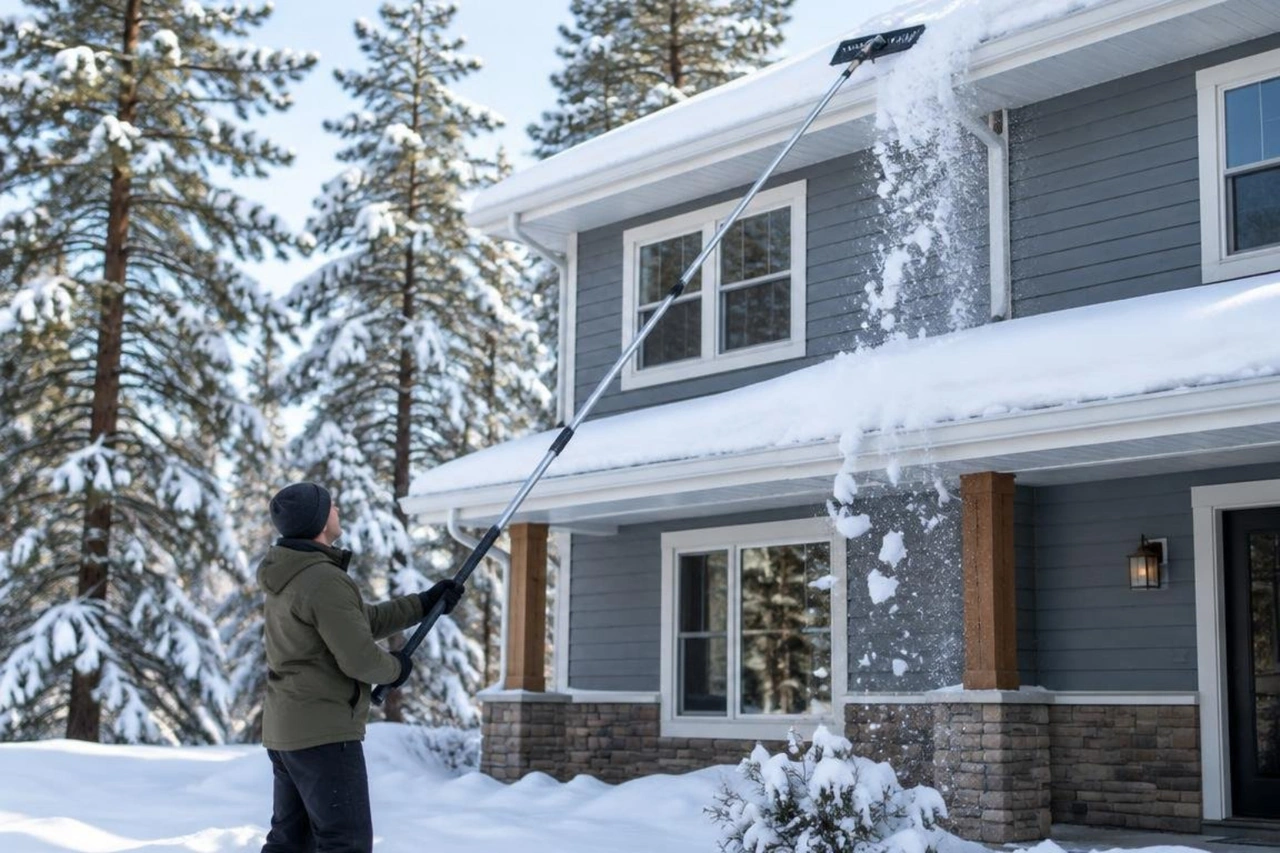
The direct answer is yes, raking snow off your roof can be very beneficial, but only when conditions call for it. In northern Wisconsin communities like Eagle River, Minocqua, and Rhinelander, clearing the lower 3 to 4 feet of snow along the eaves helps reduce ice dam risks and relieves excess structural weight during heavy winter storms.
However, you do not need to pull out the roof rake after every single snowfall. A well-built, properly insulated, and properly ventilated home is designed to function as a "cold roof." On a cold roof, the attic temperature stays close to the outdoor temperature. This keeps the bottom layer of snow from melting prematurely, allowing routine snow accumulation to sit safely without causing trouble.
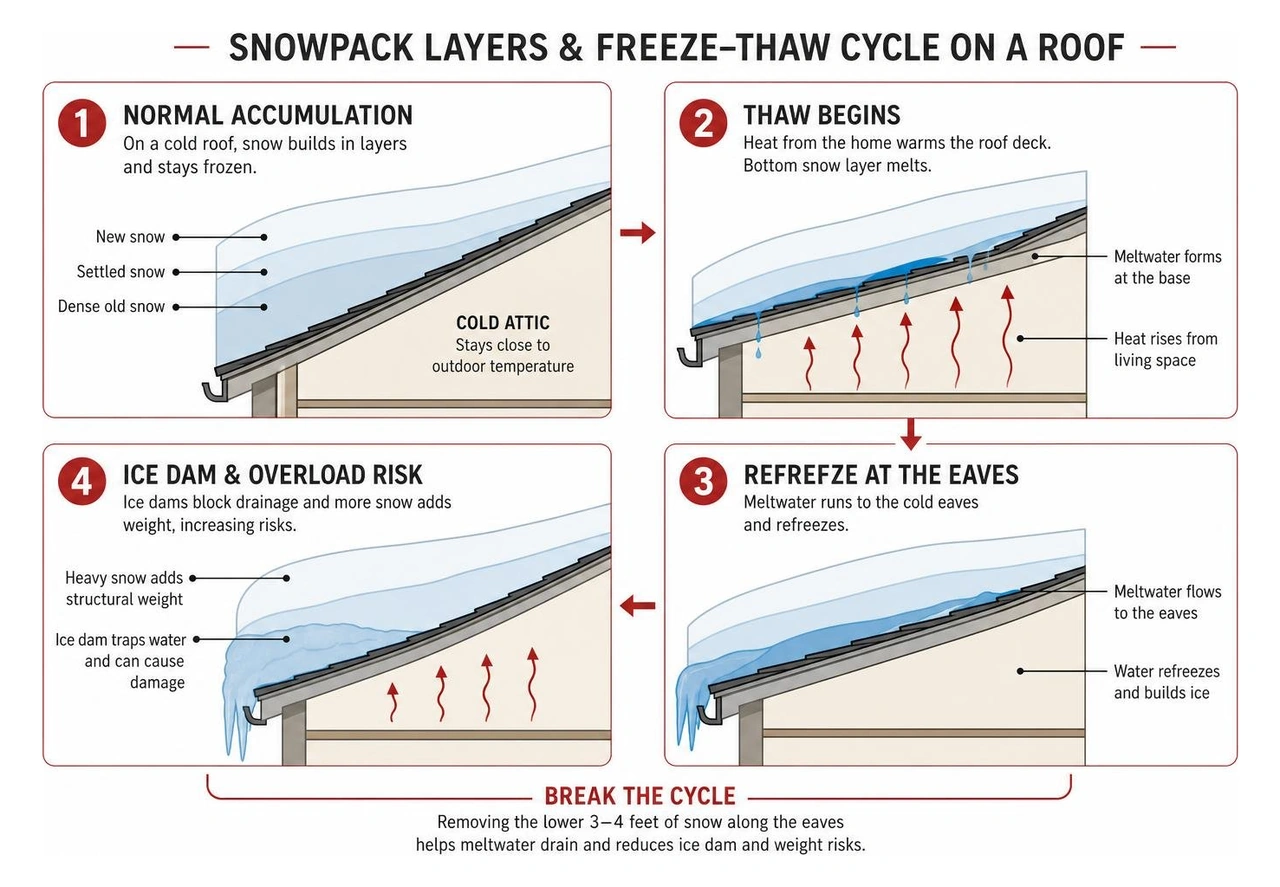
The challenge arises when normal accumulation transitions into dangerous structural overload or prime ice dam conditions. In our region, winter weather rarely stays constant. We often see light powder followed by lake-effect moisture, sunny days near freezing, and sudden subzero snaps. These repeated freeze-thaw cycles turn the bottom layers of snowpack into dense, heavy ice.
When that happens, the snow acts like a heavy insulating blanket. Heat escaping from the living space warms the roof deck, melts the base layer, and sends water trickling down to the cold overhangs where it refreezes. Removing the snow along the lower roof edge breaks this cycle and creates an open path for meltwater to drain safely.
How Much Snow Load Is Too Much for a Wisconsin Roof?
To understand how much snow your roof can carry, you have to look at the physics of snow weight. Snow is not just snow. Its weight varies dramatically depending on moisture content, age, and compaction:
- Fresh, light powder: Typically weighs between 3 and 5 pounds per cubic foot.
- Settled or packed snow: Usually weighs between 12 and 20 pounds per cubic foot.
- Wet, slushy snow: Can weigh anywhere from 20 to 60 pounds per cubic foot.
- Solid ice: Weighs approximately 57 pounds per cubic foot (about 5 pounds per square foot for a single inch of thickness).
Standard residential building codes in northern climates typically require roofs to support a minimum "live load" of 20 to 40 pounds per square foot (psf), with many modern Northwoods homes engineered for higher regional loads.
This is why depth alone can be misleading. You might have 4 feet of light, dry powder on your roof that weighs only 16 psf, well within safe engineering limits. On the other hand, just 12 to 18 inches of heavy, waterlogged snow can easily reach 40 to 60 psf. On a typical 2,000-square-foot roof, that wet snow can add tens of thousands of pounds of force that your rafters were never intended to carry indefinitely.
| Snow Type | Average Depth Threshold | Density (lbs/cu. ft.) | Estimated Roof Load (psf) | Structural Risk Level |
|---|---|---|---|---|
| Fresh, Fluffy Powder | 36 to 48 inches | 3 to 5 lbs | 9 to 20 psf | Low |
| Settled / Wind-Packed Snow | 18 to 24 inches | 12 to 20 lbs | 18 to 40 psf | Moderate |
| Wet, Heavy "Snowman" Snow | 12 to 18 inches | 20 to 40 lbs | 20 to 60 psf | High |
| Ice Slabs / Saturated Slush | 3 to 6 inches + ice | 40 to 57 lbs | 30 to 60+ psf | Very High |
Roof pitch also plays a major role in how weight accumulates. As explained in our Northern Wisconsin cabin roof guide, steeper pitches help shed snow naturally, while lower-slope cabin roofs, porches, and additions tend to hold onto snowpack all winter long. Homeowners assessing multi-layer snowpack can also review independent guidelines on whether to rake snow off a roof to help determine when cumulative weight justifies manual removal.
What Are the Warning Signs That Your Roof Is Under Severe Stress?
Roof structures rarely fail without giving off subtle warning signs first. Because heavy snow compresses over time, you cannot always gauge the stress on your home simply by looking out the window. You should also watch for physical indicators inside and outside your home.
Interior Warning Signs
- Interior doors sticking: When roof trusses or rafters deflect under intense weight, they push down on interior partition walls. If bedroom, bathroom, or closet doors suddenly stick or swing open on their own, your framing may be deflecting under load.
- New drywall or plaster cracks: Look for fresh hairline cracks radiating from the corners of door frames, window openings, or across ceiling drywall joints.
- Audible sounds: Popping, creaking, or groaning sounds coming from the attic or ceiling structure during a storm indicate framing members shifting under extreme stress.
- Ceiling sag: Any visible downward bowing of the ceiling drywall or timber beams requires immediate attention.
Exterior Warning Signs
- Visible ridge or roof sag: Step back from your home and look along the ridge line. A dip in the ridge or a wave across the roof plane is a clear sign of structural deflection.
- Bowing fascia or drooping overhangs: Heavy snow and ice concentrated at the eaves can bend structural tails and pull gutters loose.
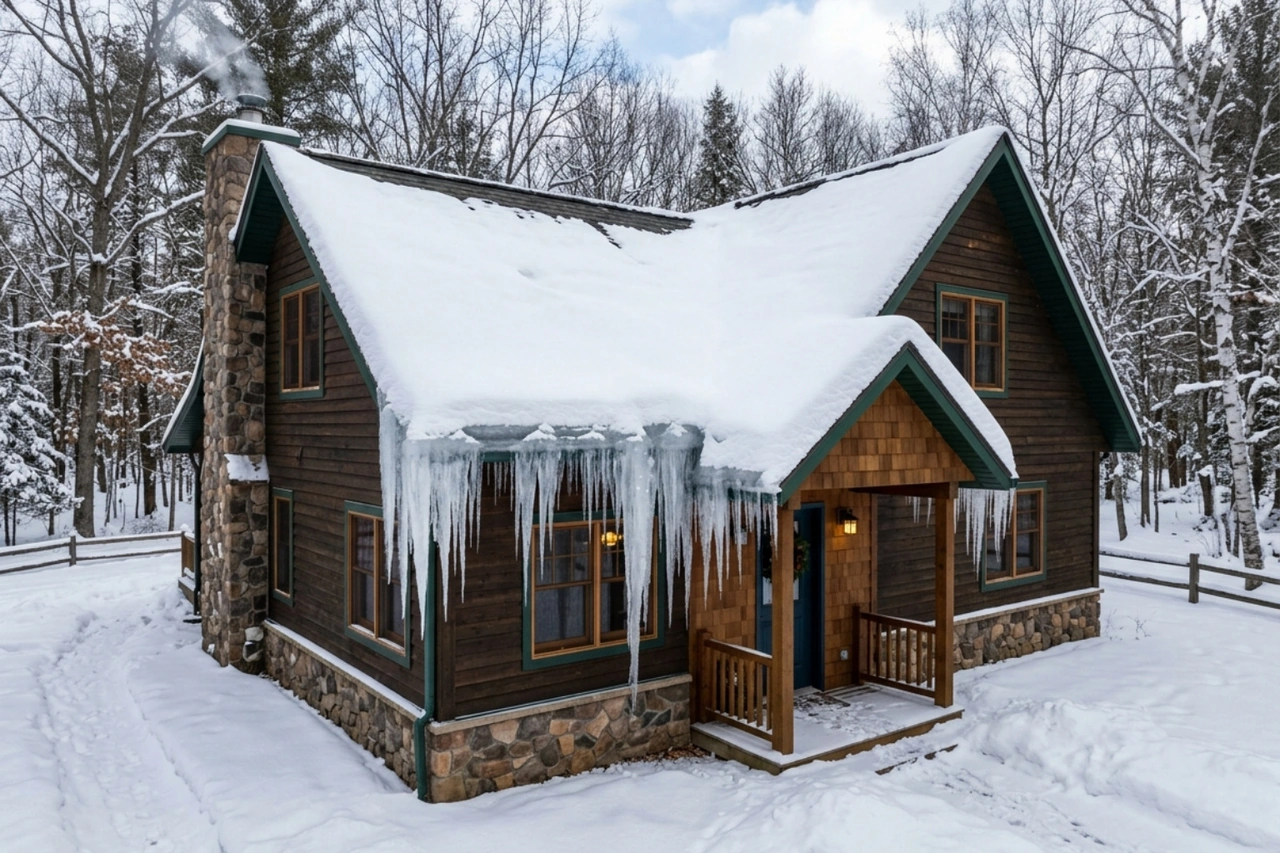
- Severe ice damming: A thick band of solid ice building up along the eaves blocks drainage and creates a thermal trap. This trapped snowpack accelerates chronic ice dam formation in specific spots year after year.
When excess weight sits on a roof for weeks, it can also aggravate common roofing problems, such as tearing valley flashing, shifting pipe boots, or pulling gutters completely off the fascia boards.
How Can You Safely Rake Snow Off Your Roof Without Damaging Shingles?
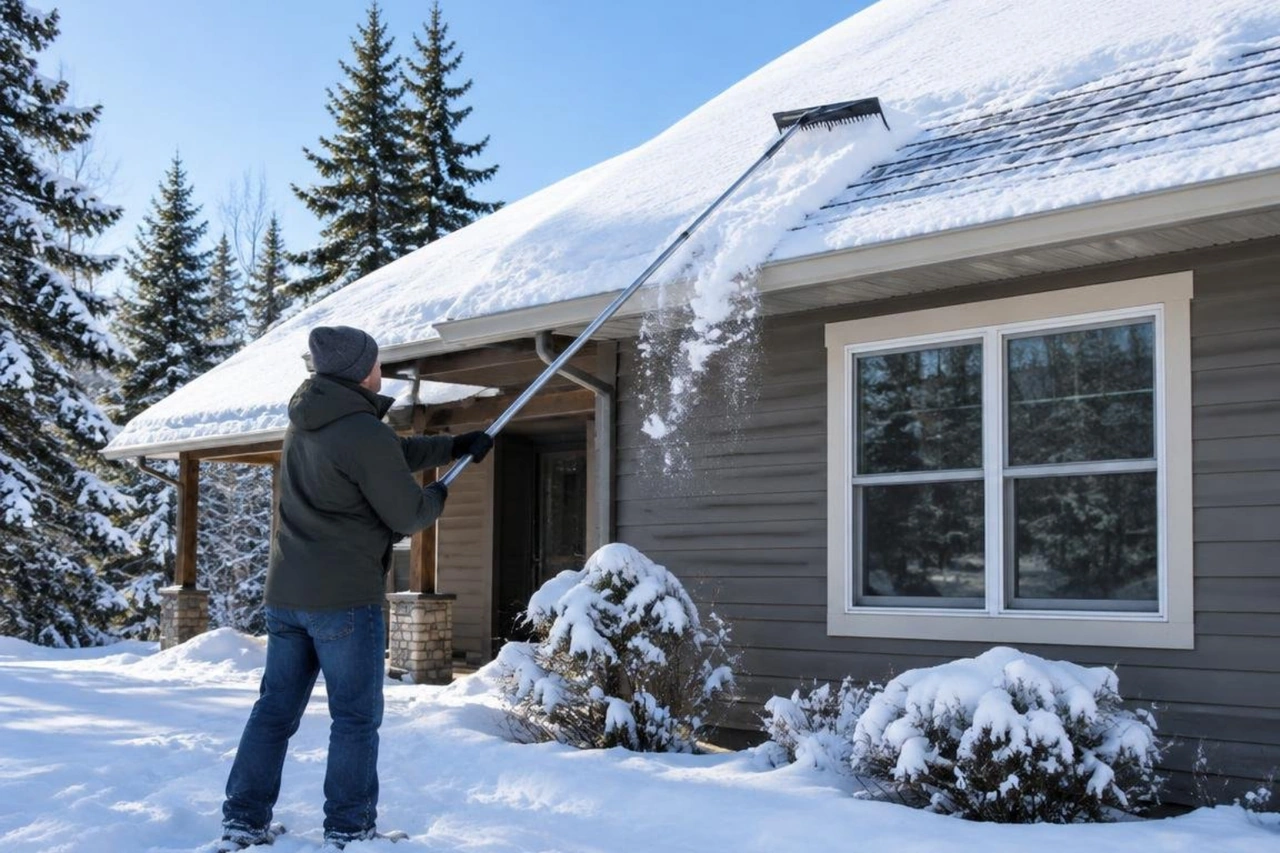
If your roof has accumulated significant wet snow or you notice ice dams starting to build, using a roof rake is a great DIY step. However, doing it incorrectly can damage your shingles or cause personal injury.
First and foremost: we strongly recommend working from the ground. Never climb onto a snowy, icy roof, and avoid setting extension ladders against frozen gutters. A sudden slide of snow can easily knock a ladder out from underneath you.
Step-by-Step Raking Technique
- Choose the right tool: Use a lightweight, extendable aluminum or polycarbonate roof rake designed specifically for homes. Look for models with small built-in rollers or protective bumper pads that keep the metal blade slightly elevated above the shingles.
- Avoid damaging tools: Never use flat metal garden spades, standard shovels, axes, ice picks, or blowtorches on your roof. These tools will gouge shingles, cut through underlayment, and create immediate leak paths. We also advise against tossing chemical salt pucks onto the roof, as corrosive runoff can discolor shingles, damage gutters, and harm landscaping below.
- Work in small sections: Extend the pole and place the rake head about 3 to 4 feet up from the edge. Pull downward gently, clearing small 3-foot wide swaths. Do not try to pull a huge 10-foot block of heavy snow all at once, which can bend your pole or pull you off balance.
- Follow the "two-inch rule": Never scrape the rake blade down to the bare asphalt shingle surface. In subzero temperatures, asphalt shingles become brittle, and scraping them strips away protective ceramic granules. Leave a 1 to 2 inch cushion of snow on the surface. That thin buffer protects the roof covering while removing the vast majority of the weight and breaking the ice dam feed line.
- Clear from the eaves up: Start at the gutter line and work your way upward in stages. Removing snow from the top first can create a heavy avalanche that packs tightly against the lower eaves.
Before getting started, you can watch helpful video demonstrations of safe roof snow removal techniques to see proper ground angles and extension handling in action.
When Should You Call a Professional Roofing Contractor Instead of Raking Yourself?
While raking the eaves of a single-story ranch or cabin is manageable for most homeowners, certain winter situations are simply unsafe for DIY methods.
You should reach out to a professional roofing contractor if:
- Your home is two or more stories tall, making ground-based raking impractical or dangerous.
- Your roof has steep pitches (greater than 6:12), complex valleys, or multiple dormers where snow packs heavily out of reach.
- High-voltage power lines run close to the roof eaves.
- You already see interior drywall cracking, sticking doors, or active ceiling leaks.
- Severe ice dams have built up several inches thick over the gutters.
Professional roofing crews do not use axes or metal shovels to break ice. Instead, professionals utilize low-pressure, high-temperature steam equipment. Steam gently melts channels through thick ice dams and liquefies heavy snowpack without mechanical impact, protecting delicate shingles and waterproof underlayments.
If your home faces recurrent winter ice and snow buildup, it may also be time to evaluate long-term structural upgrades. Exploring roofing systems built for heavy snow and ice dams can help you find a lasting solution. For example, standing seam metal roofing is a durable, premium option with hidden fasteners that helps shed heavy snow loads efficiently, though it may not fit every project budget. For residential asphalt shingles, we exclusively install high-performance GAF architectural shingle systems paired with full-coverage ice and water shield membranes to provide dependable protection against wind-driven meltwater on qualifying projects.
We also recommend scheduling a comprehensive review using a seasonal roof inspection checklist before winter arrives. Proper attic insulation (targeting R-38 to R-49 in northern Wisconsin) and balanced soffit-to-ridge ventilation keep roof deck temperatures even, helping to reduce ice dams before they start.
At Eagle River Roofing, we are proud to be locally owned and rooted right here in the Northwoods. Founded in late 2023, our company is built on a 50+ year legacy of local roofing experience. Over the history of our experienced team, we have installed more than 9,000 roofs and over 8 million feet of seamless gutters across northern Wisconsin and Upper Michigan communities like St. Germain, Three Lakes, and Minocqua.
As a factory-certified GAF Master Elite contractor, we focus on high-durability residential roof replacements, commercial flat roofing, storm damage repairs, and heavy-gauge gutter installations. We provide clear written quotes, maintain tidy job sites, and offer the honest guidance you need to protect your home through the toughest winters.
What Are the Most Common Questions About Roof Snow Removal in the Northwoods?
Does Raking Snow Off the Roof Completely Eliminate Ice Dams?
Roof raking is an effective way to relieve immediate symptoms, but it does not completely eliminate the root cause of ice dams.
Ice dams occur when heat escapes from the heated living space into the attic, warming the roof deck and melting the underside of the snowpack. When that meltwater runs down to the cold roof eaves, it refreezes into ice.
Raking the bottom 3 to 4 feet of snow removes the moisture source that feeds the dam, which provides significant short-term relief. However, long-term ice dam reduction often requires addressing attic bypass leaks, ensuring adequate attic insulation (R-38 or higher), and maintaining clear, continuous intake and exhaust ventilation.
Can Using a Roof Rake Damage or Void the Warranty on My Shingles?
Using a roof rake can cause surface damage if poor technique is used, but proper raking is safe for your roof.
The primary danger is scraping the hard edge of the rake blade directly across the shingles. In freezing weather, asphalt shingles become rigid and brittle. Scraping can dislodge the protective mineral granules, exposing the underlying asphalt to UV degradation and moisture.
To protect your roof covering and maintain warranty protection (depending on product and registration), we recommend using a rake equipped with protective wheels or bumpers, and follow the two-inch rule by leaving a thin cushion of snow over the shingles.
How Far Up the Roof Do You Actually Need to Rake?
You generally only need to rake the first 3 to 4 feet up from the roof edge.
The goal of roof raking is twofold: to remove snow from the cold overhangs where ice dams form, and to take weight off the eaves. The overhang of your roof extends past the heated exterior wall of your home, making it the coldest part of the roof plane.
Clearing the lower 3 to 4 feet moves the snowline back past the warm wall line. This allows any water melting higher up on the roof to run down the cleared surface and drain off the edge without hitting a cold snowbank and refreezing. You do not need to struggle to clear all the way to the ridge. Focus on the eaves, valleys, and overhangs where snow gathers deepest.
This article is for general informational purposes only and may not reflect the most current products, pricing, codes, availability, weather-related recommendations, or roofing requirements for your specific property. Every home and roof is different, especially in the Northwoods. Please contact Eagle River Roofing directly for the latest information and guidance for your project.

