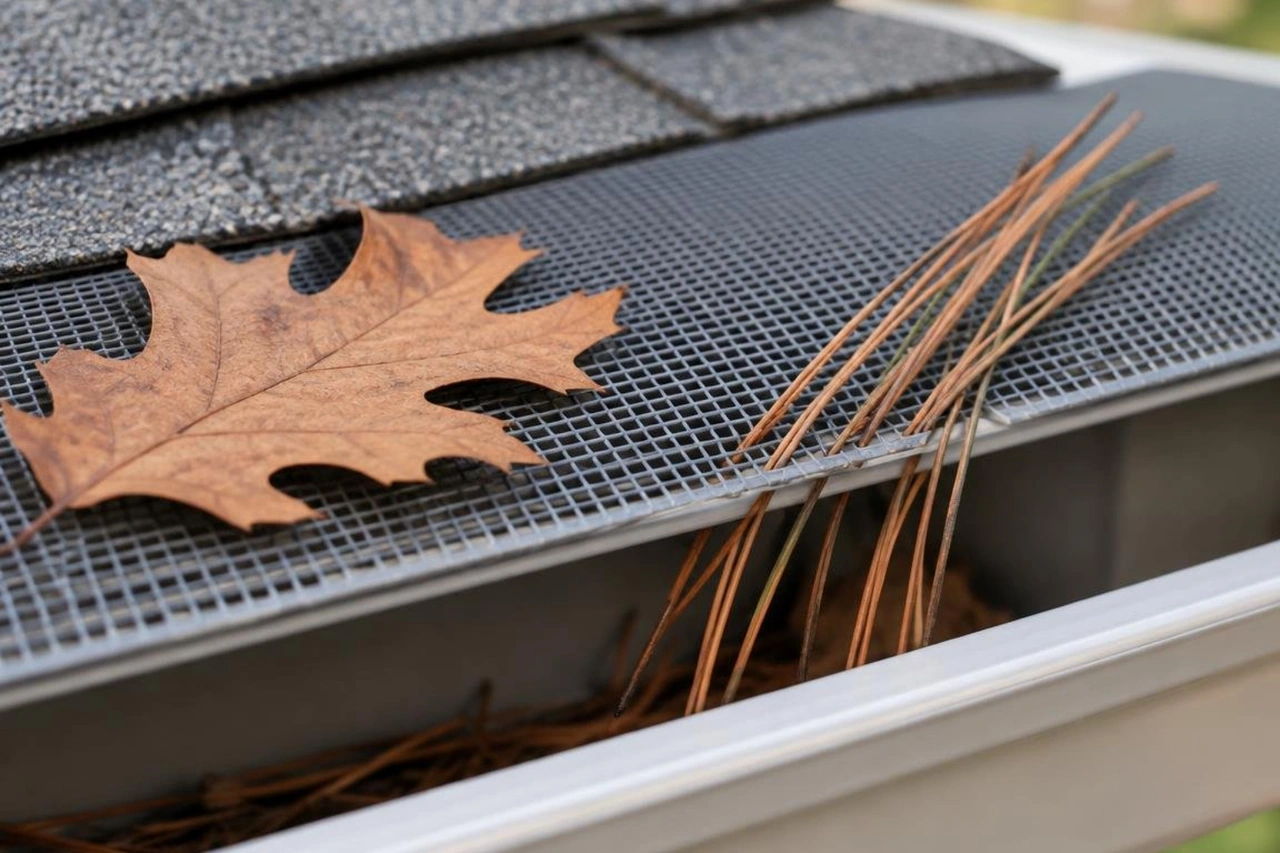
Why Are Pine Needles More Difficult for Gutter Guards Than Regular Leaves?
Yes, gutter guards can work with pine needles, but the type of guard matters a great deal. High-quality stainless steel micro-mesh guards with very small openings are designed to keep most pine needles out of the gutter channel, while standard screens and perforated covers often clog because the needles slip through or get stuck in the holes. No guard removes all maintenance, but the right system can greatly reduce how often you need to clean your gutters.
Deciduous leaves, such as oak or maple, are broad and flat. When they dry out in autumn, a moderate breeze will often lift them off a roof surface or blow them across a flat screen. Pine needles behave in an entirely different way.
Coniferous trees, including eastern white pine, red pine, balsam fir, and black spruce, drop debris that presents several physical challenges for gutter systems:
- Thin needle geometry: Individual pine needles are cylindrical and remarkably slender, typically measuring between 75 and 150 microns in diameter (about 0.003 to 0.006 inches). Because they are so thin, they easily slip vertically through standard slotted or perforated guards that have openings of 1/8 inch (3,175 microns) or larger.
- Interlocking structure: Pine needles rarely stay separated once they land. Their shape and slight flexibility cause them to knit together into a dense, interwoven thatch. This thatch functions like a fibrous filter mat that catches dirt, roof grit, and smaller organic particles.
- Continuous shedding cycle: Deciduous trees shed the majority of their leaves over a three-to-four-week window in autumn. Conifers shed needles throughout the spring, summer, and late autumn. This creates ongoing debris pressure across every season.
- Sap and resin content: Conifers produce natural resins and sticky sap. When needles drop onto your roof, residual pitch bonds with fine airborne dust, pollen, and asphalt shingle granules. This creates a tacky residue that adheres to metal and plastic surfaces.
- Acidic decomposition: As wet pine needles break down, they release organic acids. When trapped inside an unprotected gutter channel, this wet, acidic compost can speed up the corrosion of standard aluminum fasteners, gutter seams, and fasteners over time.
As highlighted in research on Best Gutter Guards for Pine Needles (2026), the physical size difference between a pine needle and a standard gutter screen opening explains why generic covers routinely fail in pine-dense environments.
The "Shelf Effect" and Surface Blinding
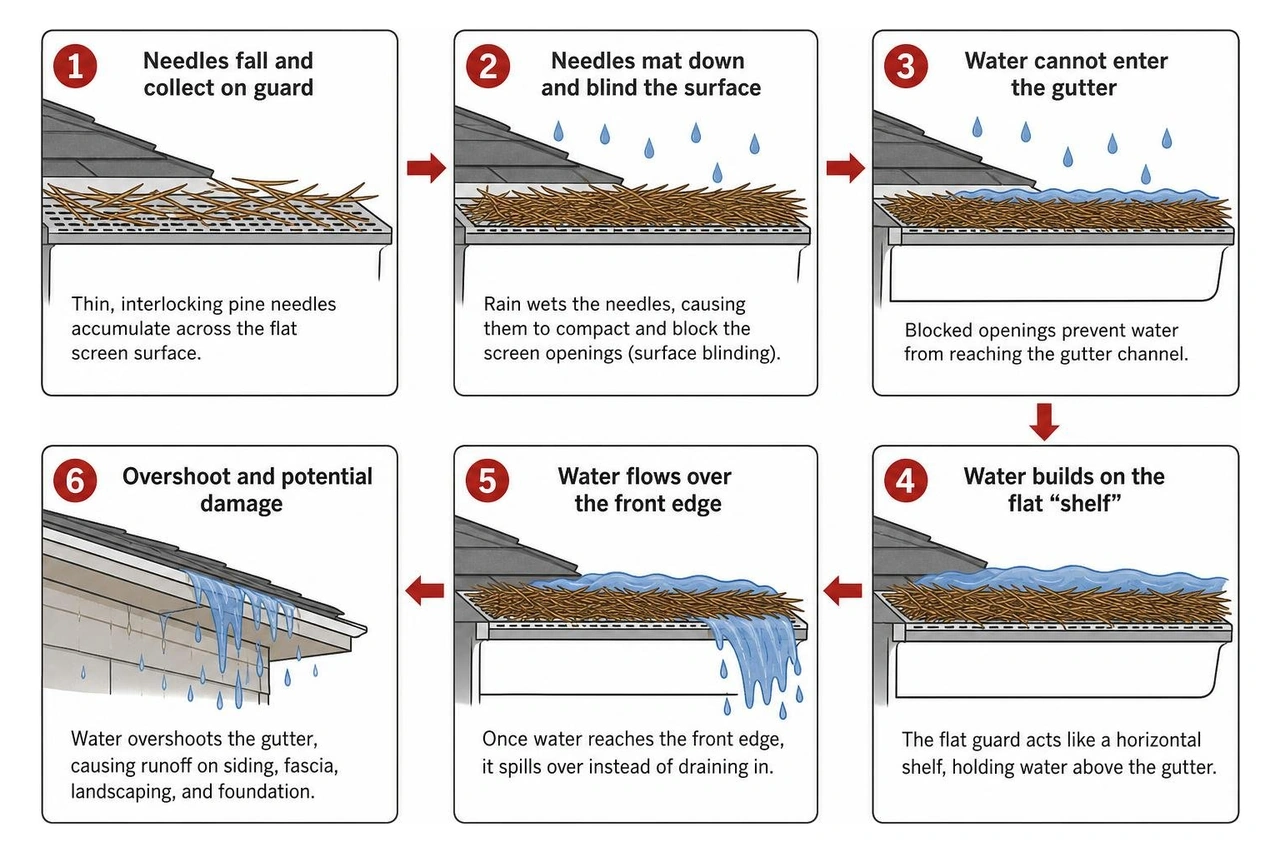
One common issue with basic gutter guard installations is known as the shelf effect. When a guard is mounted completely flat across the top of the gutter trough, it acts like an open horizontal shelf.
Needles accumulate across the flat plane rather than blowing off. As subsequent rains fall, water wets the needles, causing them to mat down tightly over the filtration holes. This process is called surface blinding.
When surface blinding occurs, the inner gutter trough underneath may remain empty and clear, but rainwater cannot penetrate the matted needle blanket. During heavy summer cloudbursts or steady autumn rains, incoming water sheets over the top of the guard and pours over the edge, potentially soaking foundation walls and landscaping.
Sap, Pollen, and Organic Biofilm Formation
In late spring across northern Wisconsin, white and red pines release heavy clouds of yellow pollen. When pollen settles onto damp gutter guards, it mixes with pine sap to form a fine, sticky paste.
On shaded roof slopes, this organic paste can create a nutrient-rich base for moss, lichen, and algae growth. Coarse plastics and untreated metals give these micro-organisms porous textures to grip onto. High-grade stainless steel micro-mesh with smooth wire surfaces helps minimize organic bonding, allowing rain and light surface washing to rinse fine residue away more easily.
How Do Different Types of Gutter Guards Perform Against Pine Needles?
Not all gutter guards handle fine debris in the same manner. Understanding how different designs interact with needles will help you when choosing gutter options for Northern Wisconsin homes.
| Gutter Guard Type | Needle Filtration Ability | Water Intake in Heavy Rain | Winter & Snow Durability | Expected Maintenance Frequency | Overall Pine Compatibility |
|---|---|---|---|---|---|
| Stainless Steel Micro-Mesh | High (blocks needles down to fine grit) | High (when pitched correctly) | High (handles snow and freeze-thaw) | Low to Moderate (1–2 surface sweeps/year) | Recommended |
| Perforated Aluminum | Moderate to Low (needles lodge in holes) | High | High | High (needles must be manually pulled) | Limited suitability |
| Reverse-Curve Helmets | Low (needles follow water curve into slot) | Moderate (can overshoot in storms) | Moderate | Moderate to High (hard to clean inside) | Not recommended for pine |
| Brush Inserts | Poor (bristles trap and weave needles) | Moderate initially (drops as debris packs) | Low to Moderate | High (must remove entire brush to wash) | Not recommended |
| Foam Inserts | Poor (needles pierce and embed in pores) | Low (clogs rapidly with organic silt) | Low (retains water and freezes solid) | High (often requires full replacement) | Not recommended |
Stainless Steel Micro-Mesh Guards (Often a Strong Option)
Micro-mesh systems use surgical-grade stainless steel wire woven to tolerances between 50 and 150 microns. Because the openings are significantly narrower than the diameter of a single pine needle, needles cannot physically enter the gutter channel.
Water enters the gutter through capillary action, where surface tension pulls water through the fine mesh while deflecting solid debris. Premium micro-mesh systems are built into rigid aluminum frames that support heavy snow loads and resist shifting during harsh Northwoods freeze-thaw cycles. While surface needles may still require occasional brushing, the interior gutter trough stays clean and open.
Perforated Aluminum and Screen Guards (Moderate to Poor)
Perforated aluminum panels and wire screens feature punched holes or diamond patterns ranging from 1/8 inch to 1/4 inch wide. While effective at shedding large oak and maple leaves, these openings are wide enough for pine needles to slide in vertically.
Once a needle enters tip-first, it catches inside the perforation. Over time, hundreds of needles stand upright in the guard, creating a brush-like barrier. Removing these wedged needles usually requires scrubbing each section by hand, making maintenance time-consuming.
Reverse-Curve "Helmet" Systems (Mixed Performance)
Reverse-curve guards work on the principle of water surface tension. Rainwater flows over a curved nose and rounds the bend into a narrow horizontal slot, while large leaves are intended to slide off the edge.
Pine needles frequently travel along the water stream, tracking around the curve and entering the narrow slot. Once inside the trough, needles settle at the downspout outlets. Because reverse-curve systems are typically sealed, clearing clogs inside the covered trough often requires taking apart the metal covers.
Foam and Brush Inserts (Not Recommended for Pines)
Foam and brush inserts are marketed as quick DIY solutions, but they tend to perform poorly around pine trees:
- Brush inserts: Thousands of stiff polypropylene bristles sit inside the gutter trough. Pine needles fall into the bristles and interweave, forming a dense debris mat. Water flow decreases quickly, and clearing the system requires pulling out the heavy, needle-filled cylinders.
- Foam inserts: Porous polyurethane foam allows water to pass while keeping debris on top. However, sharp pine needles easily poke into the foam pores. Tree pollen and decaying organic matter fill the air pockets, turning the insert into a waterlogged sponge. In sub-zero winter conditions, saturated foam freezes into a solid block of ice that can strain gutter brackets.
Why Does Roof Pitch, Guard Angle, and Gutter Sizing Matter for Pine Needles?
A gutter guard is only as effective as the system supporting it. How a guard is positioned and sized plays a significant role in preventing needle buildup.
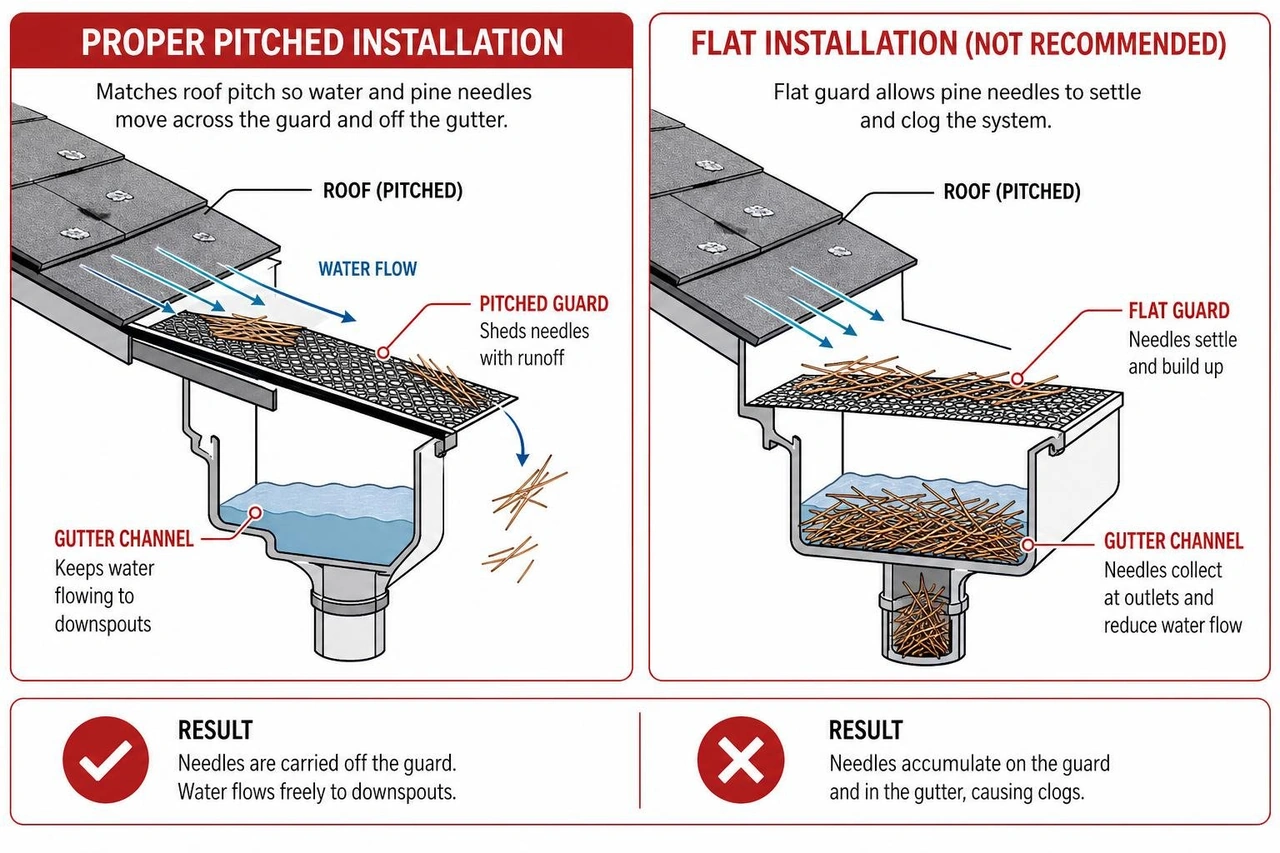
The concept of the angle of repose explains how debris behaves on sloped surfaces. When a micro-mesh guard is installed matching the pitch of the roofline, gravity and roof runoff work together. Water moving down the roof helps push loose pine needles across the mesh and off the front edge of the gutter.
When guards are installed flat across the gutter, gravity works against you. Needles settle in place, and light winds cannot lift them off the recessed surface.
Other design factors that improve water management in pine-heavy areas include:
- Upgrading gutter capacity: Choosing between 5-inch and 6-inch gutters provides a wider opening to catch high-velocity water from steep roof pitches, reducing water overshoot during sudden cloudbursts.
- Installing larger outlets: Pairing fine-filtration guards with oversized downspouts helps fine pollen, roof grit, and micro-sediment flush out freely without creating bottlenecks at drain openings.
- Continuous hanger strength: In areas with heavy snow and ice, guards should be secured to the fascia using heavy-duty continuous brackets. Weak snap-in seams can bow under snow loads, creating gaps where needles can enter.
Detailed design considerations are also discussed in industry reviews such as Best Gutter Guards For Pine Needles: What Works & What Doesn’t.
Can Pine Needles Still Cause Problems Even With High-End Gutter Guards?
Installing a surgical-grade micro-mesh system helps keep pine needles from clogging the interior of your gutter trough. However, it is important to distinguish between an internal trough clog and surface debris accumulation.
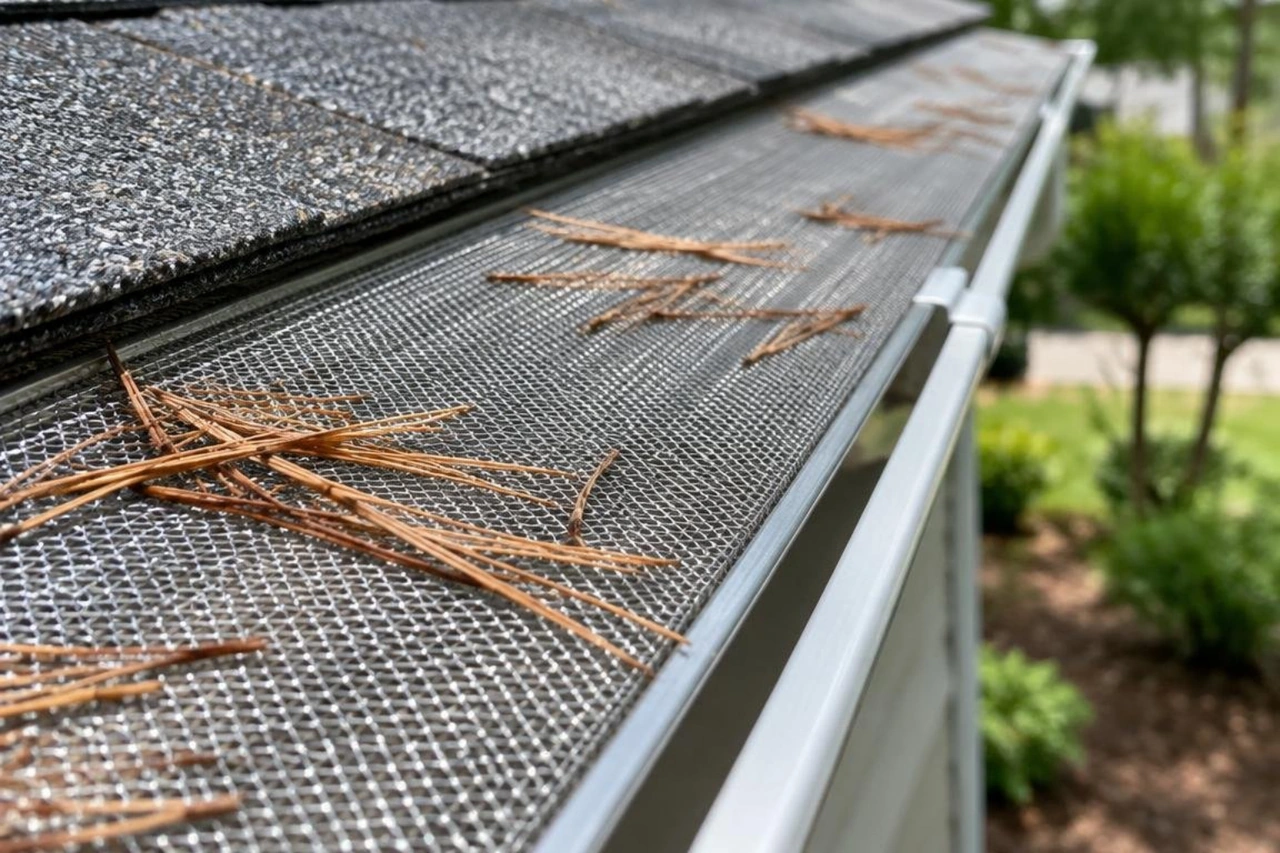
Even on properly angled guards, wet needles can temporarily cling to the mesh during calm, drizzly conditions. When needles collect across the surface, several minor issues can occur if they are left unaddressed:
- Temporary water overshoot: If a thick layer of pine needles covers the mesh during a sudden, heavy downpour, incoming water may sheet over the debris layer and spill over the front lip.
- Valley accumulation: Valleys concentrate water and debris into tight roof corners. Pine needles often build up where valleys meet gutter end caps, forming localized dams.
- Moisture retention at the roof edge: Needles that rest along the bottom edge of shingles can hold moisture against the roof overhang. While this does not directly cause ice dams (which are mainly caused by attic heat loss and poor ventilation), wet debris mats can slow drainage during spring thaws.
For seasonal properties and gutters for Northwoods cabins, planning for basic surface maintenance ensures your drainage system works reliably when you are away.
What Happens to Needles That Rest on the Guard Surface?
On pitched micro-mesh systems, dry needles are often blown away by moderate winds once rain clears and sunshine dries the roof. Needles that remain will gradually dry out and lose their grip on the wire mesh.
A quick visual inspection once or twice a year lets you see if any needles have collected in sheltered roof corners or valley drop-points.
How Often Do You Need to Clean Gutters If You Have Pine Trees and Gutter Guards?
A common misconception is that gutter guards eliminate all exterior home maintenance. In pine-heavy regions, a quality guard changes the nature and frequency of your maintenance rather than eliminating it entirely.
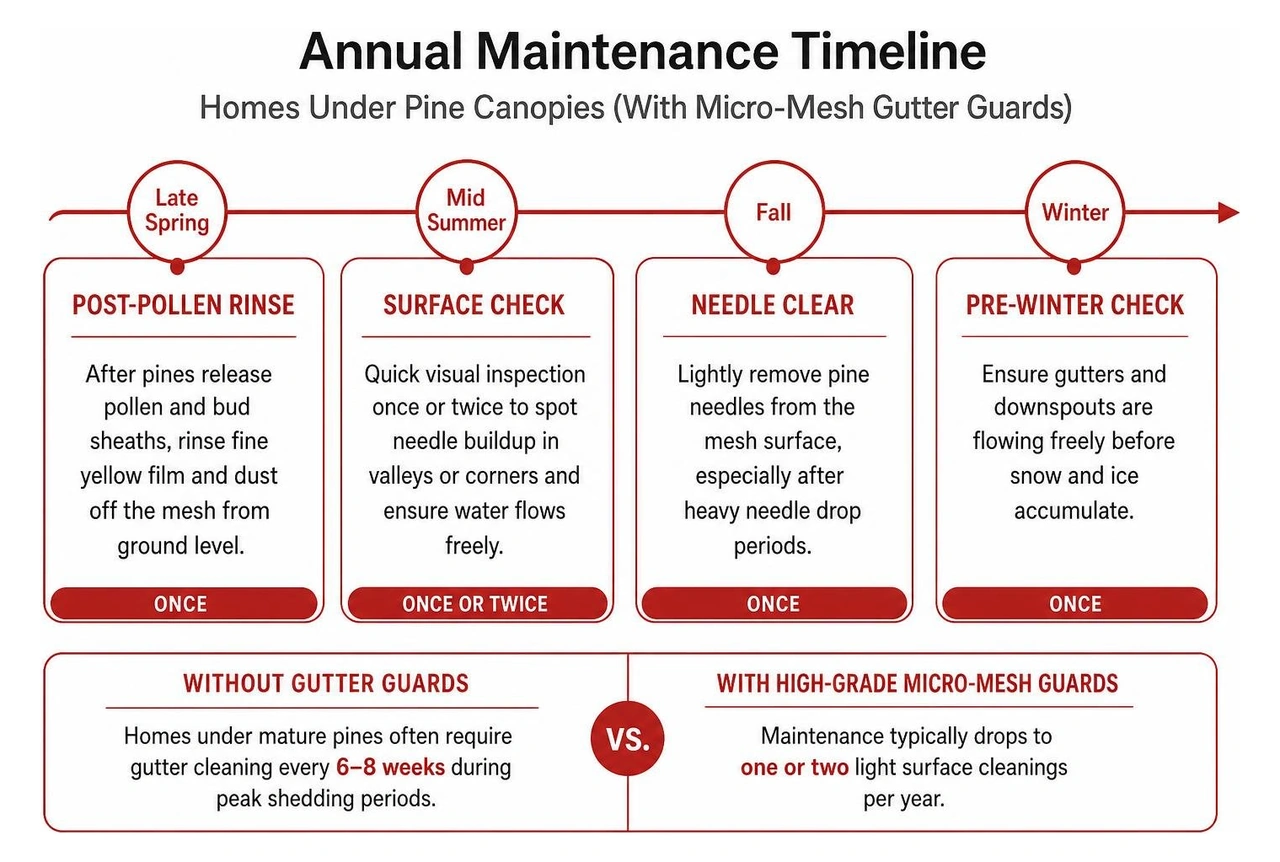
Without guards, homes surrounded by mature pines often require gutter cleaning every six to eight weeks during peak shedding periods to prevent overflow and fascia rot. With high-grade micro-mesh guards, maintenance typically drops to one or two light surface cleanings per year.
Recommended Seasonal Maintenance Plan
- Late Spring (Post-Pollen Rinse): After pines release their pollen and bud sheaths, use a garden hose with an angled nozzle to rinse fine yellow film and dust off the mesh from ground level.
- Late Autumn (Post-Needle Drop Sweep): After deciduous leaves and peak autumn pine needles drop, use a soft-bristled telescoping brush or a leaf blower with a curved gutter attachment to sweep away dry surface needles.
You can perform most surface cleaning safely from the ground using lightweight extension poles, eliminating the need to climb ladders and scoop wet, decaying debris out of open gutter channels.
Are DIY Gutter Guards Effective for Pine Needles, or Is Professional Installation Necessary?
Many home improvement centers sell snap-in plastic screens, foam strips, and DIY micro-mesh sections. While DIY products may appeal to budget-conscious homeowners, their long-term effectiveness against pine needles is often limited by installation challenges.
Common failure points seen with DIY installations include:
- Seam gaps: DIY guards typically come in short three-to-four-foot sections. If the joints between sections are not tightly sealed, slender pine needles will find these gaps and slip into the trough.
- Improper pitch: Snap-in guards often sit flat inside the gutter opening rather than matching the roof slope, creating a flat shelf where needles collect.
- Fastener and shingle issues: Forcing guards under the first course of asphalt shingles can lift shingle edges, break sealant strips, or compromise roof warranties.
- Weak support under snow loads: Lightweight plastic clips can bend under heavy northern winter snow and ice, loosening the guard and creating entry points for debris.
Working with experienced local professionals ensures that your gutters and guards are properly matched to your roofline. At Eagle River Roofing, we are locally owned, founded in late 2023, and built on a 50+ year legacy of local experience. Our ownership team has installed over 9,000 roofs and 8 million feet of gutters. As a GAF Master Elite contractor, we ensure gutter guard systems are installed securely without disturbing your roofing components. We provide tidy job sites and clear written quotes so you know exactly what to expect.
To learn more about local installation standards, explore our guide on professional gutter and guard installation in our area.
Frequently Asked Questions About Gutter Guards and Pine Needles
Will micro-mesh gutter guards prevent 100% of pine needle clogs?
Quality micro-mesh guards can help keep most pine needles from entering and clogging the inside of your gutter channel. However, no guard can stop every individual needle from landing on the top surface. While wind and rain will clear many dry needles from properly pitched guards, occasional surface sweeping may still be needed to prevent debris mats during heavy shedding periods.
Do gutter guards cause ice dams in snowy, pine-heavy climates?
Gutter guards do not cause ice dams. Ice dams are primarily caused by heat escaping from the living space into an under-insulated or poorly ventilated attic, which melts snow on the upper roof that refreezes at the cold eaves.
However, if gutters or guards are left covered with heavy, wet pine debris heading into winter, that trapped organic matter can hold moisture and slow drainage during sunny midday thaws. Clearing guard surfaces in late autumn helps water drain smoothly.
How do I safely clear pine needles off my gutter guards without damaging the mesh?
To clear debris safely without harming the fine stainless steel mesh:
- Use a telescoping pole equipped with a soft nylon brush attachment to sweep dry needles off the surface from ground level.
- Use a leaf blower with a curved extension tube to blow dry needles out of roof valleys and off guard tops.
- Rinse away pollen, tree sap, and roof dust using a standard garden hose with a low-pressure spray nozzle.
- Avoid using stiff metal wire brushes, high-pressure power washers, or sharp scraping tools, as these can tear the micro-mesh or dislodge protective frame seals.
What Is an Effective Long-Term Strategy for Protecting Gutters from Pine Needles?
Managing pine needles around your home requires a coordinated approach rather than relying on a single product:
- Choose the right guard style: Opt for high-grade stainless steel micro-mesh with small openings (50 to 150 microns) that are designed to help block thin needles from entering the trough.
- Mount at an angle: Ensure guards are installed matching the roof pitch to encourage wind and water to shed debris naturally.
- Ensure proper gutter and downspout capacity: Pair guards with sturdy seamless gutters and oversized downspouts so water and fine pollen drain freely.
- Keep up with simple seasonal care: Plan on a quick surface sweep in late fall and a light hose rinse in spring to keep filtration openings clear.
If you are ready to protect your home with durable, weather-ready water management solutions, explore our comprehensive professional gutter services or request a clear, straightforward quote using our instant roofing and gutter estimate tool today.
This article is for general informational purposes only and may not reflect the most current products, pricing, codes, availability, weather-related recommendations, or roofing requirements for your specific property. Every home and roof is different, especially in the Northwoods. Please contact Eagle River Roofing directly for the latest information and guidance for your project.

