What Causes Moisture and Frost to Build Up in Cold Attics?
To understand why frost forms in your attic, it helps to look at how air moves through your home during a typical Northwoods winter.
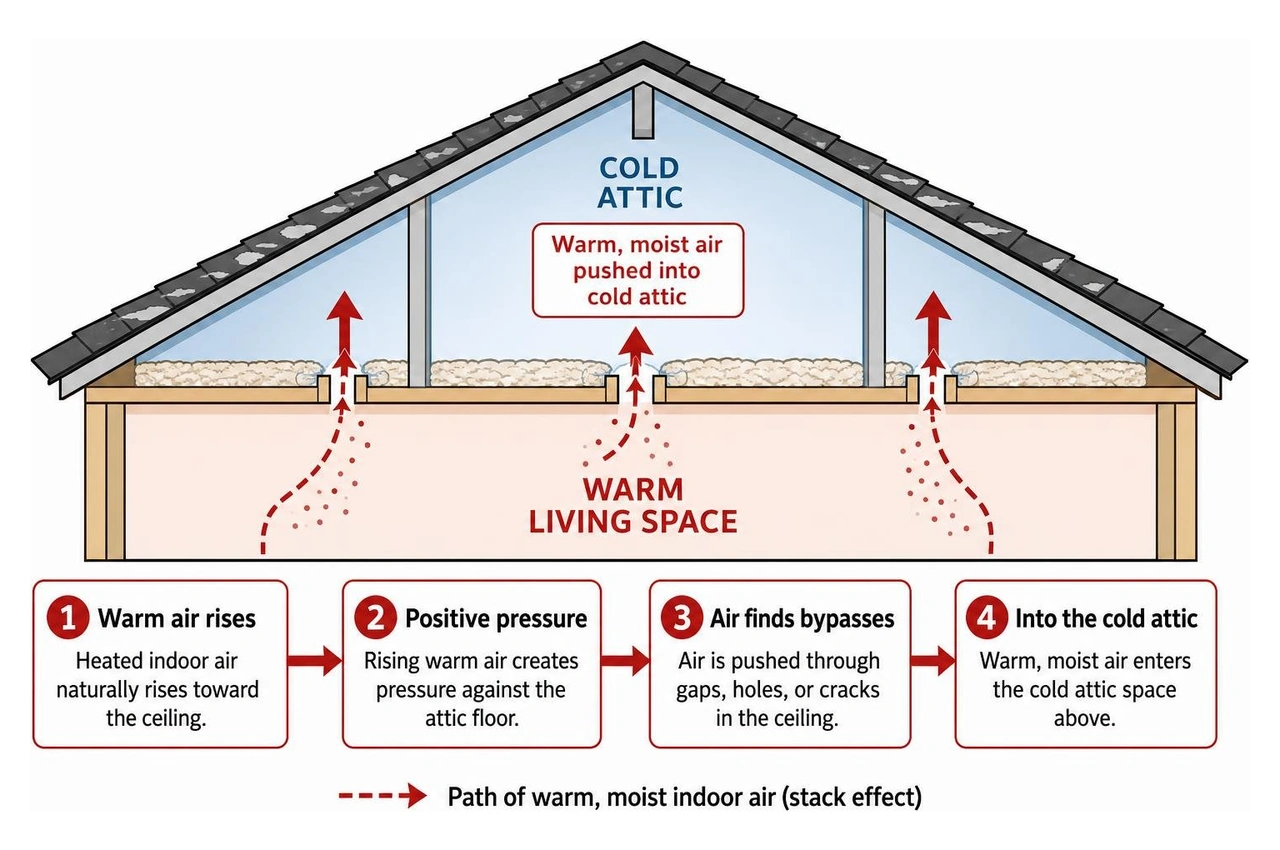
When you heat your home in places like Eagle River or Minocqua, that warm air naturally wants to rise. This movement is known as the stack effect. As warm air floats upward toward your ceiling, it creates positive pressure against the attic floor. If there are any unsealed gaps, holes, or cracks, that warm indoor air gets pushed directly into the cold attic space above.
Indoor air carries a surprising amount of water vapor. A typical family of four can generate several gallons of moisture every day simply by living in the home. Everyday activities add humidity to the air, including:
- Running whole-home humidifiers set too high for sub-zero weather
- Cooking, boiling water, and running dishwashers without exhaust fans
- Taking long, hot showers
- Drying clothes on indoor racks or running unvented appliances
- High household occupancy during winter holidays and cabin gatherings
When that humid air travels upward, it finds pathways through what building scientists call attic bypasses. Common bypasses include unsealed attic access hatches, gaps around recessed pot lights, cuts around plumbing vent stacks, clearances around chimney chases, and holes drilled for electrical wiring.
Another major culprit is improper exhaust ducting. In many older homes across Oneida and Vilas counties, bathroom fans were simply vented directly into the attic cavity or terminated loosely near a soffit. When you take a hot shower, that fan dumps pure steam directly onto your cold roof framing. Over time, that vapor coats your attic surfaces. For a deeper look at building science fundamentals, see how warm indoor air leakage triggers attic frost.
How Ventilation Imbalances and Cold Roof Decks Compound Moisture Problems
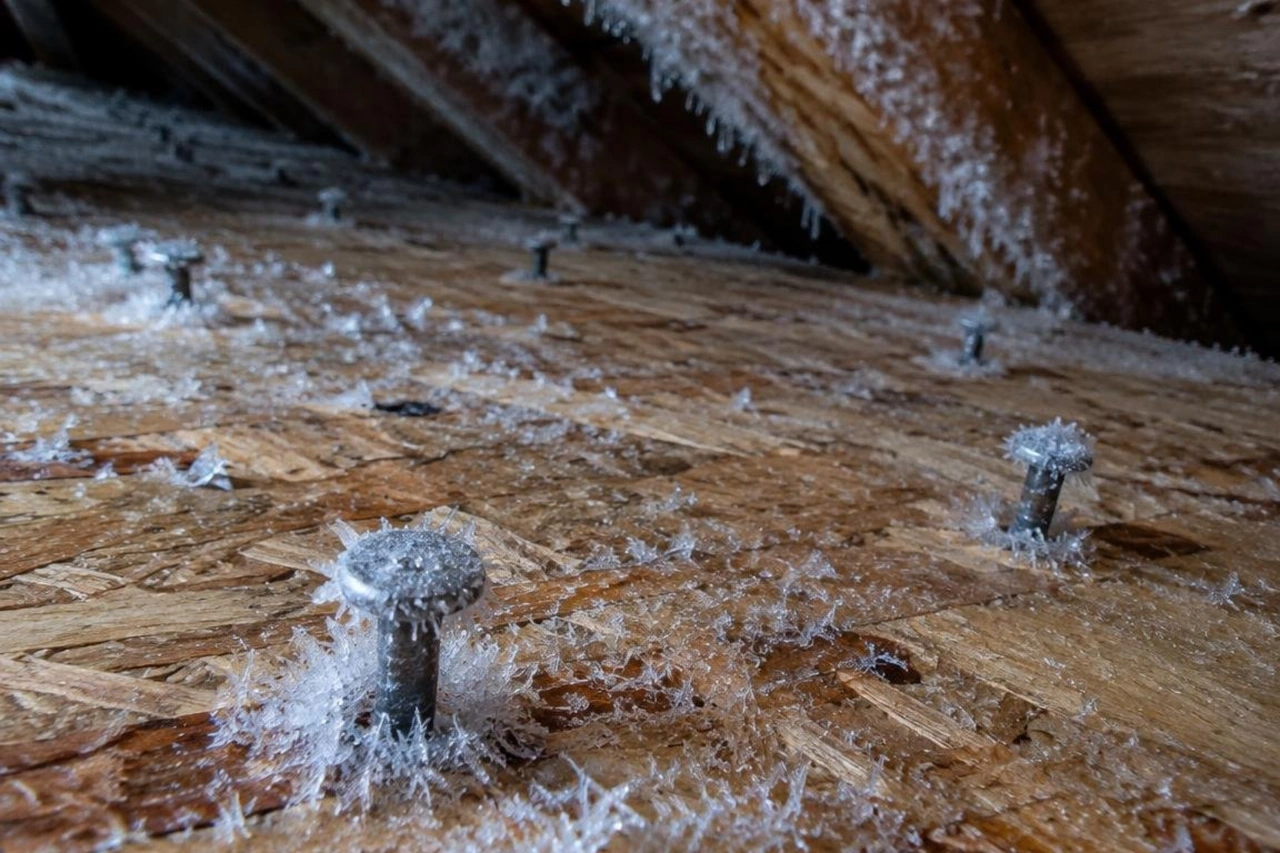
Once warm, moist air enters the attic, physics takes over. During our cold winter months, the roof sheathing (the plywood or OSB boards under your shingles) and the exposed metal tips of roofing nails drop well below freezing.
When the warm, humid air contacts these freezing surfaces, it quickly reaches its dew point. In milder weather, water vapor turns into liquid droplets (condensation). In sub-zero winter temperatures, it bypasses the liquid stage and freezes immediately into a white, crusty layer of frost or ice.
This problem gets much worse when attic ventilation is restricted or imbalanced. A healthy attic relies on continuous, passive airflow. Cold, dry outdoor air should enter through the soffit vents at the eaves, sweep along the underside of the roof deck, and exit through ridge vents or static roof vents near the peak. This airflow carries away moisture before it can settle and freeze.
Moisture problems often compound due to two common ventilation failures:
- Blocked soffit vents: Blown-in insulation frequently gets pushed tight against the eaves, blocking intake airflow.
- Ventilation imbalances: When there is plenty of upper exhaust (like a ridge vent) but choked soffit intake, the attic can draw replacement air from the heated living space below, pulling even more moisture into the attic.
When warm air escapes into an improperly ventilated attic, it also warms up the upper roof deck unevenly. This trapped heat melts the underside of the snowpack on your roof. The runoff flows down to the cold eaves and refreezes, leading directly to chronic ice dam formation on cold roof eaves.
How Can You Tell If It Is Attic Condensation or a Roof Leak?
When you notice a wet spot on your drywall in January or February, your first thought is probably that a shingle blew off or a seam opened up on your roof. However, during dry, sub-zero winter stretches, exterior roof leaks from rain are virtually impossible, and true exterior snowmelt leaks typically happen only when significant ice dams form at the roof edges.
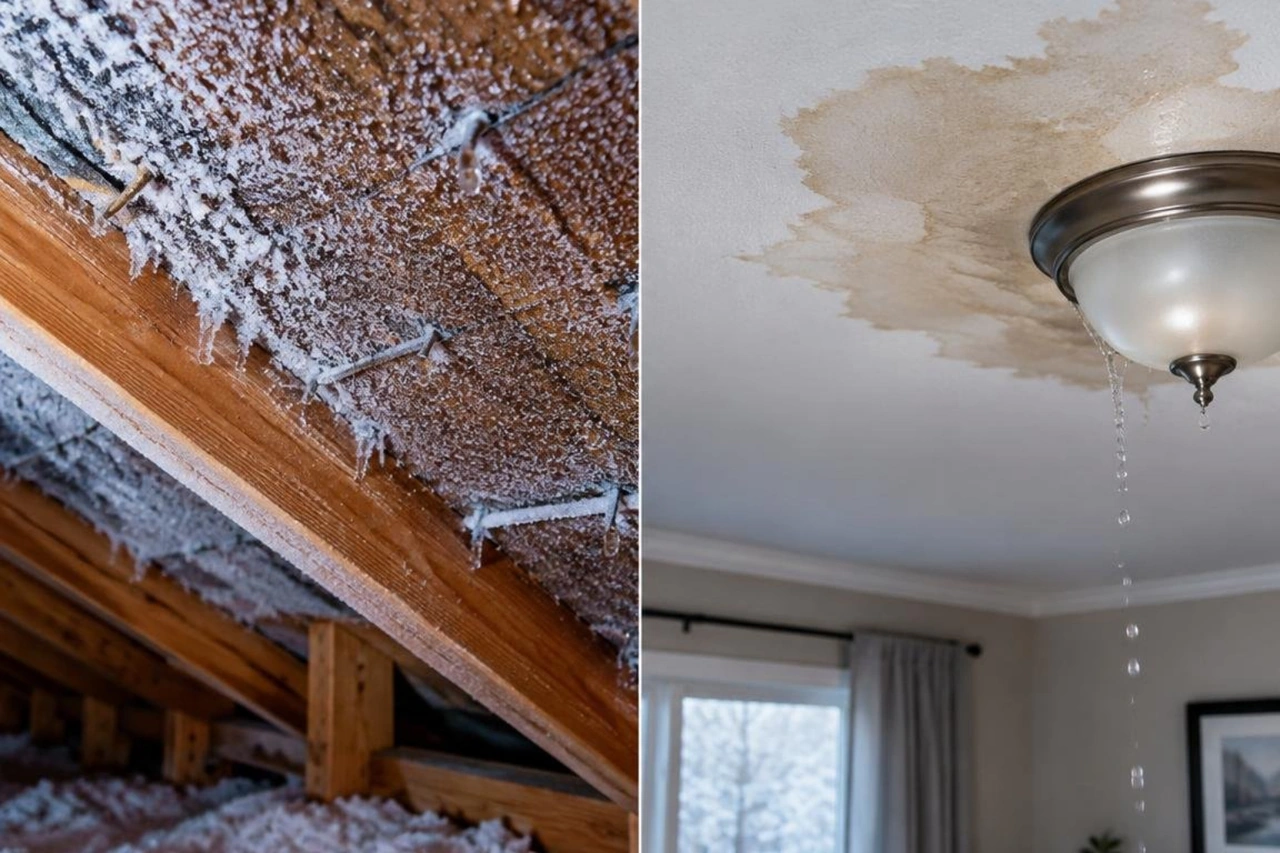
Attic condensation (often called "attic rain") behaves differently from a standard roof leak. Recognizing the signs can help you identify the real source of the problem before you begin repairs.
Attic Condensation vs. Active Roof Leak Comparison
| Feature | Attic Condensation ("Attic Rain") | Active Exterior Roof Leak |
|---|---|---|
| Weather Timing | Drips on sunny, thawing winter days or during sudden temperature swings, often when no rain is falling. | Drips during active rainfall, heavy driving rainstorms, or prolonged snowmelt behind ice dams. |
| Stain Locations | Often shows multiple, scattered ceiling spots near bathroom fans, light fixtures, or attic access hatches. | Typically appears as a single concentrated leak area below roof valleys, chimneys, or damaged flashing. |
| Attic Findings | Widespread frost or sweating across hundreds of nail tips and large areas of roof sheathing. | Localized wet wood framing, damp rafters along a specific path, or a visible puncture hole. |
| Insulation Condition | Widespread crusty frost or dampness across the top surface of the insulation layer. | Saturated insulation concentrated directly beneath a specific roof penetration or seam. |
| Primary Root Cause | Indoor air leakage, high household humidity, and inadequate attic ventilation. | Missing shingles, failed flashing, puncture damage, or ice dam backup under shingles. |
The Flashlight and Moisture Inspection Method
If you suspect moisture is building up in your attic, you can perform a safe visual inspection from your attic access opening. We recommend checking on a very cold morning, and again on a day when outside temperatures warm up toward freezing.
Here is a straightforward inspection method:
- Safety first: Set up a sturdy stepladder beneath your attic hatch. Wear a dust mask (N95), safety glasses, and a headlamp or carry a high-powered flashlight. Do not step off the joists or attic catwalk onto bare drywall.
- Scan the nail tips: Shine your light along the underside of the roof deck. Look closely at the tips of the roofing nails protruding through the plywood. In a home with moisture issues, you will see bright white frost crystals or frozen droplets clinging to dozens of nail points.
- Inspect the roof sheathing: Check the plywood or OSB boards between the rafters. Look for white frost patches, dark wet stains, black speckling (surface mold), or shiny ice glazes.
- Look at the insulation: Look down at the top of your fiberglass or cellulose insulation. Check whether the top surface looks compressed, crusty, discolored, or wet beneath the framing bays.
- Check bath fan hoses: Follow the flexible or rigid ducts running from your bathroom exhaust fans. Verify that they connect securely to an exterior roof or wall cap and are not loose, torn, or venting into the attic.
If you notice widespread frost, extensive dampness, or structural wood discoloration, scheduling a professional roof inspection can help determine whether your roof deck and ventilation system are working together properly.
What Are the Hidden Dangers of Ignoring Attic Frost?
A small amount of temporary frost on a few nail tips during a rare cold snap of minus-20 degrees might dry out harmlessly. However, thick layers of frost or repeated freeze-thaw cycles inside an attic can cause real damage over time.
1. Reduced Insulation Performance (R-Value Loss)
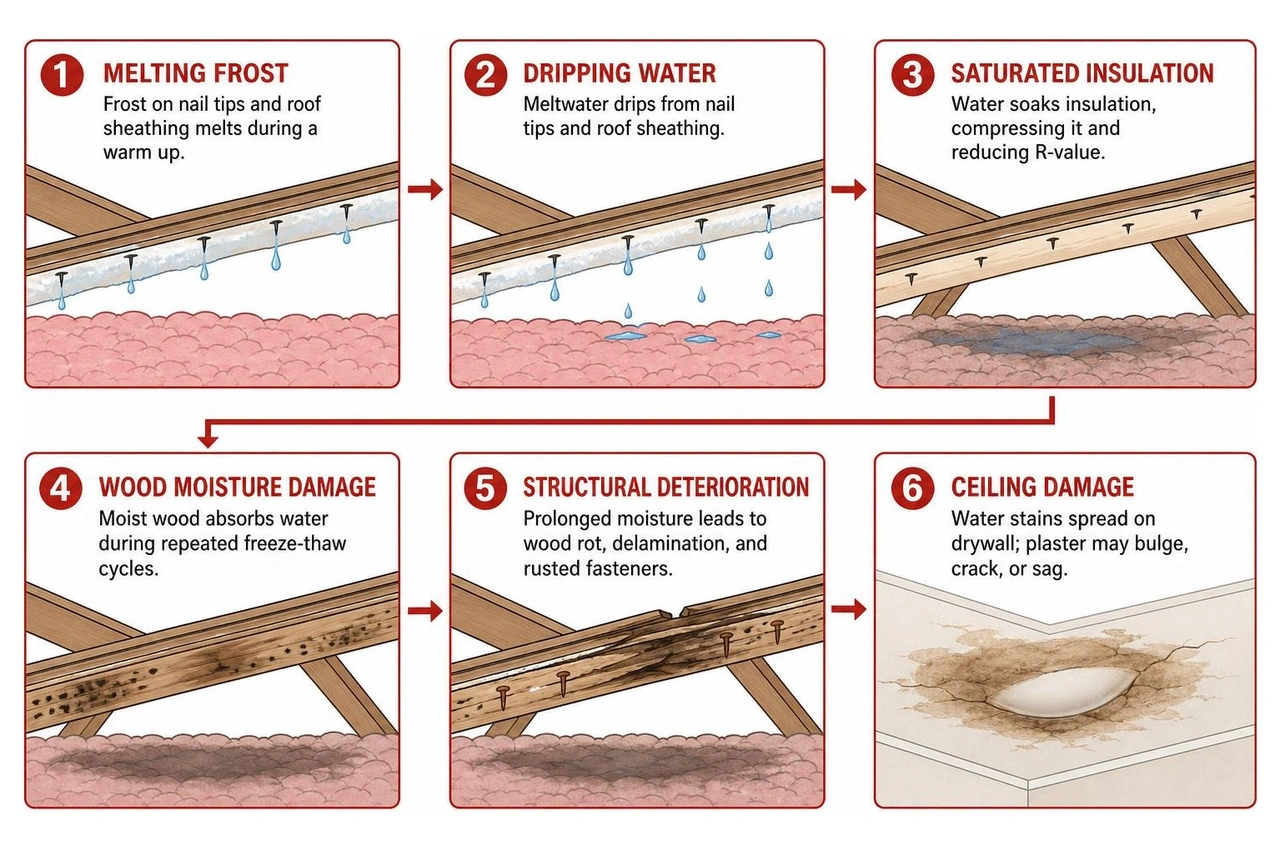
When attic frost melts, it drips onto the insulation below. Fiberglass batts and loose-fill cellulose work by trapping tiny pockets of still air. When water saturates these materials, they compress and lose their loft. Wet insulation conducts heat much faster than dry insulation, drastically reducing its effective R-value. This leads to higher winter heating bills and colder rooms in your home.
2. Wood Rot and Structural Weakening
Roof sheathing and rafters are designed to stay dry. When wood framing repeatedly absorbs moisture during winter thaws, the wood fibers soften and decay. Over several seasons, this can lead to delaminated plywood, sagging roof decking, and rusted fasteners that lose their grip on your shingles.
3. Mold and Mildew Growth
Attic wood and paper-faced insulation provide organic food sources for mold spores like Cladosporium and Penicillium. While these molds remain dormant during deep freezes, they can activate quickly once temperatures inside the attic rise above 40 degrees Fahrenheit in the presence of moisture. For more details on health considerations, review health risks and structural corrections for attic frost.
4. Interior Drywall and Ceiling Damage
Melting frost can pool on the top side of your ceiling drywall. Eventually, this water seeps through, causing yellow or brown water rings, peeling paint, cracked tape seams, and sagging plaster. In severe cases, moisture can collect inside ceiling electrical boxes, creating corrosion and potential safety concerns for light fixtures and smoke detectors.
How Do You Fix Attic Frost and Prevent Winter Dripping?
Fixing winter attic moisture requires a systematic approach. The goal is simple: stop warm, humid air from entering the attic, and provide enough balanced airflow to exhaust any stray moisture that does get in.
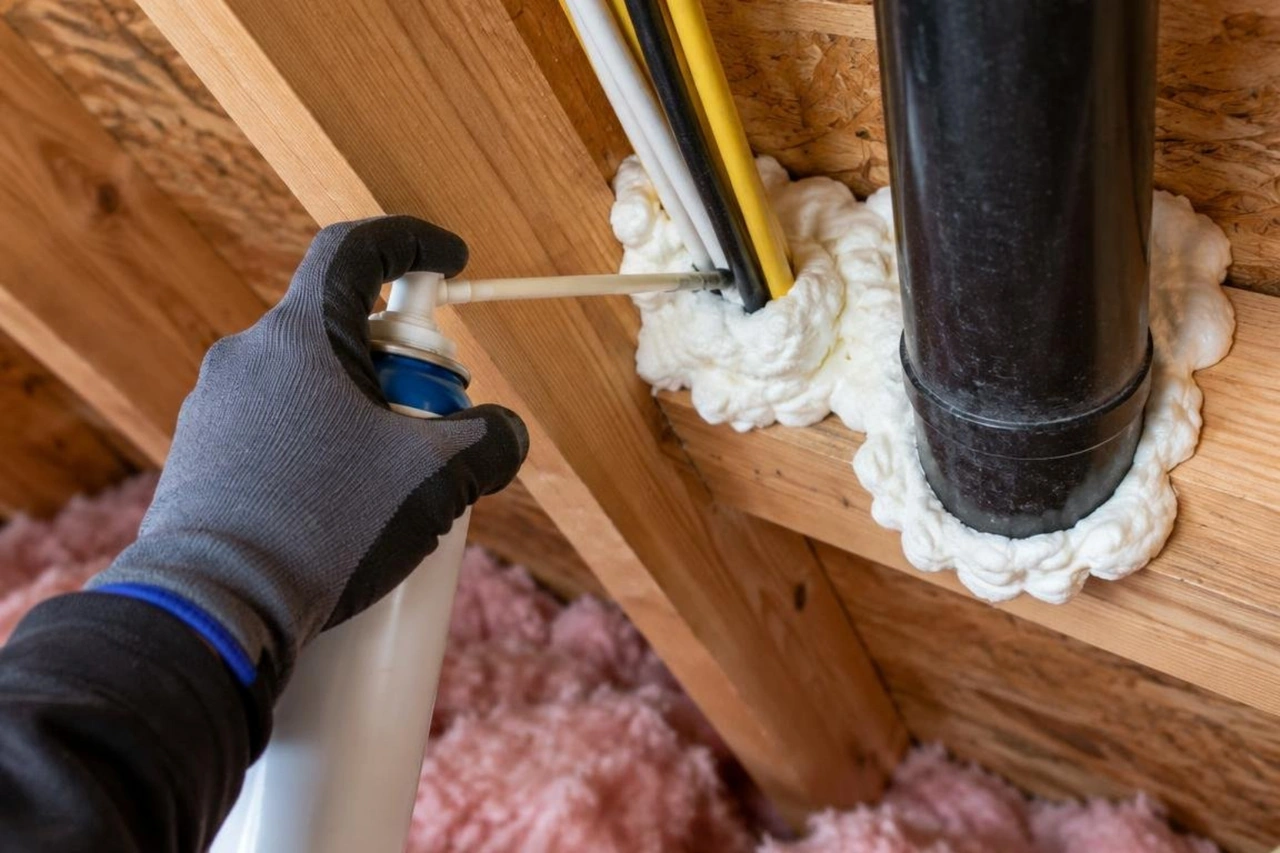
Step 1: Prioritize Attic Air Sealing
Air sealing the attic floor is usually the single most effective step you can take. Sealing stops the stack effect from pushing indoor humidity into the roof cavity.
Key air sealing priorities include:
- Attic access hatches and drop-down stairs: Install durable weatherstripping around the perimeter and attach rigid foam board insulation to the back of the cover.
- Recessed pot lights: Seal non-IC rated can lights with fire-rated covers, or upgrade to airtight, IC-rated LED fixtures sealed with expanding foam or mastic.
- Plumbing vent stacks and electrical wires: Use expanding foam sealant to close gaps where pipes and wiring penetrate the top plates of interior walls.
- Chimney and flue chases: Seal clearances around metal chimneys and masonry chases using sheet metal and high-temperature fire-rated caulk.
- Top plates of partition walls: Pull back insulation along interior wall lines and seal the joint between drywall and wood framing with expanding foam.
Step 2: Control Indoor Winter Humidity
During Northwoods cold snaps, outdoor air is dry, but indoor humidity can climb quickly. In sub-zero weather, indoor relative humidity should ideally be kept between 30% and 35%. If you notice heavy condensation on the inside of your double-pane windows, your indoor air is likely too humid, and that same moisture is likely reaching your attic.
Practical humidity control steps:
- Turn down or temporarily shut off central humidifiers when temperatures drop below zero.
- Run bathroom exhaust fans during showers and let them run for 20 minutes afterward to clear steam.
- Be sure to run your range hood fan when boiling water or cooking on the stove.
- Avoid drying wet firewood or hanging large loads of laundry inside the house.
Step 3: Repair and Insulate Exhaust Fan Ducts
Make sure every bathroom and kitchen exhaust fan vents directly through an insulated duct to a dedicated roof or gable vent cap with a backdraft damper. Flexible vinyl or foil ducts should be replaced with smooth, rigid metal piping wrapped in R-6 or R-8 insulation. Insulating the duct helps keep moisture from condensing inside the pipe and running back down into the fan housing.
Upgrading Ventilation and Insulation Systems the Right Way
Once air sealing is completed, evaluating your attic's ventilation and insulation balance ensures long-term protection.
Ensuring Balanced Ventilation
Building codes generally recommend a minimum attic ventilation ratio of 1:300 (one square foot of net free ventilating area for every 300 square feet of attic floor space, when balanced between intake and exhaust).
- Intake airflow (soffits): Continuous perforated soffit vents or evenly spaced intake louvers allow fresh, cold air into the attic.
- Rafter baffles (vent chutes): Install rigid polystyrene or cardboard baffles in every rafter bay before adding insulation. These baffles keep loose-fill insulation from tumbling into the eaves and choking off airflow.
- Exhaust airflow (ridge vents): A continuous ridge vent along the roof peak lets warm air and humidity exit naturally.
Why Adding Insulation Alone Does Not Solve Frost
A common mistake is blowing additional fiberglass or cellulose into an attic without sealing air leaks first. Adding more insulation makes the attic ceiling below warmer, but it makes the attic cavity and roof decking colder. If warm, humid air still leaks through unsealed bypasses, it will hit an even colder roof deck, potentially creating thicker frost than before. Air sealing should come first.
If moisture issues have gone unnoticed for multiple seasons, your roof sheathing may show signs of rot, mold, or structural sagging. In these situations, it is wise to evaluate whether to repair or replace a leaking roof before investing in new interior insulation.
At Eagle River Roofing, we exclusively install GAF shingles for residential asphalt replacements, pairing them with matched intake and exhaust ventilation components. For homes with low slopes or heavy snow loads around St. Germain and Three Lakes, snow-ready standing seam metal roofing can also provide a durable option depending on your home and budget.
Frequently Asked Questions About Winter Attic Frost
Will adding more insulation to my attic stop frost from forming?
No. Simply adding more insulation without first sealing air bypasses can actually make attic frost worse. Insulation slows down heat transfer, which makes the attic space and roof sheathing even colder during winter. If moist air continues to escape through unsealed gaps around lights, pipes, and access doors, that vapor will hit the colder roof deck and freeze even faster. Be sure to complete thorough air sealing and verify balanced ventilation before increasing insulation depth.
Is a small amount of frost normal in an attic during severe sub-zero cold?
A very light, temporary dusting of frost crystals on nail tips during an extreme cold snap (such as minus-20 degrees) can occur in northern climates. When temperatures recover, that light dusting often evaporates through normal ventilation without dripping. However, thick layers of frost across sheathing boards, heavy ice buildup, or dripping water during thaws are clear signs of air leakage, high indoor humidity, or restricted ventilation that should be addressed.
Can unaddressed attic moisture and improper ventilation void my roof warranty?
Yes, they can. Most major shingle manufacturers require adequate, balanced attic ventilation (typically meeting the 1:300 ventilation guideline) as a condition of their warranty coverage. Severe, unaddressed moisture buildup can cause roof deck warping, rot, and premature shingle blistering. Reviewing what can void a roof warranty can help you maintain valid coverage on qualifying projects.
How Can Eagle River Roofing Help Protect Your Home This Winter?
Dealing with winter frost and ceiling drips can feel stressful, but understanding the underlying cause makes finding a solution straightforward. Resolving attic frost requires a coordinated approach:
- Seal ceiling air leaks to keep warm, moist air inside your living space.
- Manage indoor humidity during extreme winter cold snaps.
- Maintain balanced intake and exhaust ventilation so your roof deck stays cold and dry.
Eagle River Roofing is locally owned and operated right here in northern Wisconsin. Founded in late 2023, our leadership team is built on a 50-plus year legacy of local hands-on roofing experience across Eagle River, Rhinelander, Minocqua, and surrounding Northwoods communities. Over the decades, our team's work has encompassed more than 9,000 roof installations and 8 million feet of seamless gutters.
As a GAF Master Elite contractor, we install durable roofing systems designed for heavy snow loads, sub-zero cold, and freeze-thaw cycles. We take pride in delivering clear written quotes, maintaining tidy job sites, and providing clear communication so your roofing projects remain low-stress from start to finish.
If you are seeing frost in your attic, dealing with ceiling drips during winter warmups, or struggling with chronic ice dams, we are here to help. Reach out to our local team today to discuss your roof and schedule a thorough ventilation and roof evaluation.
This article is for general informational purposes only and may not reflect the most current products, pricing, codes, availability, weather-related recommendations, or roofing requirements for your specific property. Every home and roof is different, especially in the Northwoods. Please contact Eagle River Roofing directly for the latest information and guidance for your project.

