Why Every Northwoods Homeowner Needs a Roof Inspection Checklist
A roof inspection checklist helps you catch small problems before they turn into expensive repairs or full replacements. Here's what to check:
Quick Roof Inspection Checklist:
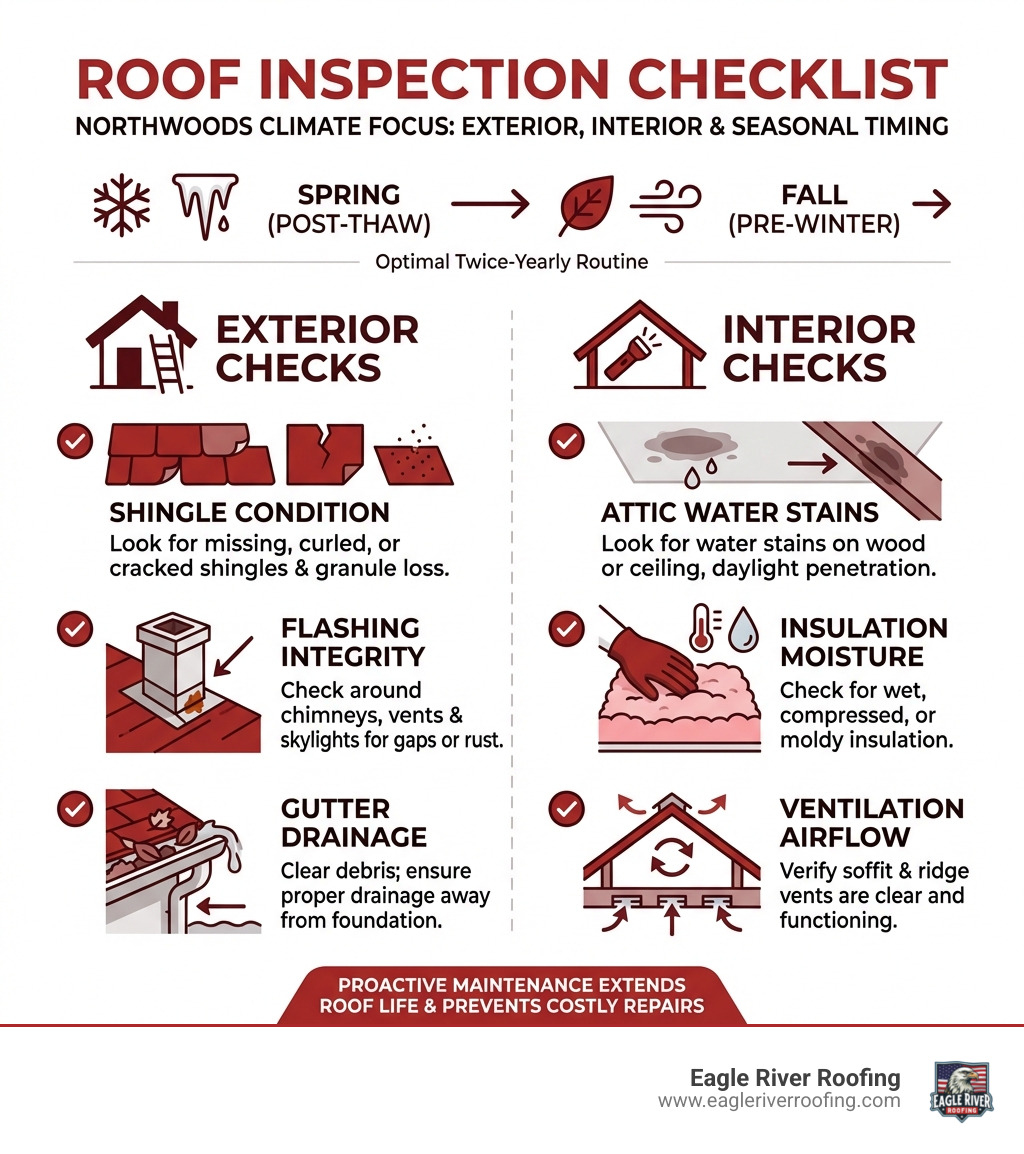
- Exterior shingles - Look for missing, curled, or cracked shingles and granule loss
- Flashing - Check around chimneys, vents, and skylights for gaps or rust
- Gutters - Clear debris and ensure proper drainage away from foundation
- Attic interior - Look for water stains, daylight penetration, and wet insulation
- Roof deck - Check for sagging areas or soft spots
- Ventilation - Verify soffit and ridge vents are clear and functioning
In the Northwoods, your roof works overtime. Heavy snow loads, ice dams, freeze-thaw cycles, and summer storms put constant stress on every component. A proactive roof inspection twice per year can save you thousands of dollars in emergency repairs and extend your roof's lifespan by 5 to 10 years—especially critical when you're dealing with Wisconsin winters that can dump three feet of snow in a week.
Most homeowners wait until they see a water stain on the ceiling or notice shingles in the yard after a windstorm. By then, the damage has already spread. A simple 30-minute visual inspection from the ground—paired with a quick attic check—can reveal problems early, when they're still cheap to fix.
This guide walks you through a complete roof inspection checklist covering both exterior and interior warning signs. You'll learn what to look for from ground level, when it's safe to inspect yourself, and when to call in a professional. We'll also explain how Wisconsin's harsh climate creates unique roofing challenges and what those mean for your inspection routine.
I'm Tyler Blair, and at Eagle River Roofing we've applied roof inspection checklists to thousands of homes across the Northwoods, from identifying early flashing failures to diagnosing ventilation issues that lead to ice dams. Whether you're maintaining a GAF shingle roof, a standing-seam metal system, or a commercial flat membrane, understanding what to inspect—and when—keeps your biggest investment protected year-round.
Why Regular Roof Inspections Matter in the Northwoods
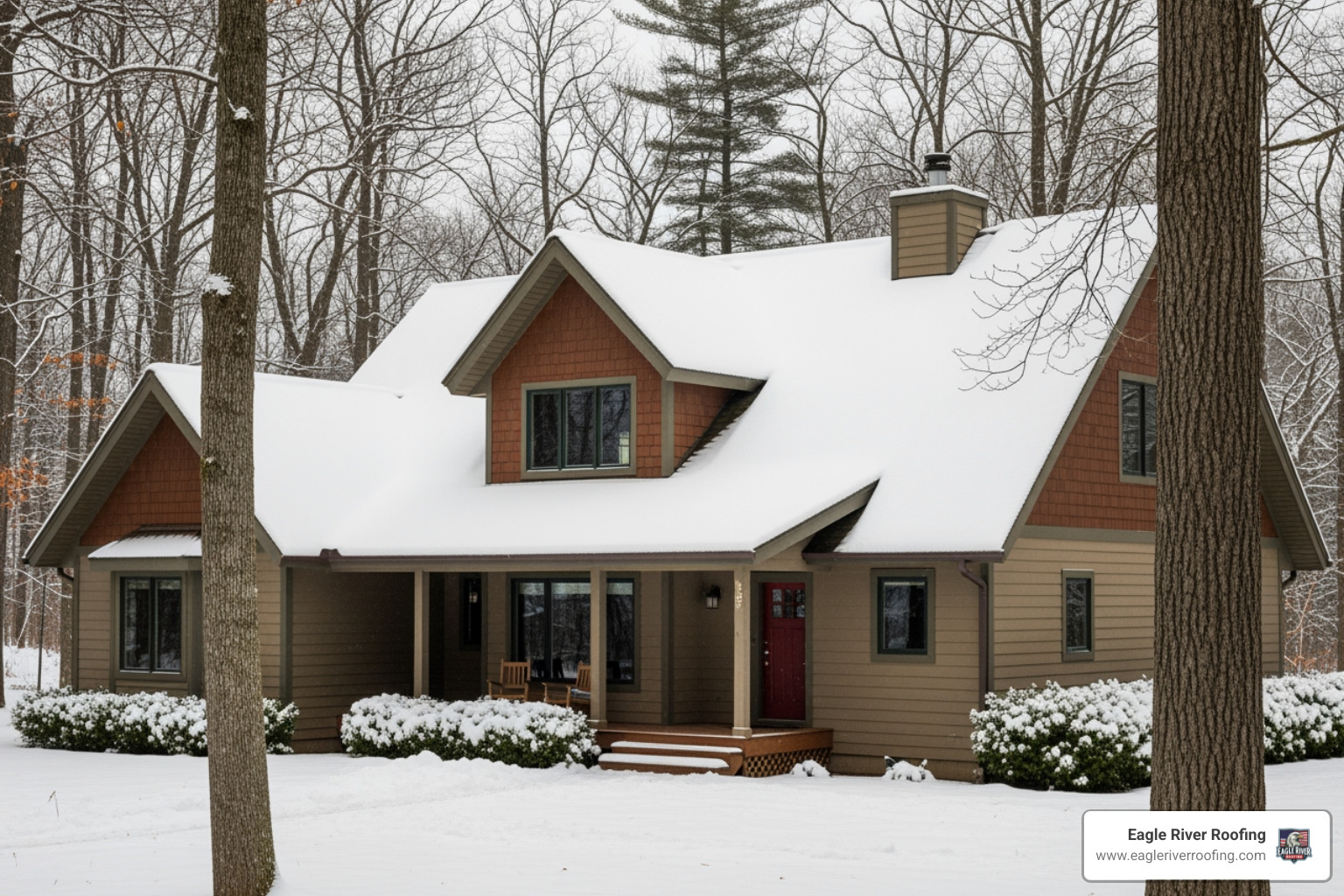
Living in places like Eagle River, Minocqua, or Rhinelander means our homes face some of the toughest weather in the country. We aren't just worried about a little rain; we’re dealing with the "Big Three" of Northwoods roof killers: heavy snow loads, brutal ice dams, and high-wind summer storms.
Regularly using a roof inspection checklist is like getting a physical at the doctor. It’s preventative medicine for your house. Routine inspections help you catch small issues before they become expensive repairs. For example, addressing a few loose shingles or a minor leak costs far less than replacing water-damaged decking or repairing interior ceiling damage.
If you ignore your roof, the financial drain is real. A full roof replacement cost can range anywhere from $5,860 to over $13,150 depending on the size and material. By staying on top of our roofing services, you can extend your roof's lifespan by 5 to 10 years.
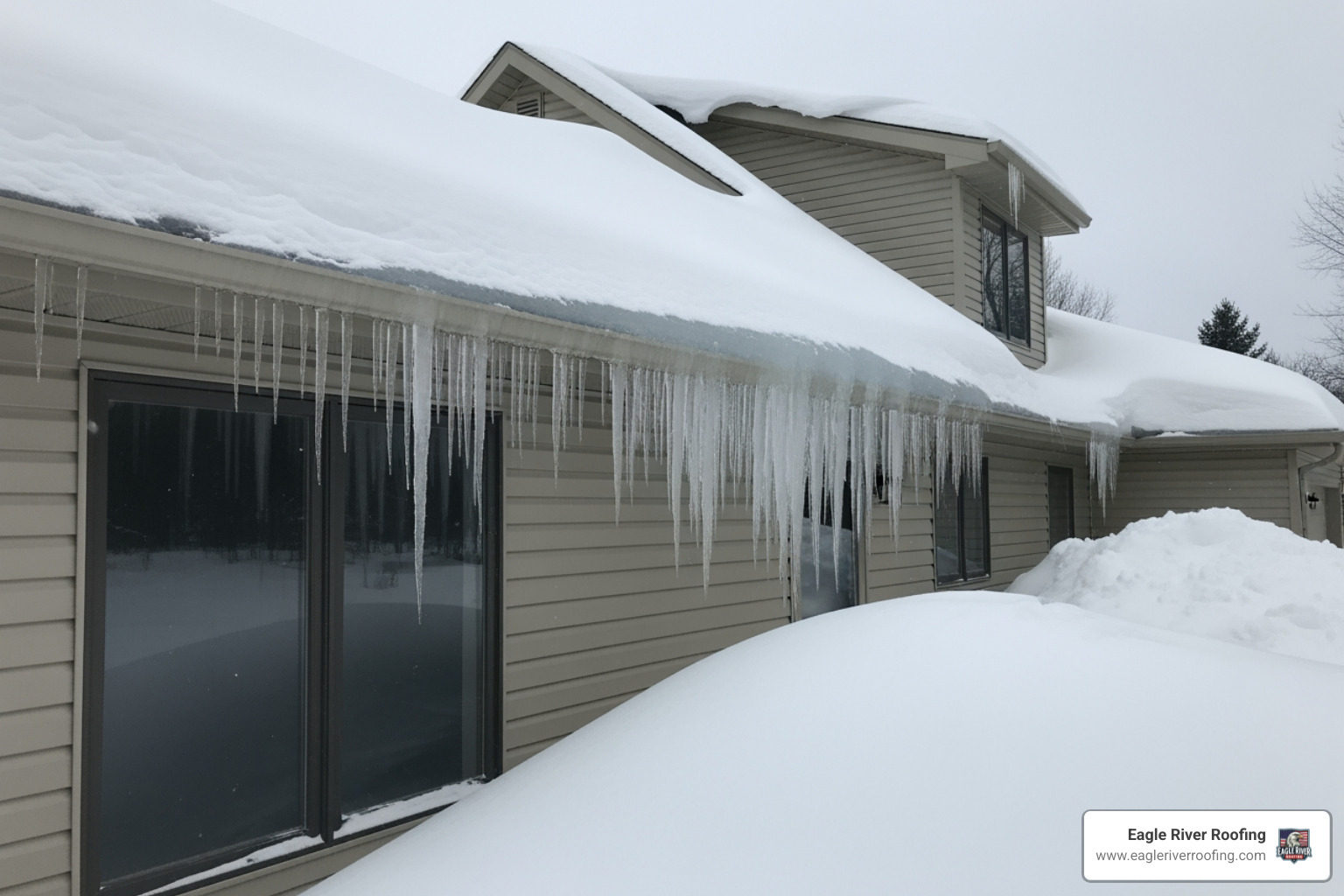
One of the biggest reasons to inspect in our area is ice dam prevention. When heat escapes your attic, it melts the snow on the roof. That water runs down to the cold eaves and freezes, forming a block of ice that backs up under your shingles. This causes rot and interior leaks. A thorough inspection helps identify the ventilation and insulation issues that cause these dams before the first blizzard hits.
Your DIY Roof Inspection Checklist: The Exterior
You don’t always need to climb a ladder to get a good idea of your roof’s health. In fact, for most homeowners, we recommend staying on the ground. Your safety is more important than a close-up look at a shingle.
Grab a pair of binoculars and walk around your property. Look at the roof from every angle—sometimes you can get a better view from across the street or the alley. You’re looking for "visual cues" that something is wrong. If you see moss or algae growth, that’s a sign of trapped moisture. While algae (those dark streaks) is mostly cosmetic, moss grows in thick patches that can lift shingles and hold water against the roof deck, leading to rot. If you see these signs, it might be time for roof repairs to prevent structural damage.
Essential Exterior Roof Inspection Checklist Items
When you’re looking through those binoculars, here are the specific items to check off your list:
- GAF Shingle Condition: We only install GAF architectural shingles because they are built for our climate. Look for shingles that are cracked, curled at the edges, or missing entirely.
- Granule Loss: Check your downspouts for what looks like coarse sand. These granules protect shingles from UV rays. Excessive loss means your shingles are reaching the end of their life.
- Chimney Flashing: This is the metal "collar" around your chimney. Look for rust, gaps, or cracked caulking. This is one of the most common leak spots we see in the Northwoods.
- Pipe Boots: These are the rubber seals around the vent pipes sticking out of your roof. Wisconsin winters are hard on rubber; look for "dry rot" or cracking.
- Sagging Ridges: Look at the peak of your roof. If it looks like a "swayback" horse, you might have structural issues with your rafters.
For more deep dives into specific material types, check out our Knowledge Center.
Gutters and Drainage Systems
Your gutters are actually part of your roofing system. If they are clogged, water can back up under your shingles or dump right next to your foundation, causing basement floods.
During your inspection, look for standing water in the gutters—this means they aren't sloped correctly. We recommend seamless gutters because they have fewer fail points. Also, check that your downspout extensions are carrying water at least five feet away from your home's foundation. In our area, we also highly recommend gutter guards to keep those pine needles and maple seeds from creating "gutter gardens" that weigh down your eaves.
Checking the Interior: Attic and Ceiling Signs
The "inside" part of your roof inspection checklist is just as important as the outside. This is where you find the evidence of leaks that haven't made it through your drywall yet.
Head up to the attic with a bright flashlight. Here is what you need to look for:
- Water Stains: Look for dark spots or "rings" on the rafters and trusses. Even if they feel dry now, a stain means water was there at some point.
- Daylight Penetration: Turn off your flashlight. Do you see any "stars" or pinpricks of light coming through the roof deck? If light can get in, water can too.
- Wet Insulation: If your insulation is matted down, wet, or smells musty, you have a leak or a major condensation problem.
- Mold Odors: A musty smell in the attic is a huge red flag. It usually means your attic ventilation isn't working, trapping moist air that rots your roof from the inside out.
When to Call a Professional for a Roof Inspection Checklist
While a DIY check is great for monthly maintenance, there are times when you need a professional eye. Roofing is dangerous work—any roof with a pitch steeper than 8/12 (a "steep" roof) is too dangerous for an untrained person to walk on.
Safety risks aside, professionals have "trained eyes" for leak diagnostics. We can often find the source of a mystery leak that a homeowner might miss. Plus, having a professional report can be vital for extending roof lifespan and maintaining your manufacturer's warranty.
Using Your Roof Inspection Checklist After a Storm
In the Northwoods, summer hailstorms and wind events are common. After a big storm, you should always run through your checklist. Look for:
- Hail Damage: Small dimples or circular depressions in shingles.
- Wind Uplift: Shingles that aren't missing but are "lifted," breaking the sealant bond.
- Fallen Branches: Even small limbs can puncture a roof or scrape off protective granules.
If you suspect storm damage, call us for a professional assessment. We specialize in storm restoration and can help you document the damage for insurance claims.
Professional Tools and Expertise
When we come out for a pro inspection, we use more than just binoculars. We look for structural anomalies and use specialized techniques:
- Infrared Thermography: This helps us find "hidden" moisture in your insulation that hasn't dripped through the ceiling yet.
- Commercial Membrane Checks: For our commercial clients with flat roofs, we check for plys, blisters, and "fishmouths" (openings in the seams).
- Standing-Seam Evaluation: We check metal roofs for mechanical damage, rust, and proper fastener tension.
Frequently Asked Questions about Roof Maintenance
| Feature | DIY Inspection | Professional Inspection |
|---|---|---|
| Cost | Free | Usually $75 - $300 |
| Safety | High Risk (if climbing) | Low Risk (for homeowner) |
| Equipment | Binoculars/Flashlight | Drones/Infrared/Harnesses |
| Documentation | Personal Notes | Official Warranty/Insurance Report |
| Leak Detection | Surface Level | Deep Diagnostic |
How often should I perform a roof inspection?
You should perform a roof inspection checklist at least twice a year: once in the spring to see what winter did to your roof, and once in the fall to prepare for the coming snow. Additionally, you should do a quick visual check after any severe weather event. If your roof is over 15 years old, we recommend moving to quarterly checks.
Can I inspect my own roof safely?
Yes, as long as you stay on the ground! Use binoculars for the exterior and a ladder only to access your attic hatch for the interior. Never walk on a wet roof, a steep roof, or a roof made of tile or wood shakes, as these can be incredibly slippery or easily damaged by foot traffic.
What are the most common roof problems in Wisconsin?
In the Eagle River and Rhinelander area, the most common issues are:
- Ice Dams: Caused by poor attic ventilation and insulation.
- Heavy Snow Load: Can cause rafters to bow or crack.
- Shingle Blow-offs: From high winds during summer thunderstorms.
- Flashing Leaks: Especially around chimneys where snow tends to pile up and sit.
Conclusion
Your roof is your home's first line of defense against the elements. In the Northwoods, that defense needs to be ironclad. By using this roof inspection checklist regularly, you're protecting your family and your wallet from the surprises that Wisconsin weather loves to throw our way.
At Eagle River Roofing, we pride ourselves on our Northwoods expertise. We are GAF certified, meaning we provide the best shingle installations in the business. We also specialize in standing-seam metal and commercial flat roofs. We promise tidy job sites, clear communication, and a roof built to last through the harshest winters.
Don't wait for a leak to start. Get ahead of the weather today. If you've found something concerning on your checklist, use our Instant Estimate tool or give us a call. We’re here to keep you covered!
This article is for general informational purposes only and may not reflect the most current products, pricing, codes, availability, weather-related recommendations, or roofing requirements for your specific property. Every home and roof is different, especially in the Northwoods. Please contact Eagle River Roofing directly for the latest information and guidance for your project.

