
Can You Replace a Roof in a Wisconsin Winter?
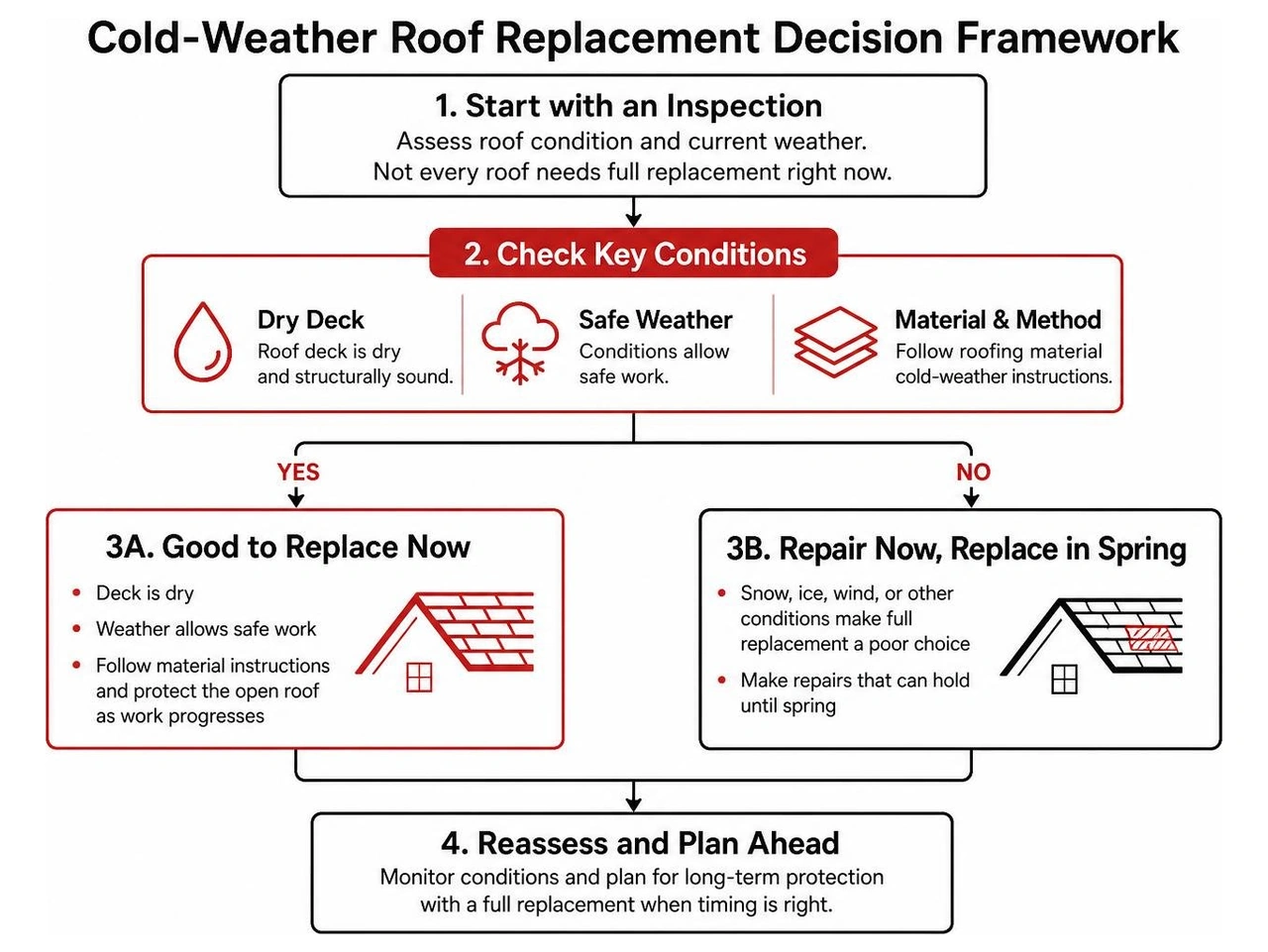
Often, yes. A roof can be replaced in a Wisconsin winter when the deck is dry, the weather allows safe work, and the crew follows the roofing material's cold-weather instructions. If snow, ice, or wind makes a full replacement a poor choice, a repair now and replacement in spring may be smarter.
For homeowners and cabin owners across Vilas and Oneida counties, including towns like Eagle River, Arbor Vitae, and Manitowish Waters, the first step is an inspection. Shingles need warmth to seal, while metal is less sensitive to cold during installation. Either way, we need a plan to protect the open roof from weather as work progresses.
I'm Tyler Blair, owner of locally owned Eagle River Roofing, and I help homeowners weigh a winter roof replacement against a repair that can hold until spring. Our GAF Master Elite team brings extensive local experience to every project, offering clear written quotes and tidy job sites.

Related winter roofing topics:
- asphalt shingle roof replacement costs in Wisconsin
- reducing recurring ice dams
- licensed roofing contractors
Planning late-season work across northern communities like Eagle River, Minocqua, and Rhinelander requires an honest look at how freezing temperatures change building materials. Understanding roof replacement timing in the Northwoods helps you make an informed choice before the heavy snow sets in.
When the thermometer drops, materials react differently. Asphalt products become stiffer and lose their natural flexibility. Tools need fine adjustments, and crews must monitor daily conditions to maintain quality. Cold weather does not stop a project completely, but it does mean we adjust our methods to protect your home.
Shingle Adhesion in Cold Weather
Residential shingle installations rely on heat to create a watertight bond. Standard shingles feature a factory-applied adhesive strip designed to bond tabs together once the sun warms the roof surface. In late fall or winter, the ambient temperature and lower sun angle mean that this thermal bonding process can pause until warmer weather returns.
For residential shingle roofs, we install GAF Timberline shingles. GAF's hand-sealing bulletin says to hand-seal shingles when installing in cold weather in the fall or winter, using dabs of roofing cement under the shingles. According to GAF, cool-weather installs don't affect the warranty when all GAF application instructions are followed, including hand sealing. This helps keep the installation aligned with proper roof warranty coverage, depending on the product and registration.
Metal Roofing in Cold Weather
Metal roofing serves as an adaptable option when winter approaches. Unlike asphalt shingles, standing seam metal panels do not rely on chemical adhesives or sun-activated seal strips to lock together. They use mechanical seams and concealed fasteners that can be installed in low temperatures without material brittleness.
Standing seam panels allow for natural thermal expansion and contraction across freeze-thaw cycles. Smooth metal surfaces also help shed heavy snow accumulations and reduce areas where pine needles and winter debris can gather. While metal is an investment that may not suit every project budget, it remains a strong option when choosing a roof for snow and ice dams in heavy snow country.
How Northwoods Weather Shapes Late-Fall Roofing
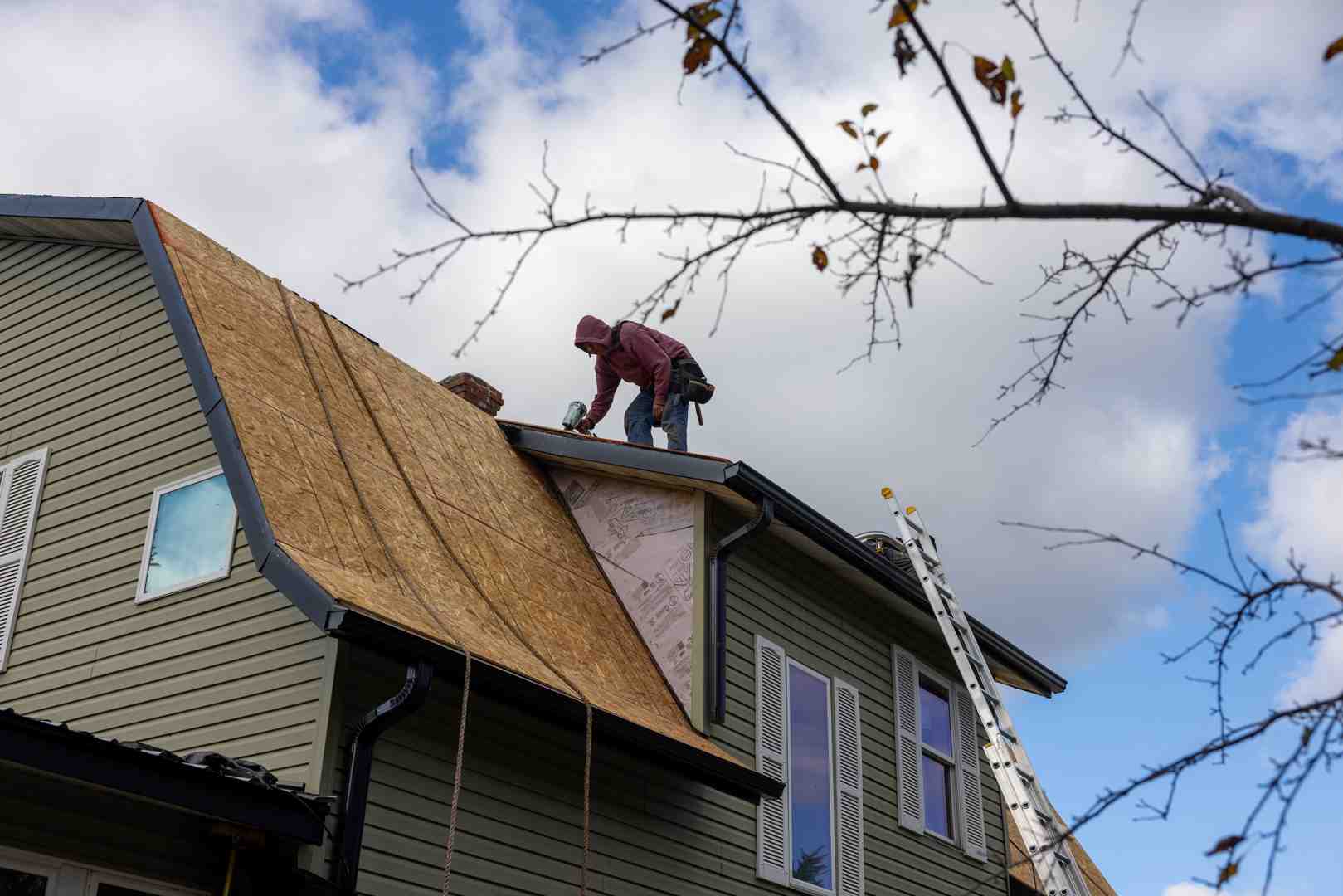
Winter roof work in St. Germain, Three Lakes, Arbor Vitae, Manitowish Waters, and nearby lake communities demands careful respect for regional conditions. Shorter daylight hours reduce daily working windows, meaning our crews focus on measured sections of the roof each day. Morning frost, wind chill off open lakes, and sudden flurries require active jobsite monitoring to keep workers safe and roof decking dry.
| Roofing Material | Cold Weather Suitability | Key Installation Requirement | Snow Shedding Ability |
|---|---|---|---|
| GAF Asphalt Shingles | Reliable with cold-weather adjustments | Manual hand sealing with asphalt cement | Moderate, retains snow blanket |
| Standing Seam Metal | High suitability in sub-freezing air | Mechanical seam fastening | High, often sheds snow loads quickly |
Managing winter conditions also involves understanding the weight of winter precipitation. Homeowners often ask about managing snow load on a Northwoods roof to protect structural decking from unnecessary strain before replacement begins.
In the Northwoods, late-fall roofing also means planning around freeze-thaw cycles. A roof deck that looks dry at sunrise can develop a thin frost layer by mid-morning, so our crews check surface conditions before laying underlayment. We also stage materials close to the work area to reduce trips across icy ground, and we keep tarps and temporary covers ready for sudden snow squalls. These small adjustments help keep a winter project moving without putting your home or our crew at unnecessary risk.
Winter Installation Protocols and Property Preparation
Careful staging helps protect your landscaping, decks, and walkways from winter hazards.
Daily Dry-In and Deck Protection

A dry roof deck is essential before applying new materials. Our crews do not install underlayment or shingles over frost, ice, or moisture. Doing so could trap dampness against the wood sheathing.
We aim to tear off only the section of roof we can dry in before dusk. We apply a self-adhering leak barrier along the eaves and valleys, extending up the slope to defend vulnerable transitions. We then cover the exposed decking with high-performance synthetic underlayment, securing the edges to create a dependable daily dry-in. This measured approach helps manage how roof replacement duration is managed during cold months.
Homeowner Preparation Checklist
Homeowners and cabin owners can help ensure a smooth project by taking a few straightforward preparation steps:
- Clear snow and ice from the plow path, driveways, walkways, and access routes so delivery trucks and work crews can park safely.
- Move personal vehicles out of the garage and away from the house perimeter before work starts.
- Keep household pets indoors and secure during work hours to reduce stress from exterior construction noise.
- Ensure clear access to your attic space in case our team needs to inspect decking or ventilation channels.
- Move outdoor furniture, potted plants, and decorations away from the eaves so tarps and ground protection can be placed securely.
We also ask homeowners to let us know about any buried downspout drains, invisible pet fences, or low-voltage landscape lighting near the work area. Marking those spots before we set up ladders and ground protection can help avoid winter damage that is easy to miss under snow cover.
Knowing When to Wait for Spring
Winter replacement is not always the best path forward. If an older roof shows minor wear without active leaks, planning a project for spring allows for warmer installation temperatures and natural adhesive activation.
If a leak appears late in the season, a targeted repair or short-term weatherproofing can often protect the structure through the coldest months. Addressing localized problem spots buys time and helps homeowners evaluate long-term options for reducing recurring ice dams without the pressure of an urgent winter build.
A spring project can also make sense when a roof has widespread granule loss, curling shingles, or soft decking that needs more extensive replacement. Waiting for stable weather gives our crew longer daylight windows and lets the factory adhesive strips activate naturally. If you are unsure whether your roof can wait, we can inspect the decking, attic ventilation, and flashing now and give you a clear written recommendation for either a winter repair or a spring replacement.
Frequently Asked Questions About Cold Weather Roofing
Can asphalt shingles seal properly during freezing temperatures?
Factory adhesive strips stay dormant until exposed to steady warmth and sunlight. When we install GAF shingles in cold conditions, we follow manufacturer instructions by manually hand sealing tabs with asphalt roofing cement. This process helps hold the shingles in place until spring sunshine naturally warms the roof and activates the factory strip.
Is a winter roof replacement covered by manufacturer warranties?
It can be, when materials are installed in accordance with the manufacturer's cold-weather guidelines. As a GAF Master Elite contractor, Eagle River Roofing can provide premium warranty options, including the GAF Golden Pledge warranty on qualifying projects, depending on the product and proper registration.
When is a temporary repair better than late-season replacement?
If weather forecasts indicate heavy blizzards, sustained extreme sub-zero temperatures, or thick ice accumulation on the roof deck, a temporary repair is often the safer, more practical choice. A minor repair can stop or reduce active water intrusion and protect your home interior until stable spring weather arrives.
How do you keep a winter roof replacement safe for the crew?
We watch wind speeds, roof surface frost, and daylight conditions throughout the day. Crews use fall protection, clear snow from work areas, and pause work when ice or high winds make the roof unsafe. We also keep the job site tidy with daily cleanup and magnetic sweeps so nails and metal scraps do not hide under snow.
Conclusion
A successful cold-weather roofing project comes down to careful planning, dry decking, and proven installation methods. Locally owned Eagle River Roofing brings extensive Northwoods experience to every project across northern Wisconsin.
As a certified GAF Master Elite contractor, we stand behind our workmanship on qualifying installations. We provide photo-backed inspection findings, clear written quotes, and tidy job sites cleaned daily with magnetic sweeps. We never use high-pressure sales tactics. For a free, no-pressure estimate, call (715) 892-8328 Monday to Friday, 8 to 5, or start with the instant estimate.
Sources
This article is for general informational purposes only and may not reflect the most current products, pricing, codes, availability, weather-related recommendations, or roofing requirements for your specific property. Every home and roof is different, especially in the Northwoods. Please contact Eagle River Roofing directly for the latest information and guidance for your project.

