
Why House Soffit Replacement Matters for Your Northwoods Home
House soffit replacement is the process of removing and installing new panels on the underside of your roof's overhang, and it's one of the most important exterior repairs you can make to protect your home.
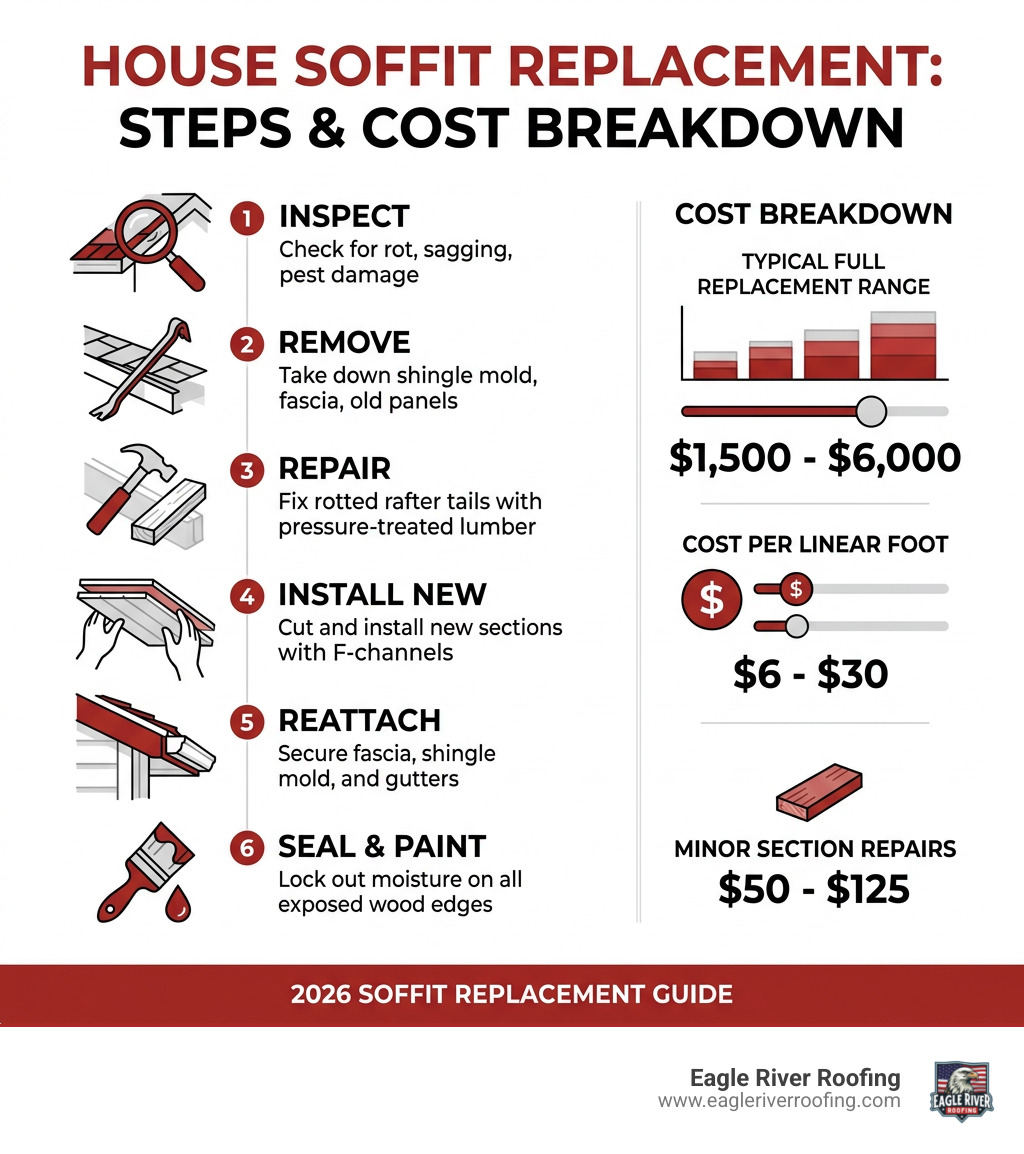
Here's a quick overview of what the job involves:
- Inspect the existing soffits for rot, sagging, or pest damage
- Remove the shingle mold, fascia, and damaged soffit panels
- Repair any rotted rafter tails with pressure-treated lumber
- Cut and install new soffit sections with proper F-channels
- Reattach the fascia, shingle mold, and gutters in the correct order
- Seal and paint all exposed wood edges to lock out moisture
Replacing damaged soffits typically costs $6 to $30 per linear foot, or roughly $1,500 to $6,000 for a full home depending on materials and labor. Minor section repairs can run as low as $50 to $125.
Up in the Northwoods, soffits take a beating. Ice, snow, freeze-thaw cycles, and the occasional squirrel looking for a warm winter home can quietly turn a small crack into a rotted mess. By the time most homeowners notice peeling paint or a sagging panel, the damage has often already spread to the fascia or rafter tails underneath.
The good news? Most soffit repairs are DIY-friendly, and even a full replacement is a manageable project when you know the right steps.
I'm Tyler Blair, co-owner of Eagle River Roofing, and between our team's combined track record of over 9,000 roofs installed across the Northwoods, house soffit replacement is something we deal with regularly alongside roof replacements and gutter work. In this guide, I'll walk you through everything you need to know to get it done right.
House soffit replacement glossary:
Understanding the Role of Your Home’s Soffit System
If you stand on your lawn in Eagle River or Minocqua and look up at your roof's edge, the soffit is that horizontal panel connecting the exterior wall to the roof overhang. It might look like just a piece of trim, but it is actually the "lungs" of your home.
The primary job of a soffit is to house intake vents. These vents allow cool, fresh air to enter the attic space. As the air warms up, it rises and exits through ridge vents or gable vents at the top of the roof. This continuous cycle is vital for attic ventilation. Without this airflow, heat and moisture get trapped. In the summer, a stifling attic can bake your shingles from the inside out and send your cooling bills through the roof.
In our neck of the woods, soffits play an even more critical role during the winter. When heat escapes from your living space into the attic, it warms the roof deck, melting the snow above. That water runs down to the cold eaves and freezes, creating ice dams. A well-ventilated soffit keeps the roof deck temperature consistent, which is your first line of defense against those nasty ice dams that can tear apart your shingles.
Beyond breathing, soffits act as a physical barrier. They keep out driving rain and prevent local critters like squirrels, birds, and wasps from turning your attic into a high-end apartment. If your soffits are rotting or have holes, you are essentially hanging a "Vacancy" sign for every pest in the Northwoods. Keeping them in top shape is also closely tied to your gutter services, as overflowing gutters are the number one cause of soffit rot.
Signs You Need a House Soffit Replacement
How do you know if it's time to stop painting and start prying? Sometimes the signs are obvious, but other times you have to look a little closer.
- Peeling Paint and Water Stains: If you see paint flaking off or dark, tea-colored stains on the underside of your eaves, water is getting where it shouldn't. This often happens because of a leaky gutter or a problem with the drip edge.
- Visible Wood Rot: Wood soffits are prone to rot if they stay damp. If the wood looks soft, crumbly, or has actual mushrooms growing out of it, a house soffit replacement is non-negotiable.
- Sagging or Cracked Panels: Vinyl or aluminum panels that are bowing downward have likely lost their attachment points because the wood rafters or subfascia behind them have rotted away.
- Pest Activity: If you hear scratching in the attic or see birds constantly flying into the eaves, they've likely found a gap. Squirrels are notorious for chewing through soft, water-damaged wood to get inside.
- High Utility Bills: If your home feels stuffy or your AC is running non-stop in July, your soffit vents might be painted over or clogged with insulation, preventing proper airflow.
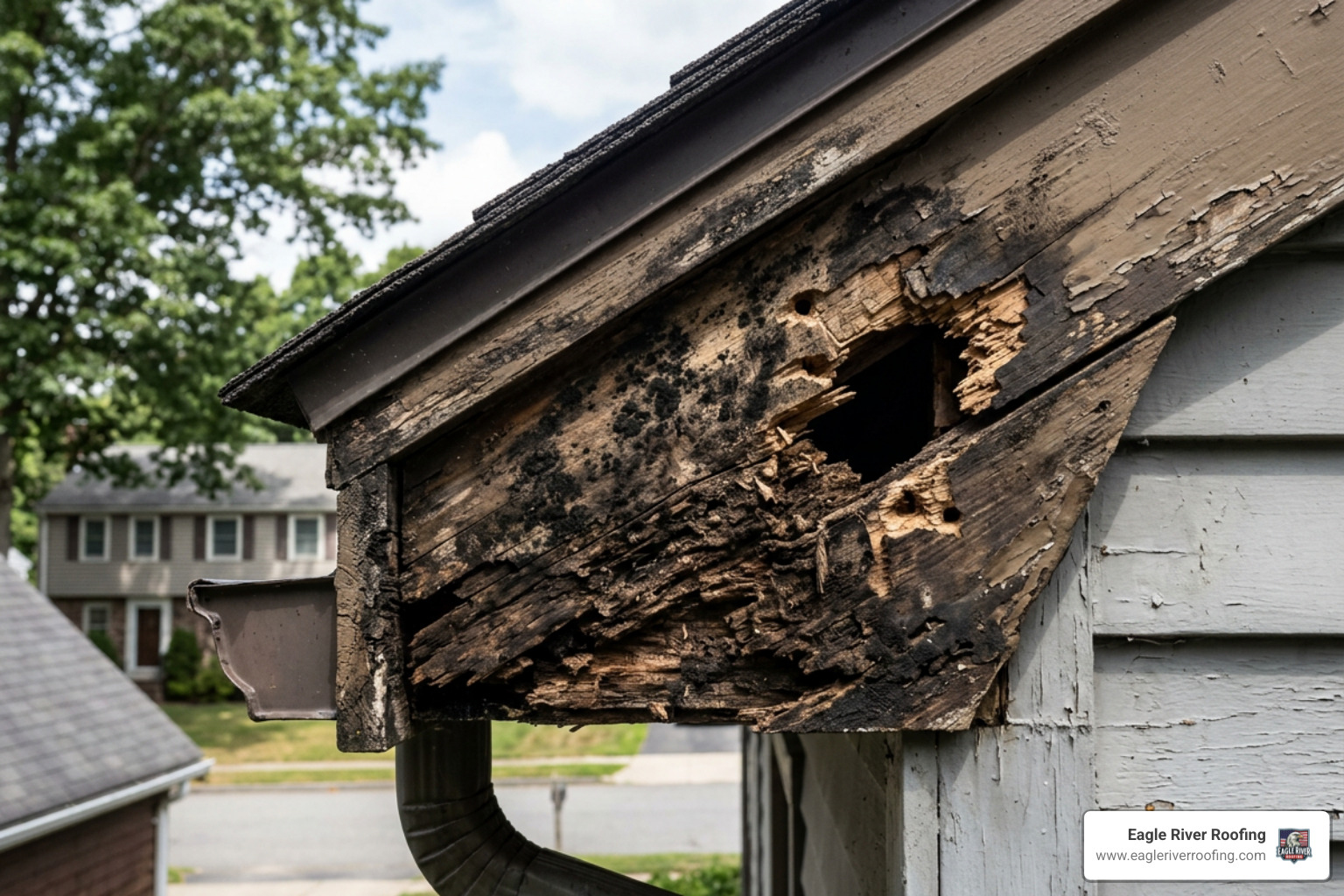
When you notice these issues, it is important to act fast. Rot is like a cold in a Northwoods winter; it spreads quickly. What starts as a small patch of mold on a soffit can quickly move into your fascia and even the rafter tails that support your entire roof structure. Check out our fascia and soffit replacement tips for more details on identifying these early warning signs.
Choosing the Right Materials for Northwoods Weather
When we perform a house soffit replacement in places like Three Lakes or Tomahawk, the material choice is everything. You want something that can handle 40-below temperatures and humid summers without warping or rotting.
| Material | Pros | Cons | Est. Cost (Linear Ft) |
|---|---|---|---|
| Vinyl | Low maintenance, affordable, won't rot | Can crack in extreme cold, limited colors | $4 - $10 |
| Aluminum | Durable, fire-resistant, easy to clean | Dents easily, more expensive than vinyl | $8 - $20 |
| Wood | Traditional look, very strong | High maintenance, prone to rot/pests | $14 - $25 |
| Fiber Cement | Fire-resistant, looks like wood | Heavy, requires professional installation | $10 - $22 |
For most Northwoods homeowners, we recommend vinyl or aluminum. Vinyl is fantastic because it never needs paint and comes in "hidden vent" styles that look clean while providing massive airflow. If you prefer the look of wood, fiber cement is a great alternative that offers better fire resistance and won't rot.
If you are sticking with wood for a historic look, always use pressure-treated lumber for any structural repairs and prime all sides of your plywood or boards before they go up. Applying a waxy sealer like AnchorSeal to the cut edges of wood can also help prevent moisture from wicking into the grain. At Eagle River Roofing, we always ensure that your soffit material is compatible with your GAF shingles to maintain a cohesive look and full system warranty.
How to Perform a House Soffit Replacement
Ready to roll up your sleeves? Replacing a soffit is a ground-accessible project, meaning you don't usually have to climb onto the roof deck itself, which makes it much safer for a DIYer. However, you will be working on a ladder, so safety is paramount.
The process generally involves removing the outer trim (the fascia), taking out the old soffit, fixing any rot underneath, and then putting it all back together. One of the best tips for how to repair a rotted soffit is to work in small sections so you don't leave the interior of your roof exposed to the elements for too long.
Tools needed for house soffit replacement
Before you start, head to the local hardware store and make sure you have these essentials:
- Flat pry bar: For gently removing shingle mold and fascia.
- Reciprocating saw: Essential for cutting out rotted rafter tails.
- Cordless drill/driver: For securing new panels and cleats.
- Safety glasses and work gloves: You'll be prying down old wood, and debris will fall toward your face.
- Circular saw or Jigsaw: For cutting soffit panels to size.
- Measuring tape: Accuracy is key for a snug fit.
- Tin snips: If you are using aluminum or vinyl soffit.
- Galvanized nails or stainless screws: To prevent rust streaks on your new trim.
Step-by-step guide for your house soffit replacement
- Remove Shingle Mold: Use your pry bar to gently pull away the small strip of molding at the very top of the fascia board. Work slowly so you don't crack it if you plan to reuse it.
- Detach the Fascia: If your fascia is rotted, you'll need to remove it to get to the soffit. If it's in good shape, you might be able to slide the soffit out, but removing the fascia usually makes the job ten times easier.
- Pull Down Old Panels: Most old soffits are nailed into the bottom of the rafters. Pry them down. Be prepared for old bird nests or squirrel debris to fall out!
- Inspect Rafter Tails: This is the most important step. If the ends of your rafters (the wood beams) are soft or black, they are rotted. Cut off the rotted section with your reciprocating saw and "sister" a new piece of pressure-treated lumber alongside it.
- Install Cleats: If your home doesn't have a subfascia, you may need to nail a small wood cleat (a 2x2 strip) along the wall of the house to give the inner edge of the soffit something to nail into.
- Cut and Slide New Sections: Measure the width of your eave. If using vinyl, install an F-channel along the wall. Cut your soffit panels about 1/4 inch shorter than the actual measurement to allow for expansion.
- Secure the Panels: Slide the panels into the F-channel and nail the outer edge into the subfascia or rafter tails. Use galvanized nails to prevent rust.
- Reattach Fascia and Gutters: Once the soffit is up, install your new fascia board. This is also the perfect time to upgrade to seamless gutters to ensure water stays away from your new wood.
When to Call a Professional for Your Project
While a single-story ranch house is a great DIY candidate, some projects are better left to the pros. At Eagle River Roofing, we often step in when:
- Height is an Issue: If you have a two-story home or a walk-out basement, working on a 30-foot ladder is dangerous without the right scaffolding and fall protection.
- Structural Rot: If the rot has traveled deep into the rafters or the top plate of your wall, you need a professional to ensure your roof remains structurally sound.
- Ventilation Upgrades: If your attic is consistently too hot, we can calculate the exact "net free vent area" needed and install high-flow vented soffits that meet GAF's strict warranty requirements.
- Steep Roof Pitches: Working under a steep gable can be tricky and requires specialized equipment.
- Time and Stress: We pride ourselves on tidy job sites and clear communication. We can often finish a full house soffit replacement in a day or two, whereas a DIY project might stretch over several weekends.
Frequently Asked Questions about Soffits
Can you replace a soffit without removing the fascia?
Technically, yes, but we don't recommend it. The fascia usually overlaps the edge of the soffit to provide a clean look and keep water out. If you try to jam a new soffit in without removing the fascia, you risk damaging the new panels or leaving gaps where moisture can get trapped. Removing the fascia allows you to inspect the rafter tails, which is where the real structural damage usually hides.
Should soffits be replaced before or after new gutters?
Always replace your soffits and fascia before installing new gutters. The fascia board is what supports the weight of the gutters (especially when they are full of heavy Northwoods slush). If you put new gutters on old, soft fascia, the whole system will eventually sag and pull away from the house. By doing the soffit first, you ensure a rock-solid foundation for your gutter system.
How often should I inspect my home's soffits?
We recommend a quick walk-around twice a year. Spring is a great time to look for winter ice damage or new bird nests. Fall is the time to make sure your vents aren't clogged with leaves or debris before the snow flies. If you've recently had a big storm with driving rain, it doesn't hurt to check for new water stains. Early detection is the difference between a $100 repair and a $5,000 replacement.
Conclusion
Your soffits are the unsung heroes of your Northwoods home. They keep your attic breathing, your roof cool, and the local wildlife exactly where they belong: outside. Whether you are tackling a house soffit replacement as a weekend DIY project or looking for a professional team to handle it alongside a new roof, the key is not to wait until the damage becomes a disaster.
At Eagle River Roofing, we specialize in durable installations designed specifically for the harsh winters of the Northwoods. From Eagle River to Rhinelander and everywhere in between, we provide clear communication and a low-stress experience. We only use high-quality GAF shingles for our residential projects, ensuring your home is protected by the best in the business.
If you’ve noticed sagging, rot, or peeling paint on your eaves, don't let your soffits suffer any longer. Contact us for expert roofing services today, and let’s make sure your home is ready for whatever the next season throws at it!
This article is for general informational purposes only and may not reflect the most current products, pricing, codes, availability, weather-related recommendations, or roofing requirements for your specific property. Every home and roof is different, especially in the Northwoods. Please contact Eagle River Roofing directly for the latest information and guidance for your project.

