How Does Wisconsin’s Climate Affect Asphalt Shingle Lifespan?
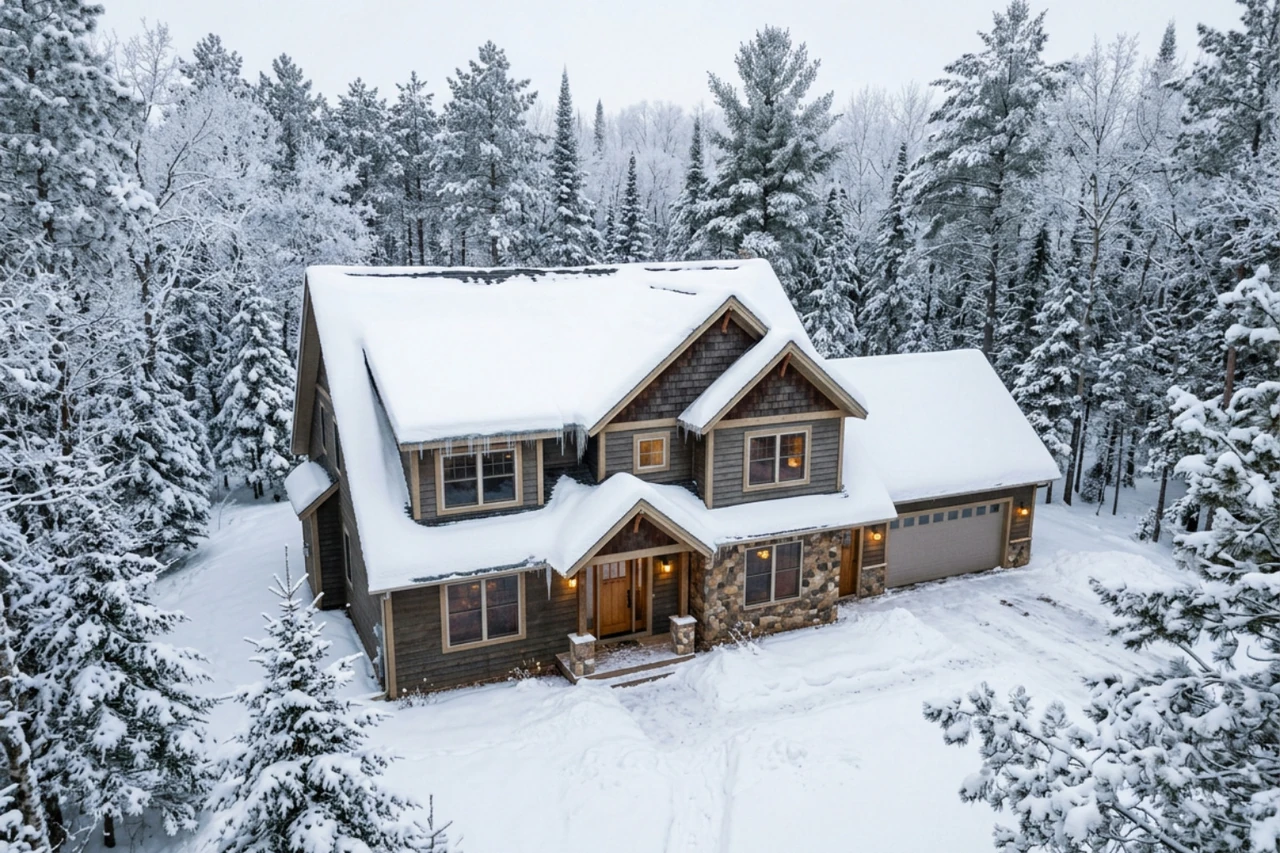
Living in the Northwoods means enjoying beautiful, distinct seasons, but those same seasons put your roof through an intense physical workout. The climate in northern Wisconsin is vastly different from the national average, and these regional weather patterns directly impact how long your asphalt shingles will remain durable.
The primary culprit behind premature roof aging is our extreme temperature swings. It is not uncommon for winter temperatures in places like Rhinelander or Eagle River to plunge to -30°F, only for the summer sun to bake those same shingles at 90°F with high humidity. This constant shifting causes shingles to expand and contract rapidly. Over time, this thermal shock makes the asphalt brittle, causing the protective mineral granules on the surface to loosen and shed.
Furthermore, our region experiences frequent freeze-thaw cycles. During early spring and late autumn, snow melts during the day and seeps into tiny crevices in and around your shingles. When the temperature drops below freezing at night, this water expands as ice, slowly prying the shingles apart, widening cracks, and loosening fasteners.
Lake-effect humidity from Lake Superior and our thousands of local inland lakes also plays a role. Damp, shaded roofs, especially those nestled under heavy tree canopy, stay wet longer. This lingering moisture creates a perfect breeding ground for moss, mold, and algae, which can rot the organic components of some shingles and hold moisture directly against the roof surface. To learn more about these environmental impacts, you can read about how long a roof lasts in the Wisconsin climate.
What are ice dams and how do they damage shingles?
Ice dams are one of the most destructive winter hazards for Northwoods roofs. They form when heat escaping from your attic melts the snow on the upper sections of your roof. As the meltwater flows down toward the cold eaves, which overhang the unheated exterior walls, it refreezes.
This process creates a solid wall of ice along your gutters. As more snow melts above, the water gets trapped behind this ice wall, forming a pool of standing water. Because shingles are designed to shed water flowing downward, they are not designed to handle standing water. The pool backs up, forces its way under the shingles, and bypasses the underlayment, leading to rotted roof decking, ruined insulation, and active indoor leaks. For a deeper look at this issue, see our guide on the best roof for snow and ice dams in Wisconsin.
How do pine needles and shade impact roof longevity?
In heavily wooded areas like St. Germain and Three Lakes, pine needles and falling leaves present a constant maintenance challenge. When needles accumulate in valleys, behind chimneys, and inside gutters, they trap moisture against the shingles.
Pine needles are naturally acidic. As they decay, they release acids that can slowly eat away at the protective asphalt coating of the shingles. Additionally, heavy shade prevents the sun from drying your roof after a rainstorm, accelerating the growth of wood-rotting fungi on your roof deck.
How Long Do Different Types of Asphalt Shingles Last in Wisconsin?
Not all asphalt shingles are built the same way. The specific type of shingle you choose for your home will play a major role in determining when you will next need a roof replacement.
| Shingle Type | Average Lifespan in Wisconsin | Wind Resistance Rating | Performance Under Snow Loads |
|---|---|---|---|
| 3-Tab Shingles | 12 to 17 Years | 60 to 70 MPH | Poor (prone to cracking and wind uplift) |
| Architectural (Dimensional) | 22 to 30 Years | 110 to 130 MPH | Excellent (heavy, multi-layered design) |
| Premium / Designer | 30+ Years (depending on registration) | Up to 150 MPH | Superior (thickest profile, maximum durability) |
Standard 3-tab shingles are flat, single-layered shingles. While they are budget-friendly upfront, they often fail early in northern Wisconsin. Because they are thin and light, they easily crack under heavy snow loads and are highly susceptible to wind uplift during severe spring storms.
Architectural shingles, also known as dimensional shingles, are manufactured with two or more layers of asphalt fused together. This gives them a textured look that mimics wood shakes. Their multi-layered construction makes them far more rigid, allowing them to handle the physical weight of heavy winter snow without cracking. You can read more about how these materials perform locally in articles discussing how long asphalt shingles last in Central Wisconsin.
Why do we recommend GAF architectural shingles over 3-tab options?
At Eagle River Roofing, we only install GAF shingles for our residential projects. GAF Timberline architectural shingles are designed to withstand extreme weather.
They feature a specialized adhesive strip that seals tightly to help resist wind uplift, offering wind resistance ratings up to 130 mph. Their heavy-duty construction handles the weight of deep snowpacks, and they feature built-in algae resistance to keep your roof looking clean despite high Northwoods humidity.
What is the lifespan of premium designer shingles?
Premium designer shingles are the thickest, heaviest asphalt options available. They are crafted to look like natural slate or hand-split wood shakes, adding incredible curb appeal to your home.
Because they contain more asphalt and stronger fiberglass mats, they are incredibly durable. In the Northwoods, a premium designer roof can easily last 30 or more years, depending on the specific product and registration, making them a fantastic long-term investment for your home.
Why Is Attic Ventilation the Number One Factor in Roof Longevity?
You can buy the most expensive shingles on the market, but if your attic ventilation is poor, your roof will fail prematurely. Ventilation is a critical factor in determining how long your asphalt shingle roof will last in Wisconsin.
A proper ventilation system relies on a balanced intake (usually through soffit vents at the eaves) and exhaust (usually through a ridge vent at the peak of the roof). This system allows continuous, natural airflow.
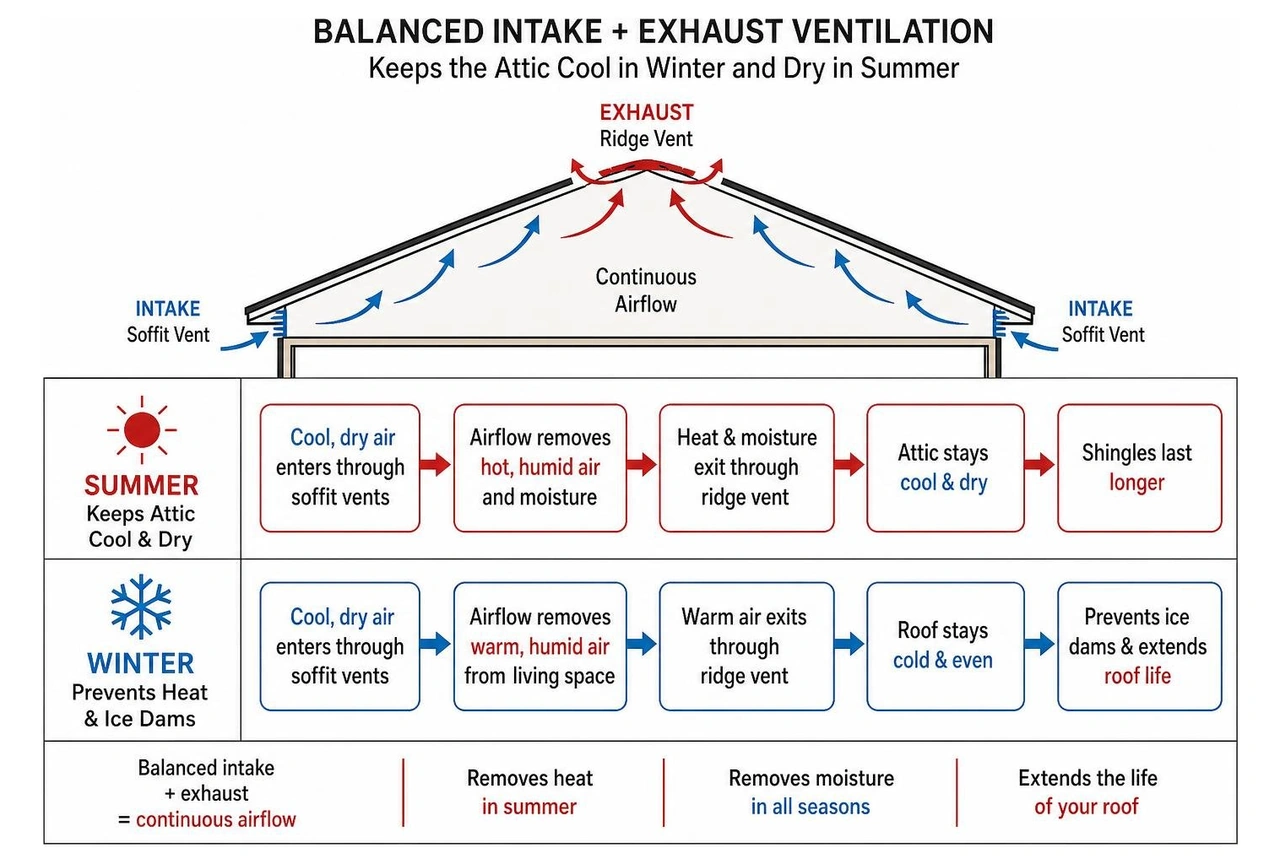
During the hot summer months, attic temperatures can soar past 150°F if heat is trapped inside. This extreme heat can bake your shingles from the underside, causing them to blister, curl, and lose their protective granules rapidly.
In the winter, a lack of ventilation traps warm, humid air rising from your living spaces. This warm air heats up the underside of your roof deck, causing uneven snow melt that leads directly to severe ice dams. Proper, balanced airflow can help add 5 to 8 years to your roof's life by keeping attic temperatures stable year-round.
The industry standard for attic ventilation is the 1:150 rule. This means you need 1 square foot of net free ventilation area for every 150 square feet of attic floor space, split evenly between intake and exhaust.
What happens to shingles when an attic cannot breathe?
When your attic cannot breathe, moisture accumulates. Warm air from your kitchen, bathroom, and laundry rises into the attic. Without proper exhaust, this moisture condenses on the cold underside of your roof decking.
This constant dampness leads to mold growth, wood rot, and structural sagging. As the roof deck warps and weakens, the shingles attached to it lose their flat alignment, cracking and pulling away from their fasteners.
How does attic insulation work with ventilation?
Insulation and ventilation must work as a team. In the Northwoods, we recommend maintaining R-49 to R-60 attic insulation levels.
While insulation keeps your home's heat inside your living spaces, ventilation helps keep the attic space cold. By keeping the roof deck at a temperature close to the outside air, you help prevent the snow on your roof from melting prematurely and forming destructive ice dams.
What Are the Warning Signs That Your Wisconsin Roof Is Nearing Its End?
Knowing when to replace your roof can save you thousands of dollars in secondary home repairs. Fortunately, you do not need to climb onto your roof to check its health. You can often spot the primary warning signs from the safety of the ground using a pair of binoculars.
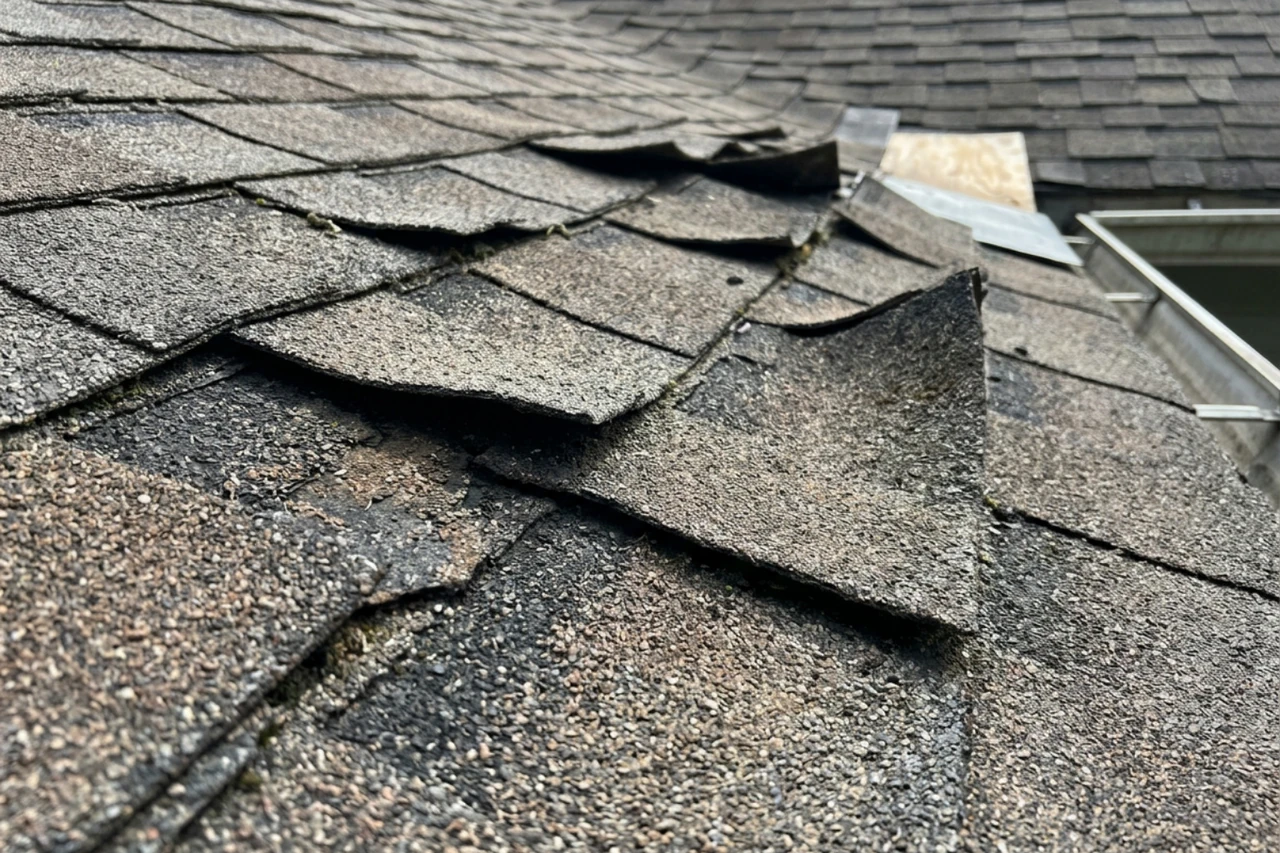
Start by looking closely at the shape of the shingles. Are the edges curling upward (cupping) or clawing downward? This shape change indicates that the asphalt has dried out and shrunk, meaning the shingles are no longer shedding water properly.
Next, look for missing shingles, especially after high winds, or cracked flashing around chimneys, dormers, and valleys. If you want to perform a thorough check, you can use our helpful roof inspection checklist to guide you. For more visual indicators of roof wear, check out our guide on roof replacement signs.
What does granule loss actually mean for your roof?
Asphalt shingles are coated with mineral granules to protect the underlying asphalt from the sun's destructive ultraviolet (UV) rays. When these granules shed, the raw asphalt is exposed directly to solar radiation, which quickly bakes and cracks the shingle.
Finding piles of sand-like granules in your gutters or at the bottom of your downspouts, especially after the spring thaw, is a major warning sign. If you see dark "bald spots" on your roof where the granules have completely worn away, your shingles may no longer protect your home as effectively.
How do you spot active leaks and structural sagging?
Active leaks often start small. Periodically inspect your attic with a flashlight during a heavy rainstorm or during the spring snowmelt. Look for water stains, damp insulation, or dark streaks along the rafters.
You should also look at your roofline from a distance. If you notice any dipping, curving, or sagging along the ridge or in the valleys, this is a sign of structural deck rot. A sagging roofline is a serious issue that requires an immediate professional evaluation to prevent a potential collapse under heavy snow. You can read more about these issues in our summary of common roofing problems.
How Can Homeowners Extend the Lifespan of Their Asphalt Roofs?
While our weather is tough, you are not powerless. Regular, proactive maintenance can extend your roof's lifespan by 5 to 10 years, helping you get the maximum value out of your investment.
Your spring and fall maintenance routine should usually start with cleaning your gutters. When gutters are packed with leaves and pine needles, water backs up under the lower edge of your roof, rotting the fascia boards and roof deck. If you need help keeping your drainage system clear, you can learn more about our gutter services.
Additionally, we usually recommend trimming overhanging tree branches back at least 10 feet from your roofline. This helps prevent branches from scraping against shingles during high winds, reduces the volume of falling leaves and pine needles, and allows sunlight to dry the shingles, helping to reduce moss growth.
Why are professional inspections crucial after major storms?
Severe storms with high winds and hail can cause hidden damage that is difficult to see from the ground. Hail can bruise shingles, fracturing the fiberglass mat underneath without showing immediate surface damage.
Having a professional inspect your roof after a major storm ensures that small issues are caught and repaired before they turn into expensive leaks. For more information on post-storm assessments, read about how long a shingle roof lasts in Wisconsin.
How do you safely manage heavy snow accumulation?
When snow piles up several feet deep, it can be tempting to clear it off. However, using sharp metal shovels or ice picks can easily gouge and ruin your shingles.
If you must remove snow, we recommend using a specialized roof rake with wheels from the ground. Only clear the first 3 to 4 feet from the eaves to help prevent ice dams. For deep snowpacks or thick ice ridges, it is usually safest to call a professional who can steam the ice away without damaging the asphalt materials.
When Is the Best Time of Year to Replace a Roof in Wisconsin?
Because of our long, snowy winters, the seasonal window for roof replacement in the Northwoods is relatively short. Most local roofing projects are completed between April and November.
Asphalt shingles rely on a heat-activated adhesive strip on the back of each shingle to seal them together. This adhesive requires natural sunlight and consistent temperatures above 40°F to 45°F to activate and cure properly. If shingles are installed in freezing temperatures, they may not seal, leaving them highly vulnerable to blowing off during winter winds. To understand how long this process takes, you can read about how long it takes to replace a roof in northern Wisconsin.
Why is late spring to early fall the ideal installation window?
The period from late spring (May and June) to early fall (September and October) offers the most predictable weather and optimal temperatures for roofing.
During these months, the warm sun quickly activates the self-sealing strips on GAF shingles, helping to create a wind-resistant seal. Scheduling your project during this window also helps avoid the unpredictable, heavy spring rains and early winter snowstorms common in Minocqua and Rhinelander.
How does scheduling affect your roof replacement project?
Because the ideal weather window is short, local contractors' schedules fill up very quickly. Planning your project ahead of time is key.
We highly recommend reaching out for estimates in late winter or early spring. Booking your project early helps you secure your preferred timeline before the busy summer rush begins. For more tips on planning, you can read about when to replace your roof in Wisconsin and how much it costs.
What Should You Look For in a Northwoods Roofing Contractor?
Choosing the right contractor is just as important as choosing the right shingle. A high-quality shingle installed poorly will still fail in a few short years. When vetting local roofers, look for a team with deep roots in the Northwoods climate.
We recommend verifying that the contractor holds active Wisconsin Dwelling Contractor credentials and carries proper liability and worker's compensation insurance. You can learn more about our local credentials and service standards by visiting our roofing company Eagle River WI page.
It is also important to understand the difference between warranties. A manufacturer's warranty covers defects in the shingles themselves, while a contractor's workmanship warranty covers installation errors. Choosing a GAF Master Elite contractor, a status held by only the top 3% of roofers nationwide, allows you to secure enhanced warranties that cover both materials and workmanship on qualifying projects.
What is included in a comprehensive roofing estimate?
A professional estimate should be clear, detailed, and written down. It should not contain vague lump sums.
Your estimate should clearly outline:
- Complete tear-off and disposal fees for your old roof
- The specific GAF shingle line and color selected
- High-quality synthetic underlayment upgrades
- Heavy-duty ice and water shield installation (extending at least 24 inches inside the warm wall line)
- Brand new metal flashing around chimneys and valleys
- All building permit fees
For a detailed breakdown of these components, check out our Wisconsin asphalt shingle roof cost guide.
Why is a complete tear-off preferred over layering shingles?
At Eagle River Roofing, we do not install a second layer of shingles over an existing roof. While some local codes technically allow a second layer, we strongly advise against it.
Adding a second layer traps heat, which can shorten the life of your new shingles. It also keeps us from inspecting the wooden roof deck underneath for hidden rot or water damage. Furthermore, a double layer of shingles adds immense weight to your roof structure, which can become dangerous when combined with heavy winter snow loads.
How do warranties protect your investment?
Warranties provide peace of mind. Because we are GAF Master Elite certified, we can offer GAF’s strongest warranties on qualifying projects.
These warranties can cover your entire roofing system for decades, depending on product and registration. Combined with our commitment to tidy job sites, magnetic sweeping for stray nails, and clear communication, we work hard to make your roof replacement as low-stress as possible.
Frequently Asked Questions About Wisconsin Roof Lifespans
Does homeowners insurance cover a roof replacement after a storm?
Generally, homeowners insurance is designed to cover sudden, accidental damage caused by storms, high winds, or falling hail. If a severe summer storm tears shingles off your roof or a falling pine branch punctures your deck, these repairs are typically covered, on qualifying projects.
However, insurance does not cover normal wear and tear, aging, or damage caused by neglected maintenance. For example, if your 25-year-old roof leaks because the shingles are simply worn out, or if you develop an ice dam because your attic ventilation is blocked, insurance will usually deny the claim. We usually recommend documenting any storm damage with photos immediately and contacting your insurer promptly.
Is metal roofing a better option than asphalt shingles for Wisconsin winters?
Metal roofing is an exceptional option for our climate, but it is not the right fit for every budget. A standing seam metal roof sheds snow easily, is highly resistant to ice dams, and can easily last 40 to 70 years.
However, metal roofing requires a significantly larger upfront investment compared to high-quality GAF architectural shingles. For many Northwoods homeowners, GAF architectural shingles offer a fantastic balance of durability, wind resistance, and affordability. You can compare these options in detail in our metal roofing complete guide 2026.
Do I need a building permit to replace my roof in Wisconsin?
Yes, in most cases, you will need a building permit for a full roof replacement. However, permit rules and fees vary by municipality across Eagle River, Rhinelander, Minocqua, and surrounding towns.
When you work with a professional, licensed contractor, they should handle the entire permitting and inspection process for you on qualifying projects, ensuring your new roof is fully compliant with the Wisconsin Uniform Dwelling Code.
Conclusion
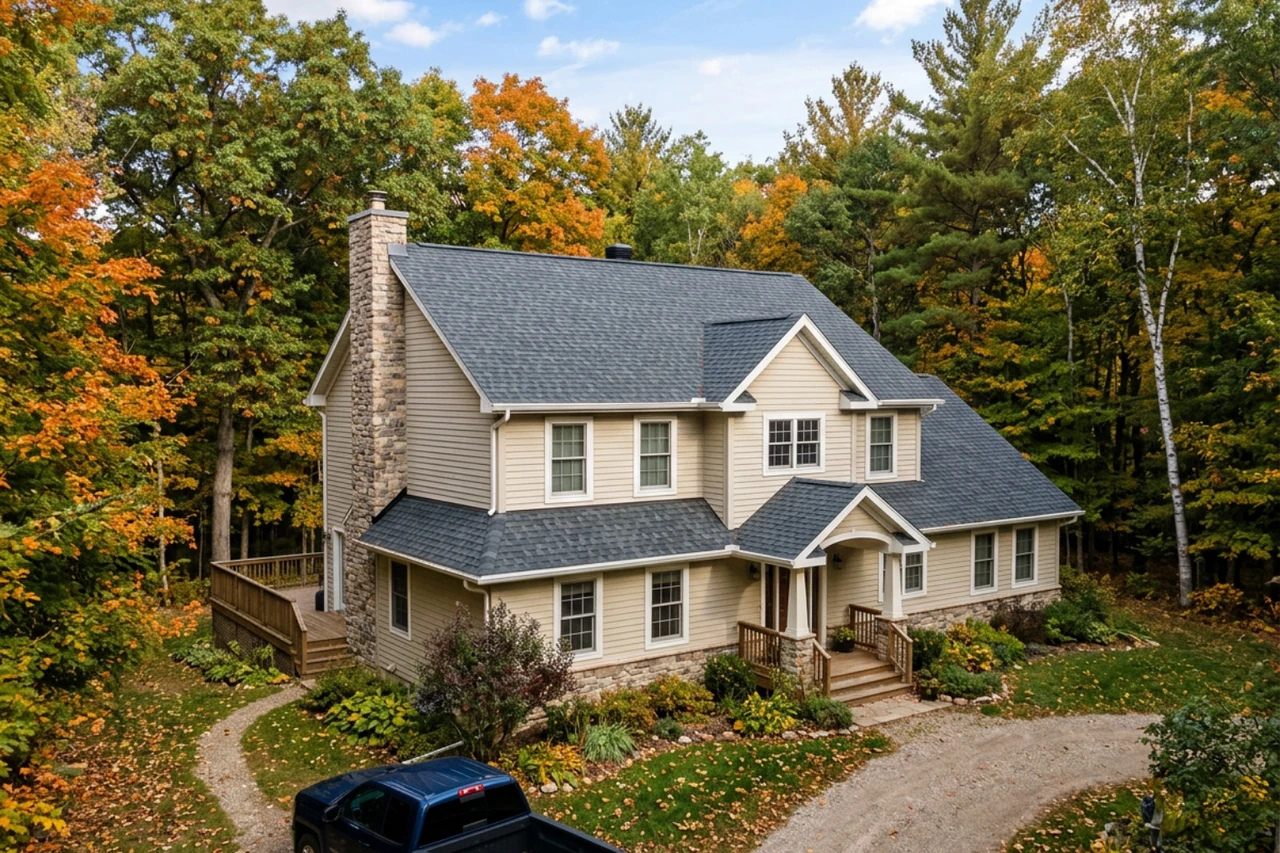
An asphalt shingle roof in Wisconsin is your home's primary shield against some of the toughest weather in the country. While our freeze-thaw cycles, heavy snowpacks, and ice dams present real challenges, choosing high-quality materials and ensuring proper attic ventilation can help your roof stand strong for 22 to 30 years.
At Eagle River Roofing, we combine local experience with GAF Master Elite installation standards to deliver durable, beautiful roofs that protect what matters most. We are locally owned, founded in late 2023 on decades of hands-on Northwoods expertise, and we have installed over 9,000 roofs and 8 million feet of gutters across our community.
We believe in honest, no-pressure guidance. If you are wondering about the health of your current roof or want to explore your options, we would love to help. Contact us today to get a clear, detailed written quote for your home.
This article is for general informational purposes only and may not reflect the most current products, pricing, codes, availability, weather-related recommendations, or roofing requirements for your specific property. Every home and roof is different, especially in the Northwoods. Please contact Eagle River Roofing directly for the latest information and guidance for your project.

