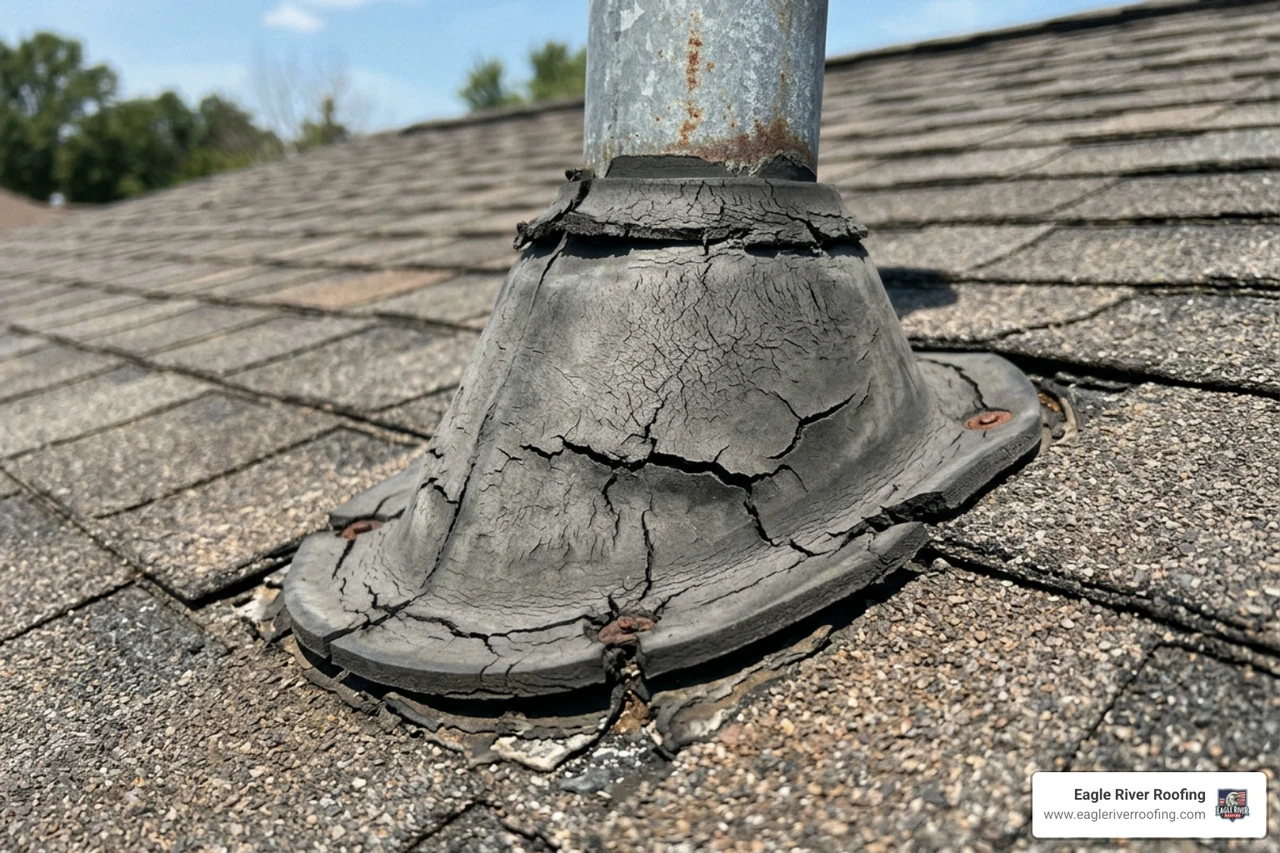
What is a Roof Pipe Boot and Why Does It Leak?
Let's start with the basics. A roof pipe boot is a type of roof flashing. Its job is to create a watertight seal around the plumbing vent pipes that poke through your roof. These pipes are essential because they allow sewer gases to escape your home and let air into your plumbing system so your drains flow smoothly. Without that air, your toilets would glug and your sinks would drain at a snail's pace.
The boot consists of a flat base (the flashing) and a flexible collar that fits snugly around the pipe. While the base is often made of metal or hard plastic, the collar is usually made of neoprene rubber. This rubber has to stay flexible to handle the natural expansion and contraction of your home.
However, being stuck on a Northwoods roof is a tough job. The main enemy is UV degradation. The sun's rays beat down on that rubber collar, causing it to dry out, harden, and eventually crack. Once those cracks appear, water follows the pipe straight down into your attic.
Common Causes of a Roof Pipe Boot Leak Repair Need
In our neck of the woods, from Rhinelander to Ironwood, we deal with some of the most extreme temperature swings in the country. This constant expansion and contraction is brutal on roofing materials.
Standard neoprene rubber boots often wear out well before the shingles around them, so a roof that still looks great can have boots that are ready to fail. Other common culprits include:
- Ice Dams: When ice backs up under the shingles near a vent pipe, it can force water up and over the top of the boot.
- Improper Installation: If the boot wasn't tucked under the shingles correctly or if it was "over-nailed," it's going to leak sooner rather than later.
- Physical Damage: Falling branches or even heavy snow sliding off a steep pitch can tear the rubber.
To keep a pulse on your roof's health, check out our Roof Inspection Checklist for more tips on what to look for during your seasonal walk-arounds.
Comparing Pipe Boot Materials
Not all boots are created equal. When we perform a roof pipe boot leak repair, we often recommend upgrading the material to something that can handle the Northwoods winter.
| Material | Pros | Cons |
|---|---|---|
| Neoprene Rubber | Inexpensive, easy to find | Cracks easily from UV and cold |
| Silicone / TPE | Excellent UV and temperature resistance | Higher initial cost |
| Lead | Extremely durable, animal-proof | Heavy, requires more skill to install |
| Slip-Over Repair Sleeve | No shingle removal, high-impact plastic | Specific sizing required |
Lead boots are traditional and very durable, but they are less common today. We find that high-quality silicone or TPE boots offer strong compatibility with modern GAF shingle systems, providing a seal that actually lasts as long as your roof.
How to Spot a Leaking Vent Pipe Before Damage Spreads
You don't always have to climb a ladder to know you have a problem. In fact, the first signs of a roof pipe boot leak repair need usually show up inside.
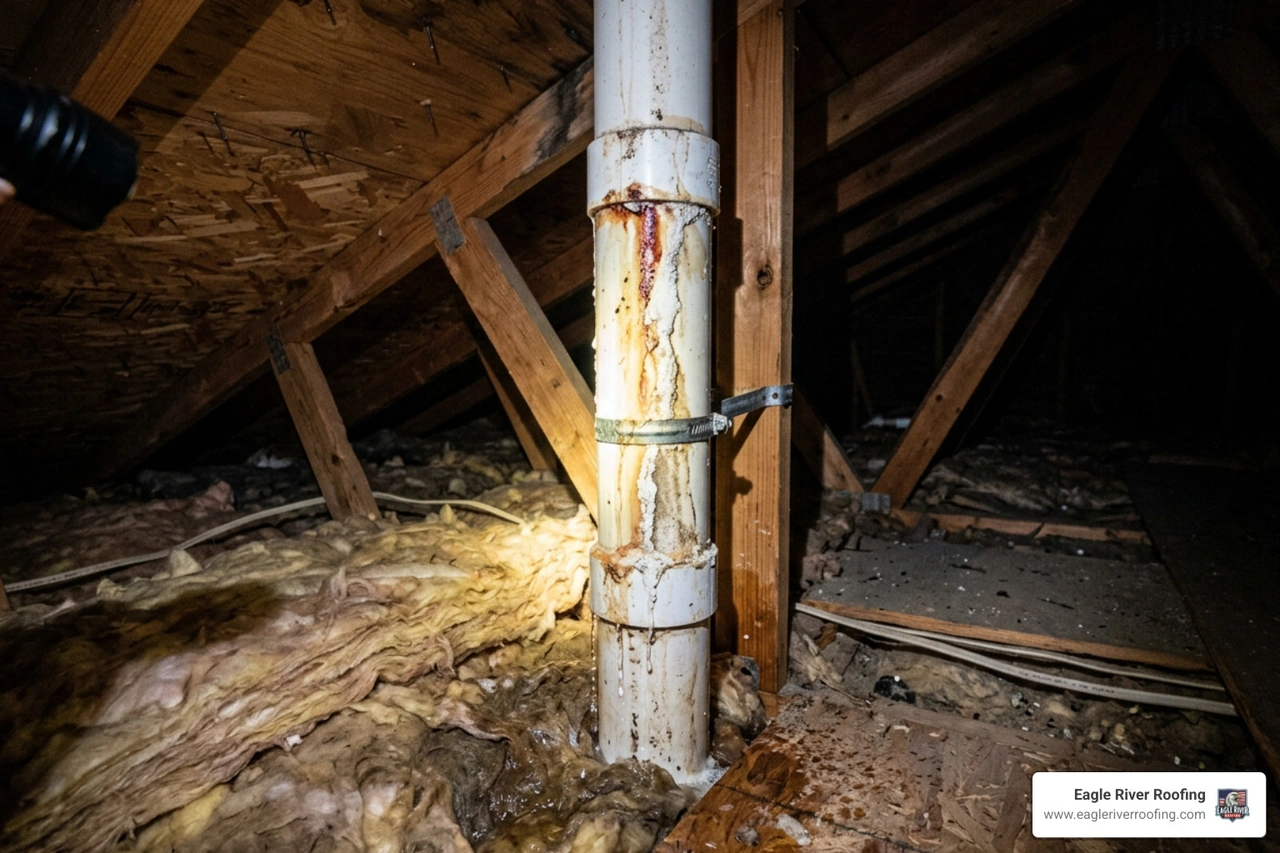
Start in your attic with a good flashlight. Look for:
- Damp Insulation: If the pink stuff looks matted or discolored around a pipe, water is getting in.
- Water Tracks: Look at the PVC pipe itself. You might see dried mineral streaks or active drips running down the side of the pipe.
- Musty Odors: That "old basement" smell in the attic often means mold or mildew is growing in the plywood decking near a vent.
If you aren't sure where the water is coming from, our Roof Inspection Cost Complete Guide can help you decide if a professional look is worth the investment.
Performing a Water Test for Roof Pipe Boot Leak Repair
If your attic inspection is inconclusive, you can perform a water test. You'll need a partner and a garden hose.
One person stays in the attic with a flashlight while the other goes on the roof. On a dry day, run the hose at the base of the vent pipe. Start low and move high. Avoid spraying the whole roof; you want to isolate the boot. If the person in the attic sees water within a few minutes, you've found your culprit.
Safety First: Only attempt this if you have a safe, low-slope roof and a helper. Use a safety harness on anything but a gentle slope, and call a pro if you're not sure.
DIY Roof Pipe Boot Leak Repair: Two Effective Methods
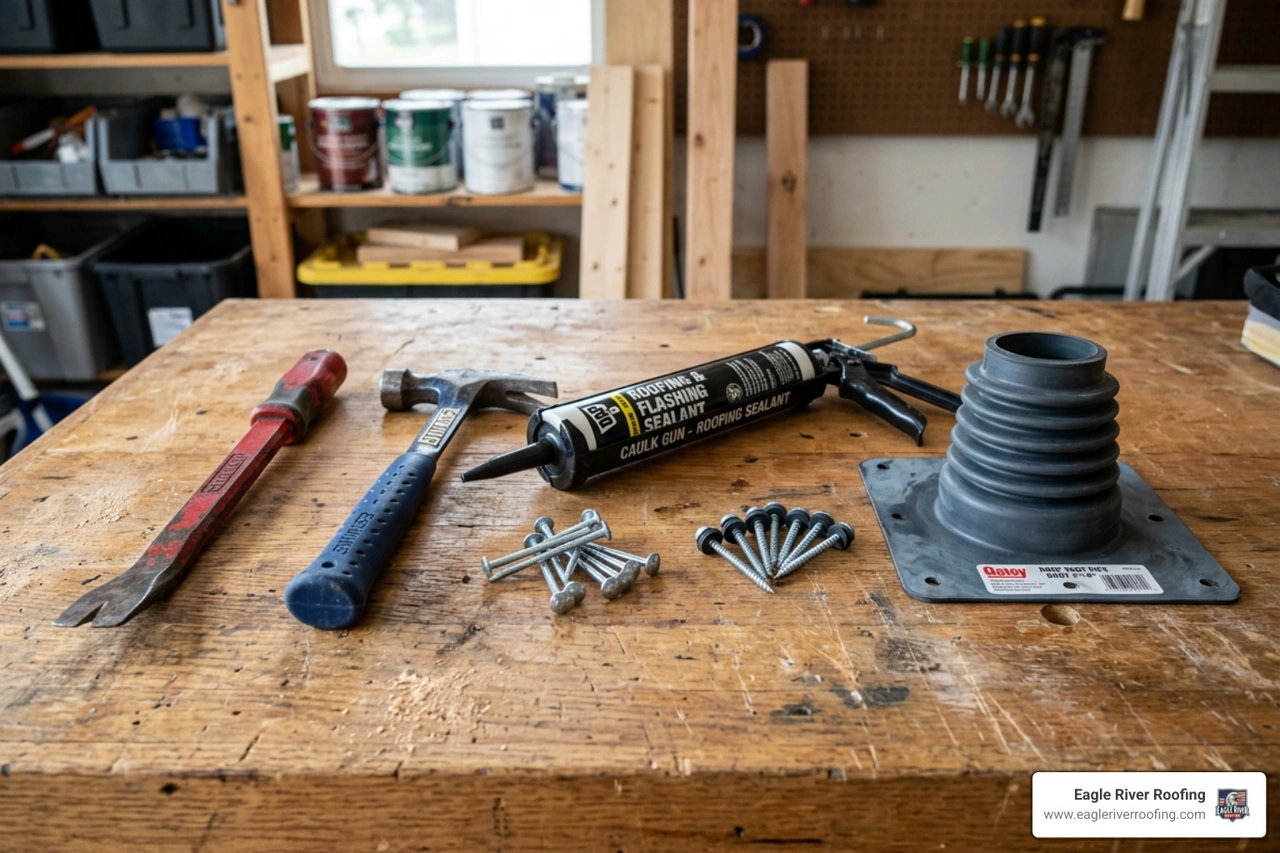
If you're handy and comfortable with heights, you can save some cash by tackling this yourself. You'll need a few basic tools:
- Flat pry bar
- Hammer
- Caulk gun with high-quality roofing sealant
- Galvanized roofing nails or washer-head screws
- Replacement boot or repair kit
Before you start, make sure the roof is completely dry. Working on a wet roof in the Northwoods is a recipe for a trip to the emergency room. For more professional tips on the process, This Old House has some great insights.
The Slip-Over Sleeve Method Without Removing Shingles
Slip-over repair sleeves let you fix the leak without touching a single shingle, as long as the sleeve matches your pipe size.
- Clean the area: Remove any loose debris or old, crusty caulk from around the existing pipe.
- Slide the base: The repair sleeve slides right over the existing pipe and covers the old, cracked rubber.
- Cap it off: A secondary cap piece goes over the top, locking the system in place.
- Seal: While some are "press-fit," we always recommend a bead of sealant at the very bottom for extra security against wind-driven rain.
This method is great because it preserves the integrity of your existing shingles. If you’d rather have us take a look, you can find more about our roof repair services here.
Full Replacement Method for Damaged Boots
If the flashing base is rusted or the shingles around it are damaged, a full replacement is necessary. Since we install GAF shingles on our residential projects, we recommend using high-quality components that match that level of durability.
- Pry back shingles: Carefully use a flat bar to loosen the shingles above and to the sides of the boot. You need to expose the nails holding the old flashing down.
- Remove the old boot: Pull the nails and slide the old boot up and off the pipe.
- Inspect the deck: Make sure the wood underneath isn't rotten. If it is, that's a bigger job.
- Install the new boot: Apply a generous bead of roofing cement to the underside of the new boot's base. Slide it down the pipe.
- Secure and Seal: Use galvanized roofing nails or washer-head screws to secure the base. Important: The top half of the flashing must go under the shingles above it, while the bottom half sits on top of the shingles below it. This ensures water sheds properly.
- Final Touches: Cover all nail heads with sealant and press the shingle tabs back into place.
When to Call a Professional for Your Northwoods Roof
A boot swap can sound easy, but it isn't always the right move. You should call us at Eagle River Roofing if:
- The Pitch is Steep: Many homes in Minocqua and St. Germain have steep "A-frame" styles that are dangerous without professional gear.
- There's Rot: If your foot feels soft near the pipe, the plywood is rotten and needs replacement.
- Multiple Leaks: If you have leaks in several spots, it might be time for a full Roofing Service evaluation rather than a patch.
- Storm Damage: If a tree hit the roof, there could be structural damage you can't see.
DIY vs. Calling a Pro
A DIY fix costs less up front, but you're on the roof yourself. When you call us, you get:
- Safety: We have the harnesses and ladders to do the job without risk to you.
- Expertise: We might find that your pipe leak is actually a ridge vent issue or a shingle failure you missed.
- Photo-backed findings: You see exactly what we found before any work starts.
Frequently Asked Questions about Pipe Boot Repairs
How long does a typical pipe boot repair last?
It depends on the boot material, sun exposure, and how it was installed. Standard neoprene boots tend to wear out sooner, especially on sunny south-facing slopes, while silicone and other upgraded boots are built to last longer.
Can I just use caulk to fix a leaking boot?
You can, but it's a "band-aid," not a cure. Sealant breaks down under UV light over time. If you're in the middle of a November rainstorm in Tomahawk, go ahead and use the caulk. But plan for a permanent roof pipe boot leak repair as soon as the weather clears.
Conclusion
A leaking vent pipe doesn't have to mean a whole new roof. By catching it early and performing a proper roof pipe boot leak repair, you can protect your home from mold and structural rot. Whether you choose a quick slip-over sleeve or a full replacement, the key is to act before the next Northwoods storm rolls in.
At Eagle River Roofing, we're a locally owned GAF Master Elite contractor. From Three Lakes to Manitowish Waters, we provide durable installations, clear communication, and tidy job sites. If you’re not comfortable hopping on the roof yourself, or if you suspect your roof has more than just a boot problem, give us a call. We're here to make sure your home stays dry through the toughest winters.
Ready to get that leak fixed for good? Get a free, no-pressure estimate: call (715) 892-8328 Monday to Friday, 8 to 5, or explore our Roofing Services.
This article is for general informational purposes only and may not reflect the most current products, pricing, codes, availability, weather-related recommendations, or roofing requirements for your specific property. Every home and roof is different, especially in the Northwoods. Please contact Eagle River Roofing directly for the latest information and guidance for your project.

