What Time Does the Crew Arrive and How Do They Protect Your Property?
Roof replacement day starts early. In most cases, our crew and project manager pull up to your home between 6:30 AM and 7:30 AM. Arriving early gives us maximum daylight to complete the heavy tear-off phase and get your roof deck fully sealed before the afternoon.
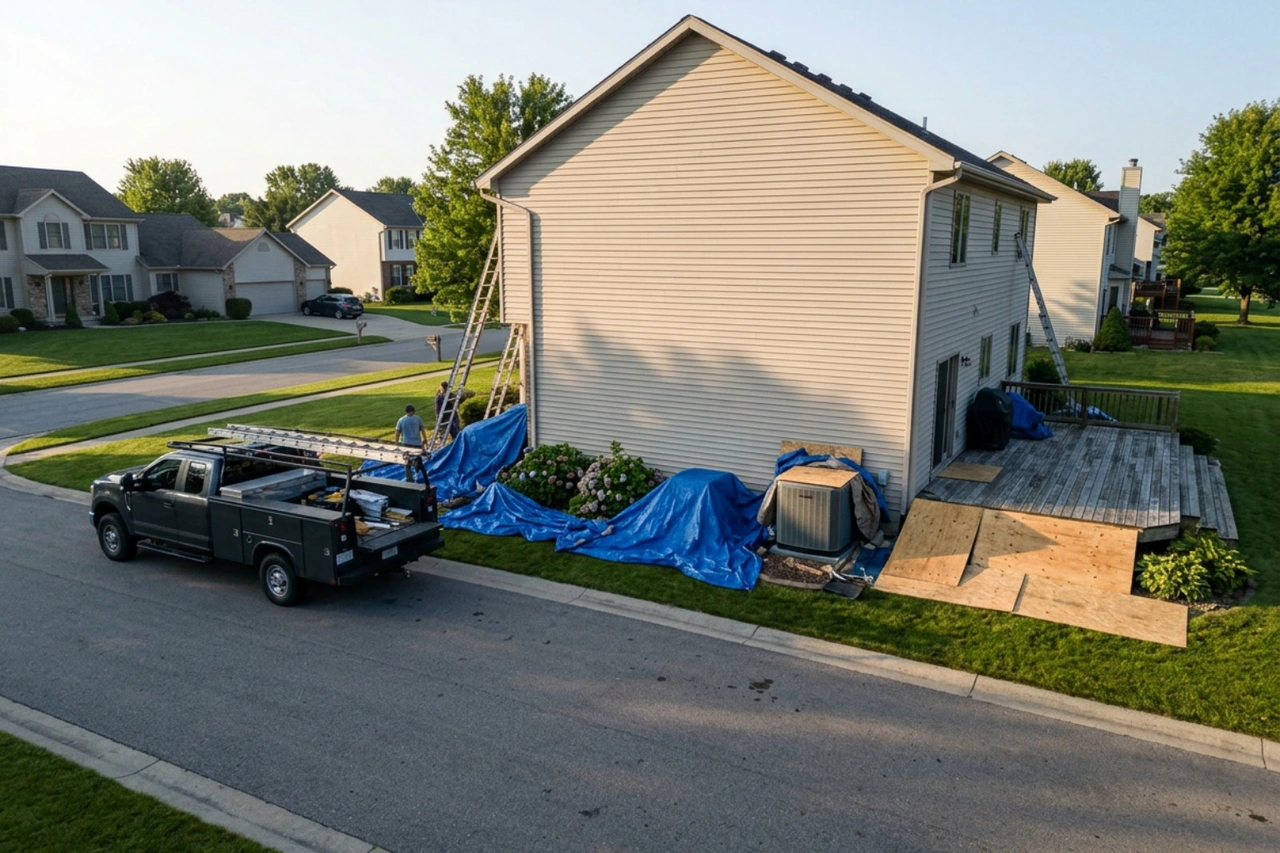
The very first hour of the day is dedicated to property setup and protection. Long before a single shingle comes off your roof, we take deliberate steps to protect your home, landscaping, and driveway:
- Vehicle Relocation: We ask that you move all personal vehicles out of your garage and driveway the night before or before 6:30 AM. Parking at least 15 to 20 feet away from the home gives our vehicles room to maneuver and protects your cars from falling debris or stray nails.
- Driveway Protection & Dumpster Delivery: A dump trailer or roll-off dumpster is positioned in your driveway as close to the roofline as possible. To protect your pavement or gravel drive from heavy wheel loads, we lay down heavy wooden boards or protective mats underneath the container legs.
- Landscaping & Siding Tarps: We spread heavy-duty tarps across your lawn, flower beds, decks, and outdoor living areas. Heavy plywood sheets are leaned against exterior walls, lower windows, and air conditioning units to absorb any bouncing debris.
- Pre-Work Perimeter Inspection: Before work begins, our project foreman walks the perimeter with you to review sensitive areas, identify delicate plants or outdoor features, and double-check that everything is secure.
Working with a licensed roofing contractor who prioritizes property setup ensures that tear-off stays controlled. Across homes in Eagle River, Rhinelander, Minocqua, St. Germain, and Three Lakes, our team focuses on maintaining tidy, well-organized job sites from the moment we pull up to the final cleanup.
How Loud Is the Roof Tear-Off Process and How Long Does It Last?
It is helpful to be direct about the noise: tearing off an old roof is loud. During the active tear-off phase, noise levels regularly reach 85 to 95 decibels inside and around your home. That level of noise is comparable to a gas lawnmower running right over your head. Later in the day, when the new roof goes down, pneumatic nail guns produce quick sound spikes exceeding 100 decibels, similar to the sound of a motorcycle starting nearby.
For a standard 1,500 to 2,500 square foot home, the tear-off process typically lasts between 3 and 5 hours. Shingle tear-off forks and pitch hoes scrape against the roof deck, stripping away old asphalt shingles, felt paper, and rusted flashing into waiting chutes.
Is it safe to stay home during tear-off? Yes, it is safe, but it may not always be comfortable. Here is how you can manage the environment during those 3 to 5 hours:
- Remote Work Considerations: If you work from home or spend a lot of time on phone calls, you will likely want to work from a coffee shop, office, or secondary location during the morning hours. Earbuds and standard headphones rarely block out the overhead scraping and banging.
- Managing Pets and Children: Pets often find the sudden overhead vibration stressful. Dogs that bark at front-door knocks will usually react strongly to workers walking across the roof. We usually recommend sending pets to a friend's house or daycare for the day. If they stay home, set up a quiet interior room on the lowest floor with a white noise machine or fan running.
- Protecting Interior Wall Decor: The impact of tear-off tools creates micro-vibrations across roof rafters that transfer straight down into upper-floor walls. Before install day, take down framed pictures, hanging mirrors, and fragile glassware resting on top-floor shelves.
For a broader look at how different home styles, weather patterns, and structural factors influence project length, you can read our full breakdown on How Long Does It Take to Replace a Roof in Northern Wisconsin.
What Happens If Damaged or Rotted Decking Is Discovered?
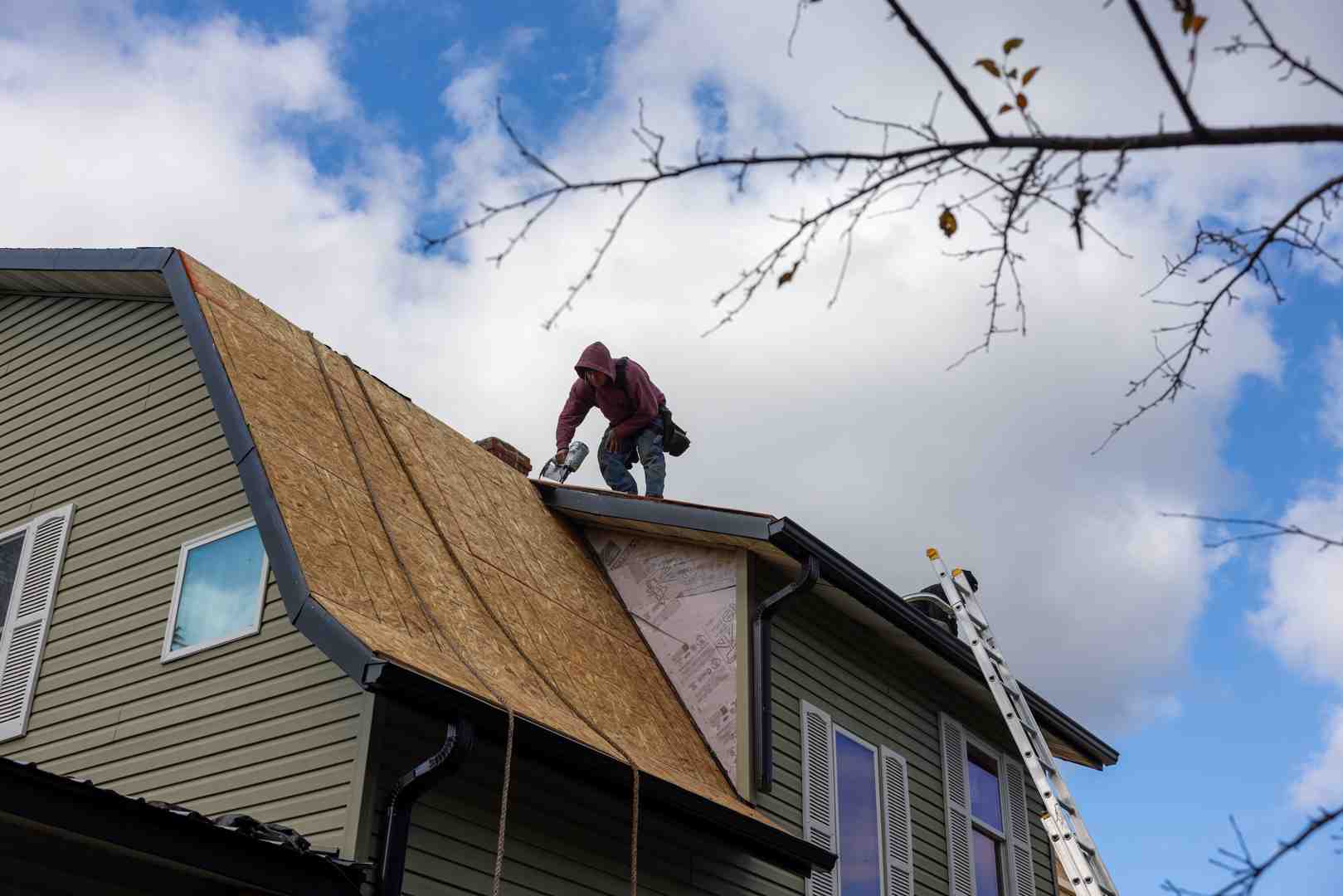
Once all old shingles, nails, and underlayments are removed down to bare wood, our foreman performs a detailed decking inspection. This usually happens mid-morning, around 11:00 AM.
Until the old roofing layers are stripped away, it is impossible to see what state your underlying plywood or OSB sheathing is in. In the Northwoods, years of winter ice dams, heavy snow loads, or minor flashing leaks can rot wood decking near eaves and valleys without ever showing visible water stains on your interior ceilings.
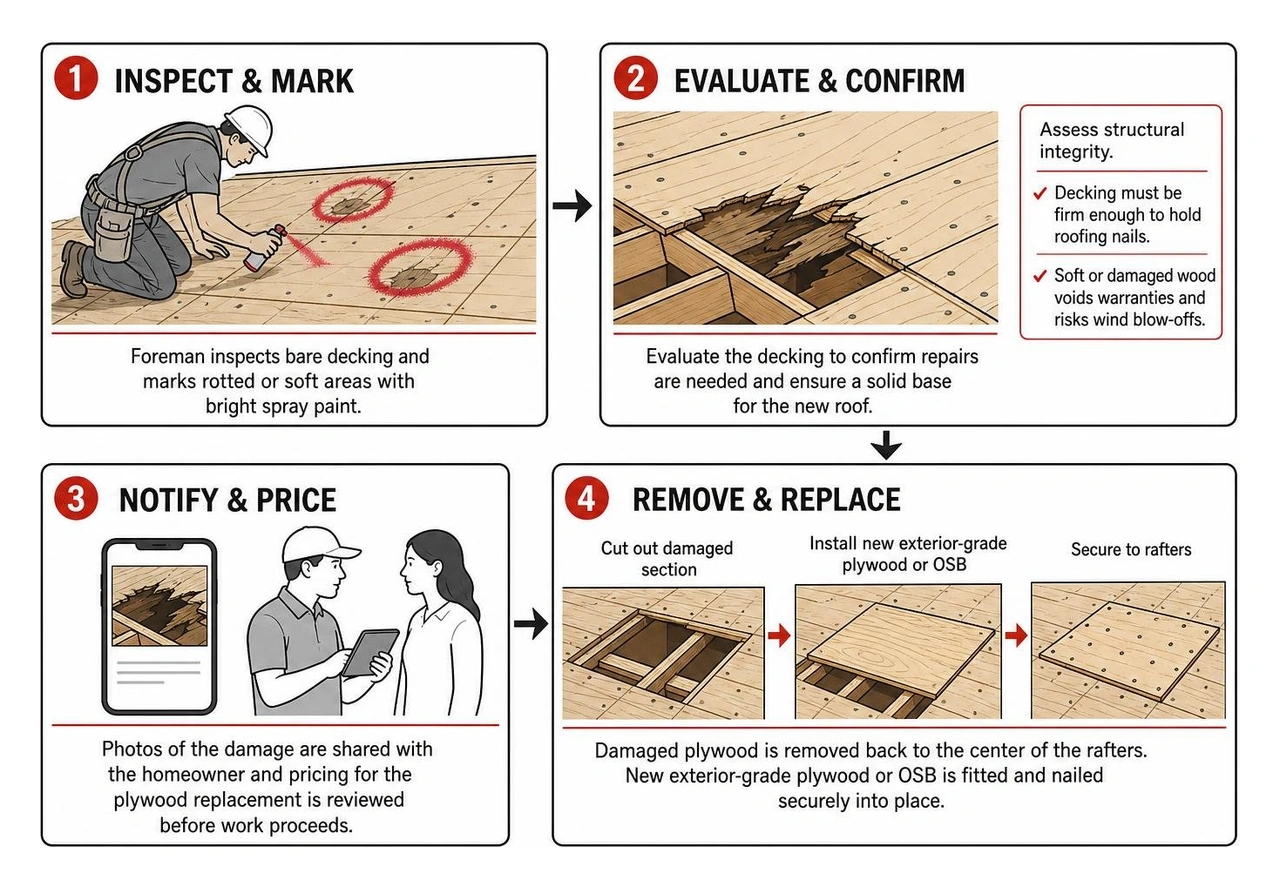
When damaged wood is spotted, here is how the repair process works:
- Marking Damaged Areas: The foreman marks rotted, delaminated, or water-softened plywood sheets with bright spray paint.
- Evaluating Structural Integrity: Sheathing must be firm enough to hold roofing nails securely. Driving nails into soft or water-damaged wood voids manufacturer warranties and risks wind blow-offs later.
- Homeowner Notification and Pricing: We take photos of the damaged decking and review the required repairs with you before proceeding. On most homes built after 1990, deck repairs are minimal, typically needing 0 to 4 sheets replaced. Specific costs for plywood replacement depend on material availability and can be confirmed during your estimate.
- Replacing Damaged Sheets: Rotted sections are cut out back to the center of supporting rafters, and fresh exterior-grade plywood or OSB is nailed securely into place.
Inspecting and repairing the decking is vital for severe weather performance. Research from building safety institutes shows that sealing roof deck seams can reduce water intrusion by up to 95% if the primary roof cover is torn off during extreme windstorms. Local events highlight how severe windstorms can impact area properties, as seen in recent storm damage assessments.
Before work begins on your home, reviewing a thorough roof inspection checklist helps you understand the health of your system, while securing a clear, written free roof estimate ensures you know exactly how change orders for decking repairs are priced ahead of time.
How Does the Crew Keep Your Site Clean and Manage Rain Risks?
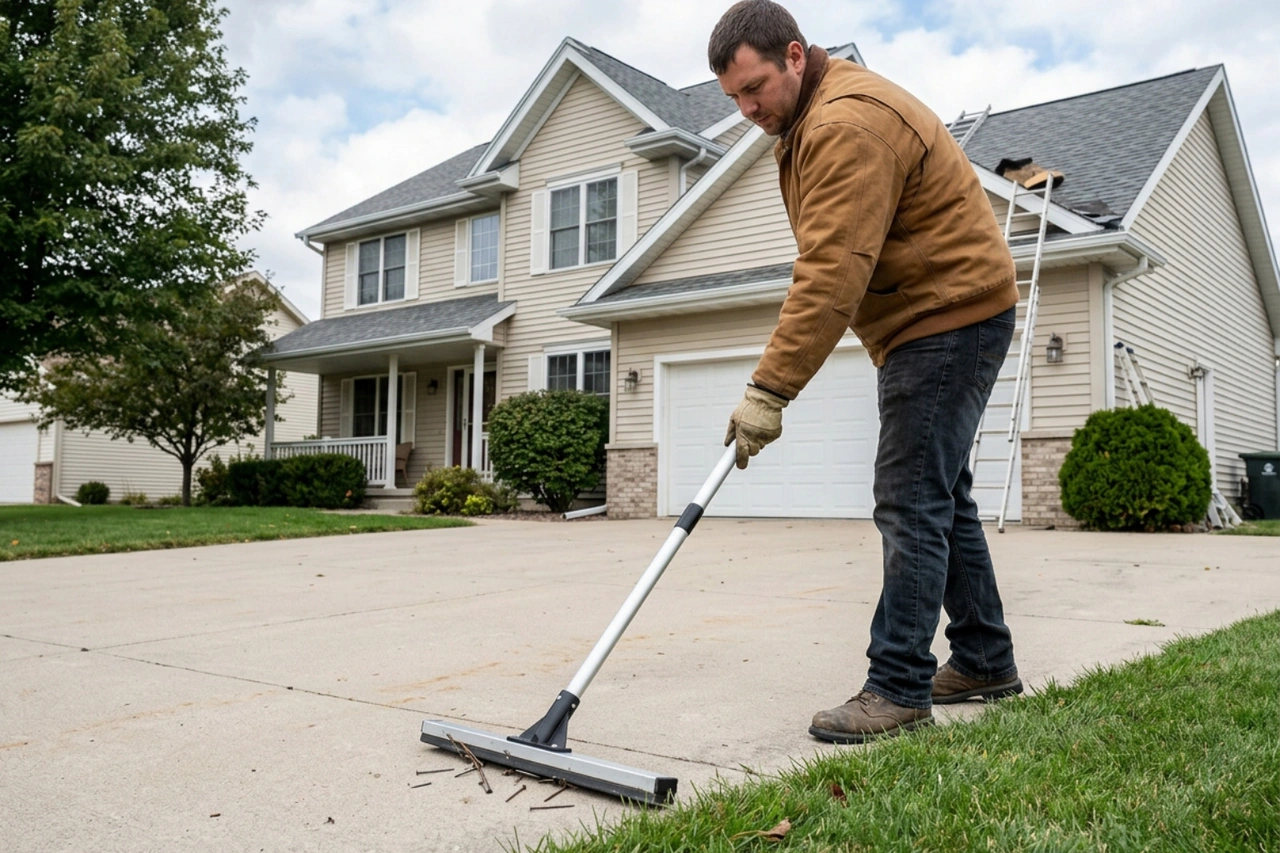
Tearing off a roof generates thousands of pounds of old asphalt, nails, and debris. Keeping the job site clean and protecting against water damage if weather turns are two of the most critical responsibilities during a roof replacement.
To manage site cleanup, our team uses a continuous cleanup routine rather than waiting until the end of the day:
- Direct Chute Dumping: Workers shovel old shingles directly off the roof into dump trailers or through enclosed tarred chutes to keep flying debris to a minimum.
- Continuous Magnetic Sweeps: A designated crew member regularly rolls a heavy-duty magnetic sweeper across your driveway, walkways, and lawn throughout the day to catch falling nails before they hide in grass blades.
- Gutter and Downspout Clearing: Once the roof is stripped, we clean accumulated shingle granules and debris out of your gutters and flush downspouts to keep your drainage system clear.
To help protect your property during tear-off day, we follow a clear step-by-step cleanup and property protection process:
- Place wooden driveway boards and position the dump trailer directly under eave zones.
- Drape protective tarps over landscaping, siding, decks, and outdoor HVAC units.
- Strip old materials in controlled sections, sweeping debris into chutes continuously.
- Run rolling magnetic sweeps across lawn and driveway areas after each major tear-off section.
- Clear shingle granules out of gutters and downspouts before applying new underlayments.
- Perform a full perimeter ground check and double-pass magnetic sweep before leaving the site.
Managing sudden weather changes is another top priority. We track live local radar throughout the day. If unexpected rain approaches before the new roof is on, we stop tear-off work immediately.
Bare wood decking is protected using synthetic underlayment and self-adhering ice and water shield. Synthetic underlayment acts as a secondary water barrier, shedding rain off the roof even before shingles are applied. If severe weather moves in quickly, heavy commercial tarps are secured over exposed sections. High winds can cause severe damage across Midwest communities, as noted in regional news reporting on storm damage, which is why we leave no roof deck exposed or unprotected overnight.
What Should You Look for During the Final Walkthrough Inspection?
As shingle installation finishes up in the late afternoon, our project manager performs a comprehensive final cleanup and property inspection. Once the crew completes their initial checks, we invite you to join the foreman for a ground-level walkthrough to review the completed project.
Here is what you should check during your final walkthrough:
- Roofline Details: Look up at the ridge line to ensure ridge cap shingles are straight and flat. Check that step flashing around chimneys, wall transitions, and pipe boots looks clean and properly sealed.
- Gutter and Eave Check: Look into gutters to confirm they are clear of leftover shingle granules, nails, or wood scraps.
- Landscaping and Yard Perimeter: Walk flower beds and lawn areas near the home to ensure tarps caught falling debris and that plants are undamaged.
- Driveway and Pathway Nail Sweep: Watch as our foreman conducts a final double-pass sweep with a rolling magnetic nail bar over your driveway, sidewalk, and immediate lawn areas.
Evaluating your roofer's cleanup standards and installation quality is a key part of hiring a reliable contractor. You can learn more about what to look for when selecting a roofer by reading our roofing contractors complete guide 2026.
At Eagle River Roofing, founded in late 2023, our leadership team brings a local legacy of over 50 years of combined experience, with over 9,000 roofs and 8 million feet of gutters installed across Northern Wisconsin. As a GAF Master Elite contractor, we emphasize clear communication, transparent written quotes, and tidy job sites so your replacement is as low-stress as possible. If you are starting to plan your project, you can get a quick baseline quote using our online instant roof estimate tool.
What Are the Most Common Questions About Roof Tear-Off Day?
Can I stay inside my house while the old roof is being torn off?
Yes, you can stay inside your home while the old roof is being torn off, as all work takes place on the exterior structure. However, noise levels inside upper-floor rooms can reach 80 to 90 decibels during active tear-off.
If you work remotely or take frequent phone calls, we usually recommend planning to work off-site during the morning hours. If young children or pets are staying inside, keeping them in an interior room on the lowest floor with a fan or white noise machine can help soften the overhead scraping sounds.
What happens if it starts raining right after my old shingles are removed?
Our crews monitor live local weather radar constantly throughout the day. We do not begin tearing off shingles if major rainstorms are forecasted within our working window.
If pop-up showers develop unexpectedly after shingles are removed, the crew halts tear-off immediately and installs synthetic underlayment and self-adhering ice and water shield over bare decking. These modern underlayments form a temporary water barrier that sheds rainfall off the roof. For heavy or wind-driven rain, commercial tarps are secured tightly over all exposed roof sections.
How do roofers reduce the risk of nails hiding in my lawn or driveway?
Minimizing stray nails requires a multi-layered cleanup strategy. First, we lay large tarps around the perimeter of your house to catch the vast majority of falling nails and shingle scraps as materials are stripped.
Second, our crew uses heavy-duty rolling magnetic sweepers continuously throughout the day, rolling them over the driveway, pathways, and lawn. Before leaving your property, we conduct a final double-pass magnetic sweep. Mowing your lawn short a day or two before installation helps magnetic sweepers pull nails out of grass blades easily.
What Are the Key Takeaways for Roof Tear-Off Day?
Tear-off day is intense, but knowing the schedule transforms what feels like a chaotic morning into a smooth, predictable process.
By relocating your vehicles early, protecting top-floor interior wall decor, and arranging a quiet space for pets, you can navigate tear-off day with minimal stress. Within a single day, an old, failing roof cover is stripped away, underlying decking is inspected and repaired, modern synthetic underlayments are installed, and brand new shingles are applied.
Choosing an experienced local contractor with high standards makes a big difference in how your job site is managed. For residential shingle projects, we exclusively install GAF asphalt shingle systems designed to withstand severe Northwoods winters, heavy snow loads, and summer lake winds. While other brands produce standard residential shingles, we choose GAF for its system compatibility, ice dam resistance, and strong manufacturer warranty options on qualifying projects.
If you are ready to plan your replacement or want to learn more about our installation standards, explore our Eagle River Roofing professional roofing services or contact our local team today to request a clear, written estimate for your home.
This article is for general informational purposes only and may not reflect the most current products, pricing, codes, availability, weather-related recommendations, or roofing requirements for your specific property. Every home and roof is different, especially in the Northwoods. Please contact Eagle River Roofing directly for the latest information and guidance for your project.

