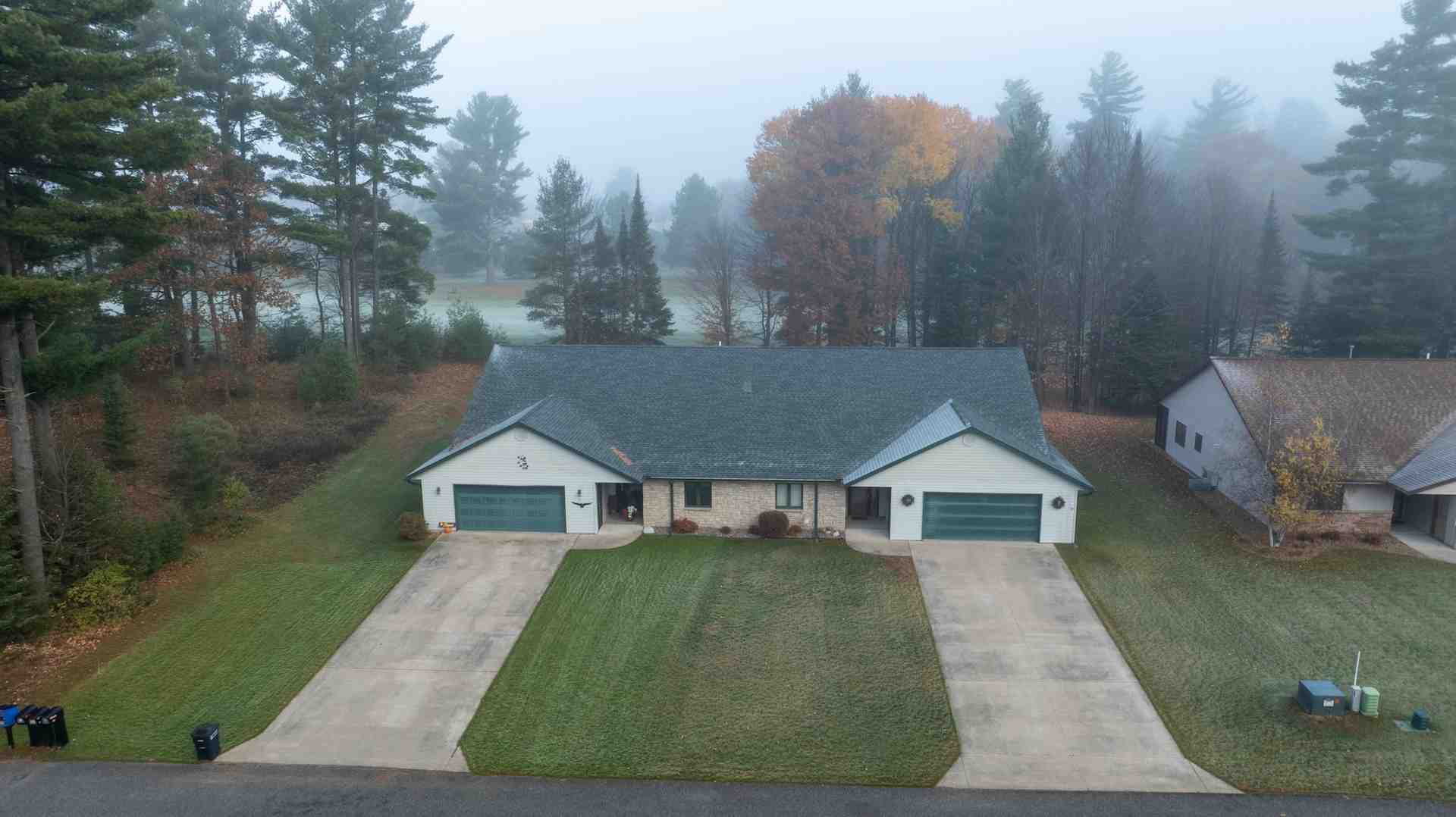
When Your Insurance Company Puts Your Roof Under the Microscope
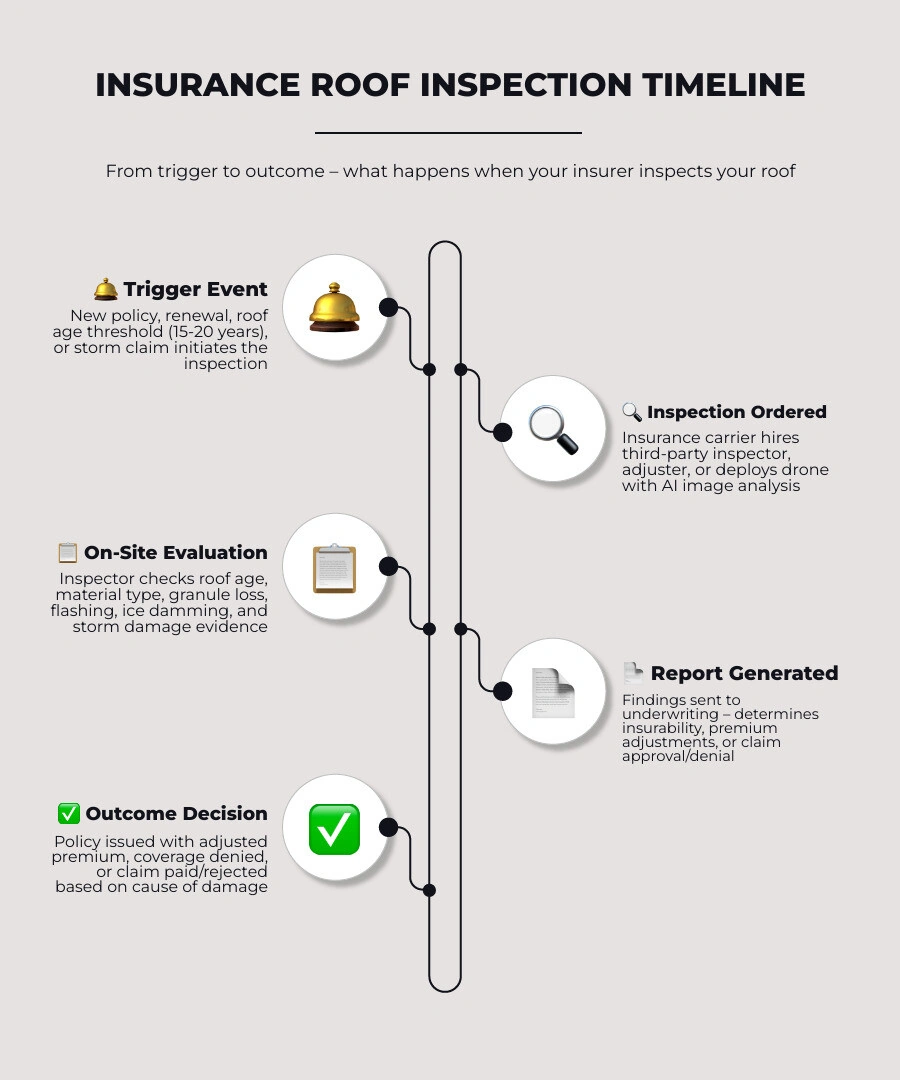
A roof inspection for insurance is a formal evaluation your insurance company uses to decide whether your roof is insurable, what your premium should be, and whether a storm damage claim holds up. Here is what you need to know at a glance:
What a roof inspection for insurance covers:
- Insurability - whether your roof has enough useful life remaining to qualify for coverage
- Risk assessment - how roof age, material, and condition affect your premium
- Claims verification - confirming that damage was caused by a covered event, not normal wear and tear
- Underwriting review - triggered by policy renewals, new policies, roof age thresholds (commonly 15-20 years), or after a storm
Who orders it: Your insurance carrier may order one at any time, but it is most common when you start a new policy, switch carriers, or file a claim.
Who performs it: Typically a third-party inspector, an insurance adjuster, or increasingly, a drone with AI-assisted image analysis.
Most homeowners in Eagle River, Rhinelander, Minocqua, and across the Northwoods only think about this process after a storm has already hit. But understanding how these inspections work before that happens can make a real difference in whether your claim gets approved.
Up here, roofs deal with things that inspectors in warmer climates rarely see: heavy snow loads, ice dams along the eaves, freeze-thaw cycles that stress flashing and seams, and pine needles that pack into valleys and hold moisture. Those conditions matter when an inspector is deciding whether damage is storm-related or something that built up over time.
I'm Tyler Blair, owner of Eagle River Roofing, and our team has helped Northwoods homeowners navigate these insurance-related roof evaluations across thousands of roofs, from straightforward renewals to disputed storm damage claims. In the sections below, we will walk you through exactly how these inspections work, what adjusters are looking for, and how to protect yourself throughout the process.
What is a Roof Inspection for Insurance and Why Does It Matter?
When you buy a home, you probably go through a standard home inspection. However, an insurance roof inspection is a completely different beast. While a home inspector looks at the entire house to help you make a buying decision, an insurance underwriter is focused on risk. They want to know how likely your roof is to leak, fail, or cost them money in a future claim.
If your roof has common roofing problems like rotting decking, loose flashing, or major granule loss, an insurance company sees a financial liability. They use these inspections to decide if they will cover your home at all, and if so, at what price. To get a better sense of what this process looks like from the carrier's side, you can Learn what to expect during an insurance inspection to avoid any surprises.
The Purpose of a Roof Inspection for Insurance
The primary goal of this inspection is to determine your roof's insurability and estimate its remaining useful life. Insurance companies are not in the business of paying for a new roof just because the old one reached the end of its natural lifespan. They want to make sure they are only covering sudden, accidental damage from wind, hail, or fallen trees.
If you want to prepare your home for an upcoming visit, reviewing a standard roof inspection checklist can help you spot minor issues, such as clogged gutters or overhanging branches, before the inspector notes them as red flags.
How Age and Materials Affect Your Coverage
Your roof's age and material type are the two biggest factors in how an insurance company views your home. In the Northwoods, we see a lot of architectural asphalt shingles and metal roofing.
If you have shingle roofing, we highly recommend GAF shingles. As a GAF Master Elite contractor, we only use GAF shingles for residential shingle replacements because they are engineered to withstand our brutal winters, providing excellent wind and impact resistance for our climate.
Insurers typically flag shingle roofs when they reach the 15-year or 20-year threshold. Once a shingle roof passes 15 years, many carriers will require a mandatory roof certification to renew your policy. They may also switch your coverage from Replacement Cost Value (RCV), which pays to replace the roof at modern rates, to Actual Cash Value (ACV). An ACV policy only pays out the depreciated value of the roof, leaving you to cover a massive portion of the bill out of pocket if a storm hits.
Metal roofing, on the other hand, is highly valued by insurers because of its durability. While a metal roof is a larger upfront investment and might not fit every budget, it can often secure you premium discounts and a much longer period of full RCV coverage.
The Four Types of Insurance Roof Inspections
Not every insurance roof inspection involves a person climbing a ladder onto your roof. Depending on why the inspection is triggered, the insurance company might use one of four different methods.
- Drive-By Inspections: These are quick, ground-level visual checks. An inspector might park on the street, take a few photos of your roof from the curb, and note any obvious issues like missing shingles or sagging lines.
- Aerial and Satellite Scans: Modern insurance companies often use high-resolution satellite imagery from companies like EagleView or Nearmap. They can scan your roof from their desks to check for major wear, ponding water, or tree limbs touching the shingles without you ever knowing they looked.
- Scheduled On-Site Inspections: If you are switching insurance companies or your roof is getting older, the carrier will schedule a physical inspection. The inspector will walk the property, check the attic for leaks, and evaluate the roof's overall structure.
- Claims-Related Inspections: Triggered after you file a claim for storm damage, this is a detailed forensic check. If you want to know how deep these forensic evaluations go compared to a basic walk-around, you can Read about forensic vs standard inspections to see how adjusters gather their evidence.
Drone Technology and AI in Modern Inspections
The insurance industry is changing rapidly. With nearly 50% of the insurance workforce expected to retire over the next 15 years, leaving more than 400,000 positions unfilled, technology is stepping in to fill the gap.
Drones and AI-driven image analysis are becoming the standard for modern roof inspections. Climbing roofs is one of the most dangerous jobs in the country, with roof falls accounting for nearly 10% of all fatal workplace falls in the United States. Drones keep inspectors safely on the ground while capturing incredibly precise, high-resolution photos of every shingle.
You can learn more about how this works by checking out AI drone roof inspection details. These drone flights can process up to 1.5 times more claims per day while reducing Loss Adjustment Expenses by approximately 20%. In fact, using drone-based technology has allowed some national carriers to reduce their claims review times from an average of 3 hours to under 1 hour. The drone software can stitch the images into a 3D model, and AI can automatically flag potential hail or wind damage with high accuracy.
How Adjusters Evaluate Storm Damage vs. Wear and Tear
When an insurance adjuster steps onto your roof after a Northwoods storm, their main job is to separate covered storm damage from general wear and tear. This is where many disagreements happen.
An adjuster is looking for specific patterns. Hail damage on an asphalt shingle does not just look like a lost granule; it looks like a dark, circular bruise where the physical shingle mat has been fractured by an impact. Wind damage is marked by creased, lifted, or missing shingles, often in a clear pattern showing where the wind caught the edge of the roof.
Normal wear and tear, on the other hand, shows up as cupping, curling shingle edges, thermal cracking, or general bald spots where the protective granules have naturally washed away over 15 or 20 years.
| Feature | Covered Storm Damage | Normal Wear and Tear |
|---|---|---|
| Common Signs | Fractured shingle mats, circular hail bruises, creased or lifted shingle tabs. | Cupping, curling, surface cracks, overall bald spots from granule loss. |
| Cause | Sudden weather events (hail, high winds, fallen trees). | Natural aging, sun exposure, poor ventilation, lack of maintenance. |
| Coverage Status | Typically covered under standard policies. | Excluded from coverage; homeowner's responsibility to repair. |
Understanding the Test Square for Hail Damage
To keep evaluations fair and consistent, adjusters use a mathematical method called a "test square." A test square is a 10-foot by 10-foot area, totaling 100 square feet, marked off on each slope of your roof.
The adjuster will physically count the number of qualifying, functional hail strikes within that square. If the count meets the insurance company's threshold, which is commonly 8 functional hits per square, it justifies replacing that entire slope or the entire roof. If you suspect your home has been hit, learning about identifying a storm damaged roof can help you understand what the adjuster will be looking for inside those test squares.
Functional vs. Cosmetic Damage in a Roof Inspection for Insurance
One of the most important distinctions in a modern roof inspection for insurance is the difference between functional and cosmetic damage.
- Functional Damage: This is damage that compromises the roof's ability to shed water or shortens its expected lifespan. Examples include fractured shingle mats, displaced metal panels, or torn underlayment.
- Cosmetic Damage: This refers to minor dents, surface scuffs, or discoloration that looks bad but does not affect the roof's water-shedding performance.
Many newer insurance policies contain cosmetic damage exclusions, especially for metal roofs. If a hailstorm leaves small dents in your metal roof but does not affect its structural integrity, your insurance company may refuse to cover the repairs under a cosmetic exclusion. It is often wise to review your policy details to see if you have one of these exclusions before a storm hits.
Navigating the Claims Process and Handling Denials
Filing an insurance claim can feel like a stressful negotiation. The adjuster represents the insurance company's interests, which means you need clear, professional evidence to back up your side of the story.
To see the exact technical checklist that underwriters and inspectors use to evaluate a roof's condition, you can view a sample roof certification form to understand how they document their findings.
How a Professional Report Strengthens Your Claim
Having a professional, independent roof inspection report can be a highly effective tool during a claim. A standard roofing estimate often just shows a lump-sum price to replace the roof. An insurance-grade report, however, includes high-resolution photos of every slope, close-ups of functional damage, and a detailed breakdown of labor, materials, and potential local permit costs, which we can confirm during the estimate.
When choosing who will evaluate your roof, knowing how to choose a roofing contractor who understands the insurance process is critical. You want a contractor who will provide a comprehensive document showing exactly what should be included in a roofing estimate so your adjuster has all the facts they need to approve the claim.
What to Do If Your Claim Is Denied
If your insurance claim is denied, do not panic. It is a common part of the process, and you have several options to dispute the decision:
- Request a Re-Inspection: You can ask your insurance company to send a different adjuster for a second look. It is highly beneficial to have your roofing contractor on-site during this meeting to point out any missed damage.
- File an Appeal: Submit your independent inspection report, photos, and any historical maintenance records to show the roof was in good condition before the storm.
- Go to Arbitration: Most policies have an appraisal or arbitration clause. This involves three neutral parties who review the evidence and make a binding decision on the claim's value.
- Contact Your State Department of Insurance: If you believe your carrier is acting in bad faith, filing a formal complaint can encourage them to comply with policy terms.
As you navigate these steps, you will need to make some practical decisions. Reading our guide on deciding between repair and replacement can help you plan your next moves while your claim is being resolved.
Frequently Asked Questions About a Roof Inspection for Insurance
Do I have to use the inspector my insurance company sends?
No. While the insurance company will send their own adjuster to evaluate their liability, you have every right to hire an independent inspector or contractor to document the damage. Working with a licensed roofing contractor ensures you have an expert advocate who can provide a detailed, unbiased report to counter a rushed or incomplete assessment by the carrier's adjuster.
How long does an insurance roof inspection take?
A typical physical on-site inspection often takes between 15 to 45 minutes, depending on the size and complexity of your roof. If the inspector uses modern drone technology, the flight itself can take about 20 minutes, and the high-resolution report can often be generated much faster than traditional manual methods.
Will my insurance premium go up after an inspection?
The inspection itself does not automatically raise your rates. However, if the inspection reveals that your roof has significant pre-existing wear, poor maintenance, or aging materials, your carrier may adjust your premium at renewal to reflect the higher risk. Proactively maintaining your roof and keeping detailed records is an effective way to help keep your premiums stable.
Conclusion
Navigating a roof evaluation for insurance can feel overwhelming, but you do not have to handle it alone. Up here in the Northwoods, our roofs have to work harder than almost anywhere else, and having a local expert on your side makes a real difference.
Eagle River Roofing was founded in late 2023, drawing on a proud legacy of local roofing experience. Over the years, our team members have installed more than 9,000 roofs and 8 million feet of gutters across Eagle River, Rhinelander, Minocqua, St. Germain, Three Lakes, and nearby communities. As a GAF Master Elite contractor, we focus on durable, snow-ready installations designed specifically for our harsh winters.
We pride ourselves on clear written quotes, tidy job sites, and a process designed to be low-stress and no-pressure. Whether you need to prepare for an upcoming insurance renewal or need an honest assessment after a storm, we are here to help.
If you are ready to get started, you can get a free roof estimate today, or learn more about our rates and services by visiting our roof inspection cost complete guide. Let us help you protect your home, your investment, and your peace of mind.
This article is for general informational purposes only and may not reflect the most current products, pricing, codes, availability, weather-related recommendations, or roofing requirements for your specific property. Every home and roof is different, especially in the Northwoods. Please contact Eagle River Roofing directly for the latest information and guidance for your project.

