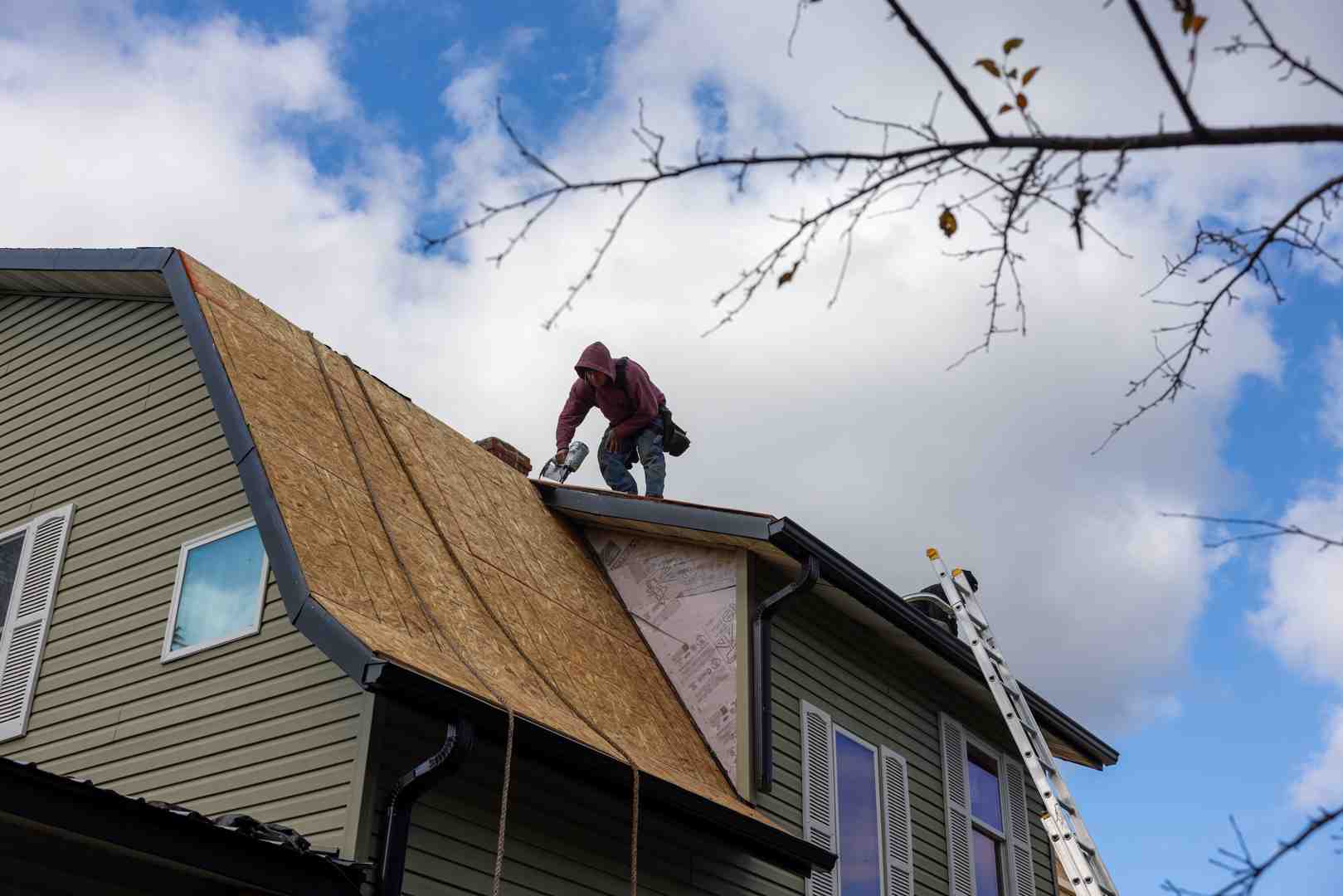
Why Is Water Leaking Around Your Chimney?
When water starts showing up inside your house near the fireplace, it is easy to assume your entire roof has reached the end of its life. In reality, most chimney leaks come down to a localized breakdown where the chimney stack meets the roof deck. The main roofing shingles across your slopes might still be in good condition, but the metal flashing collar or the masonry joints around the chimney itself have opened up a path for water.
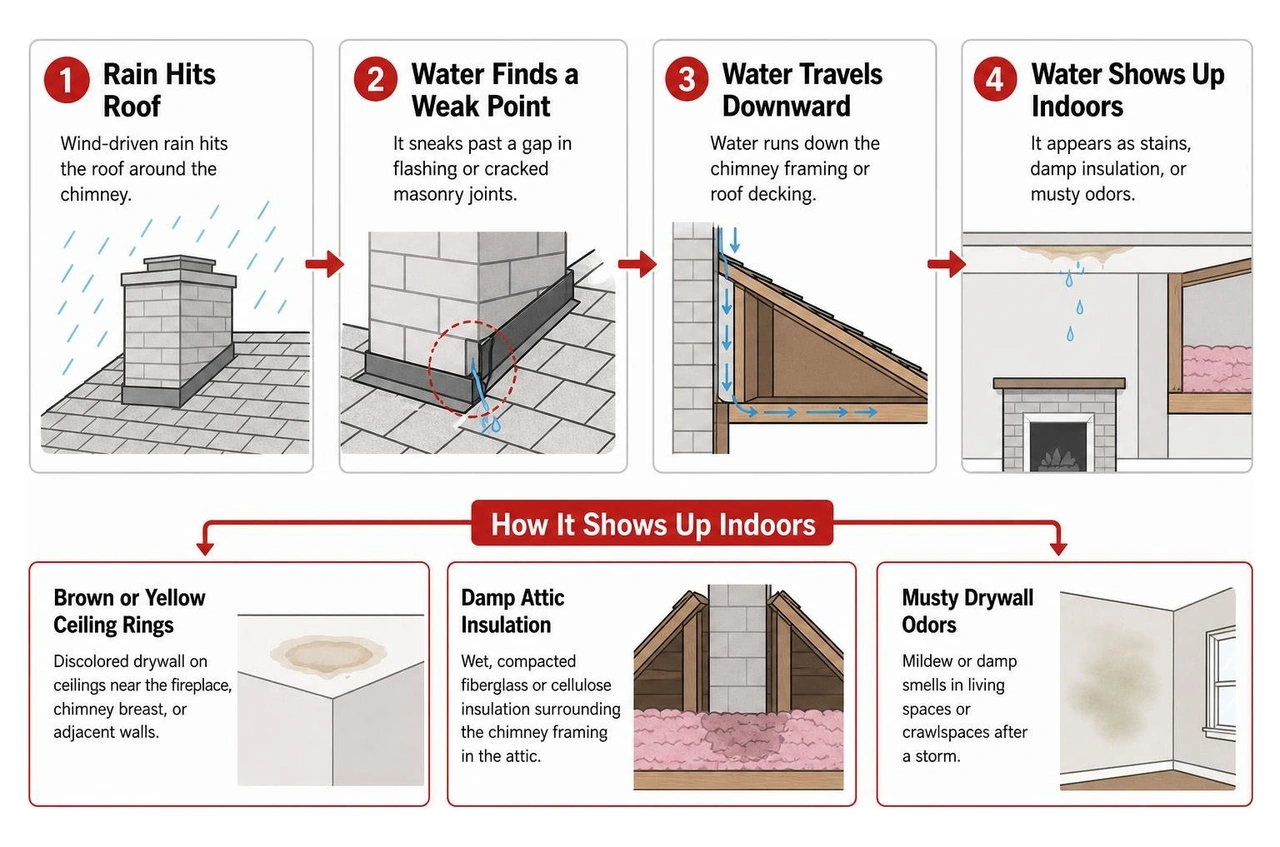
Water intrusion around a chimney often starts small and shows up indoors in several distinct ways:
- Brown or yellow ceiling rings: Discolored drywall on ceilings near the fireplace, chimney breast, or adjacent walls.
- Damp attic insulation: Wet, compacted fiberglass or cellulose insulation surrounding the chimney framing in the attic.
- Musty drywall odors: Mildew or damp smells in living spaces or crawlspaces after a storm.
- Rusted fireplace dampers: Moisture dripping down the interior flue or metal firebox, causing surface rust and staining hearth bricks.
One confusing part about chimney leaks is that indoor water spots do not always appear directly below the leak. Water often enters a tiny gap in the exterior flashing, drops onto a rafter or the plywood roof deck, and runs several feet down the slope before finding a drywall seam or light fixture to drip through. A water mark ten feet away from your fireplace can still originate right at the chimney base.
In our Northwoods climate across communities like Eagle River, Rhinelander, and Minocqua, our roofs face intense weather swings. Heavy winter snow accumulation, lake winds, spring thaws, and dozens of seasonal freeze-thaw cycles put continuous physical stress on the joints around roof penetrations. When temperature shifts cause materials to expand and contract, small gaps can quickly become active leaks.
Can a Chimney Leak Be Fixed Without Installing a New Roof?
The short answer is yes. If the asphalt shingles across the rest of your roof are still flexible, holding their granules, and years away from their design lifespan, you do not need a complete roof tear-off just because water is entering around your chimney.
Deciding between a localized repair and a full roof replacement usually comes down to three clear factors:
- Age and condition of the field shingles: If your shingles are under 15 to 20 years old and have plenty of life left, rebuilding the flashing makes practical and financial sense. If the entire roof is brittle, curling, or losing granules across all slopes, investing in localized flashing work may only delay an inevitable full replacement.
- Condition of the roof decking: Before committing to a repair scope, a roofing technician should gently lift adjacent materials to inspect and probe the wood decking around the stack. If hidden leaks have caused structural wood rot, the damaged plywood or tongue-and-groove boards must be cut out and replaced before installing new flashing.
- Isolation of the problem: When water entry is isolated to the chimney collar, crown, or mortar joints, a focused repair can completely restore the water-shedding barrier.
A common mistake homeowners and handy neighbors make is spreading thick layers of black roofing tar or generic caulk over old, rusted flashing. Surface-applied sealants are temporary fixes at best. They tend to dry out, crack in sub-zero winter temperatures, and trap moisture beneath the surface. Trapped water accelerates wood rot in your rafters while keeping the damage hidden from view.
Rebuilding the intersection with high-grade metal components and proper underlayment through professional roof repairs can help restore complete weather protection without replacing the entire roof.
What Are the Most Common Culprits Behind Chimney Roof Leaks?
Chimneys are among the most vulnerable parts of any roofing system because they create a square hole in a sloped roof. Moisture will naturally seek out any mechanical gap between contrasting building materials.
- Failed or missing base and step flashing along the sides
- Loose, cracked, or surface-caulked counter flashing
- Cracked concrete chimney crowns at the very top of the stack
- Porous, aging mortar joints and spalling bricks
- Missing chimney crickets on wide chimney backs
- Rusted or improperly sloped back pans
Flashing Failure and Differential Thermal Movement
The number one cause of chimney leaks is flashing breakdown. To understand why flashing fails, you have to look at how a house moves. Your roof structure is framed with wood, while your chimney is built with brick, stone, or a framed chase. Wood and masonry expand and contract at completely different rates when the outdoor temperature shifts from summer heat to deep winter cold.
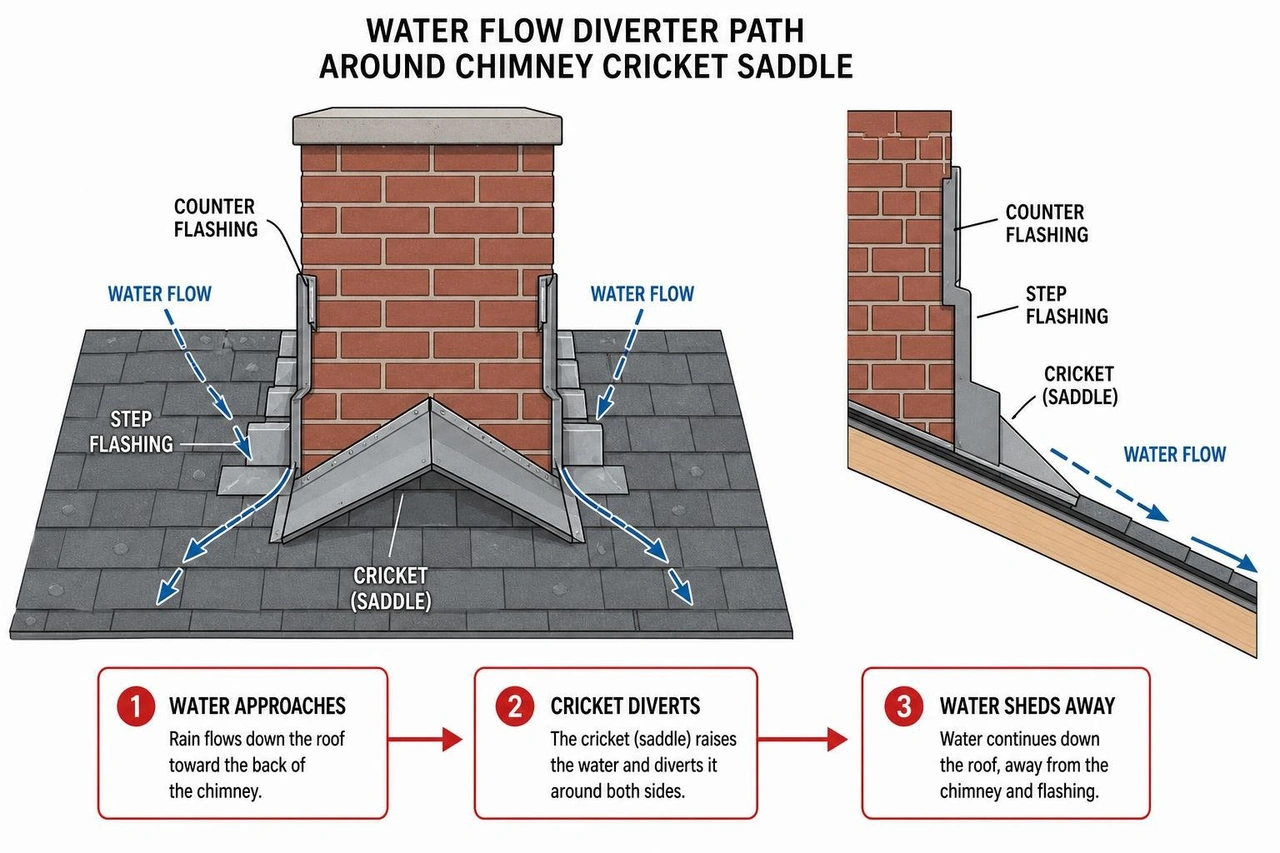
Because of this differential thermal movement, a single rigid piece of metal nailed to both the roof and the brick is engineered to fail. The natural shifting will pull fasteners loose or crack the metal seams.
A durable installation requires a two-part flashing) system:
- Step Flashing (Base): Individual L-shaped metal pieces that weave beneath each course of shingles and turn up against the vertical chimney wall. These pieces are fastened only to the roof deck so they can move freely with the roof.
- Counter Flashing (Cap): Metal pieces that overlap the step flashing from above. The top edge is bent and embedded into a cut mortar joint (called a reglet) and secured with masonry fasteners and flexible polyurethane sealant.
When counter flashing is simply glued to the brick surface with caulk rather than cut into the mortar joints, hot sun and freezing cold cause the caulk to separate in a matter of seasons. For a closer look at how these interior warning signs connect to exterior flashing problems, this chimney leak diagnostic guide walks through common inspection steps homeowners can expect.
Cracked Chimney Crowns and Deteriorated Mortar Joints
Not every leak at the roofline starts at the roofline. Water can enter at the top of the chimney and travel downward inside the brickwork before showing up in your ceiling framing.
The chimney crown is the concrete slab that sits atop the masonry stack, designed to act as an umbrella that sheds rain away from the flue. Over time, seasonal freeze-thaw cycles cause hairline fractures in the concrete. Once cracks open wider than 1/8 inch, rain and melting snow funnel straight down into the interior brick structure.
Bricks and mortar are also naturally porous. In sustained rainstorms, older chimney masonry can absorb water like a sponge. Applying breathable, siloxane-based penetrating water repellents can help protect the brickwork from soaking up moisture while still allowing internal vapors to escape safely.
Missing or Damaged Chimney Crickets
When a chimney sits on a roof slope, the uphill backside (the side facing the roof peak) acts like a dam. Rainwater and heavy snow sliding down the roof hit the flat back of the chimney and stop.
A chimney cricket, also called a saddle, is a small peaked ridge built behind the chimney on the roof deck. Its job is to split the water stream and direct snowmelt and rain around the sides of the chimney.
Most building codes require a cricket on any chimney wider than 30 inches. Without one, standing water, pine needles, and ice dams will sit directly on the back flashing pan. Even the highest-grade metal will eventually fail if water is allowed to pool continuously against it.
What Separates a Temporary Patch from a Long-Term Flashing Repair?
When dealing with a chimney leak, you will generally encounter two repair approaches: a quick sealant patch or a full two-part flashing reconstruction.
| Feature | Temporary Caulk Patch | Two-Part Flashing Reconstruction |
|---|---|---|
| Typical Lifespan | 6 to 18 months | 20 to 30+ years |
| Primary Material | Silicone, tar, or roof cement | Heavy-gauge aluminum or copper with ice barrier |
| Masonry Integration | Glued to the exterior brick surface | Embedded into cut mortar reglet joints |
| Shingle Integration | Smothered over top of existing shingles | Woven beneath individual shingles course by course |
| Deck Inspection | None (hidden rot remains unchecked) | Full deck inspection and wood repair if needed |
| Weather Resistance | Prone to cracking in deep Northwoods freezes | Accommodates thermal movement and snow loads |
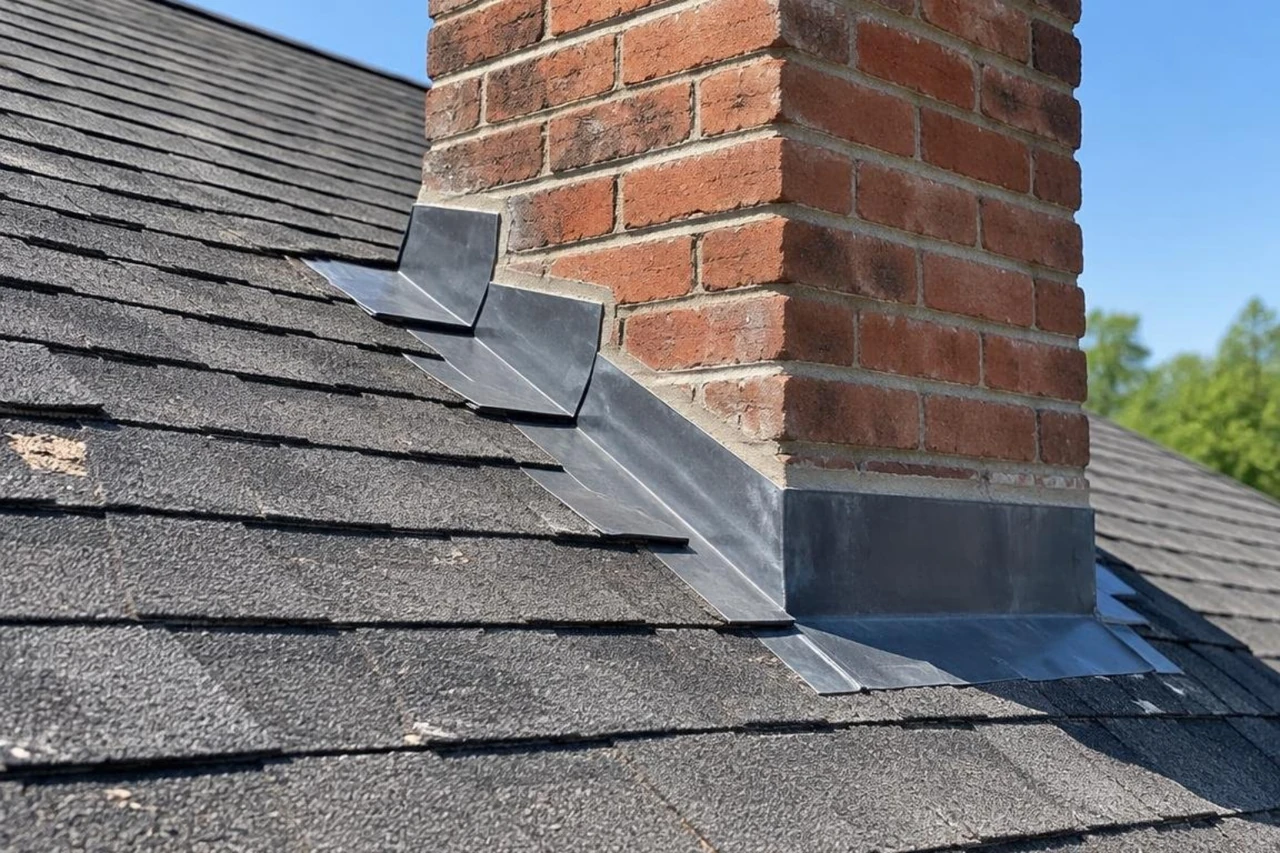
A proper flashing reconstruction cannot be done by simply sliding new metal over old pieces. We usually recommend carefully removing the shingles immediately surrounding the chimney. This allows technicians to install a self-adhering ice-and-water barrier against the roof deck and turn it up the chimney wall. New step flashing is then woven under each course of shingles as they are reinstalled.
Reusing old shingles that have curled or conformed to old flashing shapes often leads to repeat leaks. Using fresh shingles designed to seal tightly over the new metal creates a clean, water-shedding roof system.
Choosing durable materials is equally important. Heavy-gauge aluminum or copper provides decades of reliability. When using aluminum near mortar, an isolation membrane must be placed between the metal and the wet mortar to prevent chemical corrosion over time.
When Should You Call a Professional Roofing Contractor?
While applying a tube of sealant might seem like a manageable weekend project, flashing repair is precise work that carries real safety considerations.
Walking on steep roof pitches, navigating multi-story drops, and working on wet or frost-covered shingles creates serious fall risks. Beyond safety, getting the layers right requires an understanding of how water sheds across roofing planes. If step flashing is nailed in the wrong spot or counter flashing is not seated properly in a masonry reglet, water will find its way behind the metal.
Working with a certified GAF Master Elite contractor helps ensure that your flashing repairs integrate seamlessly with your residential shingles and meet strict manufacturer standards. While some contractors offer CertainTeed or other generic materials, we work exclusively with GAF roofing systems for residential asphalt shingle installations because of their proven wind resistance, seal strength, and performance in northern climates.
At Eagle River Roofing, our company is locally owned and was founded in late 2023, built on a 50+ year legacy of local hands-on experience in the Northwoods. Having installed over 9,000 roofs and 8 million feet of gutters across harsh winter climates, our crews understand how snow accumulation and lake winds impact roof penetrations.
When you request an inspection, you can expect clear communication, photo-documented findings, tidy job sites, and clear written quotes via our instant roofing estimate tool.
Frequently Asked Questions About Chimney Roof Leaks
How much does it typically cost to fix a chimney leak?
The investment required to repair a chimney leak depends on which component is failing, the accessibility of your roof, and the overall scope of work, which is confirmed during an on-site estimate:
- Minor Sealant Maintenance: Resealing minor counter flashing joints or cap joints on an accessible, low-pitch roof.
- Partial Flashing Repairs: Replacing damaged apron flashing, rebuilding a back pan, or repairing localized step flashing sections.
- Complete Two-Part Counter Flashing Reconstruction: Full removal of adjacent shingles, deck inspection, new step flashing, cutting new mortar reglets, and installing custom-bent counter flashing.
Factors like steep roof pitches, multi-story heights, deteriorated brickwork needing tuckpointing, or structural wood rot in the roof deck can adjust the project scope and labor requirements.
How do I know if the leak is from flashing or the chimney crown?
The timing of the leak provides strong clues:
- Rain-only leaks: If water drips inside during or immediately after a steady rainstorm, failed step flashing, damaged apron flashing, or open crown cracks are the primary suspects.
- Winter thaw leaks: If water appears on sunny winter days when it is not raining, melting snow is likely backing up behind an ice dam or soaking through unsealed brickwork.
A controlled water test can help pinpoint the exact location. On a dry day, a technician can run a garden hose at low pressure around the base flashing for 10 minutes while someone checks the attic. If no water enters, the hose is moved upward to the masonry and finally the chimney crown to isolate the entry point without soaking the whole system at once.
Can ice dams cause chimney leaks during harsh winters?
Yes. In areas like Three Lakes, St. Germain, and surrounding Northwoods towns, heavy snowfall combined with attic heat loss can create ice dams on the upslope side of the chimney.
When heat escapes into the attic, snow on the upper roof melts and flows down toward the chimney. When that water hits the cold chimney stack and unheated eaves, it refreezes into a thick ice ridge. Meltwater backs up behind this ice barrier, rising above standard metal flashing heights. Installing a high-temperature ice-and-water shield membrane extending at least two feet past the chimney base can help reduce the risk of winter meltwater backups.
How Can You Prevent Chimney Leaks in the Future?
Keeping your chimney and roof watertight does not require complicated maintenance, but it does require regular attention.
- Schedule regular visual inspections: Check your roof and chimney every spring and fall to spot lifted metal, loose mortar, or moss growth before leaks begin.
- Keep roof valleys and crickets clean: Remove pine needles, leaves, and twigs that pile up behind the chimney saddle to prevent moisture from sitting against the metal.
- Inspect mortar and masonry joints: Masonry mortar typically needs tuckpointing or repointing every 25 to 30 years to stay solid against driving rain.
- Avoid generic caulk coatings: Never coat flashing in thick roof cement or silicone as a preventative measure. It creates uneven surfaces that trap debris and water.
If your shingles are approaching 20 to 25 years of age and showing widespread wear, investing in targeted repairs may only provide a short bridge. In those cases, exploring complete residential roofing services with durable GAF shingle systems or standing seam metal roofing can give your home long-term protection against the toughest Northwoods weather.
Taking care of a chimney leak early helps protect your home's framing, can help prevent costly attic mold remediation, and keeps your roof performing the way it should for decades to come.
This article is for general informational purposes only and may not reflect the most current products, pricing, codes, availability, weather-related recommendations, or roofing requirements for your specific property. Every home and roof is different, especially in the Northwoods. Please contact Eagle River Roofing directly for the latest information and guidance for your project.

