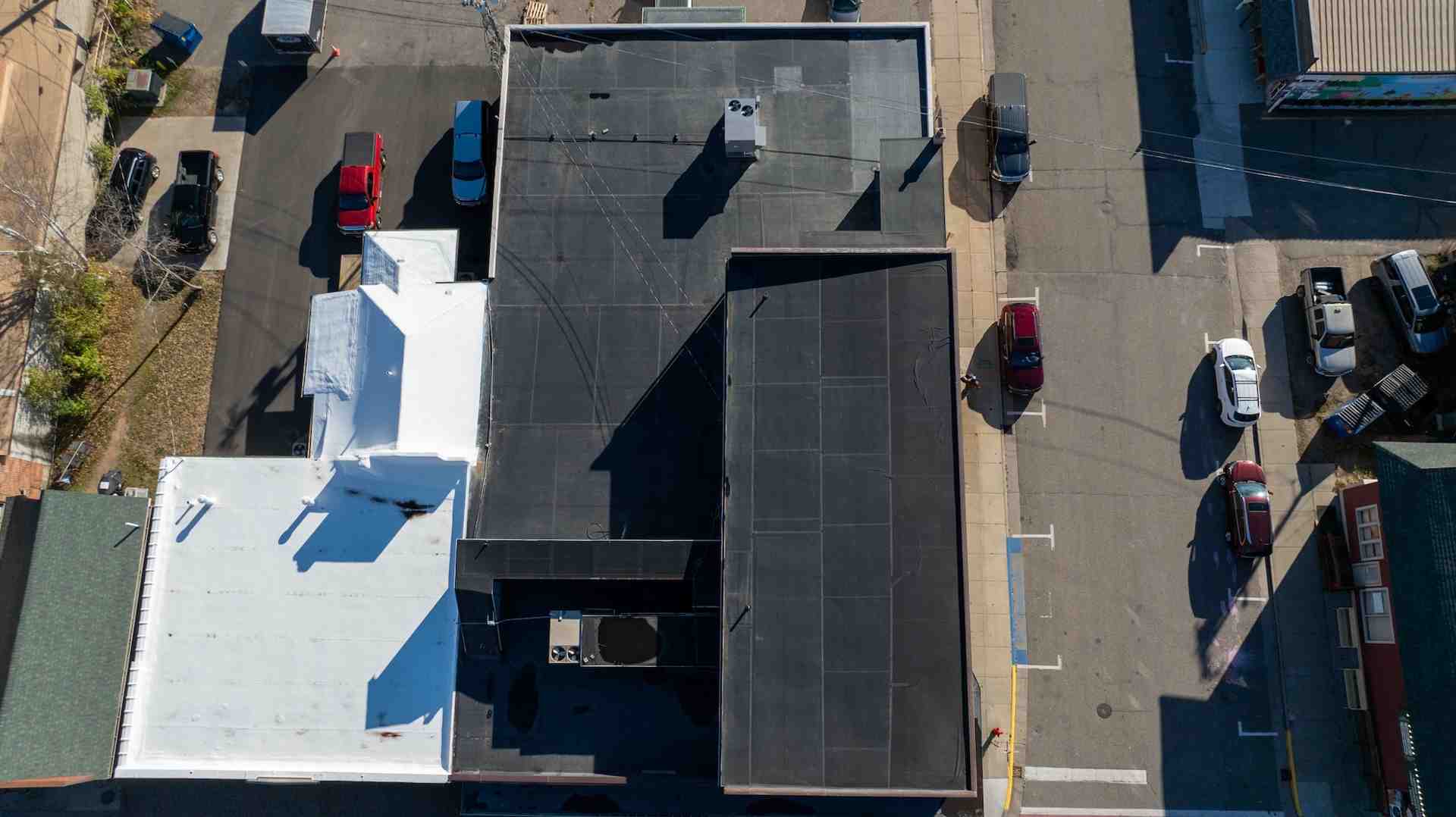
Critical Diagnostic Signs and Common Leak Sources
Commercial roof repair involves finding the exact point of water intrusion, removing saturated insulation, and restoring the protective membrane using system-matched materials like hot-air welded single-ply patches, durable adhesives, or flashing reinforcements. Addressing leaks promptly stops moisture spread, protects structural decking, and preserves daily building operations.
Commercial low-slope roofs face constant environmental pressure. In northern climates, seasonal freeze-thaw cycles, deep snow accumulation, and fallen pine needles test every transition point on your building. When water enters a commercial roofing system, the visible interior damage is only the final symptom of an issue that may have started weeks or months earlier.
Understanding common roofing problems helps facility managers catch minor wear before it causes structural deck decay or ruins inventory. Most commercial roof issues develop at specific weak points:
- Ponding Water and Drainage Blockages: Low spots that hold water for more than 48 hours after precipitation can degrade adhesives, stress membrane seams, and accelerate material breakdown. Autumn leaves and pine needles frequently clog primary roof drains and scuppers, creating unintended rooftop ponds.
- HVAC Curbs and Rooftop Units: Rooftop air handlers vibrate continuously. Over time, this movement loosens mechanical fasteners, cracks perimeter sealant, and pulls flashing away from the curb corners.
- Parapet Flashing Failures: Parapet walls expand and contract at different rates than the main roof deck. Without flexible termination bars and durable counter-flashing, thermal movement pulls the membrane away from the wall.
- Pipe Penetrations and Pitch Pans: Plumbing vents, electrical conduits, and gas lines puncture the waterproof layer. Pitch pockets filled with outdated pourable sealer often shrink, crack, and allow water to run directly down the pipe.
- Membrane Splits and Punctures: High winds, heavy snow loads, or foot traffic from service technicians can tear single-ply membranes or puncture aged asphalt layers.
- Blister Formation: Pockets of trapped moisture or air expand under summer sun, forming raised blisters that can crack or pull away from the underlying insulation board.
Root-Cause Leak Detection and Thermal Imaging
Finding the true origin of a leak requires systematic diagnostics rather than guesswork. Professional technicians use specialized methods to find hidden water paths without tearing apart sound roofing materials.
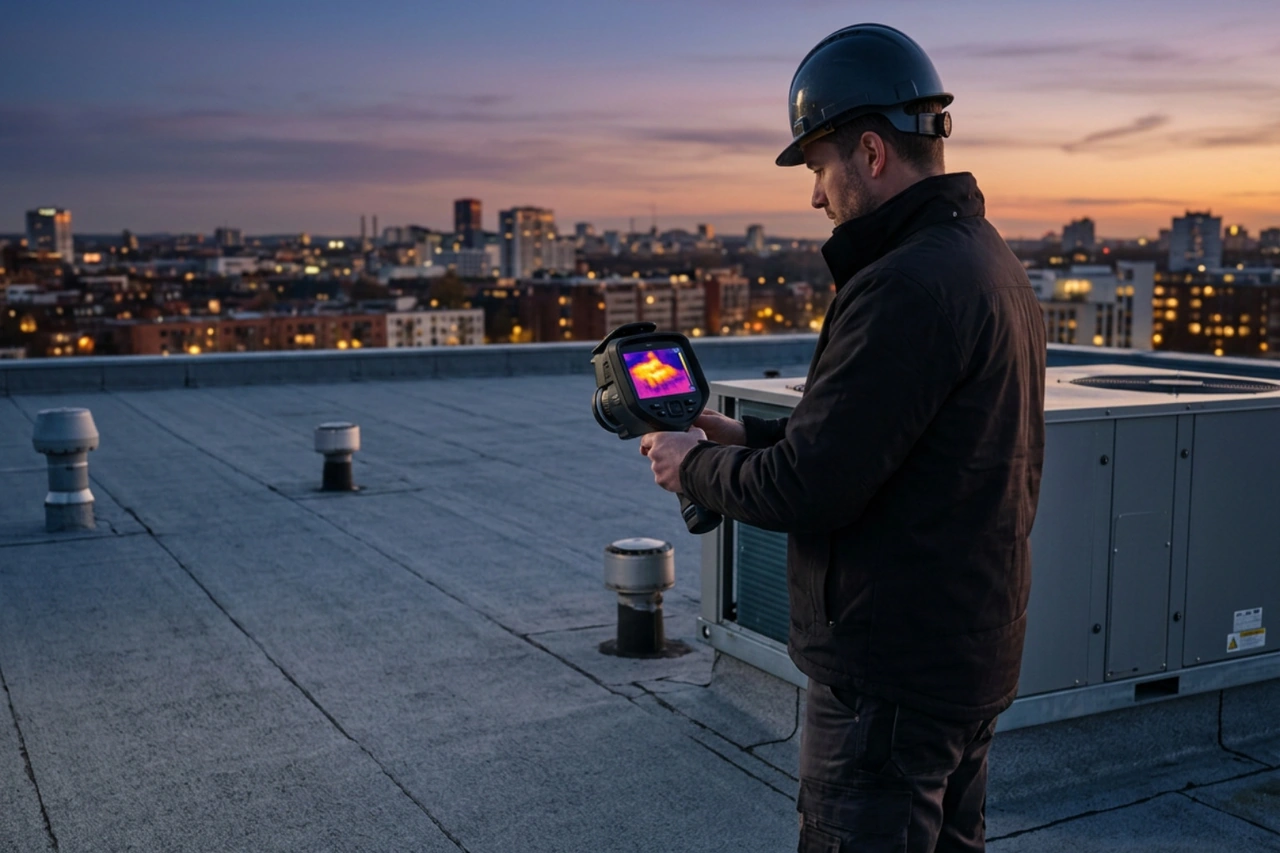
A key tool in non-destructive diagnostic work is infrared thermography. Because wet insulation holds onto thermal energy longer than dry insulation, an infrared scan performed as the roof cools in the evening reveals clear temperature differences. These thermal scans produce a visual map of subsurface moisture pockets.
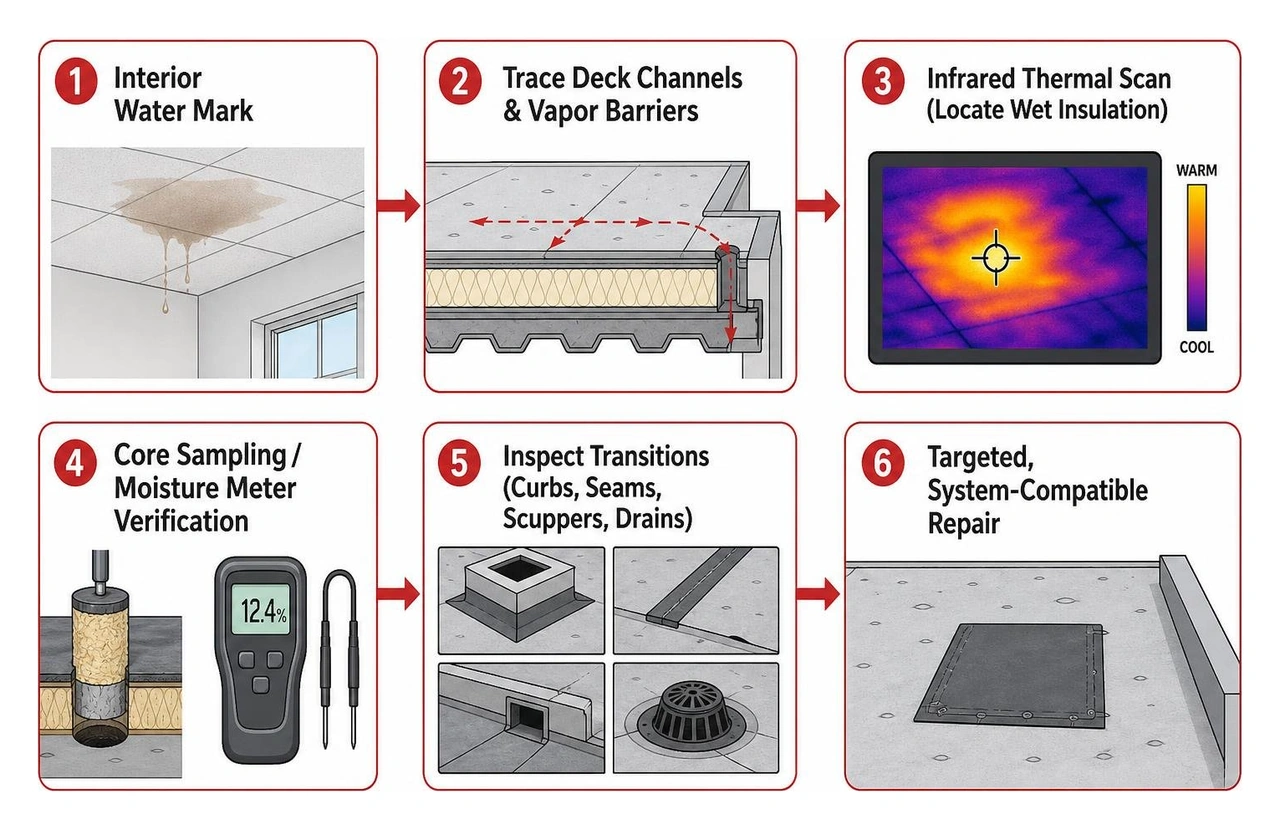
When an infrared scan indicates trapped moisture, technicians verify the findings using non-invasive electronic moisture meters or small, targeted core samples. Taking a core sample involves cutting a tiny cross-section of the roof down to the deck to inspect the exact moisture level of the insulation and check the condition of the structural decking. Once verified, the sample location is immediately sealed with a compatible, permanent membrane patch. This root-cause process helps ensure that repairs treat the actual breach rather than just covering up surface marks.
Why Ceiling Stains Mislead Building Managers
Facility managers are often surprised when a roofing technician walks 15 to 20 feet away from an interior drip to begin inspecting the roof. On a low-slope roof, water rarely travels straight down.
Commercial buildings typically feature multiple construction layers: a weatherproofing membrane, one or more layers of rigid polyisocyanurate (polyiso) or EPS insulation, a vapor retarder, and a structural deck made of fluted steel, precast concrete, or wood. When water breaches the upper membrane, it flows across the top of the vapor retarder or travels along the low flutes of a metal deck. The water continues horizontally until it reaches an open seam in the decking, a conduit cutout, or a fastener hole. Because of this path, the spot where water enters your workspace is almost never directly beneath the hole in your roof.
Commercial Roof Repair Costs and Membrane Systems
Repair costs vary based on the membrane chemistry, the extent of moisture saturation in the insulation, roof accessibility, and the type of repair required. Rather than relying on fixed rates, commercial estimates typically factor in the overall square footage of affected insulation, seam splicing needs, and flashing complexity around curbs and drains. For general industry pricing benchmarks across various materials, facility managers can consult resources like Commercial Roof Repairs 2026: Cost by Type & System | TRB.
Pricing Breakdown for Membrane Patching and Seams
Each commercial roofing membrane requires specific chemistry, equipment, and handling during a repair:
- TPO Membranes: As the most common single-ply material on modern commercial facilities, TPO relies on hot-air welded seams. Repairing aged TPO requires thorough surface cleaning with specialized solvent cleaners to remove years of oxidized material, followed by hot-air welding a round-cornered patch at temperatures between 800°F and 1,000°F.
- EPDM Rubber: EPDM is a non-weldable thermoset rubber. Repairs require mechanical cleaning, application of an EPDM-specific primer, and the use of cured EPDM membrane with specialized splice tape or uncured flashing tape. Liquid adhesives alone often fail prematurely when exposed to seasonal ponding.
- PVC Single-Ply: Highly resistant to animal fats and industrial chemicals, PVC is common on restaurants and processing facilities. Like TPO, PVC is repaired using hot-air welding. However, older PVC can lose plasticizers over time, requiring specialized testing to confirm the existing sheet can still accept a weld.
- Modified Bitumen: Multi-ply asphaltic systems are repaired using cold-applied SBS adhesives, self-adhering membranes, or torch-applied modified sheets. Torch repairs demand strict safety protocols, including local hot-work permitting and post-work fire-watch procedures.
Restoring Versus Replacing Commercial Low-Slope Roofs
When addressing recurring leaks, property managers must decide whether to continue spot repairs, invest in full fluid-applied restoration, or schedule a complete tear-off and replacement through comprehensive commercial roofing services.
A reliable guideline used by facility consultants is the 30-to-40 percent rule: if cumulative repair and maintenance costs exceed 30% to 40% of total replacement cost across a rolling 12-month window, continuous patching is no longer financially practical.
Fluid-applied silicone or elastomeric restoration systems can be an effective middle ground on qualifying projects. By applying a high-solids silicone coating over an existing single-ply or metal roof, you create a seamless, weather-resistant barrier that reflects UV rays without the expense and waste of a full tear-off. However, restoration is only viable if wet insulation sections are cut out and replaced beforehand.
Evaluating Estimates and Contractor Qualifications
A commercial roof repair estimate should be clear, detailed, and easy to understand. Low-slope roofing demands precise technical execution, and vague proposals can lead to unexpected change orders, voided manufacturer warranties, or repeated leaks.
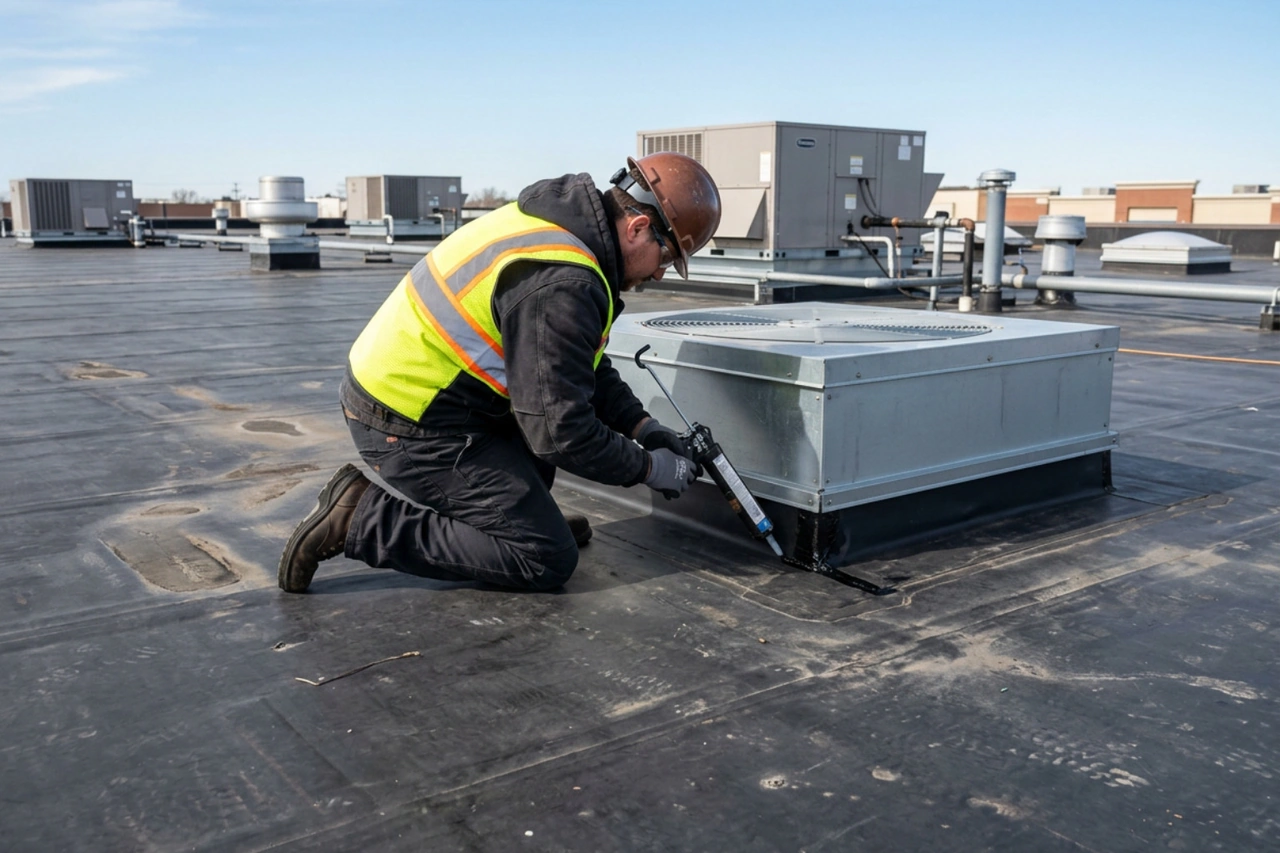
When reviewing contractor proposals, check for these critical details:
- Precise Physical Locations: The estimate should clearly identify problem areas using marked roof maps and labeled inspection photographs.
- Detailed Scope and Material Specs: The proposal must list exact membrane types, mil-thickness, primers, adhesives, and flashing materials that match your current system.
- Surface Preparation Standards: Look for specific cleaning and preparation methods, such as solvent washes for single-ply or wire-brushing for metal.
- Workmanship Warranty Terms: The contractor should provide a written warranty covering their repair labor on qualifying projects (terms depend on the system, often 1 to 2 years for minor repairs with longer terms for full restorations).
- Site Safety and Cleanup: Confirm that debris removal, building protection, and safety measures are included in the base bid.
For a deeper look at what to review before signing, see our guide on what should be included in a roofing estimate.
Manufacturer Warranties and Certified Technicians
If your commercial building is protected by a manufacturer No Dollar Limit (NDL) warranty from brands like Carlisle, Firestone (Elevate), GAF, or Duro-Last, you must use an authorized, factory-certified contractor for all repair work.
Hiring an uncertified contractor or applying unapproved store-bought mastics can void your manufacturer warranty. Choosing a factory-certified licensed roofing contractor helps protect your long-term investment and ensures that repairs comply with strict engineering guidelines. Building owners evaluating local options can review qualified installers on Best Roofers in Saint Germain, WI | GAF Roofing Contractors.
What Every Commercial Roof Repair Estimate Must Detail
A thorough repair proposal should leave no room for ambiguity. High-quality commercial proposals specify:
- Matched Mil-Thickness: Using a patch membrane that equals or exceeds the thickness of the existing sheet (for example, using a 60-mil TPO patch over a 45-mil or 60-mil base roof).
- Corner Detailing: Rounding all membrane patch corners. Square corners easily peel up under wind scour and freeze-thaw expansion.
- Water Cut-Offs: Installing temporary tie-ins or water cut-offs at the end of each work shift to ensure unexpected rain cannot get beneath open sections.
- Permit and Code Provisions: Clear statements outlining local building code compliance and permitting responsibilities (permit rules vary by municipality, so confirm during the estimate).
Preventive Maintenance and Emergency Response Strategies
Emergency repairs are designed to stabilize an active leak during severe weather, while permanent repairs restore long-term structural and waterproof integrity. Knowing the difference helps facility managers protect their property and control costs.
Temporary Patches Versus Permanent Commercial Roof Repair
During a major storm, emergency roof technicians focus on quick stabilization. They might use specialized poly-glass patches, quick-setting expanding foams, or emergency water-diverter tarps inside the ceiling cavity. These temporary fixes stop water from ruining inventory or halting tenant operations.
Once weather conditions clear, technicians return to complete the permanent repair. This involves cutting away any saturated insulation, cleaning the substrate, and hot-air welding or vulcanizing system-compatible materials. Permanent repairs include full photographic documentation, which helps support property insurance claims and keeps facility maintenance logs up to date.
Seasonal Inspections and Long-Term Protection
Routine inspections are the most effective way to prevent costly roof emergencies. In areas that experience harsh winters, commercial roofs should be professionally inspected twice a year: once in the spring to evaluate winter stress and once in the autumn to prepare for freezing temperatures.
Our recommended roof inspection checklist focuses on several key preventative tasks:
- Clearing pine needles, leaves, and trash from all scuppers, strainers, and interior drains.
- Checking mechanical unit curb seals and pitch pockets for shrinking or cracking.
- Probing single-ply seams with a dull cotter-pin tool to identify weak or unbonded edges.
- Inspecting parapet wall cap metal joints and counter-flashings for loose fasteners.
- Checking expansion joints for tears or loose anchoring.
Frequently Asked Questions About Commercial Roofs
How quickly should a contractor respond to an active leak?
For active commercial leaks that threaten equipment, tenant spaces, or inventory, professional roofing services typically provide emergency triage within 24 to 48 hours. Emergency crews focus on immediate water containment to limit interior damage, followed by a scheduled permanent repair once rooftop conditions are dry.
What is the 30-to-40 percent rule for roof replacement?
The 30-to-40 percent rule is a common financial benchmark used by commercial roofing consultants. If your total repair and leak-mitigation costs over a 12-month period exceed 30% to 40% of the cost of a full replacement, continuing to patch the roof is rarely economical. At that point, hidden insulation saturation and seam degradation usually mean replacement or complete fluid-applied restoration is the better long-term choice.
Can commercial roof repairs be performed while the facility is occupied?
Yes, the vast majority of commercial roof repairs take place while the building is open and fully operational. Professional roofing crews manage staging areas, establish ground safety perimeters, and use low-odor, low-VOC adhesives and cold-applied processes to keep noise, fumes, and disruption to a minimum.
Conclusion
Managing a commercial facility means keeping everyday operations running smoothly while protecting your physical property. When leaks happen, taking a practical approach by identifying the true source of water intrusion, choosing system-compatible materials, and working with certified professionals can help you avoid costly disruptions and extend the life of your roof.
At Eagle River Roofing, we provide reliable low-slope commercial repairs, durable metal roofing, and complete replacements across Eagle River, Rhinelander, Minocqua, St. Germain, Three Lakes, and neighboring Northwoods communities. Founded in late 2023, our business is built on a 50+ year legacy of local experience and an ownership team record of more than 9,000 roofs installed. As a factory-certified contractor, we deliver tidy job sites, photo-backed inspections, and clear, written quotes with no pressure.
If you are dealing with an active leak or want an honest evaluation of your commercial roof's condition, explore your options with our instant estimate tool today.
This article is for general informational purposes only and may not reflect the most current products, pricing, codes, availability, weather-related recommendations, or roofing requirements for your specific property. Every home and roof is different, especially in the Northwoods. Please contact Eagle River Roofing directly for the latest information and guidance for your project.

