How Often Should You Inspect a Commercial Flat Roof?
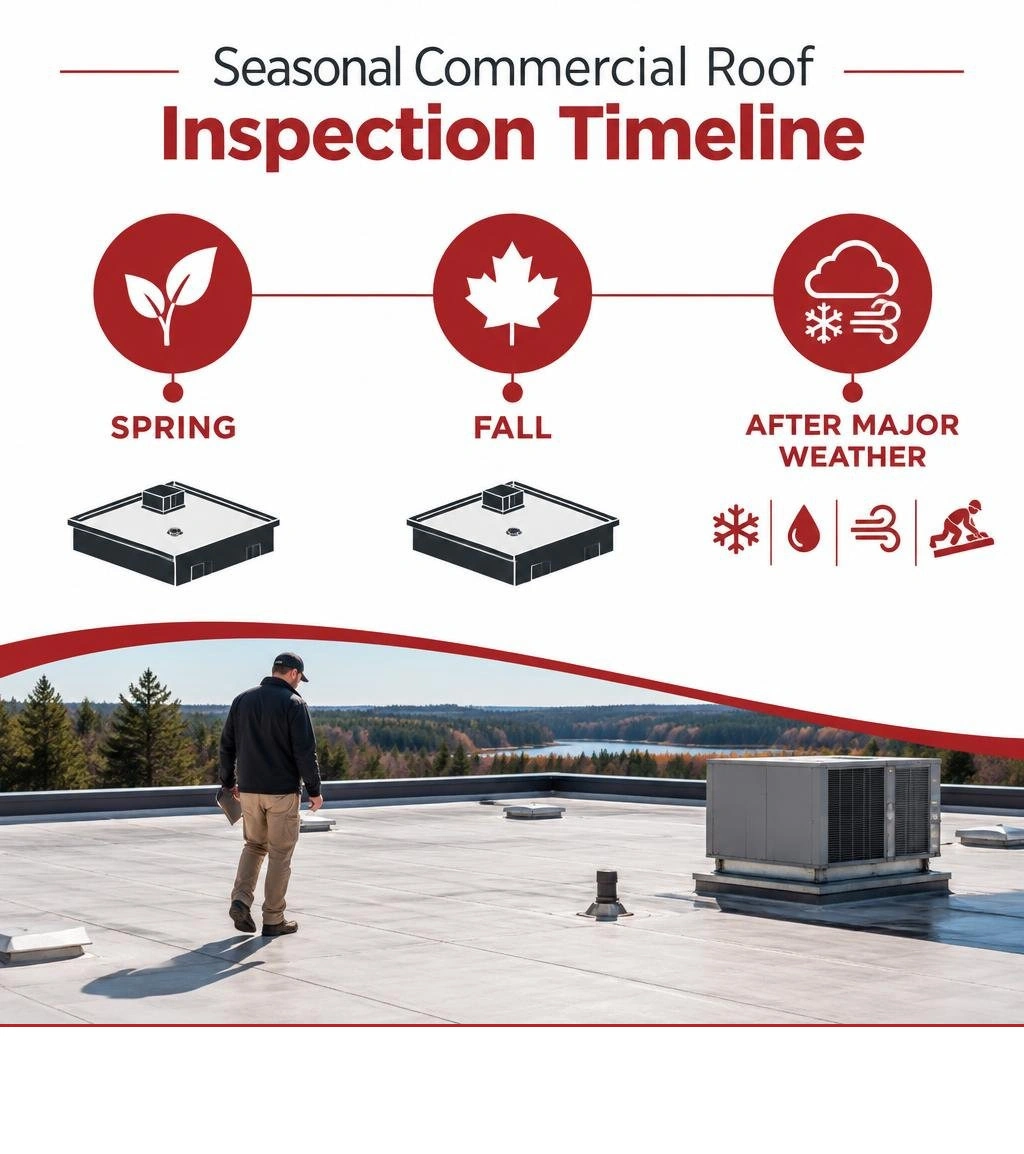
Plan a commercial roof inspection in spring and fall, plus an extra check after heavy snow, a major thaw, strong winds, or rooftop work. That is our recommended schedule for flat and low-slope roofs in Vilas and Oneida counties and nearby Gogebic County.
A good inspection looks at drains and scuppers, standing water, membrane seams, flashing around walls and rooftop units, edge metal, and punctures. Between inspections, you can watch for ceiling stains or drips near equipment and keep photos and written records of anything you find.
I am Tyler Blair, owner of Eagle River Roofing in Eagle River, WI. We are a locally owned GAF Master Elite contractor founded in late 2023, built on a 50+ year legacy of local experience with over 9,000 roofs and 8 million feet of gutters installed. Our commercial roof inspections come with photo-backed findings and clear written quotes. We also work to keep job sites tidy when repairs are needed.
When to Schedule a Commercial Roof Inspection
Managing a commercial property, resort, or multi-family building in northern Wisconsin and the Upper Peninsula means balancing tight seasonal windows. Flat and low-slope roofs carry heavy snow loads, shed seasonal pine needle fall, and face severe freeze-thaw cycles. Setting a predictable inspection routine helps you spot small tears, loose seams, or blocked drainage paths before cold weather sets in.
According to NRCA's Professional Roofing magazine, building owners should inspect their roof systems at least twice a year, preferably in spring and fall, with extra inspections after severe weather. Sticking to a bi-annual rhythm keeps your facility ready for seasonal changes.
Routine Spring and Fall Schedule
A spring check focuses on how your roof held up through the winter months. Once the snow melts, we look for physical damage from sliding ice, compressed insulation under heavy drifts, or tears near rooftop mechanical units.
An autumn assessment is all about preparing for the coming cold. In communities like Minocqua, St. Germain, and Three Lakes, tall white pines shed heavy needles and small twigs every autumn. If this organic debris settles over drains and scupper boxes, trapped autumn rain can freeze solid when temperatures drop. Clearing these areas in the fall helps ensure melting snow has an open path off the building all winter long.
Post Storm and Seasonal Thaw Checks
Severe weather patterns call for quick spot checks outside your regular routine. In northern Wisconsin, sudden mid-winter thaws bring running meltwater across frozen roof decks. High lake winds can also pull at perimeter edge metal or shift mechanical unit hoods.
Rooftop foot traffic is another common reason to check the surface. When third-party technicians service heating units, or when maintenance crews consider how much snow is too much for a Northwoods roof and clear deep drifts, shovel blades and heavy boots can cause accidental punctures. Even small scuffs on membrane roofing systems can open a path for moisture during the next thaw.
Key Areas Checked on Flat and Low Slope Roofs
Flat roofs are complex assemblies where multiple materials meet. When looking for commercial flat roofing in the Northwoods, choosing a team that understands cold-climate movement is essential. A proper evaluation covers the open field of the membrane, along with every seam, penetration, and wall transition.
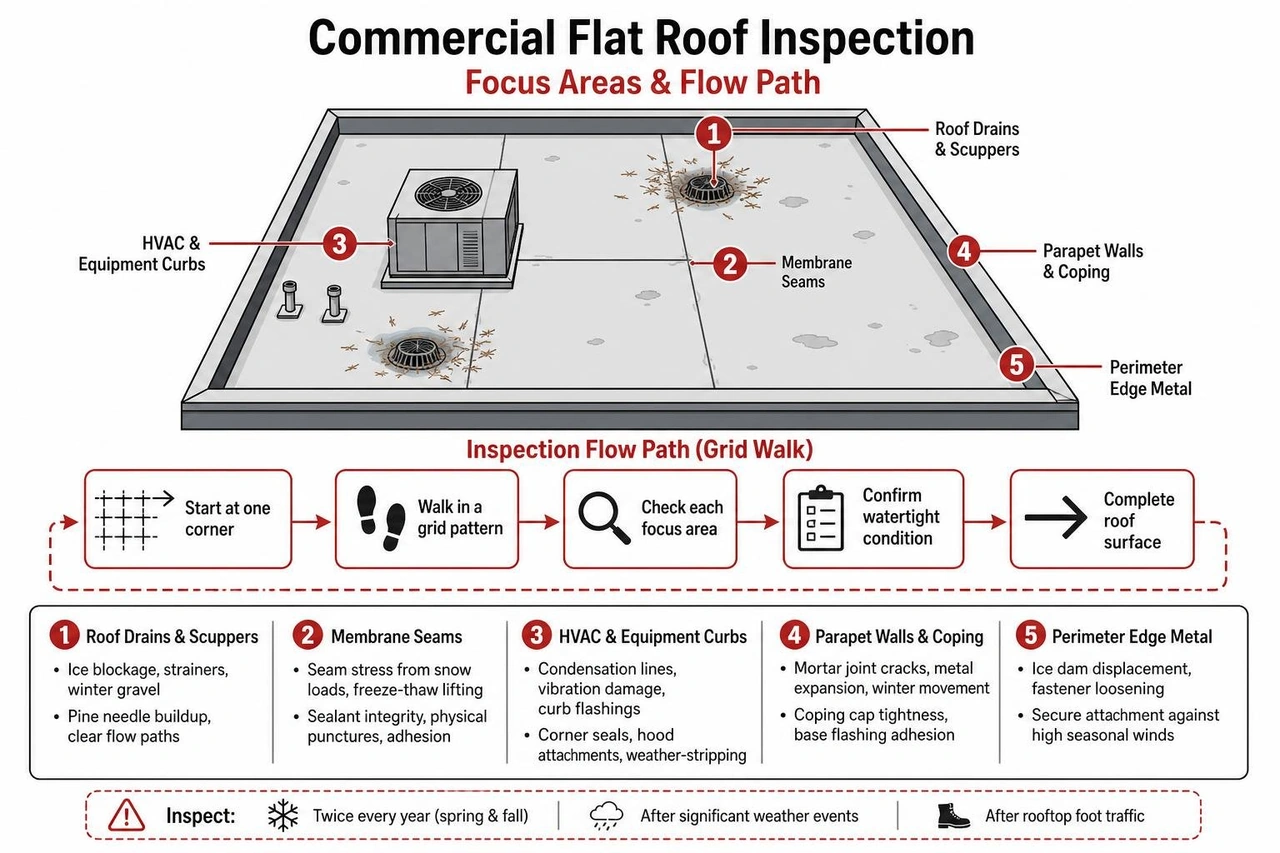
| Inspection Area | Spring Focus Points | Fall Focus Points |
|---|---|---|
| Roof Drains & Scuppers | Ice blockage, strainers, winter gravel accumulation | Pine needle buildup, leaves, clear flow paths |
| Membrane Seams | Seam stress from snow loads, freeze-thaw lifting | Sealant integrity, physical punctures, adhesion |
| HVAC & Equipment Curbs | Condensation lines, vibration damage, curb flashings | Corner seals, hood attachments, weather-stripping |
| Parapet Walls & Coping | Mortar joint cracks, metal expansion, winter movement | Coping cap tightness, base flashing adhesion |
| Perimeter Edge Metal | Ice dam displacement, fastener loosening | Secure attachment against high seasonal winds |
What Happens During a Commercial Roof Inspection
During a visit, we walk the roof surface, check how the membrane is attached, look for soft spots that can point to wet insulation below, and inspect edges and seams for openings.
Drainage Paths, Scuppers, and Ponding Water
Proper drainage is critical for low-slope roof longevity. Standing water that lingers long after rain or snowmelt can degrade protective materials under hot sun. In winter, ponding water freezes into heavy ice slabs that expand, putting extra stress on surrounding seams. We inspect interior drain bowls, strainer domes, and exterior scuppers to confirm water leaves the deck without restriction.
Flashings, Curbs, and Membrane Seams
Most flat roof leaks do not start out in the open field; they begin at transitions. Rooftop mechanical units sit on raised wood or metal curbs that expand and contract at different rates than the roof deck. We inspect base flashings where the membrane turns up walls, parapet coping caps, pipe boots, and termination bars. We check the seams to see whether cold temperatures have pulled any bonded edges apart.
Early Signs of Water Intrusion to Watch From Inside
Building owners and property managers may not need to climb onto the roof to spot trouble. Many issues show early warnings inside the facility or from the ground level. Understanding these signals helps you plan timely commercial roof repairs before structural decking is affected.

Ceiling Stains and Moisture Near Equipment
Keep an eye out for these subtle indicators inside your building:
- Discolored acoustic ceiling tiles, especially around roof-mounted heating units or interior drain pipes.
- White, powdery mineral deposits (efflorescence) running down interior masonry walls.
- Rust stains on steel beams, bar joists, or metal decking panels.
- A damp, musty odor in upper-floor storage rooms, attics, or utility closets.
- Peeling paint or sagging drywall along exterior walls directly beneath roof parapets.
Signs You Shouldn't Wait for the Next Seasonal Check
Some situations require a prompt professional evaluation rather than waiting for your next seasonal check. If you see active drips inside the building during a steady rain or sudden winter thaw, water has already bypassed the membrane and soaked through the insulation layer.
Visible sagging on the ceiling deck, frozen scuppers backing water onto the roof, or loose perimeter metal flapping in high winds are all signs that your roof assembly needs a prompt on-site assessment.
The Value of Keeping Clear Roof Maintenance Records
Maintaining a written history for your commercial building makes long-term property management much simpler. Whenever a technician services rooftop equipment, walks the deck, or performs an evaluation, log the date and notes in a central roof access log.
A comprehensive commercial roof inspection report provides photo-backed documentation of your roof's current state. Having clear before-and-after photos, along with written scopes of work, helps you track membrane aging over time. This written record provides clear data for capital budgeting, tenant management, and future roof planning across your entire portfolio.
Frequently Asked Questions About Commercial Roof Care
Can on-site maintenance staff inspect flat roofs?
On-site staff can easily handle ground-level visual checks, monitor interior ceilings for water stains, and look for visible debris around exterior downspouts. However, walking flat roofs involves working near unprotected edges, navigating slippery frost, and knowing the subtle signs of seam separation. A comprehensive condition assessment is typically handled by a professional contractor trained in rooftop safety.
How is an on-site evaluation performed?
A thorough commercial roof inspection covers the entire roof surface, drainage components, flashings, curbs, and perimeter details. The exact scope depends on the size of the building, the layout of the rooftop units, access points, and the overall complexity of the drainage systems. After walking the roof, we compile the photos and findings into a clear written estimate.
How does freeze-thaw weather affect flat roofs?
Northwoods winters bring frequent freeze-thaw cycles. When daytime sunshine melts snow on a flat roof, the water flows toward scuppers and drains. If temperatures plummet after sunset, that slow-moving meltwater freezes. As water turns to ice, it expands. If even a tiny opening exists in a seam or flashing seal, expanding ice can widen the gap, allowing water deeper into the roofing assembly during the next thaw.
Conclusion
Protecting your commercial building, resort property, or multi-family facility starts with regular care. Scheduling a commercial roof inspection each spring and fall helps catch minor flashing gaps, seam stress, and drainage clogs before they cause costly interior interruptions.
At Eagle River Roofing in Eagle River, WI, we are a locally owned GAF Master Elite contractor with deep roots in the Northwoods. We understand what local winters demand of low-slope buildings. We take pride in delivering photo-backed findings, clear written quotes, and tidy job sites from start to finish.
Whether you need a routine seasonal check, leak repairs, storm damage repair, temporary repairs, or a full replacement, we are here to provide clear, honest guidance. Call (715) 892-8328, Mon to Fri 8 to 5, to schedule your free, no-pressure estimate for our commercial roofing services.
Sources
This article is for general informational purposes only and may not reflect the most current products, pricing, codes, availability, weather-related recommendations, or roofing requirements for your specific property. Every home and roof is different, especially in the Northwoods. Please contact Eagle River Roofing directly for the latest information and guidance for your project.

