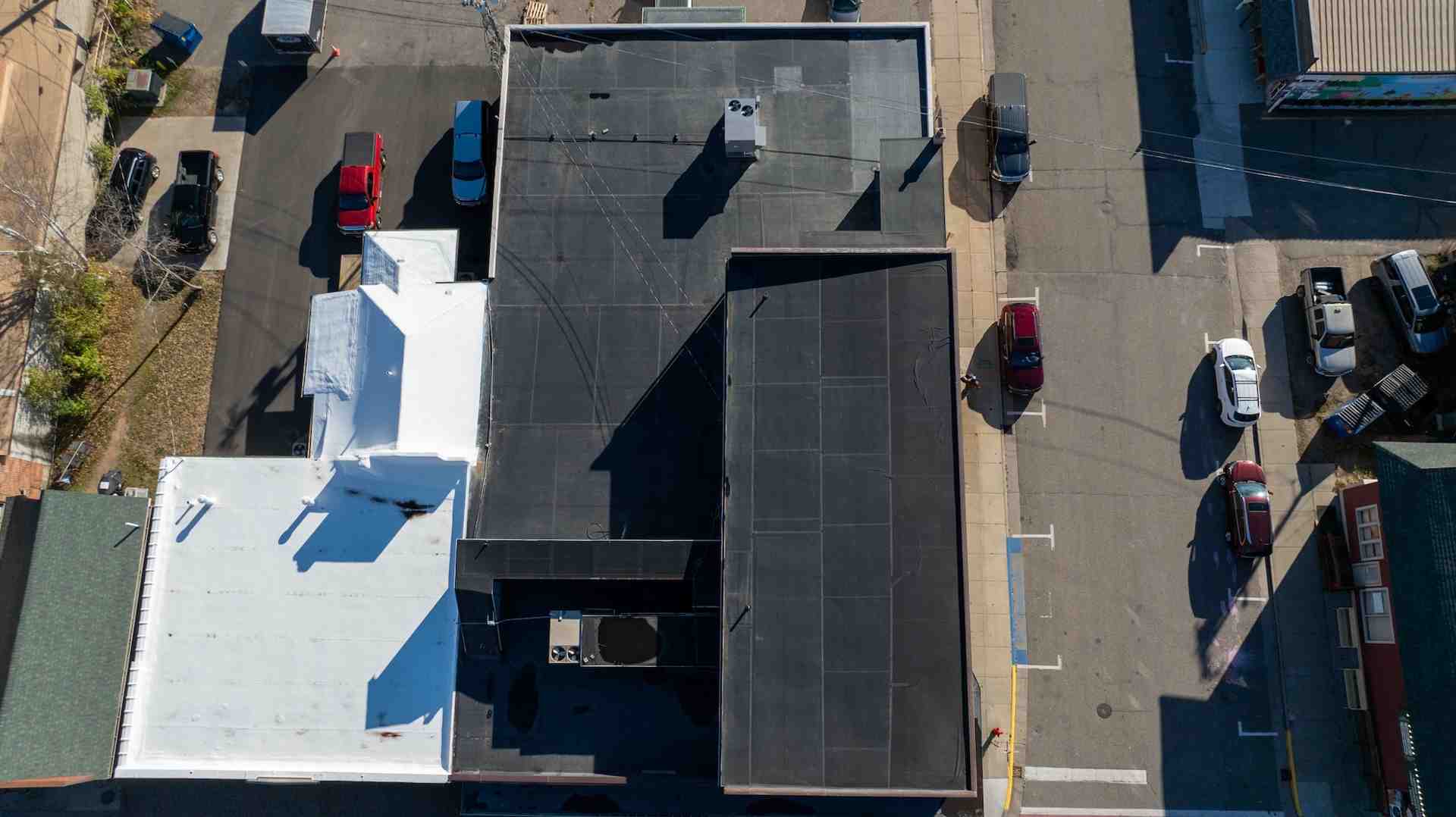
Why Is Commercial Flat Roofing Crucial for Northwoods Businesses?
Commercial flat roofs in Northern Wisconsin face challenges that buildings in warmer climates never see. Towns like Eagle River, Rhinelander, and Minocqua receive heavy snowfall and experience long freeze-thaw cycles. During early spring or mild winter spells, snow pack melts during the day and refreezes at night. This expansion puts intense pressure on seams, flashing, and roof drains.
A flat roof on a retail store, school, restaurant, or industrial plant needs to hold up under severe cold and heavy snow loads. When water stays on a low-slope roof, even a tiny seam leak can lead to internal structural damage, ruined inventory, or uncomfortable business interruptions.
Different flat roof membranes handle cold weather in different ways:
- Duro-Last PVC: A flexible thermoplastic membrane that uses custom factory prefabrication. Heat-welded seams make it very resistant to standing water and cold temperatures.
- TPO (Thermoplastic Polyolefin): A popular white single-ply membrane that reflects summer heat and offers solid puncture resistance.
- EPDM (Synthetic Rubber): A durable black rubber membrane that handles extreme temperature swings well, though glued seams can require maintenance over time in freezing weather.
- IB Roof Systems: Highly durable PVC single-ply membranes designed for low-slope roofs, featuring heat-welded seams for strong leak resistance.
Choosing a watertight, cold-weather-rated roof system helps protect your commercial building so your business can run smoothly all winter long.
Local Commercial Flat Roofing Companies
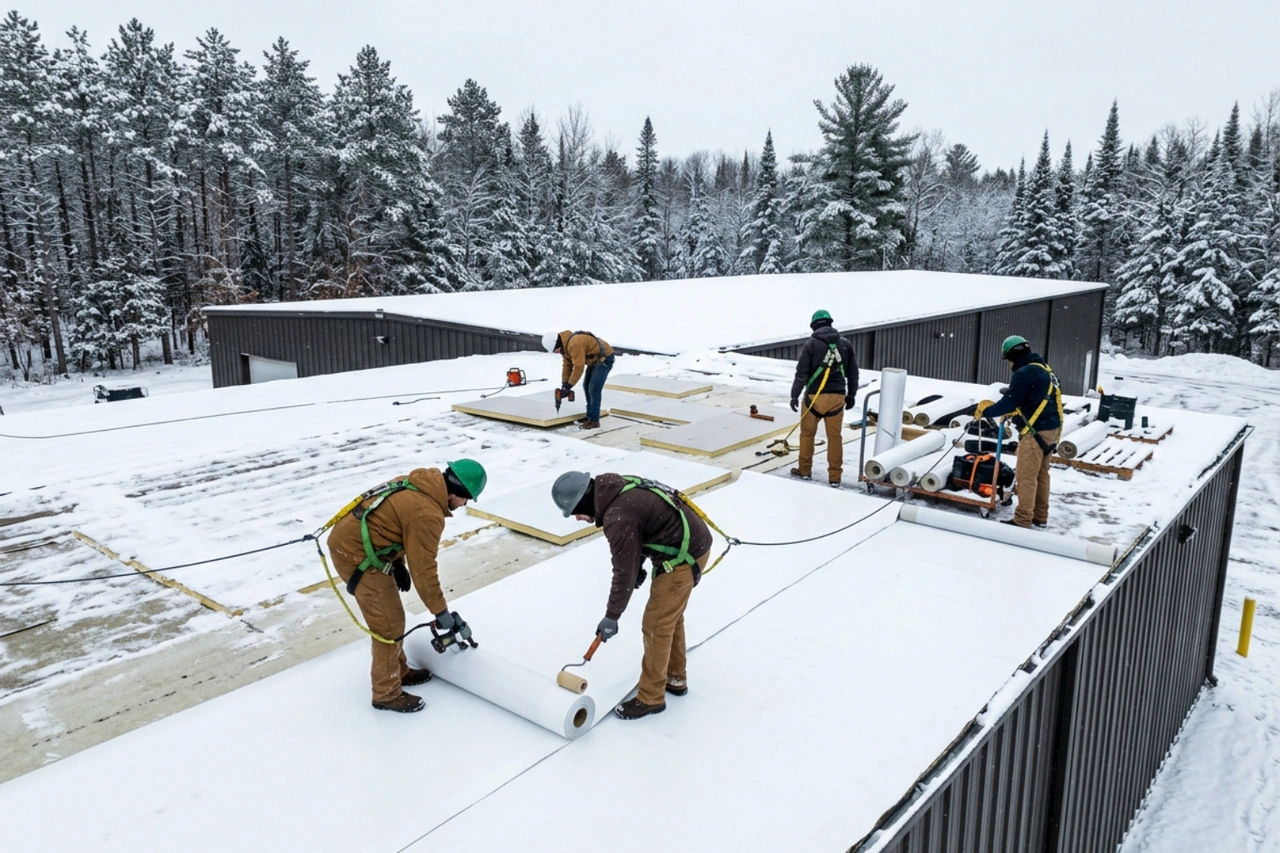
Several local and regional commercial roofing contractors handle flat roofs across the Northwoods, including Eagle River, Rhinelander, Minocqua, Tomahawk, and Boulder Junction.
Here is a look at active commercial flat roofers serving our region:
- Eagle River Roofing: Based right here in the Northwoods, our company was founded in late 2023 and is built on a 50+ year legacy of local hands-on roofing experience. Our team has installed over 9,000 roofs and 8 million feet of gutters across Northern Wisconsin. As a GAF Master Elite contractor, we focus on high-quality commercial flat roof replacements, retrofits, and repairs. We focus on tidy job sites and clear written quotes so property owners know what to expect. You can explore our options on our Services / Roofing / Commercial Roofing page or check regional credentials through the GAF Roofing Contractors Directory in Saint Germain, WI directory.
- Nasi Roofing: Operating across Wisconsin and Upper Michigan since 1983, Nasi Roofing focuses heavily on prefabricated Duro-Last PVC flat roofing systems and commercial metal roof retrofits.
- Copper Creek Roofing & Construction: Servicing Northern Wisconsin and the Upper Peninsula, Copper Creek provides flat roof installations including Duro-Last and EPDM alongside general commercial construction.
- Kimmons Roofing: Located in Central and North Central Wisconsin, Kimmons Roofing focuses on custom Duro-Last single-ply systems and low-slope roof maintenance.
- Oneida Roof and Chimney: A family business serving Oneida County with origins dating back to 1954, offering IB Roof Systems, heat-welded single-ply membranes, and metal fabrication.
- Valiant Roofing: Founded in 2019, Valiant Roofing provides commercial flat roof repairs, rubber membrane installations, and storm damage insurance claim guidance across Western and Northern Wisconsin.
- Davis Enterprises: Operating in Northwoods towns like Tomahawk and Minocqua, Davis Enterprises provides commercial flat roofing services using dedicated in-house installation crews.
How Do Northwoods Flat Roofing Contractors Compare?
When comparing commercial contractors, look closely at crew structure, membrane options, and manufacturer credentials.
| Contractor Name | Primary Flat Roof Systems | In-House Crews | Key Proof Points & Experience |
|---|---|---|---|
| Eagle River Roofing | Single-Ply PVC, TPO, EPDM, GAF Systems | 100% In-House | Founded late 2023; 50+ yr local legacy; 9,000+ roofs installed; GAF Master Elite status |
| Nasi Roofing | Duro-Last PVC, Metal Retrofit | In-House | Over 20 million sq ft installed since 1983; Platinum Duro-Last contractor |
| Copper Creek Roofing | Duro-Last PVC, EPDM Rubber | In-House | Full-service construction & flat roof installations across Northern WI & UP |
| Kimmons Roofing | Duro-Last PVC | In-House | Certified Duro-Last installer; single-ply dome & low-slope installer |
| Oneida Roof and Chimney | IB Roof Systems, Single-Ply | In-House | Family roofing legacy dating back to 1954; custom sheet metal fabrication |
| Valiant Roofing | Rubber Membranes, Metal | In-House | Founded in 2019; former insurance adjuster expertise on staff |
| Davis Enterprises | Heavy-Duty Commercial Flat Roofs | 100% In-House | 80+ years combined experience serving Minocqua, Tomahawk, and Rhinelander |
Contractors who rely on dedicated in-house crews rather than seasonal subcontractors often have stronger quality control and tighter project schedules. Additionally, contractors with specialized manufacturer certifications may be able to provide expanded non-prorated material and labor warranties, depending on the system, product selection, and registration.
What Types of Flat Roofing Systems Perform Well in Cold Climates?
Not all flat roofing materials react the same way to Northwoods freezing temperatures. Here is how the most common systems perform:
- Duro-Last PVC: Custom pre-fabricated in a factory to match your building's exact measurements, which can reduce rooftop field seams by up to 85%. The PVC material stays flexible in freezing weather, and heat-welded seams create a single continuous sheet.
- TPO Membranes: Highly popular for commercial buildings due to strong UV reflectivity and heat-welded seams. TPO performs well under snow, though proper membrane thickness should be chosen to resist hail and ice impact.
- EPDM Rubber: Extremely flexible in sub-zero weather and very resistant to thermal shock. However, EPDM seams are typically joined using adhesive tape or liquid glue, which can break down faster under standing water and freeze-thaw cycles than heat-welded seams.
- IB Roof Systems: PVC-based single-ply systems built for harsh weather, offering thick puncture-resistant options and heat-welded joints.
Heat-Welded vs. Glued Seams
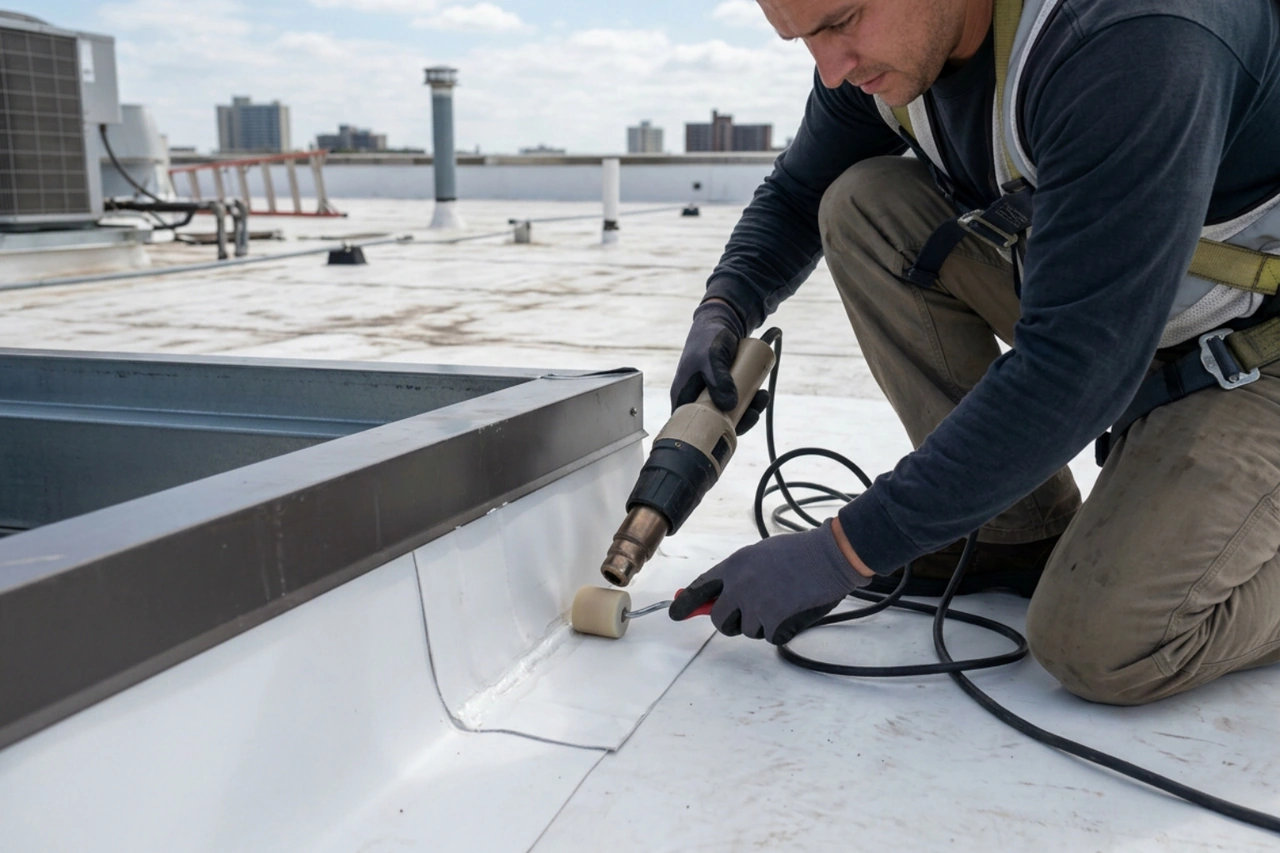
In the Northwoods, seam technology is critical. Glued seams depend on chemical adhesives that can weaken over years of exposure to ponding snowmelt. Heat-welding uses hot air to melt the overlapping membrane edges together. Once cooled, the seam is stronger than the membrane itself, forming a continuous barrier designed to help resist water intrusion from melting snow banks and ice dams.
Retrofit Solutions
If your existing commercial roof or metal deck is structurally sound, a retrofit installation can save money. Instead of paying for an expensive tear-off and disposal, installers place flute-fill insulation over old metal panels or existing flat surfaces to build a smooth, insulated base. A new single-ply membrane is then attached on top. To learn more about local commercial options, check out our Commercial Roofing Wisconsin Guide or review statewide commercial building standards.
Energy Efficiency Benefits
White single-ply membranes reflect solar energy during bright summer days, lowering cooling loads for air-conditioned retail spaces or offices. In winter, proper insulation board installed under the membrane keeps heating energy inside where it belongs.
What Are the 5 Questions to Ask Before Hiring a Northwoods Flat Roofing Contractor?
Before you sign a commercial roofing contract, asking the right questions helps ensure your project goes smoothly.
Question 1: Do You Use 100% In-House Installation Crews or Subcontractors?
In-house crews mean the contractor directly employs and trains the workers on your roof. This leads to better jobsite safety, consistent workmanship, and clear communication. Subcontractors can sometimes cause scheduling delays or inconsistent detail work around difficult HVAC curbs and flashings.
Question 2: Are Your Seams Heat-Welded or Glued, and Do You Use Prefabricated Membranes?
Heat-welded thermoplastic seams generally perform much better against Northwoods ice and ponding water than chemical glues. Ask if the contractor uses factory prefabrication. Prefabricated roof sheets are custom-made to fit your building, reducing the amount of hand-welding required on-site in cold or windy weather.
Question 3: Can the Roofing System Be Installed as a Retrofit to Avoid Expensive Tear-Off Costs?
A reputable contractor will inspect your roof deck to see if a retrofit installation is possible on qualifying projects. If your insulation is dry and the structure is sound, adding rigid insulation board and a new single-ply membrane directly over the old roof can help save on labor and landfill fees.
Question 4: How Does Your Flat Roof System Handle Northwoods Snow Loads, Ice Dams, and Ponding Water?
Your contractor should explain how their system manages water runoff. Ask about custom tapered insulation crickets to channel water toward drains, heavy-duty edge details, and commercial gutter integration. If your property needs drainage upgrades, review our Services / Gutters options to help reduce ice backup along your roof edges.
Question 5: What Specific Warranties Cover both Materials and Labor?
Commercial flat roof warranties vary widely. Ask for written details on:
- Length of coverage: Typically ranges from 15 to 30 years depending on the system, product selection, and registration.
- Ponding water coverage: Some warranties have restrictions if water sits on the roof for extended periods. Look for warranties that include ponding water coverage on qualifying installations.
- Consequential damage: Check if optional warranty tiers help cover interior building damage if a covered material failure occurs.
- Third-party inspections: Premier membrane manufacturers send field inspectors to review the installation depending on the system and warranty level selected.
Timelines and Budgets for Commercial Flat Roofing
Planning a commercial flat roof replacement requires a clear timeline so your business operations are not disrupted.
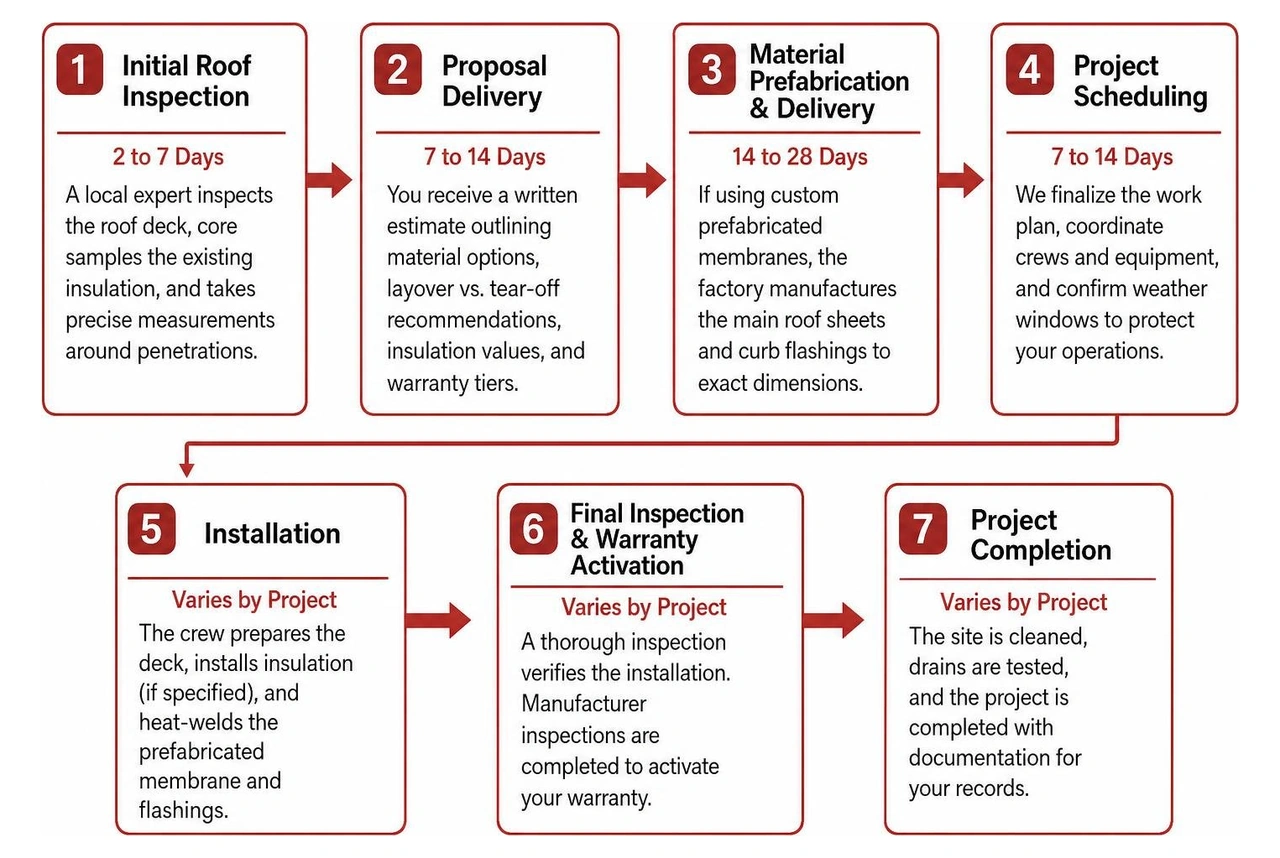
Here is how a typical commercial project moves from start to finish:
- Initial Roof Inspection (typically 2 to 7 days, depending on project scope): A local expert inspects the roof deck, core samples the existing insulation, and takes precise measurements around penetrations.
- Proposal Delivery (typically 7 to 14 days; confirm during the estimate): You receive a written estimate outlining material options, retrofit vs. tear-off recommendations, insulation values, and warranty tiers.
- Material Prefabrication & Delivery (typically 14 to 28 days, depending on product selection): If using custom prefabricated membranes, the factory manufactures the main roof sheets and curb flashings to exact dimensions.
- On-Site Installation (typically 1 to 3 days for standard commercial buildings, depending on weather and scope): An experienced crew installs the insulation board, fastens or adheres the membrane, and heat-welds all seams and flashings.
To protect your day-to-day business, commercial crews can load materials during off-peak hours and work in sections so your doors remain open to customers.
Budget Factors to Consider
The overall cost of a commercial flat roof depends on several variables:
- Total square footage and building height.
- Choice between a retrofit installation or a complete tear-off.
- Required insulation thickness (R-value) to meet local building codes.
- Number of roof penetrations, such as skylights, vents, and HVAC units.
To start planning your budget, schedule a site visit through our Contact Us page to receive a transparent written estimate.
Frequently Asked Questions
Can a Commercial Flat Roof Be Installed During Northern Wisconsin Winters?
Yes, commercial flat roof repairs and installations can happen during colder months, but weather conditions must be monitored. Single-ply membranes can be mechanically attached in cold weather, but heat-welding equipment requires proper temperature adjustments to ensure strong seam fusion. On extremely cold or snowy days, contractors often focus on emergency tarping or temporary sealants, saving full membrane installations for milder weather windows.
How Long Does a Commercial Flat Roof Last in Cold Climates?
Depending on the material, installation quality, and maintenance, a commercial single-ply flat roof often lasts between 20 and 30+ years. Routine maintenance plays a huge role in longevity. Clearing roof drains before winter, removing heavy snow pack after severe storms, and keeping gutters clear of pine needles in autumn can help extend the life of your roof system.
What Are the Signs That a Commercial Flat Roof Needs Repair or Full Replacement?
Keep an eye out for these common warning signs on your commercial building:
- Water stains on interior ceiling tiles or walls after a snow melt.
- Blistering, cracking, or pulling away of the membrane near parapet walls.
- Separated or popping seams where adhesives have aged out.
- Standing water that remains on the roof surface longer than 48 hours after rain or melting snow.
- A sudden spike in winter heating costs, which often indicates wet, compressed ceiling insulation.
Getting Started on Your Flat Roof Project
Finding the right commercial flat roofing contractor comes down to local experience, proven seam technology, and clear communication. A reliable roof system keeps your building protected against heavy snow, freezing temperatures, and spring thaws, allowing you to focus on running your business.
When you are ready to evaluate your commercial building, follow this simple checklist:
- [ ] Request a complete roof inspection including insulation moisture checks.
- [ ] Ask whether a retrofit installation can help save on tear-off costs.
- [ ] Verify that the contractor uses heat-welded seams and dedicated in-house crews.
- [ ] Review warranty terms for ponding water coverage and non-prorated protections.
- [ ] Get a clear, written estimate with no hidden charges.
Our team at Eagle River Roofing is here to help you navigate your commercial roofing decisions with practical, honest guidance. Visit our Services / Roofing page today to request an evaluation and free estimate for your commercial property.
This article is for general informational purposes only and may not reflect the most current products, pricing, codes, availability, weather-related recommendations, or roofing requirements for your specific property. Every home and roof is different, especially in the Northwoods. Please contact Eagle River Roofing directly for the latest information and guidance for your project.

