
Should You Replace Gutters With a New Roof?
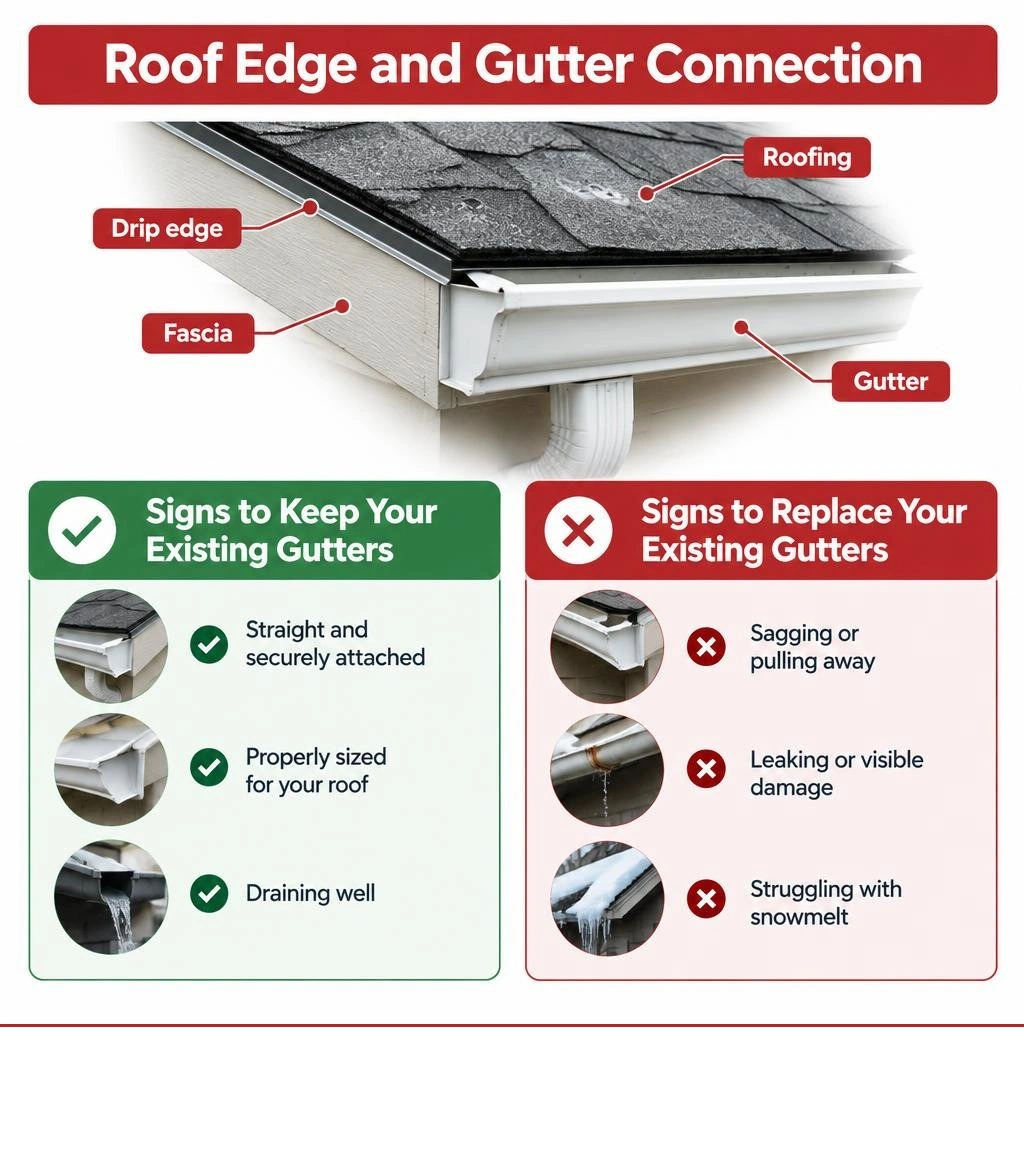
Often, it makes sense to replace both, but you do not have to. If your gutters are straight, securely attached, properly sized, and draining well, you may be able to keep them. If they sag, leak, pull away from the fascia, or struggle with snowmelt, plan to replace them as part of the roof project. Many Northwoods homeowners ask whether they should replace gutters during roof work, and the answer depends on the condition of your existing system.
The roof edge is where the decision matters most. During a tear-off, gutters may need to come off or be disturbed, and the new drip edge must direct water into them rather than behind them. We check that connection, along with the fascia, before recommending what to keep.
I’m Tyler Blair, owner of locally owned Eagle River Roofing, and I help Northwoods homeowners make the gutter decision during a roof replacement. Founded in late 2023, our company is built on 50+ years of combined local experience, and our ownership team has installed over 9,000 roofs and 8 million feet of gutters. We’re a GAF Master Elite contractor that provides clear written quotes and keeps job sites tidy.
When to Replace Gutters During Roof Work
Water management is the main job of both your roof and your gutter system. When these two parts work together smoothly, rain and melting snow move safely away from your siding, landscaping, and foundation. When one part fails, the other often suffers. In areas like Eagle River, Minocqua, and Rhinelander, winter weather brings heavy snow loads and freeze and thaw cycles that put extra strain on the roof edge.
Old gutters that are already showing their age can create hidden problems. If water has been spilling behind a loose trough for seasons, the wood fascia board behind it may have rot. Leaving weak troughs in place during a reroof can mean attaching your new drip edge over decaying wood. You can read our gutter repair and replacement guide to understand how small leaks differ from major structural issues.
Old spike and ferrule fasteners often pull free under the weight of winter ice. Once a gutter starts pulling away from the wood, water runs down the exterior wall. Heavy sliding snow can also bend older metal channels out of shape, ruining the slope needed to carry water toward the downspouts.
| Consideration | Keeping Old Gutters | Full Gutter Replacement |
|---|---|---|
| Initial Project Scope | Lower upfront work during reroofing | Combines eaves, drip edge, and drainage updates |
| Fascia Access | Limited view behind existing troughs | Full visual check and easy wood repair |
| Drainage Capacity | Keeps existing five inch or sectional troughs | Option to upgrade to larger six inch seamless profiles |
| Edge Alignment | Drip edge must be fitted to existing slope | Gutters are custom pitched to new drip edge |
| Attachment Strength | Retains older spike or screw spacing | Uses modern heavy duty hidden hangers for snow load |
Signs Your Gutters Should Be Replaced
There are clear physical signs that tell you when old gutters have reached the end of their useful life. Sectional gutters joined with caulked seams often split over time due to seasonal expansion and contraction. Once seams begin leaking, patching them usually provides only temporary relief.
Look for these warning signs along your roofline:
- Separating or leaking seams: Water dripping through joints during rain or spring thaw.
- Rust spots or corrosion: Thinning metal on older steel channels that can soon lead to holes.
- Sagging runs and standing water: Troughs that hold stagnant pools instead of draining completely.
- Pulling away from the fascia: Visible gaps between the gutter back and the wood trim.
- Staining on siding or foundation: Discoloration caused by repeated water overflow.
If you are already seeing common roof replacement signs like curling shingles or granule loss, your gutters have likely weathered the exact same seasons. Replacing them at the same time helps create a fresh start for your entire water shedding system.
When Your Existing Gutters Can Stay
You do not need to replace gutters that are still doing their job well. If your home has seamless aluminum troughs that are structurally sound, free of cracks, and pitched correctly toward the downspouts, they can often remain in place.
We usually check whether the current troughs are deep enough to handle heavy rainfall and snowmelt without overflowing. We also verify that the existing brackets are spaced closely enough to hold winter weight and that the new drip edge will slip neatly behind the gutter back without bending the metal. If everything checks out, keeping your current setup is a reasonable and practical choice.
Why Roof Tear-Offs and Drip Edges Affect Your Gutters
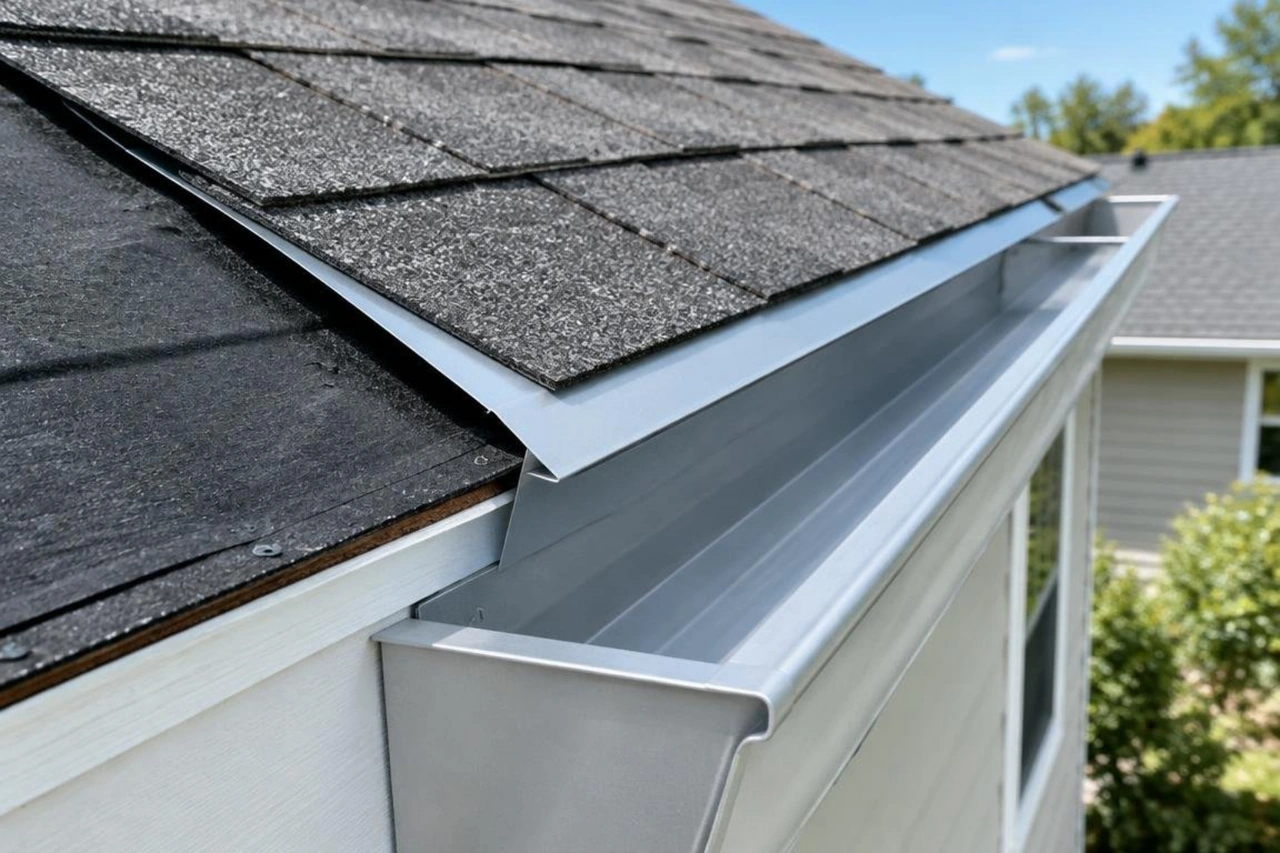
A full roof replacement involves removing old shingles, pulling nails, and carrying heavy bundles across the roof deck. Even with careful work, old gutters can be bumped or stressed during a tear-off. Shingle debris and roofing nails can collect in the channels if they are not covered or cleaned out.
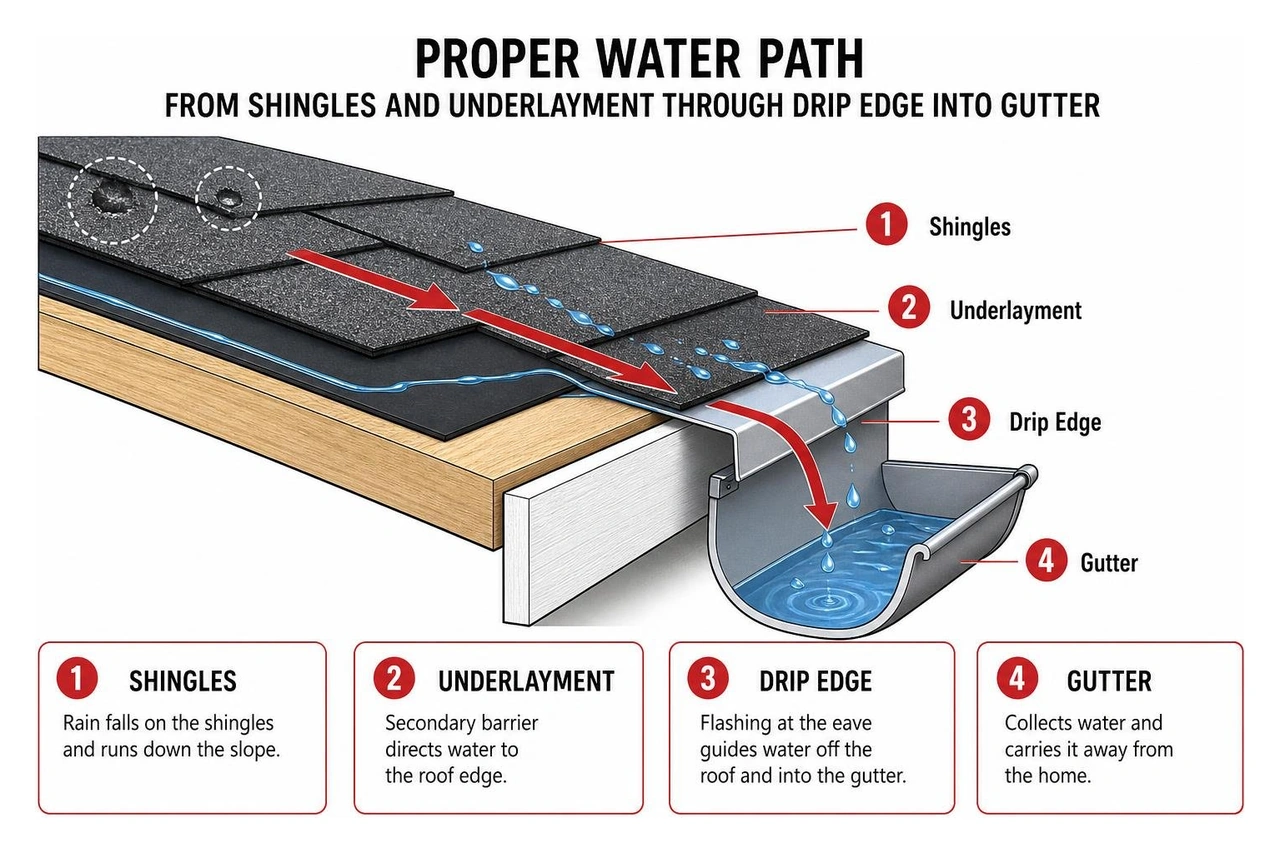
The connection between the roof edge and the gutter trough is where water intrusion most often starts. Roofers install a metal strip called a drip edge along the eaves. This flashing guides water off the shingle overhang and directs it straight into the gutter mouth. If gutters are already hanging at an awkward angle, fitting the new drip edge correctly becomes much harder. Sequencing the roof installation before hanging new gutters allows the flashing to sit in its ideal position.
How Proper Installation Order Protects the Fascia
The correct order of work is to finish the roof first and install the gutters second. When the old roof and old gutters come down, our crew gets a clean look at the bare wood fascia boards. If we find soft spots or rot caused by past leaks, we can repair the wood before any new metal is attached.
Once the fascia is solid, the roofing crew installs the underlayment, the drip edge flashing, and the new shingles. With the roof edge fully sealed, the gutter crew can hang the new seamless troughs so the back edge slips directly under the drip edge. This simple order helps keep water from seeping behind the gutter and rotting your freshly repaired wood.
Choosing the Right Gutter Options for Northwoods Winters
Winters in St. Germain, Three Lakes, and surrounding towns bring deep snow and prolonged freezes. Standard lightweight materials often struggle under the weight of packed snow and ice. Choosing the right material and profile helps your drainage system hold up season after season.
When planning an upgrade, understanding seamless gutter benefits helps you see why continuous metal runs perform better than store bought sectional pieces. Seamless gutters have joints only at the corners, which reduces some common leak points.
Here is how common gutter materials compare for Northwoods homes:
- Heavy gauge aluminum: The most common residential choice. It does not rust, handles temperature swings well, and comes in many factory finishes to match your trim.
- Galvalume steel: Steel coated with an aluminum and zinc alloy. It offers high rigidity for heavy snow areas while resisting corrosion.
- Copper: A premium metal that develops a natural patina over time. It offers strong durability, though it comes with a higher initial cost.
Pine trees are a common feature of our local landscape, and falling needles can quickly fill an open trough. Adding quality micro mesh guards can help keep out many needles and leaves while helping water flow through freely. You can read our pine needle gutter guard guide to see how different screen styles handle thin Northwoods debris.
Gutter Sizing and Snow Load Capacity
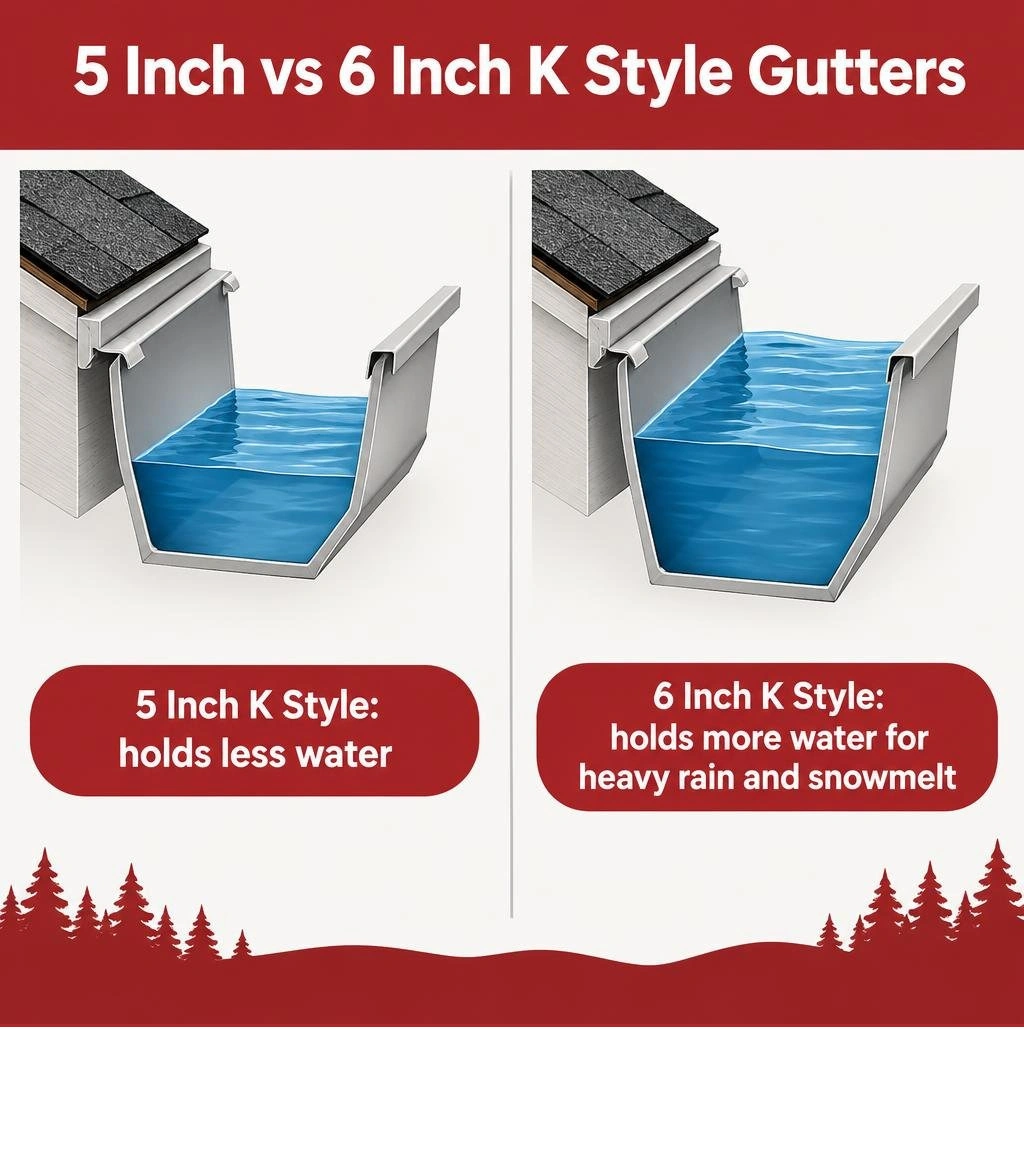
Standard residential homes often have five inch gutters, but many Northwoods cabins and homes benefit from larger six inch profiles. When comparing five inch and six inch gutters, six inch K-style troughs hold significantly more water volume. This added capacity is especially helpful during sudden spring thaws when large snow loads melt quickly under warm rain.
Hanger spacing is just as important as gutter size. In milder climates, hangers are often spaced farther apart. In our snow country, we space heavy-duty hidden hangers closer together to carry the snow load. Screwing the hangers directly into the rafter tails behind the fascia provides strong support when ice accumulates inside the channel. Pairing larger troughs with oversized downspouts can also help melting slush and heavy runoff clear the roofline quickly.
Frequently Asked Questions About Gutter and Roof Replacement
Do Gutters Need to Be Replaced With a New Roof?
You do not have to replace gutters with every roof job. If your existing troughs are relatively new, properly sloped, and in good physical shape, keeping them is a sound choice. However, if they are older, dented, or leaking at the joints, doing both projects together is often practical. Coordinating the jobs can save labor and helps ensure the roof warranty and water drainage work together as intended.
Can Roofers Replace a Roof Without Damaging the Gutters?
Yes, a careful crew can replace a roof while leaving existing gutters intact. Careful crews use ladder stand-offs so ladders rest against the wall or roof deck rather than crushing the gutter edge, and place protective tarps over the troughs to catch stray shingles and nails during the tear-off process.
How Long Does Gutter Installation Take After the Roof Is Done?
It depends on the size and layout of your home and the gutter system you choose. Seamless gutters are formed on-site to fit your roofline, so there are no stock lengths to wait on. We’ll talk through timing with you during your estimate.
Conclusion
Deciding whether to replace your gutters alongside a new roof comes down to the condition of your eaves, the age of your troughs, and the demands of our local climate. Combining both projects often saves time and ensures your drip edge and gutters fit together seamlessly.
Eagle River Roofing is locally owned right here in Eagle River, Wisconsin. Founded in late 2023, our company is built on 50+ years of combined local experience, and our ownership team has installed over 9,000 roofs and 8 million feet of gutters. As a certified GAF Master Elite contractor, we install GAF shingles on residential asphalt roofs, backed by photo-backed inspection findings, clear written quotes, and a 25-year workmanship warranty on most full roof installs (we’ll confirm it applies during your estimate).
We treat your property with care, using tarps and plywood to protect your plants and performing daily magnetic sweeps for stray nails. Financing is available to help make whole-home exterior updates manageable.
For a free, no-pressure estimate, call (715) 892-8328 Monday to Friday, 8 to 5, explore comprehensive gutter services, or request an instant roofing estimate.
This article is for general informational purposes only and may not reflect the most current products, pricing, codes, availability, weather-related recommendations, or roofing requirements for your specific property. Every home and roof is different, especially in the Northwoods. Please contact Eagle River Roofing directly for the latest information and guidance for your project.

