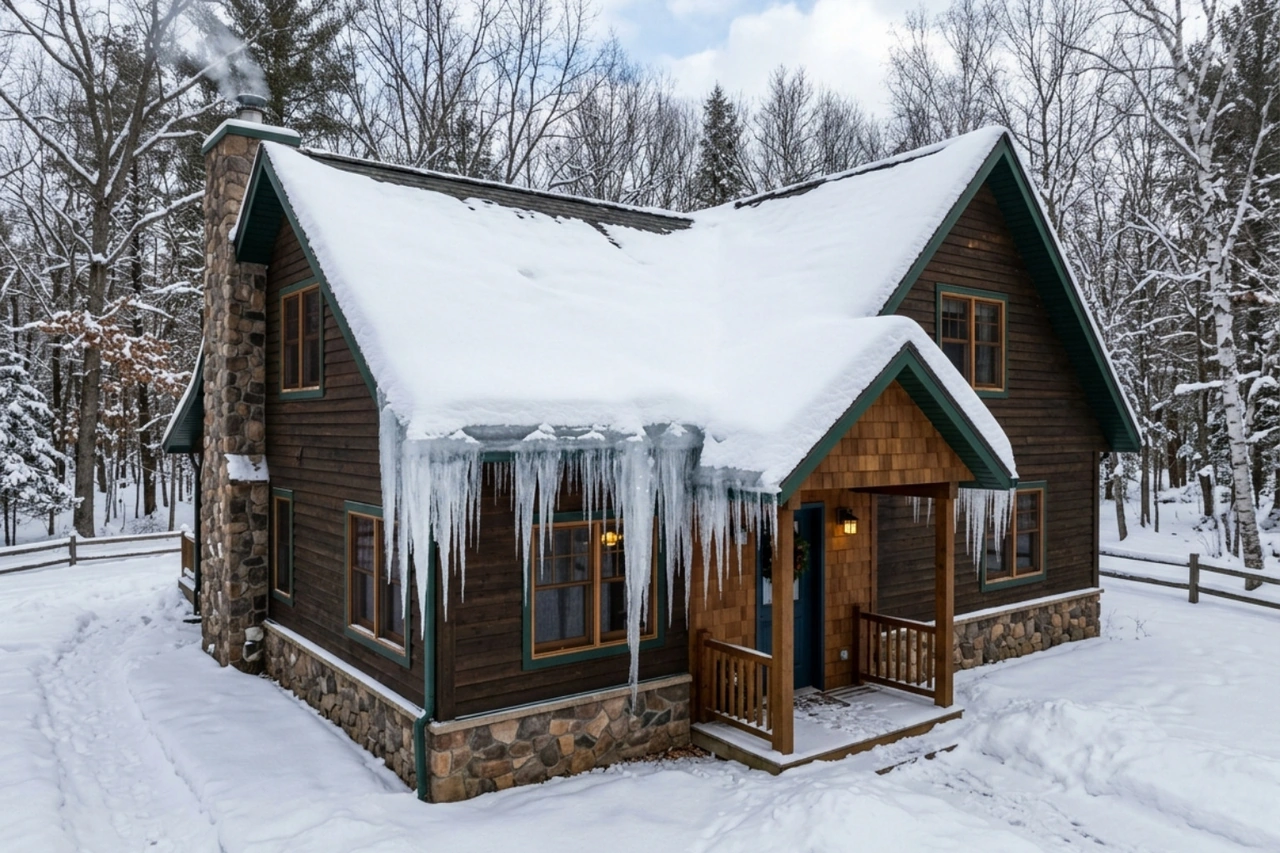
Why Proper Attic Ventilation Matters in Cold Climates
Healthy attic ventilation draws cold outside air in through soffit vents low on the roof and lets warmer, moist air leave through ridge or other high roof vents. The intake and exhaust need to be balanced. If insulation blocks the soffits, adding exhaust vents alone may not improve airflow.
For homeowners in Vilas and Oneida counties, attic frost or recurring ice dams are good reasons to get your attic checked. Ventilation can help keep the roof deck cold during snowy weather, but it works alongside ceiling air sealing and insulation, not in place of them.
I'm Tyler Blair, owner of locally owned Eagle River Roofing. Founded in late 2023 on more than 50 years of local experience, our ownership team has installed over 9,000 roofs and 8 million feet of gutters; as a GAF Master Elite contractor, we check attic ventilation during roof inspections and provide clear written quotes while keeping job sites tidy.
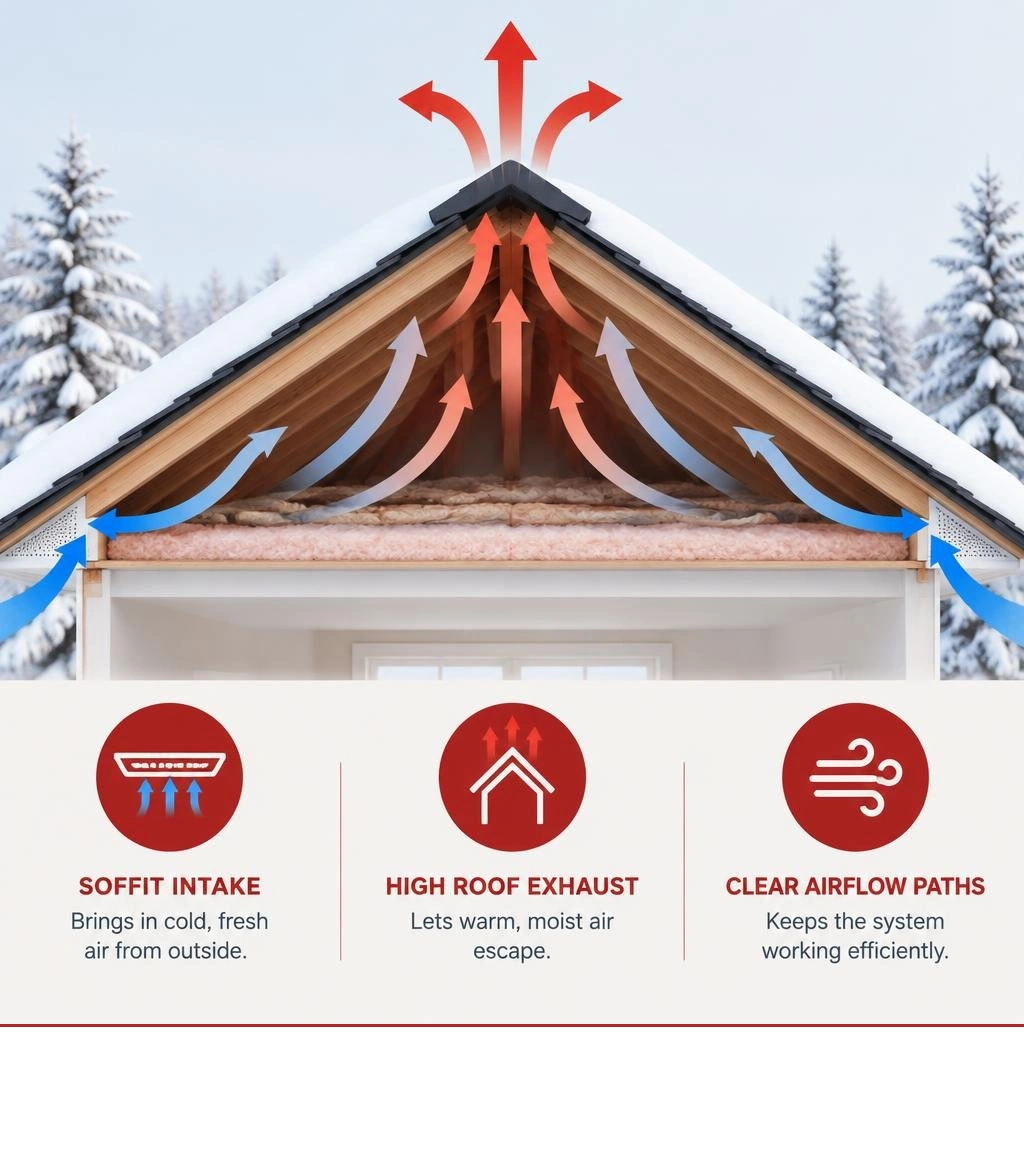
Living in Eagle River, Minocqua, or Three Lakes means preparing for long winters, subzero cold snaps, and heavy snowfall. When snow piles up on your shingles, the space right beneath your roof deck needs to stay cold.
Attic ventilation works using natural physical forces: the stack effect and wind pressure. Warm air naturally rises toward the peak of your roof. When your roof has upper exhaust vents, that warm air escapes outside. This movement creates a gentle vacuum that pulls fresh, cold outdoor air in through your lower soffit vents.
According to scientific research on attic airflow and roof assemblies, keeping the roof sheathing at a cold temperature during winter months is the primary defense against snowmelt issues. When indoor heat warms the roof decking above the freezing point, the bottom layer of snow melts, runs down the slope, and refreezes into thick ice over the cold eaves. Understanding this dynamic is key when addressing recurring ice dams in the same roof areas.
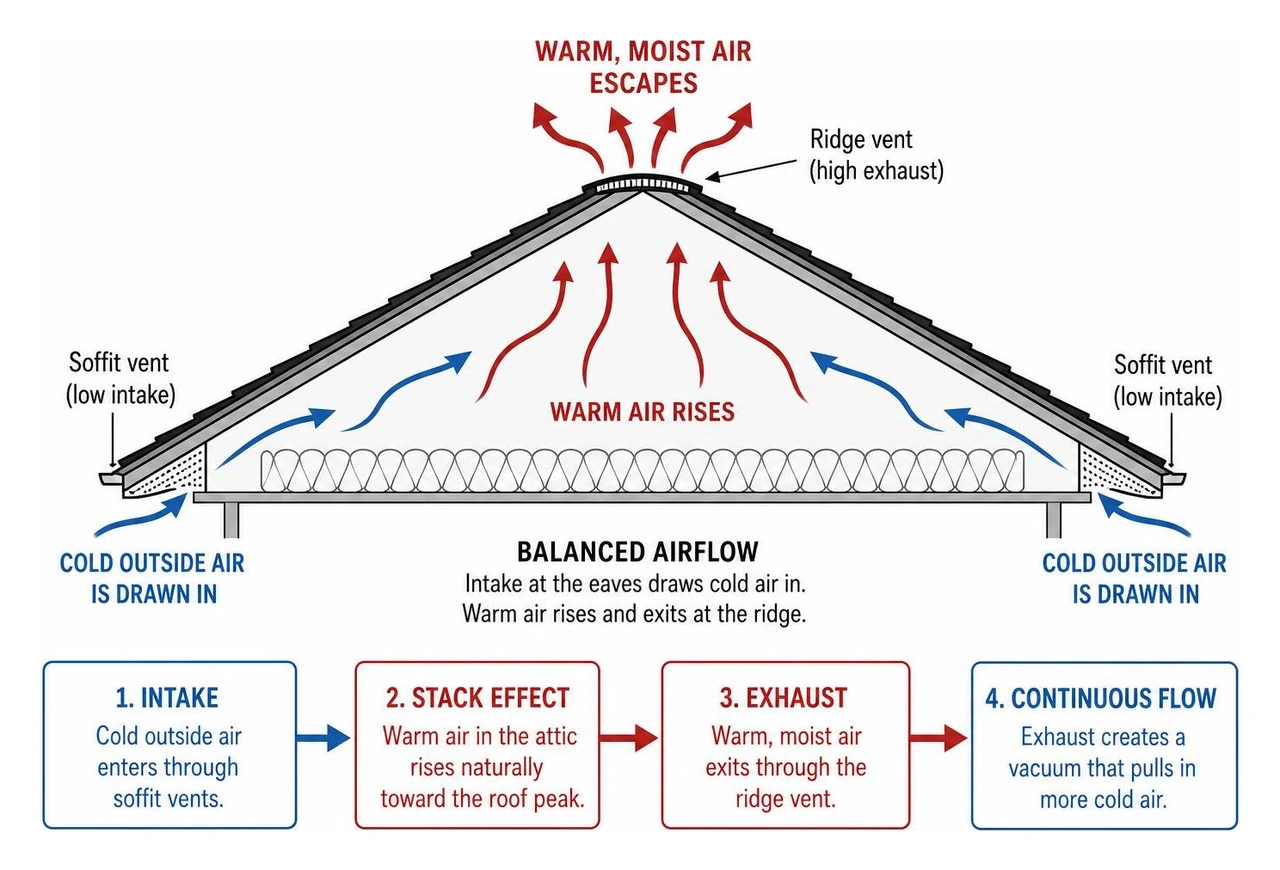
Managing Winter Moisture and Frost Accumulation
Heat is not the only thing moving into your attic during a Northwoods winter. Everyday household activities like taking hot showers, running dishwashers, cooking, and doing laundry put a lot of water vapor into the air. This moisture travels upward through tiny ceiling gaps, unsealed light fixtures, and attic hatches.
When that warm, moist air meets freezing roof sheathing, it quickly reaches its dew point and condenses into frost. If your attic lacks steady airflow, thick layers of frost accumulate on the plywood and roofing nails. As soon as a mild sunny day arrives, that frost melts, dripping onto your insulation and ceiling drywall. We explore the root causes of this hidden problem in our guide on frost or water dripping in the attic during winter.
Supporting Shingle Durability and Roof Decking
Proper ventilation plays an important role all year long. In the heat of midsummer, intense sunshine can heat an unventilated attic space significantly. Trapped heat bakes asphalt shingles from the underside, accelerating oil loss, granule shedding, and premature aging.
High humidity trapped in winter can also soften wood sheathing and cause fasteners to corrode. GAF, our primary shingle brand, includes proper attic ventilation in its installation requirements, which is one reason we check ventilation during roof replacements. When evaluating roof damage, assessing your venting helps determine whether your roof needs a repair or a full replacement.
How Balanced Airflow Can Help Your Roof

An effective ventilation system relies on balance. Air can only leave through the top of your roof as well as outdoor air can come in along the bottom edges.
If you have plenty of exhaust vents along your roof peak but your intake vents are blocked or missing, your attic enters a state of negative pressure. Instead of drawing in fresh outdoor air, it can pull conditioned, heated air up from your living rooms through ceiling penetrations.
| Vent Type | Primary Function | Ideal Placement | Key Considerations |
|---|---|---|---|
| Continuous Soffit Vents | Air Intake | Underside of eaves and overhangs | Provides even distribution; requires baffles to keep insulation clear |
| Baffled Ridge Vents | Air Exhaust | Highest peak along the horizontal ridge | Uses natural convection; external baffle helps prevent weather entry |
| Static Box Vents | Air Exhaust | Upper roof slope near ridge | Works well on short ridges, but requires multiple penetrations |
| Gable Vents | Mixed Airflow | Exterior siding peaks on gable ends | Can disrupt ridge vent draw; prone to wind-driven snow entry |
Intake Vents, Rafter Baffles, and Insulation Clearance
Intake ventilation is usually located under the eaves in the form of continuous perforated soffit panels or evenly spaced rectangular vents. When outdoor air enters the soffits, it needs an open channel to travel up into the main attic space.
One common issue is loose insulation pushed over the eaves, blocking the intake vents. To help prevent this, rafter vents (also called insulation baffles or chutes) should be installed between every rafter bay where the roof meets the ceiling joists. These rigid foam or plastic channels keep blown-in insulation from sliding into the eaves while maintaining an open airway.
While our team handles roof vents and flashing during roof replacements and repairs, we do not perform insulation or air sealing work. If your baffles are missing or your insulation is compacted, we recommend consulting a qualified local insulation contractor.
Exhaust Vent Types and the Risk of Short-Circuiting Airflow
Continuous ridge vents with external baffles are generally the most reliable exhaust option for gable roofs. The external baffle creates low pressure when wind blows over the peak, pulling air out of the attic regardless of wind direction.
As a general rule, avoid mixing different exhaust vent types on the same connected attic. For example, if a roof has both a continuous ridge vent and static box vents or gable vents, the system can short-circuit. Air follows the path of least resistance.
Instead of pulling cold air from the low soffit vents across the entire roof deck, the ridge vent will pull outdoor air directly from the nearby box vents or gable louvers. This leaves your lower roof decking unventilated, increasing the chance of localized frost and ice dams. Reviewing attic ventilation guidelines and airflow dynamics from the Home Ventilating Institute provides helpful technical insight into how air flows through roof cavities.
How Much Ventilation Does Your Attic Need?
Ventilation is sized by the open area air can actually pass through, called net free area. Building codes and shingle manufacturers set minimums based on the size of your attic floor, and the right setup depends on your roof shape. During an inspection or estimate, we look at whether your intake and exhaust are balanced and whether there is enough of each.
Sizing Intake and Exhaust for Complex Northwoods Rooflines
Many homes and cabins in St. Germain, Rhinelander, and Arbor Vitae feature steep roof pitches, cathedral ceilings, or complex hip rooflines with short ridge lengths.
Steep roofs hold a larger volume of air beneath the roof deck, which often calls for increased ventilation capacity. For hip roofs where the main ridge is short, off-ridge static vents or specialized intake-and-exhaust configurations may be necessary to achieve the required net free area.
When dealing with vented cathedral ceilings, maintaining an unobstructed airflow path is critical. These ceilings need a continuous clear airspace between the top of the insulation and the underside of the roof deck. Choosing sensible roof geometry and venting is covered further in our article on selecting roof designs for heavy Wisconsin snow.
Warning Signs and Diagnostic Checks

Spotting airflow problems before winter sets in can save you from unexpected leaks during spring thaws. You can read our advice on preparing roofs and gutters for Northwoods winters for a seasonal maintenance overview.
Common Signs of Inadequate Attic Ventilation
You can check for potential ventilation problems both from your yard and inside your attic space. Review our essential seasonal roof inspection checklist for step-by-step guidance.
- Thick Ice Ridges on Eaves: Heavy ice bands forming along roof edges while snow quickly melts higher up on the roof slope.
- Frost on Roof Nails in Winter: Shingle nails protruding through the roof deck that become covered in white frost during freezing weather.
- Black Staining or Mildew on Sheathing: Dark discoloration along the underside of roof plywood or OSB boards, indicating trapped water vapor.
- Rusty Fasteners or Metal Hangers: Roof nails and truss plates showing reddish-brown surface corrosion from chronic humidity.
- Wavy or Blistered Asphalt Shingles: Shingles curling or buckling from excessive heat and moisture exposure beneath the decking.
Evaluating Attic Air Sealing Versus Ventilation Needs
Ventilation is designed to remove normal ambient moisture, but it cannot overcome major indoor air leaks on its own. If you have large gaps around plumbing stacks, chimney chases, or recessed lighting, a lot of warm air can flow straight into your attic.
Air sealing the attic floor creates an airtight barrier that keeps your conditioned, humid living air inside the home. Once that barrier is established, your passive soffit and ridge vents can do their job effectively. Because air sealing and insulation require specialized materials and techniques, we advise working with a dedicated insulation contractor to address ceiling bypasses.
Frequently Asked Questions About Winter Roof Airflow
Can you have too much exhaust ventilation on a roof?
Yes. Having significantly more exhaust area than intake area creates an unbalanced system. When upper exhaust vents pull more air than the soffit vents can supply, the attic enters negative pressure. This can draw conditioned, heated air out of your living space through ceiling bypasses, increasing heating costs and drawing indoor humidity into the attic where it can freeze against the cold roof sheathing.
Do powered attic fans work better than passive roof vents in winter?
Powered attic fans usually aren't the answer for winter moisture in cold climates. Building research from the Building America program notes that powered attic ventilators can create strong negative pressure inside the attic cavity. This pressure often pulls warm household air and moisture up through ceiling cracks, worsening condensation and creating risks of backdrafting gas appliances. A well-designed passive system of soffit and ridge vents works safely with natural convection.
Why shouldn't ridge vents and gable vents be used together?
Ridge vents and gable vents are designed for different airflow dynamics. When both are installed on the same open attic, the ridge vent tends to draw outside air through the nearby gable louvers rather than pulling cold air upward from the low soffit vents. This short-circuits the natural convection loop, leaving the lower portions of your roof deck unventilated and prone to moisture and ice problems.
Conclusion
A well-balanced attic ventilation system works quietly to protect your roof framing, improve shingle durability, and reduce winter moisture buildup across the Northwoods. By pairing unobstructed soffit intake with baffled ridge exhaust, your home is better equipped to handle heavy snowfall and freezing temperatures.
Eagle River Roofing is a locally owned GAF Master Elite contractor, founded in late 2023 and built on a 50+ year legacy of local experience. With over 9,000 roofs and 8 million feet of gutters installed across our ownership history, we take pride in clean job sites, clear written quotes, and dependable craftsmanship. If you are noticing signs of roof wear or need help with professional roof repairs and ventilation corrections, we are here to help.
Contact us for a free, no-pressure roof estimate by calling (715) 892-8328, Mon to Fri 8 to 5, or use our online tool for an instant estimate.
Sources
- Building Science Corporation: Understanding Attic Ventilation
- Home Ventilating Institute: Attic Ventilation Guidelines and Principles
- Building America Solution Center: Attic Ventilation Fans Technical Guide
This article is for general informational purposes only and may not reflect the most current products, pricing, codes, availability, weather-related recommendations, or roofing requirements for your specific property. Every home and roof is different, especially in the Northwoods. Please contact Eagle River Roofing directly for the latest information and guidance for your project.

