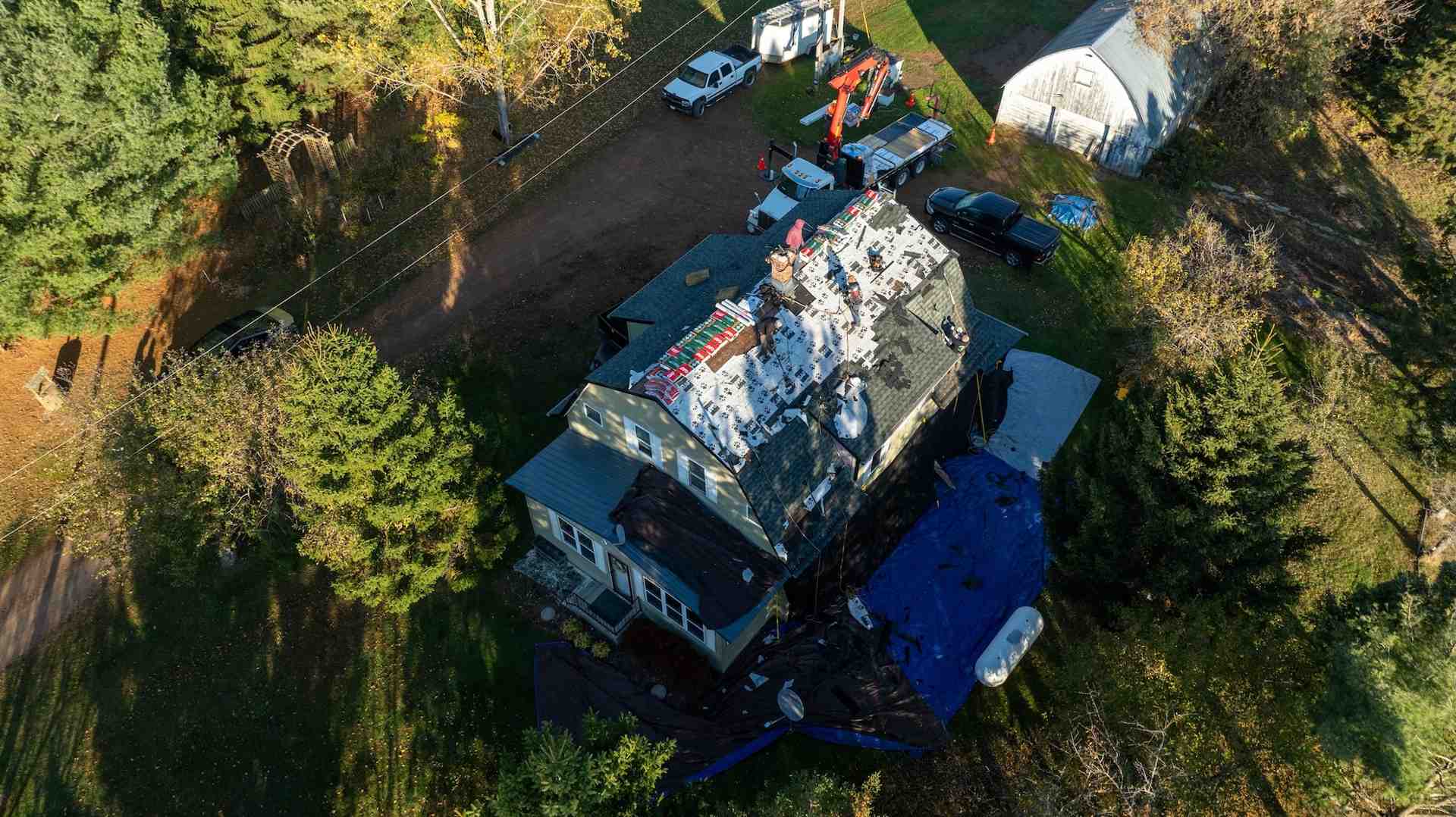
What Immediate Safety Steps Should You Take After a Storm or Tree Impact?
When high Northwoods winds or heavy pine limbs hit your home, step outside and evaluate the property strictly from ground level. Before moving closer to the structure, check for immediate severe hazards:
- Downed power lines: Treat any downed wire as live. Contact your local electrical utility or 911 immediately and keep everyone far away.
- Gas leaks: If you smell natural gas or LP gas (that distinct rotten egg odor), evacuate the property right away and alert emergency responders.
- Sagging drywall or ceiling joists: Look through main floor windows or doorways. Saturated drywall can weigh over 50 pounds per panel and can drop suddenly.
If a large white pine, oak, or birch has crushed through main roof trusses, ridge beams, or support walls, do not remain inside. Structural framing under severe load can shift hours after the initial impact. For broader emergency guidance after severe weather, you can also review Ready.gov's thunderstorm and lightning safety tips.
When it is safe to look around from the ground, we recommend using a simple sequence to spot damage: evaluate the Inside (looking up into attic spaces from the access hatch), check the Outside (scanning shingles, gutters, and trim from the yard), and look Up (using binoculars or a cell phone camera zoom rather than climbing a ladder).
A fallen timber can dislodge structural decking or crack rafters several feet away from the direct impact zone. If you notice structural issues or water entering your living space, start by reviewing the basics of managing a Storm Damaged Roof to protect your property safely.
How Should You Recognize Attic Framing and Decking Collapse Hazards?
To inspect attic spaces safely, stand on your access ladder with a bright flashlight without stepping onto interior ceiling drywall or damaged framing.
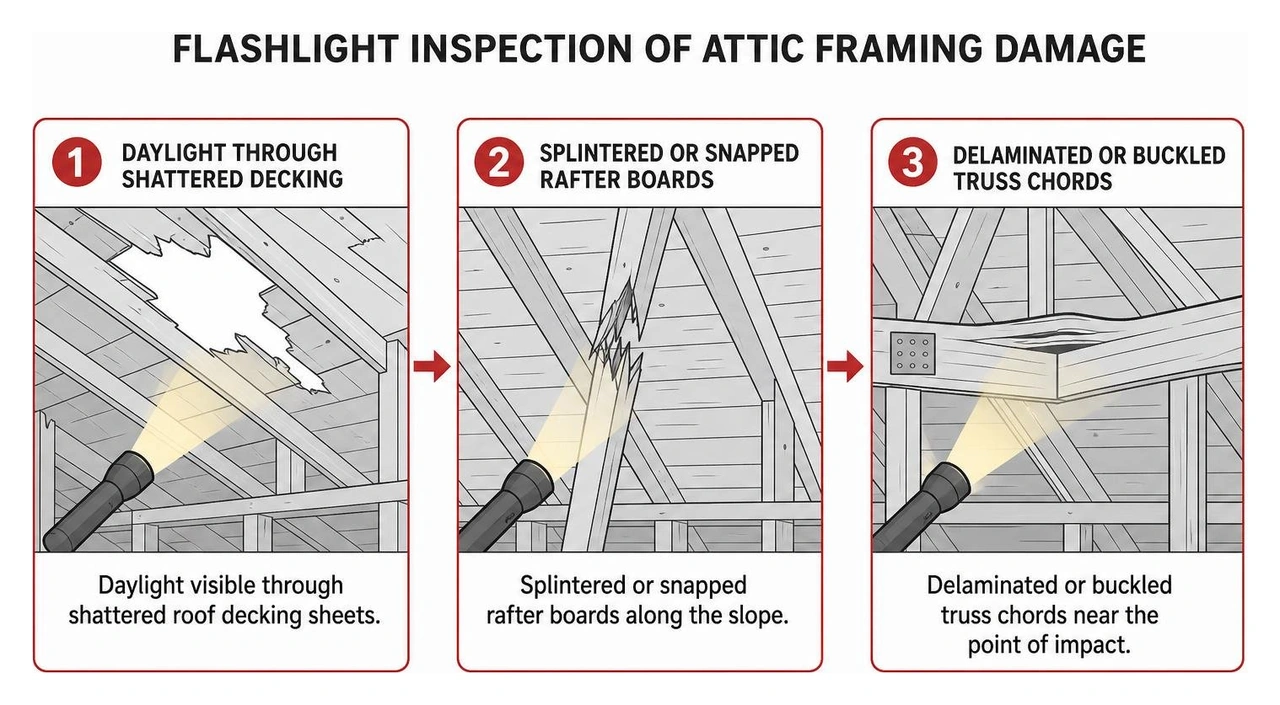
Look for clear indicators of structural compromise:
- Daylight visible through shattered roof decking sheets.
- Splintered or snapped rafter boards along the slope.
- Delaminated or buckled truss chords near the point of impact.
If water is pooling above your ceiling drywall and causing a deep sag, you can perform a quick relief step. Place a large 5-gallon bucket directly underneath the sag, then use a long screwdriver or broom handle to poke a small relief hole in the center of the sagging drywall. Draining the trapped water into a bucket relieves heavy weight and can help protect the entire ceiling drywall panel from collapsing onto your floors.
How Do You Temporarily Secure Your Roof to Prevent Secondary Water Damage?
Stopping water from entering your home within the first 24 to 48 hours is vital. In fact, national industry data shows that emergency tarping within this early window buys 30 to 60 days of temporary weather protection, giving you time to file insurance paperwork and plan permanent repairs.
Proper temporary containment requires more than pulling a plastic tarpaulin over a hole:
- Use heavy-duty material: We recommend using 6-mil thick, UV-resistant woven polyethylene tarps.
- Extend coverage borders: The tarp should extend at least 4 feet beyond the damaged zone on all sides and wrap securely over the roof ridge line whenever possible.
- Fasten mechanically: Secure the edges using wooden 1x4 batten boards screwed or nailed through the tarp directly into the roof structure.
Never use bricks, cinder blocks, heavy rocks, or bungee cords to hold down a temporary tarp. Northwoods lake winds can lift loose weights, turning them into dangerous projectiles and allowing rain or melting snow beneath the plastic.
Why Should Homeowners Avoid DIY Roof Tarping in Severe Weather?
Climbing onto a roof after a storm is high risk. Wet asphalt shingles, moss-covered wood shake, or fresh pine needles create slick surfaces, and damaged roof decking underfoot may be hidden under fallen branches. Falling from a roof slope can cause severe injury.
Professional emergency roofing crews carry full fall-arrest safety harnesses, ladder stabilizers, and weather-ready fasteners designed for high wind resistance.
Keep every receipt if you pay for emergency tarping, boarding up, or temporary tree removal. Standard homeowners insurance policies generally reimburse reasonable mitigation expenses intended to help limit secondary interior loss.
What Documentation Should You Gather for Your Insurance Claim?
Before moving fallen branches or clearing away storm debris, capture detailed evidence of every affected area. Insurance claims depend on clear proof that damage occurred suddenly from a specific storm event.
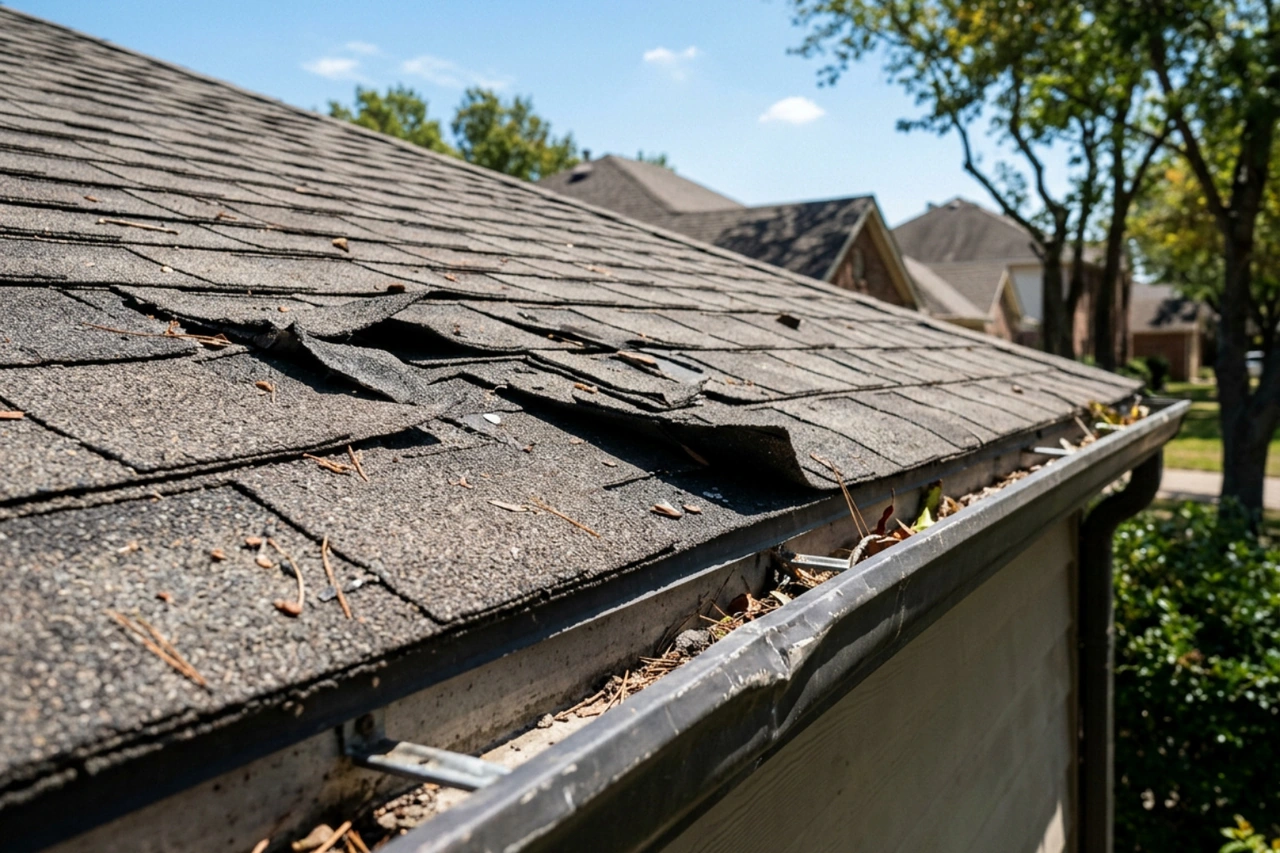
- Take date-stamped photographs and videos: Capture photos of the roof from ground level, fallen trees, punctured decking, torn shingles, dented gutters, and water leaks inside ceilings or walls.
- Log the storm details: Record the exact date and time the storm hit your area in Eagle River, Rhinelander, or nearby towns.
- Track out-of-pocket expenses: Maintain a binder or digital folder containing receipts for tarps, emergency labor, temporary lodging, or water extraction equipment.
- Contact your insurance carrier promptly: File your initial claim notification as soon as practical. Most carriers request notice within 30 to 60 days of the weather event.
Homeowners policies typically cover sudden perils like severe wind uplift, hail impact, and tree strikes. However, claims can face challenges if an adjuster believes water leaks were caused by ongoing maintenance neglect or unaddressed aging shingles. To make sure you don't miss hidden damage points during your initial review, follow our Roof Inspection Checklist.
If an insurance adjuster denies part of your claim or underestimates repair costs, you can request a re-inspection. Having a licensed local contractor present during the adjuster's site visit helps ensure all necessary repair steps are noticed.
How Do Replacement Cost Value (RCV) and Actual Cash Value (ACV) Differ?
Understanding how your policy pays out is critical when reviewing your insurance summary page:
| Feature | Actual Cash Value (ACV) | Replacement Cost Value (RCV) |
|---|---|---|
| Value Calculation | Pays current value minus age-based depreciation | Pays the full cost to replace materials at current market rates |
| Initial Payout | Initial check issued by carrier after deductible | First check covers ACV; second check releases withheld depreciation |
| Out-of-Pocket Risk | Higher out-of-pocket cost on older roofs | Lower out-of-pocket cost (typically limited to your deductible) |
| Completion Proof | Not required to prove full project completion | Requires contractor final invoice showing work is complete |
When filing an RCV claim, your insurance carrier usually issues an initial ACV check based on the depreciated value of your current roof. Once we complete the full roof restoration and submit the final invoice, the insurance company releases the remaining withheld depreciation funds.
How Do You Determine If Your Roof Needs Repair or Full Replacement?
Deciding whether your roof needs a targeted repair or a complete replacement comes down to practical factors: total structural damage, shingle age, and repair feasibility.
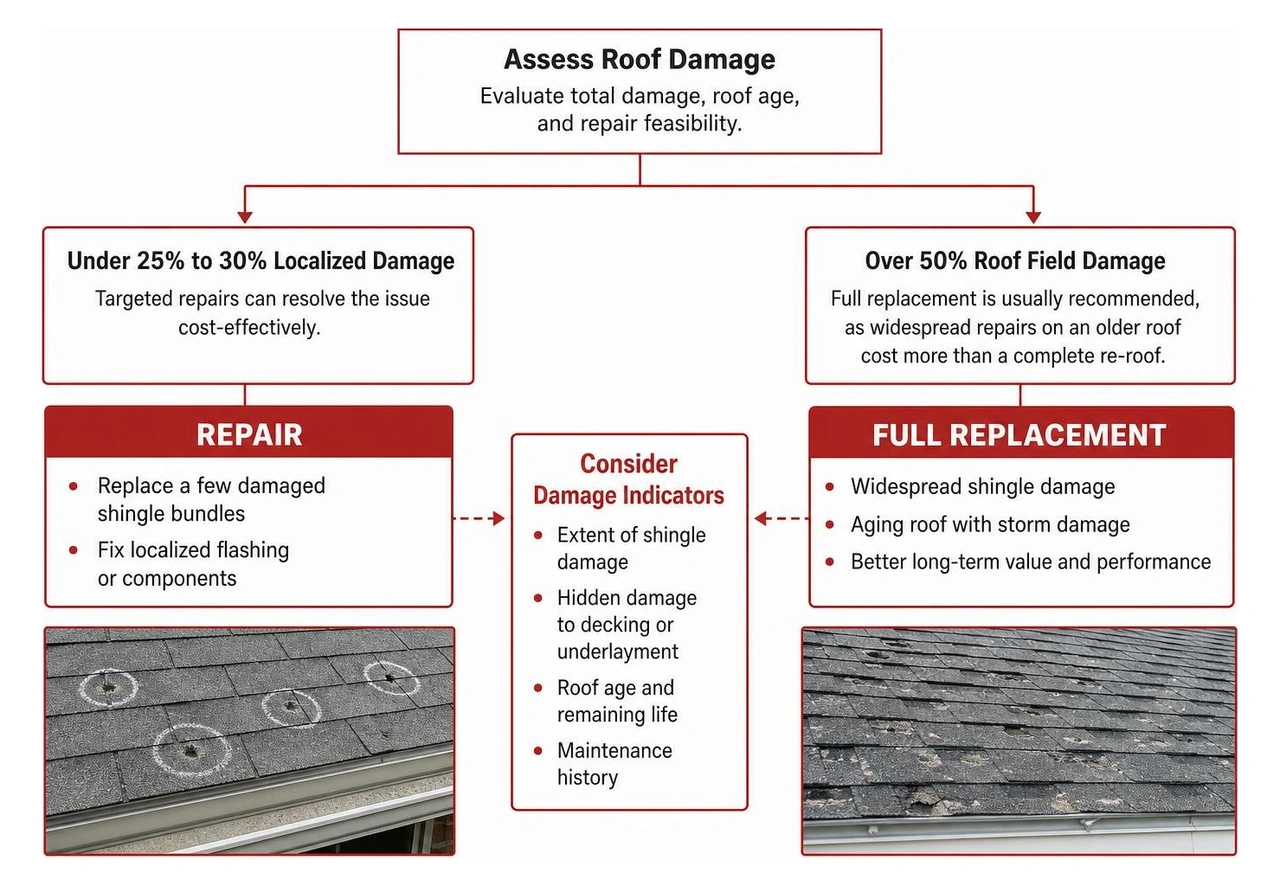
Insurance adjusters and roofing professionals generally apply standard financial threshold rules:
- Under 25% to 30% localized damage: Targeted repairs (such as replacing a few damaged shingle bundles or fixing localized flashing) can resolve the issue cost-effectively.
- Over 50% roof field damage: Full replacement is usually recommended, as widespread repairs on an older roof field often cost more than a complete re-roof.
You should also consider specific damage indicators:
- Wind damage: Look for creased asphalt shingles, lifted tabs, or entire sections stripped away down to the felt underlayment.
- Hail damage: Look for loss of shingle granules leaving dark exposed asphalt spots, dimpled metal roof valleys, or cracked vinyl accents.
- Roof age considerations: Asphalt shingles older than 15 to 20 years become brittle in Northwoods cold. Prying up old shingles to patch a small storm area can crack surrounding shingles, triggering a chain reaction of damage.
To evaluate whether your roof is a candidate for spot fixes or a complete tear-off, refer to our detailed guide on How Do You Know Whether Your Roof Needs a Repair or a Full Replacement.
How Does Eagle River's Climate Impact Roof Repair Decisions?
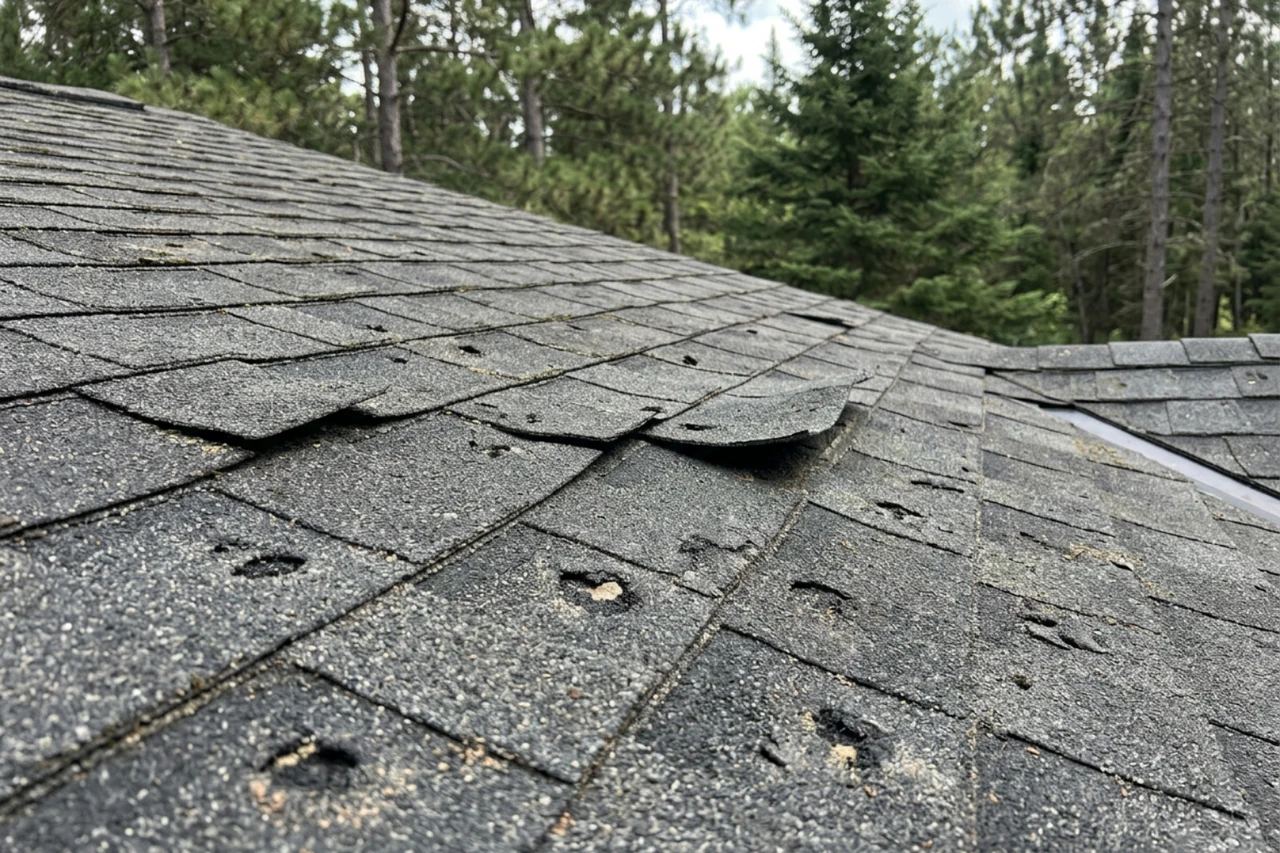
Our Northwoods winter weather changes how storm damage behaves. A minor wind-lifted shingle or small deck puncture might not leak immediately during early autumn. However, once winter snow builds up, freeze-thaw cycles and ice dams can force meltwater backward under weakened shingles. Heavy winter snow loads (often reaching 30 to 50 pounds per square foot) can cause compromised rafters or cracked decking to sag under pressure.
When replacing a storm-damaged roof in Eagle River, Rhinelander, Minocqua, or Three Lakes, we usually recommend upgraded protection:
- GAF Class 4 Impact-Resistant Shingles: Residential shingle roofing requires materials that can take heavy weather. We exclusively install GAF asphalt shingles for residential shingle replacements. GAF's impact-resistant shingle lines are designed to absorb hail impacts and severe weather, and upgrading can qualify homeowners for discounts on their annual insurance premiums depending on the carrier. If you are considering other brands like CertainTeed, we recommend choosing GAF's Timberline series for warranty coverage and regional performance.
- Self-Adhered Ice and Water Leak Barriers: Installing high-performance rubberized membranes along eaves, valleys, and rakes helps guard against ice dam backups during cold spring thaws.
How Do You Choose a Reliable Emergency Roofing Contractor in Eagle River?
After severe storms, out-of-state "storm chasers" often travel through affected neighborhoods offering fast fixes and high-pressure door-to-door sales. These transient companies frequently disappear before winter, leaving homeowners with little recourse if warranty issues arise during seasonal freeze-thaw cycles.
To protect your home and investment, confirm key credentials before signing any contract:
- Verify local licensing and insurance: Confirm the contractor holds proper state credentials along with active general liability and worker's compensation insurance.
- Verify manufacturer certifications: Elite certifications like GAF Master Elite status indicate advanced installer training and enable extended manufacturer warranty protections on qualifying systems.
- Require detailed written estimates: Never accept a vague verbal quote. Ensure every estimate details itemized tear-off fees, underlayment specs, flashing replacements, waste handling, and explicit payment terms.
- Check local physical presence: Choose a business with a permanent physical office footprint in Vilas or Oneida County.
For a comprehensive checklist on vetting local businesses, consult our guide on How Do I Choose a Roofing Contractor.
Why Is Local Expertise Essential for Storm Restoration in Eagle River?
Restoring a roof in Northern Wisconsin demands hands-on knowledge of local building codes, snow load allowances, and regional weather patterns.
Eagle River Roofing is a locally owned business founded in late 2023, built on a 50+ year legacy of local roofing experience across the Northwoods. Our crews have installed over 9,000 roofs and 8 million feet of seamless rain gutters across communities like Eagle River, Rhinelander, Minocqua, St. Germain, and Three Lakes.
As a GAF Master Elite certified contractor (a distinction held by a select group of installers nationwide), we provide:
- System-matched components: Heavy synthetic underlayments, drip edge flashing, and ventilation systems matched for cold weather.
- Tidy job sites: We perform thorough magnetic sweep-downs to remove stray roofing nails from driveways and lawns so your property remains safe for kids and pets.
- Clear written quotes: Detailed, transparent pricing that clearly explains project scopes and warranty coverage options.
What Are The Most Frequently Asked Questions About Storm Roof Damage?
Will Filing an Insurance Claim for Storm Damage Increase Your Rates?
In most cases, filing a single claim for weather-related storm damage (considered an act of God) will not directly cause an individual rate increase. Insurance carriers calculate storm risk across entire geographical postal zip codes rather than penalizing an individual homeowner for isolated weather events. However, multiple frequent claims within a short timeframe or unresolved ongoing maintenance issues can impact policy renewals.
How Long Do You Have to File a Storm Damage Claim?
Most standard homeowners policies permit up to 12 months from the date of the weather event to submit a claim for storm damage. However, we usually recommend notifying your insurance carrier within 30 to 60 days. Prompt filing can help reduce claims disputes where an insurer might argue that secondary water damage or interior rot resulted from neglect rather than the original storm.
Can Emergency Roof Tarping Be Installed During Rain or Snow?
Yes. Experienced emergency roofing crews utilize specialized fall-arrest safety equipment, harness anchors, and specialized rubberized sealing materials to secure tarps during active rainfall or light snow. Halting active water entry immediately is essential to protect interior drywall, ceiling insulation, and electrical systems from costly water damage.
What Are Your Next Steps to Restore Your Roof After a Storm?
Navigating storm or tree damage can feel stressful, but following a clear step-by-step plan helps keep your home safe and your insurance claim on track:
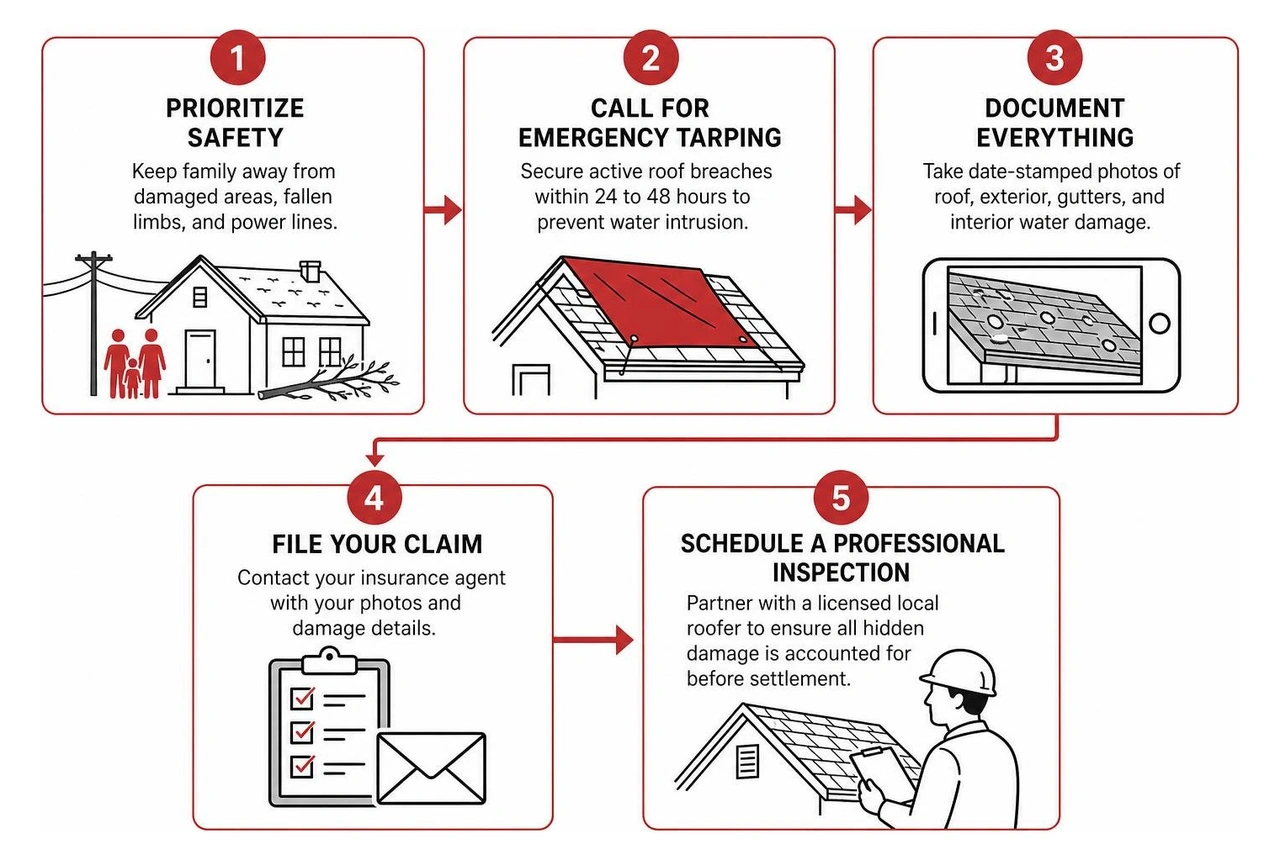
- Prioritize safety: Keep family members away from damaged ceiling drywall, fallen tree limbs, and power lines.
- Call for emergency tarping: Secure active roof breaches within 24 to 48 hours to help protect against water intrusion.
- Document everything: Take date-stamped photographs of all roof, exterior siding, gutter, and interior water damage.
- File your claim: Contact your insurance agent with your photos and damage details.
- Schedule a professional inspection: Partner with a licensed local roofing company to ensure all hidden structural items are accounted for before settlement.
When weather strikes your Northwoods home, you don't have to handle the recovery alone. Contact our team at Eagle River Roofing to request a professional inspection, get immediate emergency tarping support, or receive a free estimate for long-term repairs. We are here to help protect your home with clear communication, tidy job sites, and reliable roofing built for Northwoods winters.
This article is for general informational purposes only and may not reflect the most current products, pricing, codes, availability, weather-related recommendations, or roofing requirements for your specific property. Every home and roof is different, especially in the Northwoods. Please contact Eagle River Roofing directly for the latest information and guidance for your project.

