How Can You Get an Accurate Inspection and Quote From Afar?
Getting an accurate evaluation on a seasonal cabin when you are hundreds of miles away might feel like a challenge, but modern technology makes it easy. You do not need to take time off work or spend a weekend driving up north just to meet an estimator on your deck.
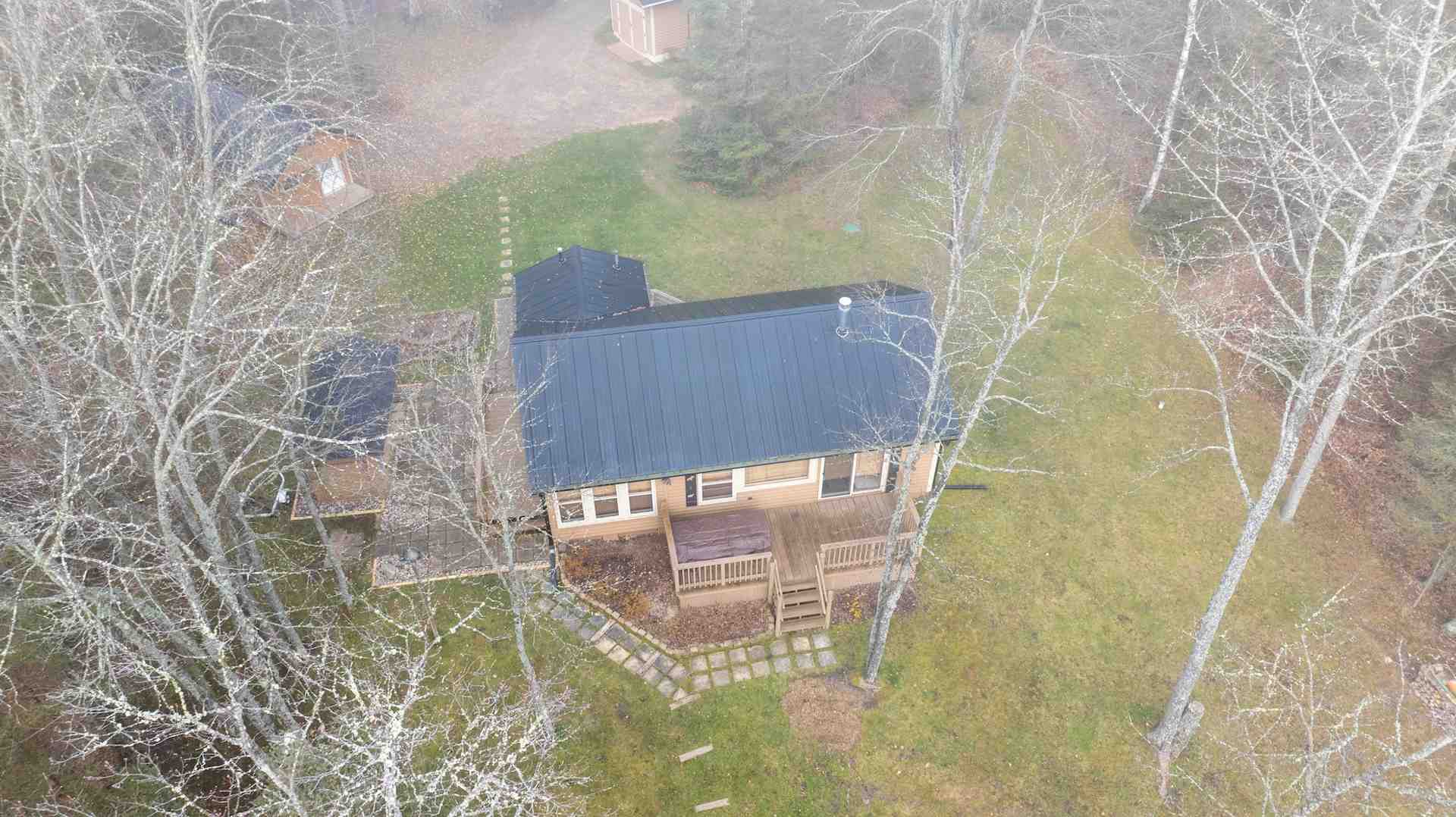
While basic satellite tools give a rough layout of a roof, heavily wooded Northwoods lots often hide critical details under deep pine tree canopies. We usually recommend a hands-on, on-site inspection that combines physical ground checks with high-resolution drone photo surveys. A camera drone can safely fly close to valleys, dormers, and chimney flashings, capturing sharp images of moss buildup, lifted shingle tabs, and tree branch scrap marks.
Noticing early Roof Replacement Signs, such as granular loss in your gutters or curled shingle edges during your late summer visits, gives you plenty of lead time to request a complete assessment before cold weather arrives.
A local roofing team can visit your property, complete a thorough exterior check, and deliver a detailed scope document directly to your email inbox. This allows you to secure a clear Free Roof Estimate without stepping foot away from your primary home.
Identifying Hidden Roof Damage Before Leaving for the Season
Before you lock up your cabin for autumn, spend 15 minutes doing a simple self-check to spot potential warning signs:
- Inspect attic spaces and ceiling lines: Look for faint water rings, damp wood odors, or dark spots around chimney flues and plumbing vents.
- Check gutter bottoms: Look for heavy accumulations of asphalt granules, which signal that your shingles are reaching the end of their service life.
- Examine eaves and overhangs: Look for softened fascia boards, peeling paint, or signs that rodents have attempted to chew along the roofline.
- Photograph current conditions: Take quick, time-stamped pictures of your ceilings and exterior roof sections. Sharing these photos with your roofer gives them immediate context before they perform their on-site inspection.
What to Look For in a Comprehensive Remote Quote
When reviewing estimates from afar, make sure the bid details every stage of the project rather than providing a single lump-sum figure. A detailed quote should outline:
- Complete tear-off and disposal: Specific fees for stripping existing layers down to the bare wooden decking.
- Underlayment specifications: Clear details on high-performance ice and water shields along eaves and valleys.
- Flashing and pipe boot replacement: Upgrading metal wall flashings, valley liners, and rubber pipe boots.
- Ventilation upgrades: Calculating soffit intake and ridge exhaust to protect unheated roof spaces.
- Clean-up procedures: Debris disposal, magnetic nail sweeps, and grounds protection standards.
To better understand current material and labor trends, you can review this video guide on Planning a Roof Replacement? Here's What 2026 Costs Look Like.
What Is the Ideal Time of Year to Schedule a Cabin Roof Replacement?
Timing a roof replacement on a summer cabin comes down to balancing two goals: avoiding disruption to your family vacation time and choosing weather conditions that support proper installation.
For most seasonal property owners, the shoulder seasons (early autumn after Labor Day or late spring before Memorial Day) offer an ideal window. Replacing your roof in September or October means your cabin remains peaceful throughout peak summer months. It also gives a crew clear access to the property when driveways and lawns are quiet.
Understanding How Long Does It Take to Replace a Roof in Northern Wisconsin helps you plan smoothly around property visits. For rental cottage owners, taking a proactive approach like Replacing a Rental Cottage Roof Between Bookings Instead of During Them can also help avoid lost rental income and guest complaints.
The Autumn Shoulder Season Advantage
Early fall is widely considered a great time for asphalt shingle installations in the Northwoods. Moderate ambient temperatures, usually holding comfortably above 50°F, allow the thermal self-sealing strips on new asphalt shingles to activate and bond properly under direct sunlight.
Completing the project in autumn helps ensure your cabin is sealed against heavy winter snow, spring thaws, and ice dams long before you return for your first summer weekend.
Why Winter Roof Installations Present High Risks
While emergency winter repairs are sometimes necessary after severe storm damage, scheduling a full roof replacement during sub-freezing weather introduces avoidable risks. Standard asphalt shingles become brittle below 40°F and can crack during nailing. Furthermore, cold temperatures can delay thermal adhesive strips from sealing right away, leaving shingles vulnerable to wind blow-offs until warm spring weather arrives.
Which Roofing Materials Perform Well for Unheated Seasonal Cabins?
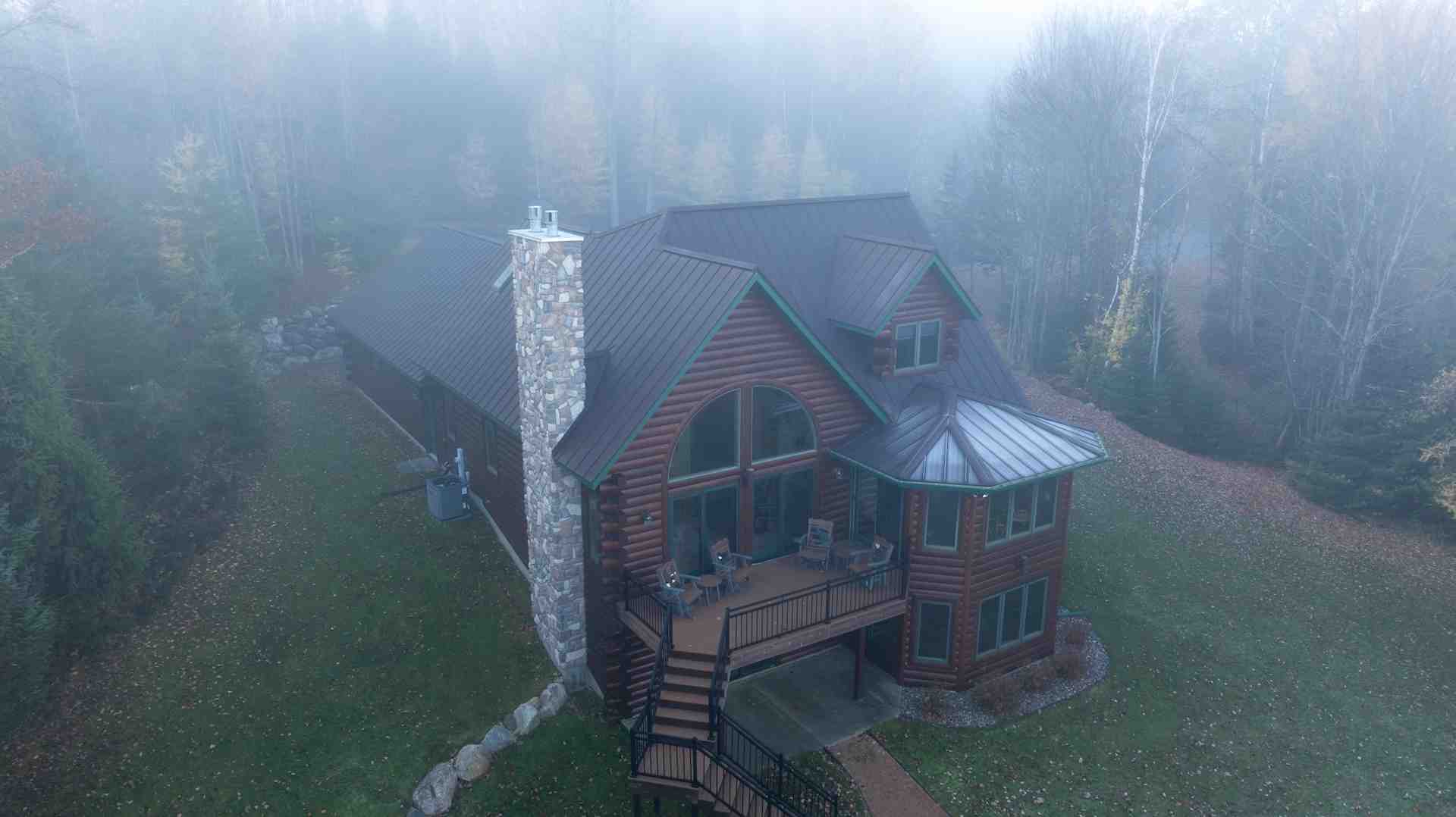
Vacation homes in communities like Eagle River, Rhinelander, and Minocqua face environmental stresses that primary suburban homes rarely encounter. Northwoods cabins often experience daily temperature swings of up to 80 degrees, persistent pine needle accumulation, and snow loads reaching 150 to 350 pounds per square foot in heavy snow belts.
Reviewing our comprehensive Northern Wisconsin Cabin Roof Guide can help you evaluate performance features across various roofing profiles.
| Feature / Performance Metric | Architectural Asphalt Shingles | Standing Seam Metal Roofs |
|---|---|---|
| Initial Investment | Lower upfront cost | Higher initial investment |
| Expected Lifespan | 15–25 years (shorter under dense trees) | 40–70+ years |
| Snow Shedding Capability | Holds snow until ambient thaw | Sheds heavy snow naturally |
| Pine Needle & Leaf Resistance | Can trap debris in shingle textures | Smooth surface washes clean with rain |
| Cold Temperature Performance | Requires 40°F+ ambient heat to self-seal | Installed easily in varying temperatures |
| Fire Embers & Moss Defense | Moderate resistance | High resistance |
Architectural Shingles for Value and Aesthetics
For homeowners seeking a classic woodsy aesthetic at a budget-friendly price point, high-quality architectural asphalt shingles remain a popular choice. At Eagle River Roofing, we exclusively use GAF shingles for all of our residential shingle projects because their dimensional thickness, strong wind warranties, and advanced algae protection hold up well in forest settings.
When choosing asphalt shingles for a vacant cabin, installing self-adhered ice and water shield membranes along all eaves, rake edges, and roof valleys is essential to help defend against ice damming.
Metal Roofing for Ultimate Snow Loads and Low Maintenance
If your cabin sits under dense pine trees or experiences heavy snowdrifts, upgrading to a Metal Cabin Roof provides long-term peace of mind. Standing seam metal panels feature concealed fasteners protected from UV exposure and thermal expansion stress.
Smooth metal surfaces allow heavy snow loads to slide off safely, reducing severe stress on structural rafters. Metal roofs also resist moss, lichens, and organic rot caused by wet pine needles trapped in valleys. Exploring What Is the Ideal Roof for Snow and Ice Dams in Wisconsin will show why metal roofing is such a reliable long-term choice for unheated vacation properties.
How Do You Coordinate Remote Construction and Site Cleanup?
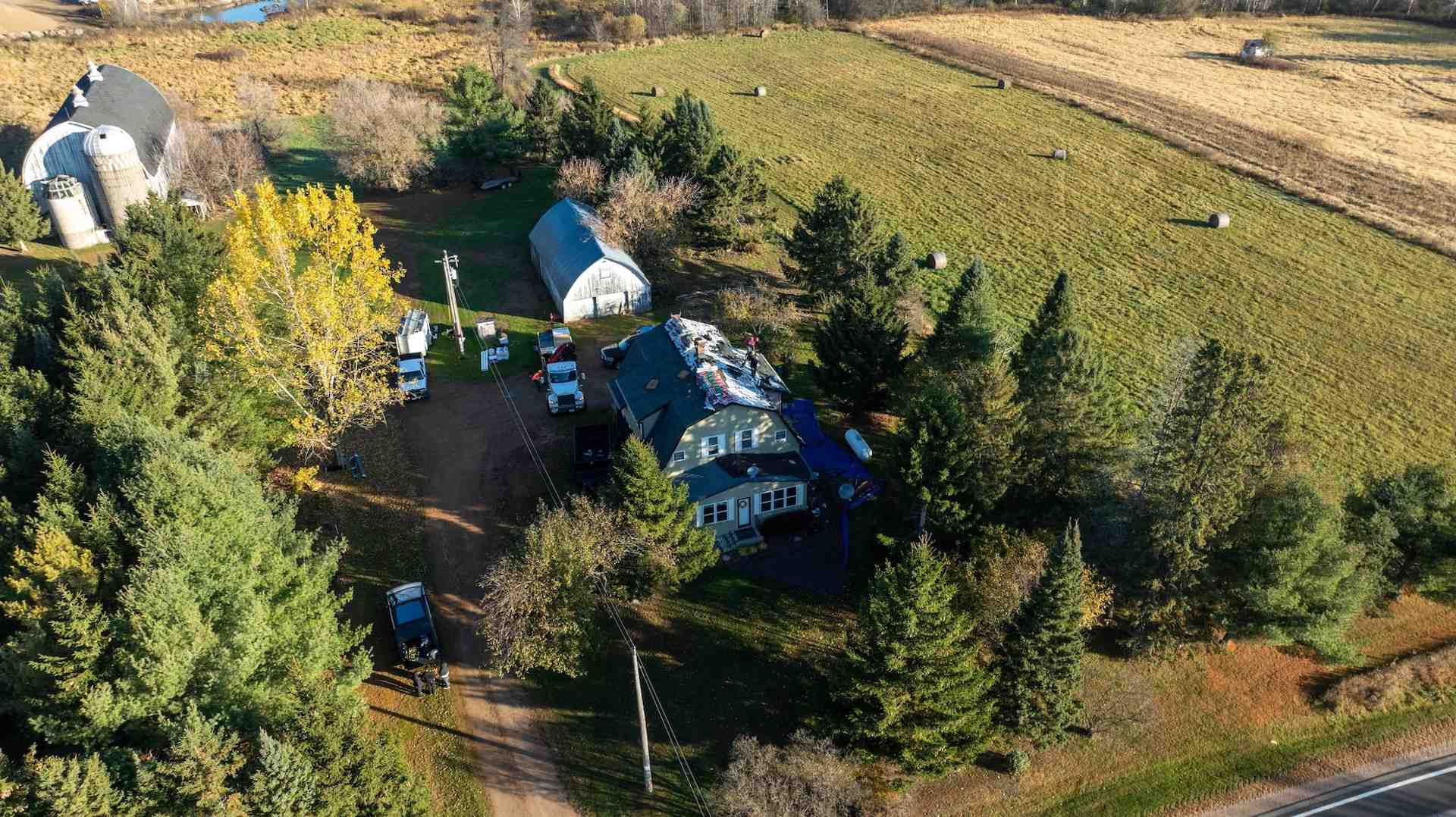
Managing a major exterior project from afar requires selecting a contractor with structured communication systems and dedicated property protection standards. We recommend verifying that your roofer carries full commercial liability insurance, holds local municipal licensing, and maintains credentialed manufacturer status, such as GAF Master Elite certification.
Before work starts, remote property coordination involves a few straightforward steps:
- Key and access management: Placing a secure lockbox on-site or coordinating key drop-offs so crews can access attic spaces or electrical panels if required.
- Utility coordination: Confirming whether exterior electrical outlets are active. If your cabin power is shut off for the season, roofing crews can bring portable generators.
- Property masking: Laying heavy-duty protective tarps over wooden decks, stone patios, docks, and prized landscaping before tear-off begins.
Transparent Milestone Photo Reporting
You should never have to guess what is happening at your cabin on installation day. A reliable remote contractor uses a milestone photo framework to keep you fully updated through text or email.
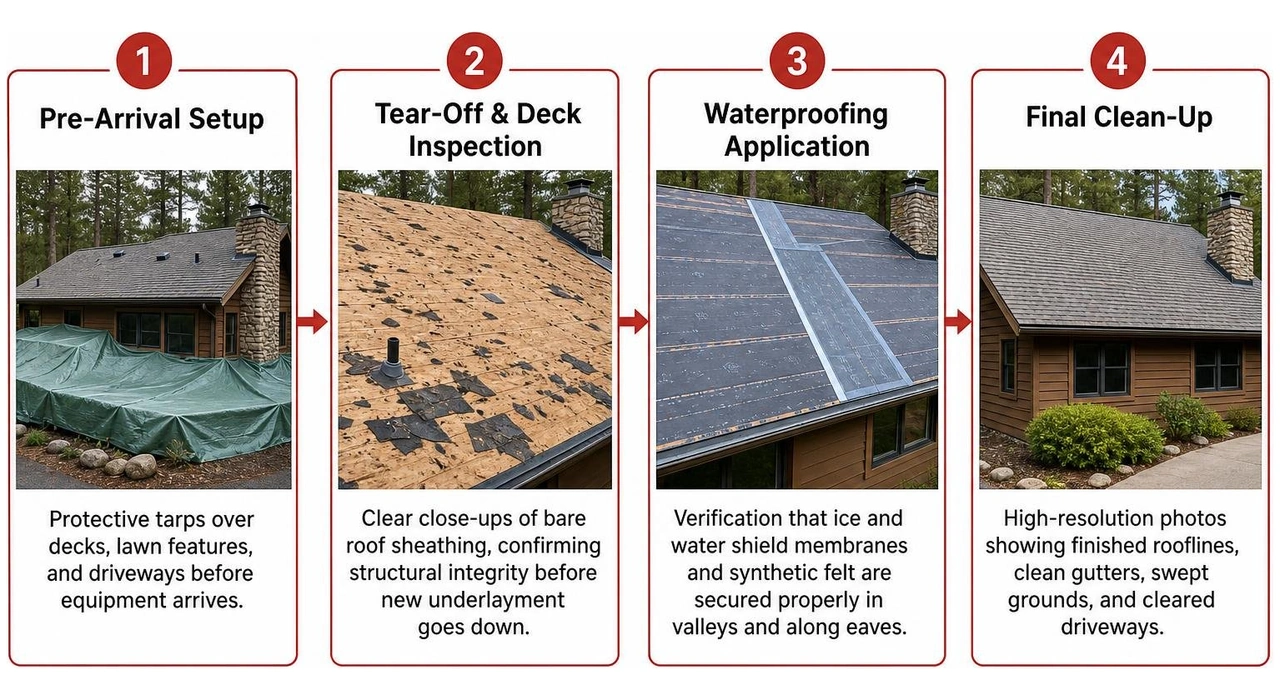
- Pre-Arrival Setup: Photos showing protective tarps spread over decks, lawn features, and driveways before equipment arrives.
- Tear-Off & Deck Inspection: Clear close-ups of bare roof sheathing, confirming structural integrity before new underlayment goes down.
- Waterproofing Application: Verification that ice and water shield membranes and synthetic felt are secured properly in valleys and along eaves.
- Final Clean-Up: High-resolution photos showing finished rooflines, clean gutters, swept grounds, and cleared driveways.
Handling Unexpected Structural Decking Rot Remotely
In seasonal cabins left vacant over winter, minor past roof leaks can lead to hidden plywood rot that only becomes visible after old shingles are removed.
If damaged decking or decayed rafter tails are discovered during tear-off, a trustworthy roofer will immediately pause work on that section, take clear digital photos of the damaged area, and send an itemized estimate for structural repairs. Work proceeds only after you review the photographic proof and give digital approval, keeping your project moving forward without unexpected surprises.
Guaranteeing Tidy Job Sites and Magnetic Nail Sweeps
Because you will not be present to inspect the lawn before children or pets run around next summer, site cleanup must be thorough. Professional crews use rolling magnetic sweepers across grass lawns, gravel driveways, and garden beds to collect stray roofing nails. Heavy debris dumpsters should also be placed on protective wooden planks to help protect against driveway cracking or lawn tire ruts.
How Are Final Inspections, Payments, and Warranties Handled Remotely?
Wrapping up a roof replacement from afar should feel just as secure as sitting down at an office table. Here is the step-by-step checklist we follow to help support total transparency upon completion:
- [ ] Contractor completes a full quality check across all roof planes, ridge vents, and flashing points.
- [ ] Contractor captures high-resolution, close-up photos of completed flashing, chimney seals, and ground conditions.
- [ ] Contractor uploads the complete photo gallery to a secure digital link for your review.
- [ ] Homeowner conducts a virtual walkthrough, asking questions about specific roof details.
- [ ] Homeowner approves the project and processes final payment through a secure online portal.
- [ ] Contractor registers manufacturer material warranties, depending on product and registration, and issues written workmanship coverage electronically.
Virtual Sign-Off and Inspection Protocols
A virtual walkthrough allows you to inspect every angle of your new roof from your primary home. High-resolution digital photos let you review critical details, like straight shingle courses, neatly trimmed ridge caps, clean valley lines, and brand-new wall flashings around dormers.
Once you are satisfied with the photo documentation, final project sign-off and payment can be completed electronically.
Off-Season Winterization and Leak Protection
Before closing out the job site, a local roofing team makes sure your cabin is ready for winter non-occupancy. This includes checking that intake vents at the soffits and exhaust ridge vents work together properly.
Adequate attic airflow helps keep unheated roof spaces cool, reducing moisture buildup, interior ceiling condensation, and mold growth while your cabin sits closed up for the season.
Frequently Asked Questions About Seasonal Cabin Roof Replacement?
What happens if hidden wood rot is discovered while I am away?
If rotted decking or compromised framing is uncovered during tear-off, your roofer should pause work on that section and take detailed photos of the rot. They will email or text you the images along with an itemized change order detailing the extra square footage and exact material costs required for repair. Work resumes as soon as you review the photo proof and approve the change order digitally.
Do I need to turn on utilities or be at the cabin during tear-off?
No, your physical presence is not required during installation. If electricity at the cabin is switched off for the winter season, professional roofing crews bring portable generator power to run their tools and air compressors. Access to the interior is generally not needed unless attic ventilation checks or ceiling leak inspections were not completed beforehand.
How much does it typically cost to replace a cabin roof?
Roof replacement costs depend on overall square footage, roof pitch, material choices, and site accessibility. Costs vary based on whether you select architectural asphalt shingles or a standing seam metal system. For a comprehensive look at line-item pricing and material factors, explore our detailed Cabin Roof Replacement Cost Guide.
Conclusion: How Can Eagle River Roofing Protect Your Cabin Investment?
Replacing a roof on a seasonal cabin you only visit in summer does not have to cause stress or interrupt your vacation time up north. By planning your project during shoulder seasons, selecting durable climate-ready materials, and working with a local contractor who provides real-time digital photo updates, you can enjoy complete peace of mind from your primary residence.
At Eagle River Roofing, we are locally owned, founded in late 2023, and built on a 50-plus year legacy of local hands-on experience across Eagle River, Rhinelander, Minocqua, St. Germain, Three Lakes, and surrounding Northwoods communities. Our team holds GAF Master Elite status, delivers clear written quotes, and maintains tidy job sites on every property we serve.
Ready to protect your Northwoods getaway before next season? Reach out to our friendly team today to schedule a remote digital evaluation and get a clear scope for your cabin roof.
This article is for general informational purposes only and may not reflect the most current products, pricing, codes, availability, weather-related recommendations, or roofing requirements for your specific property. Every home and roof is different, especially in the Northwoods. Please contact Eagle River Roofing directly for the latest information and guidance for your project.

