Why Clean Gutters Still Overflow
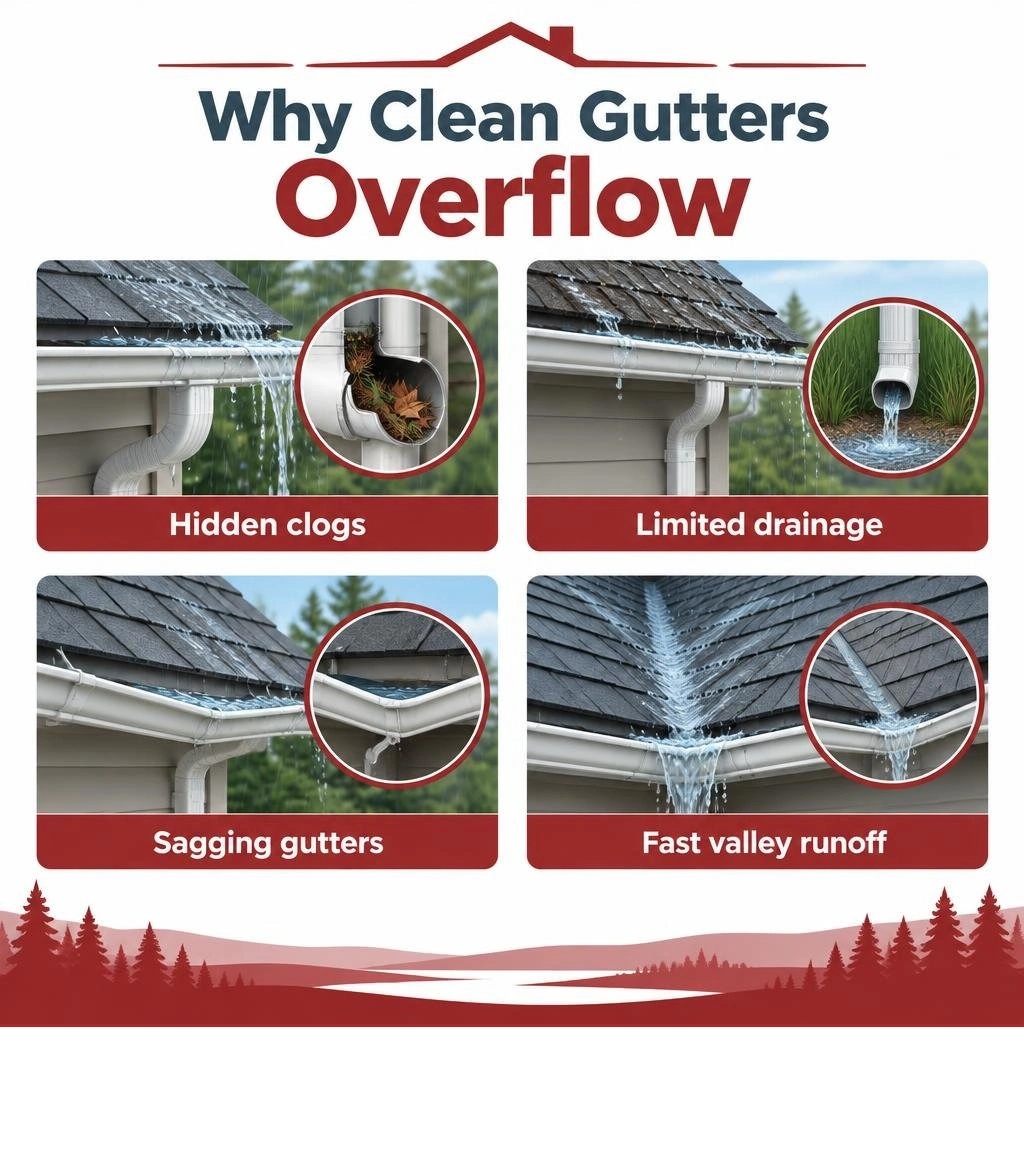
Clean gutters usually overflow because water cannot get out fast enough. A clog hidden in a downspout elbow or underground drain, downspouts that are too small or too few, a gutter run that is too flat or sags between hangers, and roof valleys that dump water into one corner can all cause trouble. Steep roofs and metal roofs can also send fast-moving water past the gutter edge.
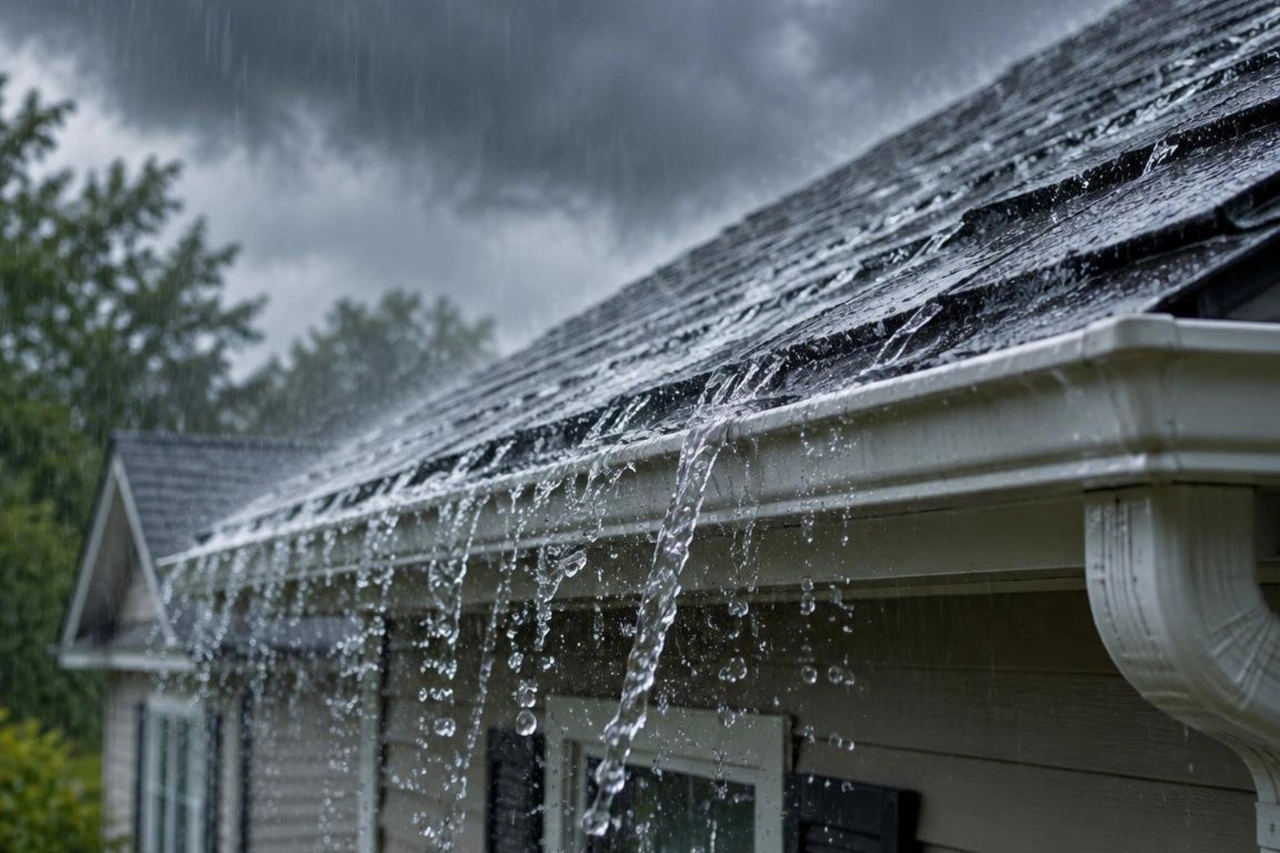
During a steady rain, these visual clues can help explain what is happening:
- Spilling along the whole run: Water may be blocked farther down the system, or the gutter and downspouts may not move water away quickly enough.
- Spilling at one spot: A local debris dam, sagging section, or loose hanger may be holding water in that area.
- Water shooting over at a valley: A roof valley may be sending a concentrated stream into one corner too quickly for the gutter to catch.
- Water dripping behind the gutter: Water may be backing up at the rear edge or getting behind the drip edge near the fascia.
Why a Clean Gutter Can Still Have a Hidden Blockage
A gutter trough can look clear from above while pine needles, leaves, or silt are packed into an outlet, elbow, or underground drain. When water cannot leave at ground level, it backs up the downspout and can spill over the gutter.
In the Northwoods, a hard rain often exposes drainage issues that stay hidden during dry weather. Where the water spills gives a clearer clue than the condition of the open gutter channel alone.
The Most Common Causes
Hidden Downspout Clogs
Pine needles, leaves, and roof grit can pack into a downspout outlet or elbow even when the open gutter channel looks clean. A buried drain can also restrict the flow. Water then backs up until it spills over the gutter edge.
Too Few or Too Small Downspouts
A gutter can fill faster than its downspouts can empty during a hard rain. This is more likely where a long roofline feeds a limited number of outlets or where a valley sends a large amount of water to one corner.
Flat or Sagging Gutter Runs
Water needs a clear path toward the outlet. A run that is too flat, or one that sags between hangers, can hold standing water instead of moving it along. Heavy snow and ice can loosen hangers over time and make this problem worse.
Roof Valleys, Steep Roofs, and Metal Roofs
Roof valleys concentrate runoff in a narrow stream. Steep roof sections and smooth metal roofing can add speed to that flow, allowing water to shoot over the front edge even when the gutter is clear.

What You Can Check From the Ground
Watch the gutters during a steady rain. Look for water standing in a run, visible sags, overflow at a valley, or water spilling along a broad section. Check the bottom of each downspout for leaves, pine needles, or another plug that blocks the exit.
Stay off ladders in rain, wind, snow, or ice. A ground-level observation can give our team useful clues without putting you at risk.
How We Fix Overflowing Gutters
Eagle River Roofing looks at how water moves across the whole roofline, not just the point where it spills over. Depending on the home, we may recommend seamless 5-inch or 6-inch K-style gutters, or 6-inch seamless half-round gutters, to better match the roof layout and runoff pattern.
We can also use oversized outlets and downspout extensions to move water toward appropriate drain zones. At valleys, inside-corner splash guards can help guide fast runoff into the gutter instead of over the edge. We use concealed hangers and set hanger spacing for local snow load so the system has dependable support through Northwoods winters.
For homes with heavy pine needle debris, Alu-Rex gutter guards can help reduce buildup while still allowing water to enter the system. If a larger profile is a better fit, our guide to 5-inch and 6-inch gutters explains the options.
What Overflowing Water Can Damage
Overflowing water can soak fascia boards, streak or wear siding, and concentrate water in the ground next to the foundation. In winter, repeated overflow can also contribute to ice building up near the roof edge. Addressing the cause early can help protect the roofline and the areas below it.
Repair or Replace?
A targeted repair can make sense when the gutter is structurally sound and the problem is limited to a loose hanger, blocked outlet, or a small area that has shifted.
A replacement may be worth considering when gutters are badly sagging, pulling away from damaged fascia, cracked, rusted, or repeatedly overflowing even after the drainage path has been evaluated. Our gutter repair versus replacement guide can help you understand the difference before an estimate.
Frequently Asked Questions About Gutter Overflow
Why do my gutters overflow at the corners even when clean?
Corner overflow often happens where two roof sections meet at a valley. The valley concentrates runoff into a fast stream that can carry over the gutter edge. An inside-corner splash guard, a better-supported gutter run, or a drainage upgrade may help depending on the roof layout.
Can overflowing gutters cause a roof leak inside my home?
They can. Water that backs up behind a gutter may reach the fascia, drip edge, or roof edge materials. If you see staining, dampness, or recurring overflow, a professional roofline inspection can help identify the source.
Get a Clear Answer for Your Roofline
Eagle River Roofing is locally owned, is a GAF Master Elite contractor, and provides free, no-pressure estimates with clear written quotes. If clean gutters still overflow, schedule a gutter evaluation and we will assess the roofline, drainage path, and gutter support system.
Call (715) 892-8328, Mon to Fri 8 to 5.
This article is for general informational purposes only and may not reflect the most current products, pricing, codes, availability, weather-related recommendations, or roofing requirements for your specific property. Every home and roof is different, especially in the Northwoods. Please contact Eagle River Roofing directly for the latest information and guidance for your project.

