What Is a Partial Roof Replacement and When Is It Feasible?
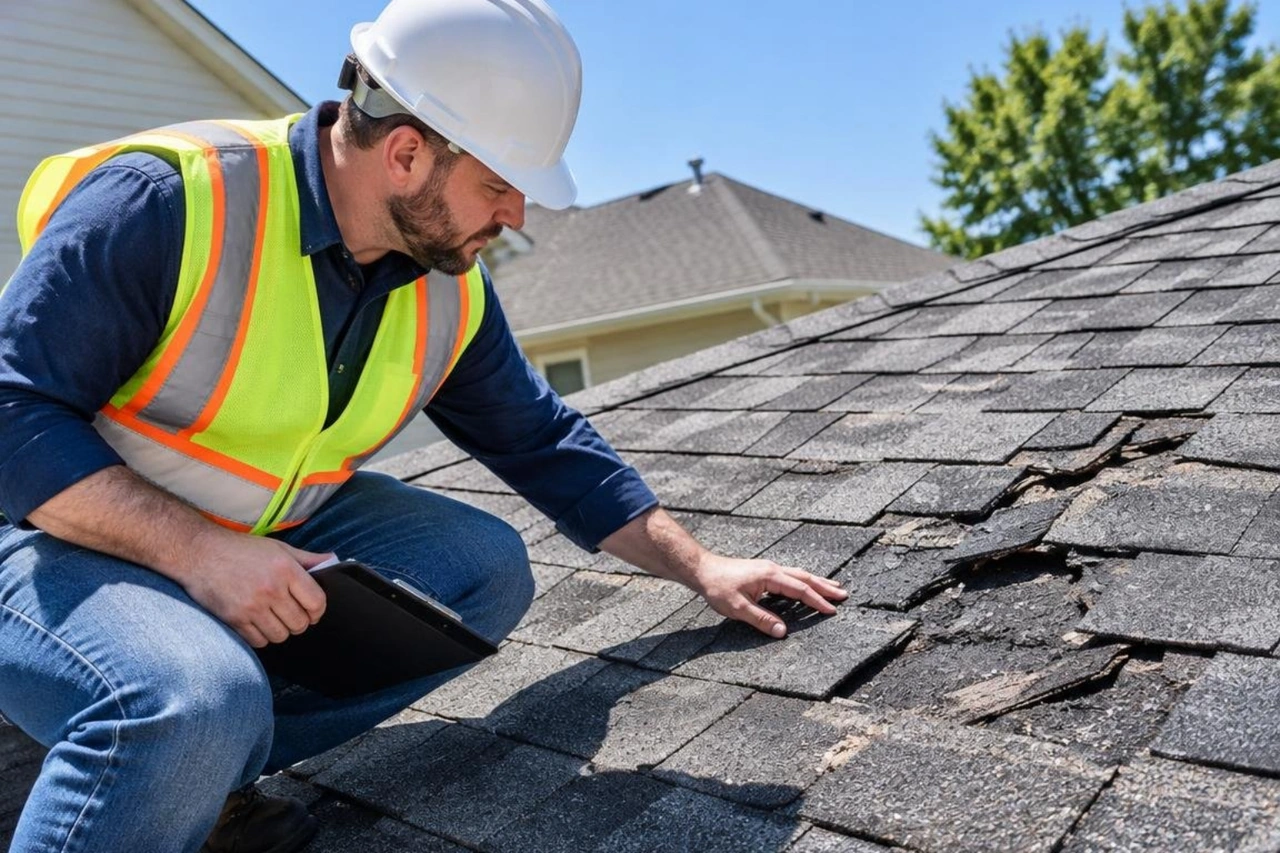
Sometimes. If the damage is limited to one slope or section and the rest of the roof is in good shape, a partial replacement can make sense; if the whole roof is aging, a full replacement is usually the better value. A partial roof replacement involves completely tearing off and rebuilding a single, defined section or slope of your roof down to the wood sheathing. Unlike a simple patch, our crew removes all old shingles, underlayment, flashing, and ridge caps on that specific plane. We then inspect the wood deck, install new protective moisture barriers, and lay fresh shingles tied securely into the surrounding roof structure.
This approach gives you a fresh start on the damaged section without requiring you to pay for materials on slopes that remain in good condition. However, choosing a partial replacement requires careful evaluation. It is generally feasible only when the following conditions are met:
- Damage is isolated to one distinct plane (such as a single wind-facing slope or an area struck by a falling tree limb).
- The damaged area is a small part of the total roof.
- The rest of the roof is fairly young and has plenty of life left.
- The underlying roof decking is structurally sound across the rest of the home.
If the rest of the roof is older, or if granule loss and wear appear across several slopes, replacing just one side can be counterproductive. In those cases, you may end up paying for multiple mobilizations as other slopes reach the end of their lifespan shortly after.
How Does Partial Replacement Differ from Standard Roof Repairs?
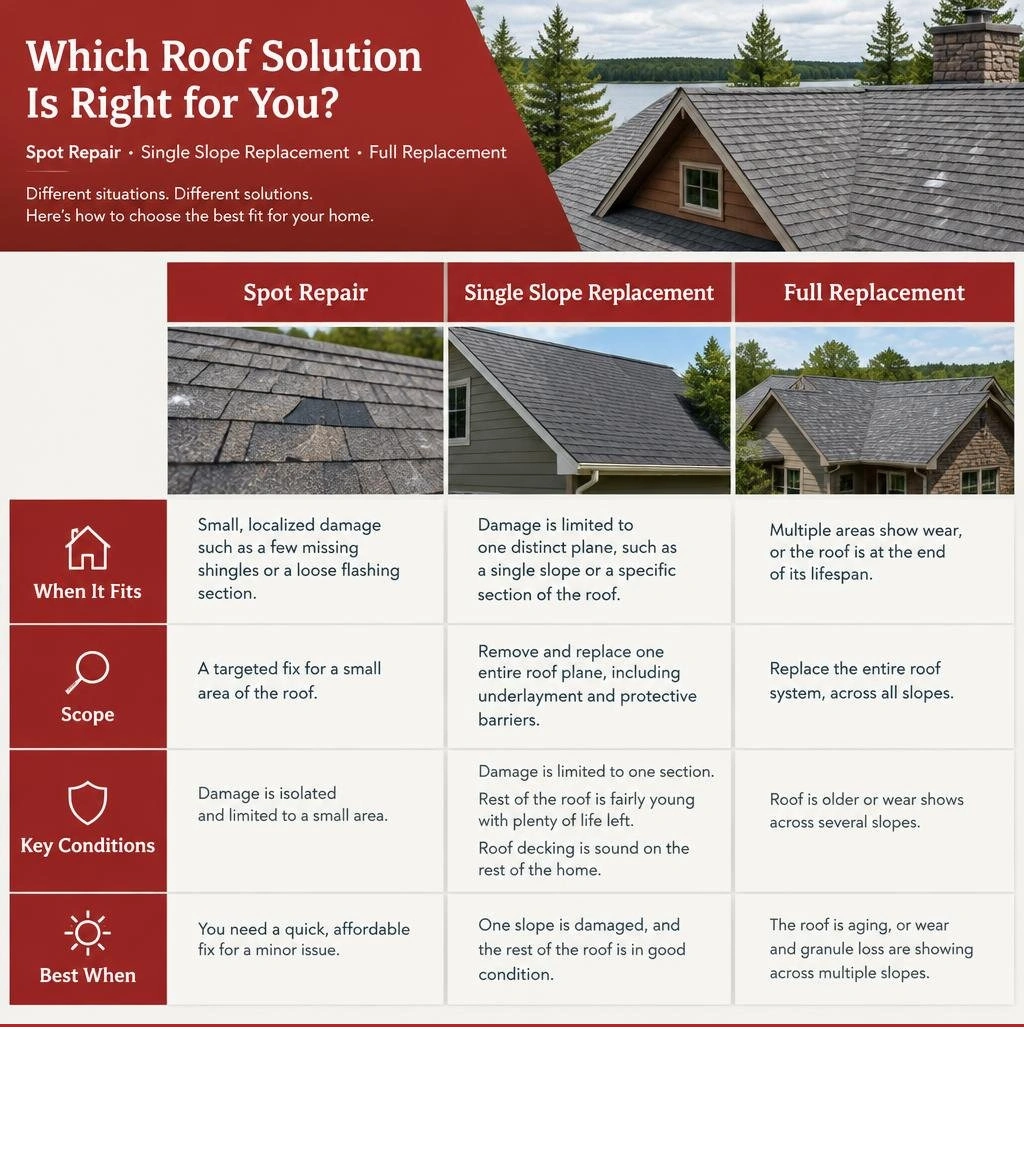
A standard roof repair is typically a localized fix. If a winter gale in St. Germain lifts a half-dozen shingles, or a small section of flashing around a vent pipe loosens, a roofer can slip in replacement shingles or reseal the flashing. While helpful for minor issues, spot repairs do not address worn-out underlayment or moisture trapped beneath the broader roof plane.
A partial replacement treats an entire architectural plane as a complete system. We strip the plane completely to expose the decking. This allows us to find hidden wood rot from stubborn winter ice dams, install modern self-adhering ice-and-water barriers along the eaves, and lay new synthetic underlayment across the entire slope. It delivers full weather protection for that specific plane rather than just covering a small leak.
When Does a Partial Roof Replacement Make Sense for Homeowners?
In Northern Wisconsin, weather patterns often create uneven wear on residential properties:
- Isolated Storm Damage: Severe storms or heavy snow loads might drop a heavy pine branch onto a single rear slope, leaving the front-facing roof untouched.
- Asymmetric Sun Exposure: South-facing roof sections get more sun than north-facing slopes. In lake areas like Minocqua and Three Lakes, south slopes can show premature granule loss and curling while shaded north slopes remain pliable.
- Home Additions and Remodels: When building a new garage, porch, or dormer, a partial replacement helps integrate the new rooflines with existing shingles.
- Budget Management: When one slope is failing but the rest of the roof has significant lifespan left, a partial scope allows you to protect your home while keeping immediate expenses manageable.
Knowing whether your roof needs a repair or a full replacement helps clarify whether your home is a sound candidate for partial work.
What Are the Pros and Cons of Replacing Only One Section of Your Roof?
Deciding on a partial roof replacement requires balancing short-term financial savings against long-term maintenance and aesthetic goals.
Before committing, it helps to recognize common roof replacement signs across all slopes to ensure you are not investing in partial repairs on a roof that needs total replacement.
What Are the Primary Advantages of Partial Roof Work?
- Lower Upfront Investment: Because you purchase fewer materials and require fewer labor hours, the total project cost is lower than a complete tear-off.
- Less Time on Site: A single slope takes less time than a full roof, depending on weather and deck conditions.
- Reduced Household Disruption: Less equipment on site, smaller dumpsters, and shorter working hours mean less noise and disruption for your family.
- Environmental Benefits: Removing only damaged materials keeps functioning shingles out of landfills and reduces raw material consumption.
What Are the Risks and Drawbacks to Consider?
- Shingle Mismatches: Sunlight, temperature swings, and natural weathering cause asphalt shingles to lighten over time. Even if you purchase the identical shingle brand and color code, new shingles will look noticeably darker than shingles installed several years ago.
- Higher Per-Square Pricing: Setting up safety equipment, delivering materials, and mobilizing a crew creates fixed costs. As a result, the price per roofing square (100 square feet) is higher on a partial job than on a full reroof.
- Transition Seams: Tying new materials into older sections along valleys or roof hips creates a seam. If these tie-ins are not flashed and sealed properly, they can become vulnerable to water intrusion during spring thaws.
- Warranty Limitations: Major manufacturers, including GAF, offer their strongest comprehensive system warranties on complete roof installations. A partial replacement generally includes warranty coverage only on the newly installed materials, depending on product and registration.
What Factors Influence the Cost of a Partial Roof Replacement?
The overall investment for a partial roof replacement is typically lower than a full replacement because fewer materials and labor hours are required. However, the exact investment depends on several job-specific variables that your contractor will confirm during the estimate:
- Roof Pitch: Steeper roofs require extra safety staging, roof jacks, and harness setups.
- Accessibility: Homes with tight property lines, dense pine trees, or steep terrain often require more labor to move materials.
- Decking Repairs: If our crew discovers rotten decking after tearing off old materials, replacing damaged OSB or plywood sheets adds material and labor costs.
- Flashing Complexity: Chimneys, skylights, dormers, and sidewalls require step flashing resets that add labor time.
To help prevent surprise expenses, we recommend verifying that your contractor details potential rotted wood replacement fees in comprehensive roofing estimates before work begins.
| Project Scope | Relative Investment | Warranty Coverage |
|---|---|---|
| Spot Repair | Lowest upfront cost | Workmanship on repair area only |
| Partial Slope Replacement | Moderate upfront cost | Material warranty on new section |
| Full Roof Replacement | Complete system investment | Full system coverage on qualifying installations |
Why Does Partial Replacement Cost More Per Square Than a Full Replacement?
While the total cost for a single slope is significantly lower than a full roof, the price per roofing square (100 square feet) is usually higher.
This difference exists because every roofing project shares fixed overhead costs: mobilizing a crew, transporting disposal containers, handling local building permits, and setting up ground protection. When these fixed costs are spread over a smaller surface area, the unit cost increases. Additionally, tying into existing ridges and valleys requires careful hand-cutting, which often results in higher percentage material waste compared to a complete tear-off.
How Do You Ensure Proper Material Matching and Weatherproofing at Transitions?

The most noticeable challenge with partial roof work is shingle matching. Even if your original shingle color code is known, asphalt shingles fade with sun and weather. Sourcing a new bundle of the same color often produces a distinct shade difference.
Furthermore, shingle manufacturers update their color blends, granule sources, and shingle dimensions over time, and older product lines are frequently discontinued. Working with a licensed roofing contractor with GAF Master Elite credentials helps ensure access to current shingle options and proper weatherproofing at tie-in points.
What Strategies Help Minimize Visual Differences Between Old and New Shingles?
When matching existing roofing, we employ several practical techniques:
- Stop at Natural Architectural Breaks: We avoid ending a partial replacement in the middle of a flat roof field. Terminating the new shingles along a ridge cap, a valley, or a dormer sidewall creates a natural break where slight color differences look intentional.
- Prioritize Less Visible Slopes: If a damaged section faces the rear of the property or a wooded tree line, slight color variations remain hidden from street view.
- Use GAF Timberline HDZ Options: For residential shingle projects, Eagle River Roofing uses GAF architectural shingles. Their dimensional shadow lines and balanced color blends help new sections integrate cleanly with existing architectural roofs.
How Are Critical Transition Seams Weatherproofed?
A partial replacement must keep water and ice out where new materials meet old sections. In harsh winter climates like the Northwoods, transition points require careful detailing:
- Tear-Down to Bare Decking: We strip all old materials completely down to the sheathing along the transition line.
- Ice-and-Water Barrier Overlaps: Self-adhering membrane underlayment must overlap the existing underlayment to create a watertight seal against ice dams.
- Flashing Resets: Reusing old, corroded step flashing along dormers or chimneys often leads to leaks. We reset new metal flashing and seal it directly to the deck.
- Full Ridge Cap Replacement: Rather than saving old ridge caps, we install fresh ridge cap shingles across the entire peak to create a clean, uniform roofline that seals both slopes.
What Is the Complete Step-by-Step Checklist for a Partial Roof Replacement?
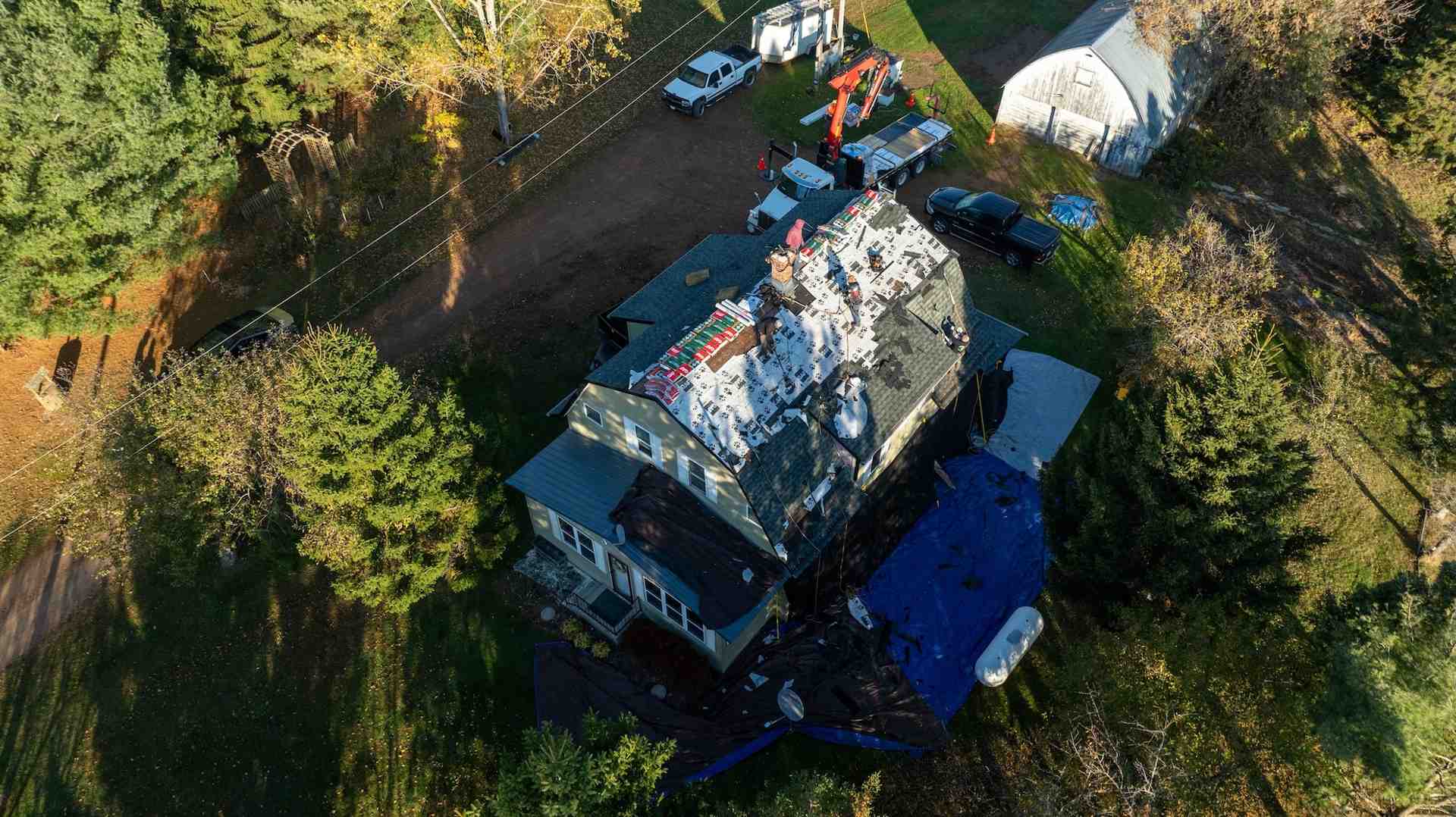
A successful partial project requires clear communication, proper safety protocols, and meticulous attention to detail. Here is a checklist for a well-run partial project, from planning to cleanup.
Pre-Project Inspection and Planning Checklist
- [ ] Inspect the entire roof structure, not just the damaged section, to make sure the remaining slopes have plenty of life left.
- [ ] Check attic spaces for hidden leaks, deck sagging, or compromised intake ventilation.
- [ ] Confirm local municipal building permit requirements and verify local cold-weather ice barrier codes.
- [ ] Take clear photos of the damage so you can see exactly what was found.
- [ ] Source matching GAF shingles and compare sample pieces against the existing roof in direct sunlight.
- [ ] Obtain a clear written estimate that includes set change-order pricing for unexpected wood deck repairs.
Installation and Quality Control Checklist
- [ ] Place protective tarps over landscaping, decks, and siding around the work zone.
- [ ] Strip damaged shingles, starter strips, and old underlayment down to bare roof sheathing.
- [ ] Inspect the wood deck for soft spots, rot, or delamination, replacing damaged sheets as needed.
- [ ] Install corrosion-resistant drip edge along eaves and rakes.
- [ ] Apply self-adhering ice-and-water barrier along eaves, valleys, and transition seams according to local building requirements.
- [ ] Lay synthetic underlayment across the field of the roof deck with proper overlaps.
- [ ] Install dedicated starter strip shingles along all eave and rake edges.
- [ ] Fasten new GAF shingles using manufacturer-specified nail patterns.
- [ ] Install new step flashing, counter flashing, and pipe boots around all roof penetrations.
- [ ] Cap all ridges and hips with matching ridge cap shingles.
Post-Job Cleanup and Warranty Checklist
- [ ] Run a magnetic sweep across the driveway, lawn, and walkways to collect stray nails.
- [ ] Walk the property perimeter with the homeowner to review the finished installation.
- [ ] Provide written copies of manufacturer material warranties and contractor workmanship guarantees.
Frequently Asked Questions About Partial Roof Replacement
Does a Partial Replacement Void Existing Roof Warranties?
A partial replacement does not void the material warranty on the untouched slopes of your roof. However, comprehensive manufacturer system warranties (which cover the entire roof as a single integrated package) usually require a complete tear-off and installation of matching system components across all planes.
On a partial replacement, your newly installed slope will carry its own material warranty, while the remaining slopes retain whatever coverage remains under their original terms.
How Long Does a Partial Roof Replacement Take to Complete?
It depends on the slope's size and pitch, the decking condition, and the weather. We'll talk through timing with you during your estimate.
When Should You Schedule a Professional Roof Assessment?
If you notice missing shingles, storm damage, or localized water stains inside your home, scheduling an on-site roof assessment can help determine whether a partial repair or a full replacement makes sense.
Eagle River Roofing is a locally owned company founded in late 2023, built on 50+ years of combined local experience, with our ownership team's over 9,000 roofs and 8 million feet of gutters installed across Northern Wisconsin and the Upper Peninsula. As a GAF Master Elite contractor, we focus on durable installations built for Northwoods winters, maintaining clean job sites and providing clear, detailed written quotes with no pressure.
Get a free, no-pressure estimate: call (715) 892-8328 Monday to Friday, 8 to 5, schedule a free roof estimate, or try our instant online roofing estimate tool.
This article is for general informational purposes only and may not reflect the most current products, pricing, codes, availability, weather-related recommendations, or roofing requirements for your specific property. Every home and roof is different, especially in the Northwoods. Please contact Eagle River Roofing directly for the latest information and guidance for your project.

